

 Pregledaj u prostoru
 Pošalji
 Podeli
 Detalji o delu

 Преузми
 Slični predmeti
 Rendgenski snimak
 Slajdovi
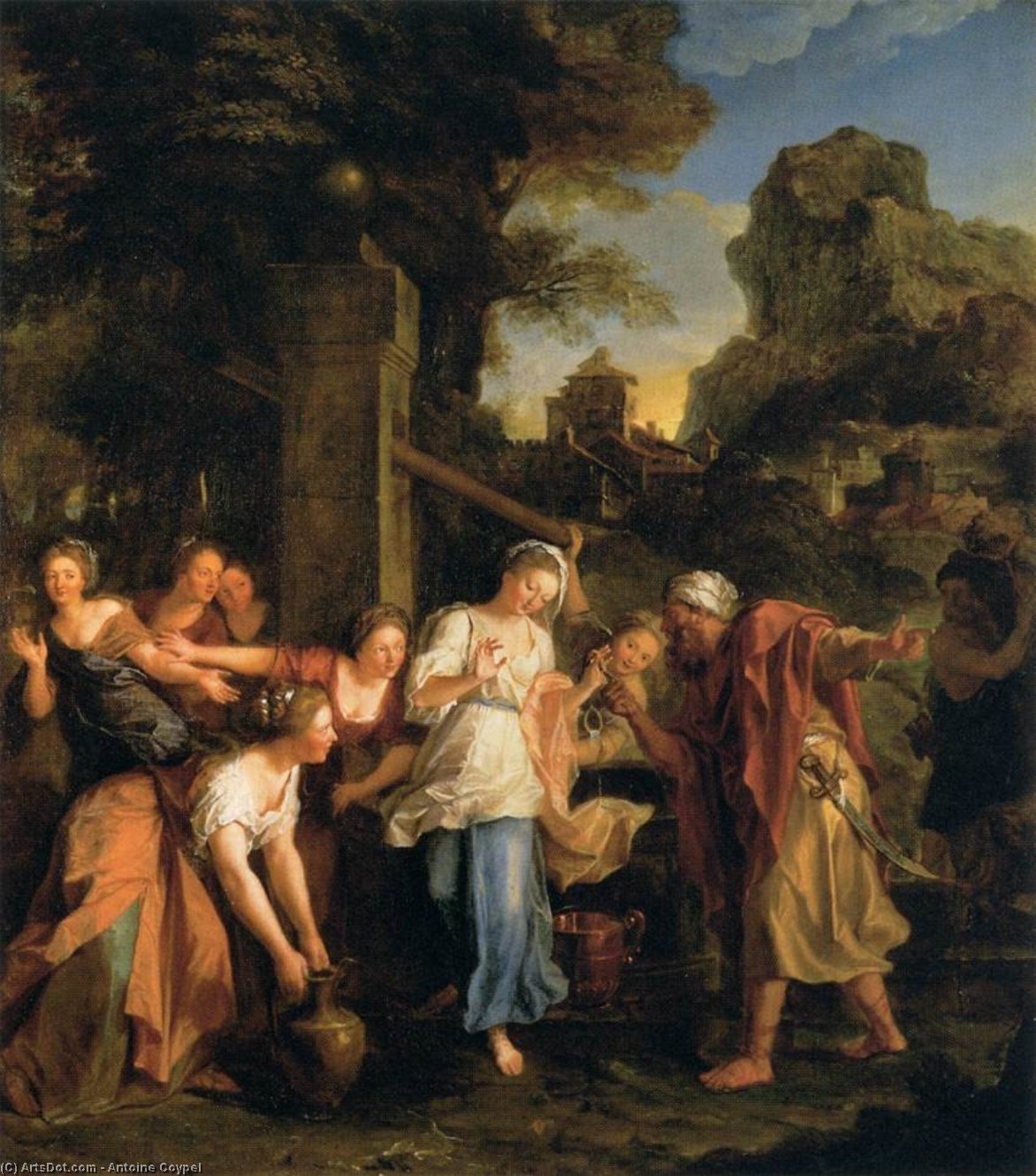
Eliezer and Rebecca
 Acrylic On Canvas
- WallArt
- Baroque Rococo Transition
 1701
1701 125.0 x 106.0 cm
 Louvre
 Pročitaj više
Kupite digitalnu sliku visoke rezolucije i poboljšanog kvaliteta, koja je znatno superiornija od onoga što vidite u online prikazu.
Svaka datoteka je pedantno pripremljena od strane naših stručnjaka koristeći napredne alate i profesionalnu ručnu retušu. Osiguravamo da svaka slika ima izuzetnu oštrinu, preciznu reprodukciju boja i fine detalje.
Konačna datoteka se dostavlja putem e-pošte u roku od 72 sata, optimizovana za neposrednu upotrebu u profesionalnim, izdavačkim i štamparskim okruženjima. To je isti kvalitet kojem veruju vrhunski studiji dizajna, izdavači i galerije.
Digitalna slika
Preuzmite datoteku visoke rezolucije za ličnu upotrebu, štampanje i kreativne projekte. ( Kupi print Kupi ručno naslikanu sliku)
Uključeno uz svaku porudžbinu digitalne slike
Profesionalna digitalna isporuka, zagarantovana
Kada odaberete ArtsDot.com, ne dobijate samo sliku – vi primate profesionalno unapređeno digitalno umetničko delo, izrađeno sa najvećom preciznošću i uz garanciju zadovoljstva. Evo svega što automatski dolazi uz vašu porudžbinu:

Brza dostava putem e-pošte
Vaša digitalna slika visoke rezolucije biće vam poslata putem e-pošte u roku od 72 sata od poručivanja – spremna za trenutnu upotrebu.

Digitalna datoteka unapređena veštačkom inteligencijom
Vaše umetničko delo je profesionalno optimizovano korišćenjem naprednih AI alata i ručne obrade, čime se osiguravaju maksimalni detalji, oštrina i preciznost boja.

Besplatna ponovna isporuka doživotno
Slučajno ste obrisali ili izgubili svoju datoteku? Ne brinite – poslaćemo vam je ponovo u bilo kom trenutku, potpuno besplatno.

Bez troškova uvoza – zauvek
Uživajte u svojim umetničkim delima trenutno, bez carine, dažbina ili troškova dostave – digitalni download je uvek bez poreza.

Garancija vernosti boja
Uz pomoć profesionalnih alata i upravljanja bojama, osiguravamo da vaša digitalna slika što vernije odražava originalne boje.

Garancija zadovoljstva u roku od 60 dana
Ako niste zadovoljni svojom digitalnom slikom, revidirat ćemo je ili vratiti 100% novca u roku od 60 dana – bez ikakvih pitanja.

100% garancija povrata novca
Niste zadovoljni? Obezbedite pun povrat novca u roku od 60 dana od trenutka kada ste primili svoju digitalnu datoteku – bez suvišnih pitanja.

Popusti na velike porudžbine
Kupite 3 slike, uštedite 10% - Kupite 5 slika, uštedite 15% - Kupite 10+ slika, uštedite 20%. Odlično za kreativne projekte, galerije i agencije.
Opis kolekcionarskog dela
Charles Antoine Coypel’s “Eliezer and Rebecca”: A Tapestry of Faith and Baroque Refinement
Charles Antoine Coypel's "Eliezer and Rebecca," completed in 1701, stands as a testament to the artistic fervor of Louis XIV’s court – specifically, his patronage of mythological and biblical narratives. This monumental canvas transcends mere depiction; it embodies the stylistic convergence of Baroque grandeur with nascent Rococo delicacy, reflecting the evolving sensibilities of European art during this pivotal period. Measuring 125 x 106 cm, the painting captures a scene from Genesis, portraying Eliezer, Rebecca’s father, offering water to her as she cradles their newborn son. Surrounding them are figures representing compassion and devotion, meticulously rendered in Coypel's signature style.A Masterful Blend of Baroque Tradition
Coypel’s artistic lineage is deeply rooted in the Baroque tradition championed by Nicolas Frémiet, his mentor, who instilled in him a profound understanding of oil painting and etching – techniques that would become cornerstones of Coypel’s prolific oeuvre. Like Antoine Coypel II, whose influence extended beyond portraiture into broader mythological explorations, Coypel skillfully navigated the stylistic currents shaping French art. His grandfather Noël Coypel established a precedent for artistic excellence, ensuring that Coypel's own creative journey benefited from a rich heritage. The artist’s ability to convey emotion and drama was unparalleled, securing him the prestigious position of Premier Peintre du Roi – a role he held until his untimely demise at the age of 58.Technique and Composition: Baroque Elegance Revisited
The painting's meticulous execution showcases Coypel’s mastery of chiaroscuro—the dramatic interplay of light and shadow—a hallmark of Baroque artistry. Light illuminates Rebecca’s serene face and the infant’s peaceful slumber, contrasting sharply with darker recesses that define the figures’ drapery and create a palpable sense of depth. Coypel's compositional choices are equally deliberate; he arranges the figures within a carefully balanced pyramidal structure, emphasizing stability and conveying an idealized vision of familial piety. The inclusion of symbolic objects – a vase hinting at fertility and abundance, a cup representing spiritual nourishment – further enriches the narrative’s visual language.Symbolism and Emotional Resonance
“Eliezer and Rebecca” speaks volumes about the religious beliefs prevalent in 18th-century France. The scene underscores themes of providence, compassion, and the sanctity of family life—values deeply cherished by Louis XIV and his court. Coypel’s depiction captures not merely a biblical story but also an emotional core: the tenderness between father and daughter, the unwavering faith guiding their actions, and the promise of future generations blessed with divine grace. This profound resonance continues to captivate viewers today, cementing Coypel's place as one of the era’s most accomplished artists.A Legacy Enduring Through Reproduction
Today, a high-quality reproduction of “Eliezer and Rebecca” offers an opportunity to experience the beauty and sophistication of Baroque artistry within the comfort of your own home. ArtsDot.com presents exceptional reproductions that faithfully capture the painting's luminous palette and intricate detail—allowing you to appreciate Coypel’s artistic genius and immerse yourself in the spirit of Louis XIV’s court.Srodna umetnička dela
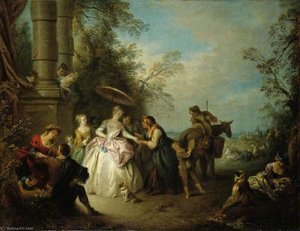
Biografija umetnika
The Legacy of Charles Antoine Coypel: A Bridge Between Eras
In the grand tapestry of French art history, few figures embody the delicate transition from the heavy grandeur of the Baroque to the lighthearted elegance of the Rococo as gracefully as Charles Antoine Coypel. Born in Paris in 1694 into a lineage of artistic distinction, Coypel was destined for greatness. As the son of the celebrated Antoine Coypel and the grandson of Noël Coypel, his very existence was steeped in the traditions of the Académie Royale. This familial heritage provided him with more than just a name; it offered an intimate apprenticeship to the masters of his time, allowing him to inherit a profound understanding of classical composition and the dramatic flair required by the French court.
Coypel’s early training under Nicolas Frémiet equipped him with a versatile technical repertoire, ranging from the precision of etching to the fluid mastery of oil painting. This versatility became the cornerstone of his career, enabling him to navigate the shifting aesthetic tides of the early 18th century. While his foundations were firmly rooted in the monumental and often theatrical style of the late Baroque, he possessed a unique sensitivity to the emerging Rococo spirit. He began to infuse his works with a newfound lightness, utilizing delicate pastel palettes, asymmetrical arrangements, and an ornamental charm that would soon define the French aesthetic for decades to come.
A Master of Narrative and Royal Commission
The zenith of Coypel’s professional life was marked by his prestigious appointment as Premier Peintre du Roi (First Painter to the King). Serving the court of Louis XIV and his successors, he became a primary visual storyteller for the French monarchy. His talent extended far beyond the canvas; he was a visionary designer who understood how art could animate entire architectural spaces. One of his most breathtaking achievements can be found in his contributions to the Versailles Chapel, where his fresco work—such as the depiction of God the Father in Glory—utilized masterful trompe-l'oeil techniques to create celestial perspectives that seemed to dissolve the very ceiling into the heavens.
Beyond the walls of royal chapels, Coypel’s influence permeated the decorative arts through his extensive collaborations with the Gobelins Manufactory. He possessed a rare ability to translate epic narratives into monumental tapestry designs. His work on series inspired by Homer’s Iliad and Odyssey demonstrated a profound command of color and movement, turning woven threads into epic poems of light and shadow. Perhaps his most daring and revolutionary undertaking was his illustrated series for Miguel de Cervantes' Don Quixote. In this project, Coypel moved away from rigid formality to embrace a more dynamic, character-driven approach to storytelling, effectively bridging the gap between classical illustration and modern narrative art.
Artistic Significance and Enduring Influence
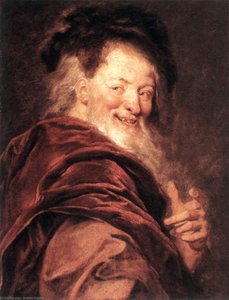
The historical significance of Charles Antoine Coypel lies in his role as an artistic mediator. He did not merely witness the transition from one era to another; he actively shaped it. By blending the structural integrity and dramatic weight of the Baroque with the whimsical, airy grace of the Rococo, he provided a stylistic continuity that allowed French art to evolve without losing its sense of majesty. His portraits, such as the evocative Democritus, continue to captivate viewers with their ability to balance regal dignity with an intimate, psychological depth.
Though his life was cut short in 1752, the impact of his work remains etched in the history of European painting. His legacy is found in:
- The evolution of French portraiture: Moving from stiff formality toward a more expressive and emotive representation of the subject.
- Tapestry and Decorative Design: Elevating large-scale textile works to the status of high narrative art through his Gobelins commissions.
- The integration of styles: Successfully synthesizing the monumental scale of the 17th century with the intimate, decorative sensibilities of the 18th century.
Today, the works of Coypel serve as a window into a transformative period of human creativity, reminding us of a time when art was used to bridge the gap between the earthly splendor of kings and the divine aspirations of the soul.
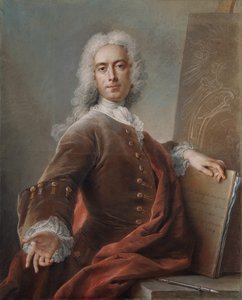
charles antoine coypel
1694 - 1752

