

![Cottage, Knebworth, Hertfordshire County, England; [exterior Elevations, Floor Plans, Sketches] — Charles Augustus Henry Lutyens](/media/artworks/images-full/fc/d3/fcd3ceefd82fe55e4d533868093efda6.jpg)
 Pregledaj u prostoru
 Pošalji
 Podeli
 Detalji o delu

 Преузми
 Slični predmeti
 Rendgenski snimak
 Slajdovi
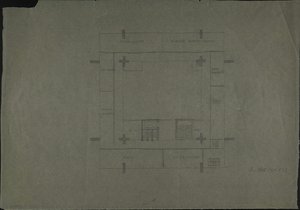
Cottage, Knebworth, Hertfordshire County, England; [exterior elevations, floor plans, sketches]

 Pročitaj više
Giclee štampa / Umetnički otisak
Giclée štampa ili print na platnu muzejskog kvaliteta uz brzu proizvodnju i fleksibilne opcije završne obrade. ( Kupi ručno naslikanu sliku Kupi digitalnu sliku)




































Izaberite jednu od naših unapred definisanih veličina koje odgovaraju originalnim proporcijama umetničkog dela.

Možete uneti sopstvene dimenzije kako biste umetničko delo prilagodili specifičnom okviru ili prostoru. Ako odabrani format ne odgovara proporcijama originalne slike, mi ćemo ili iscrtati deo dela ili proširiti sliku pomoću ogledane ivice ili jednobojnog popunjavanja. Digitalni prikaz će vam biti poslat na odobrenje pre početka proizvodnje.
Imajte na umu da pregled na ekranu ne odražava stvarno iscrtavanje ili proširivanje. Samo će prikaz (mockup) precizno pokazati finalnu kompoziciju.
Iako su prilagođene dimenzije dostupne, preporučujemo da odaberete dimenziju sa unapred definisane liste kako biste očuvali originalne proporcije.
Dostava širom sveta () za 2 nedelje umesto uobičajenih 4/5 nedelja. (2 септембар)

Besplatna ekspresna dostava širom sveta

Visokokvalitetno laneno platno

Kompletno osiguranje transporta

Garancija povraćaja carine i uvoznih dažbina

Garancija vernosti boja

Politika povrata u roku od 60 dana (samo u slučaju nedostataka)

Garancija povrata novca od 100%

Popust pri grupnoj kupovini
 Opcija sa staklom dostupna je samo za dimenzije manje od 110 cm

Cottage, Knebworth, Hertfordshire County, England; [exterior elevations, floor plans, sketches]
Giclee štampa / Umetnički otisak
Dimenzije reprodukcije
-


Konačna cena
$ 62
Srodna umetnička dela
Biografija umetnika
The Dual Legacy of a Visionary: Soldier, Painter, and Architect
To contemplate the life of Charles Augustus Henry Lutyens is to traverse the complex landscape of the British imperial era, where the precision of military discipline met the fluid grace of artistic expression. Born in 1829 into a distinguished military lineage, Lutyens was shaped by a heritage of service and structure. As the son of Major Lutyens, a man whose career spanned the Peninsular War and diplomatic missions to Denmark, the young Charles was immersed from birth in an environment where duty and global perspective were paramount. While history often remembers him through the lens of his architectural contributions and his identity as a painter, his very essence was forged in this crucible of Victorian order and expansive colonial ambition.
His early years were marked by a profound intellectual curiosity that transcended the boundaries of a single discipline. Though he initially turned toward the spiritual path of theology during his studies at Oxford University, the call of design and visual storytelling proved irresistible. This transition from the sacred to the aesthetic allowed him to infuse his later works with a sense of monumental permanence and spiritual gravity. His artistic development was deeply influenced by the prevailing movements of his time, particularly the Gothic Revivalism and the Beaux Arts principles that emphasized classical symmetry and intricate ornamentation. This period of formation instilled in him a lifelong reverence for craftsmanship and an ability to see the structural potential within the purely decorative.
A Tapestry of Technique and Memory
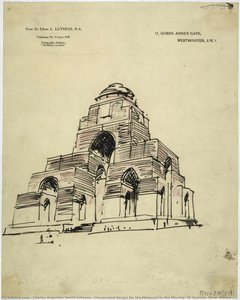
As a painter and draftsman, Lutyens possessed a rare ability to translate the weight of history onto paper. His work often serves as a poignant window into the collective psyche of an era grappling with loss and reconstruction. One can observe this most movingly in his architectural drawings, such as his unexecuted design for the Memorial to the Missing in St Quentin, France. In these monochromatic studies, he utilized the stark, evocative power of black and white line work to create a landscape of memory. Through meticulous hatching and varying line densities, he achieved a sculptural quality that made stone appear almost tactile, capturing the interplay of light and shadow to evoke the somber atmosphere of post-war mourning.
His technical mastery was not merely about precision but about the emotional resonance of scale. By incorporating small, silhouetted figures within his grand architectural visions, Lutyens masterfully established a sense of human vulnerability against the backdrop of monumental structures. This technique grounded his sweeping, imperial ambitions in the intimate reality of individual lives. Whether capturing the delicate beauty of Cupids and Flowers or the imposing geometry of a commemorative tower, his hand remained dedicated to the idea that art should serve as an axis mundi—a bridge between the earthly realm of human experience and the eternal realm of remembrance.
The Architectural Shadow and Historical Significance
While Charles Augustus Henry Lutyens is often discussed in relation to the monumental architectural achievements of his era, his historical significance lies in the foundational aesthetic values he championed. His involvement with the Arts and Crafts movement, alongside figures like William Morris, reinforced a commitment to authenticity and a rejection of mass production. This dedication to meticulous detailing and the use of genuine materials became a hallmark of the period's design language. He viewed architecture not merely as the construction of shelter, but as the creation of spaces that embodied ideals of order, permanence, and authority.
His legacy is inextricably linked to the broader narrative of British architectural evolution, providing a bridge between the traditionalism of the early 19th century and the transformative urban planning seen in projects like New Delhi. Though he shared the spotlight with other great designers of his time, his unique position as both a soldier and an artist allowed him to approach design with a singular perspective—one that understood both the rigid requirements of structure and the delicate necessity of beauty. Today, his works remain vital touchstones for understanding how the visual arts were used to navigate the complexities of identity, empire, and the enduring human desire to leave a lasting mark upon the world.
charles augustus henry lutyens
1829 - 1915
Osnovne informacije
- Artistic Movement Or Style: Arts and Crafts
- Artists Who Influenced This Artist:
- William Morris
- Gustav Stickley
- Date Of Birth: 1829
- Date Of Death: 1915
- Full Name: Charles Augustus Henry Lutyens
- Nationality: British
- Notable Artworks:
- India Gate
- Houses of Parliament
- Scottish Rite Temple
- Place Of Birth: London, England

