

 Pregledaj u prostoru
 Pošalji
 Podeli
 Detalji o delu

 Преузми
 Slični predmeti
 Rendgenski snimak
 Slajdovi
Funeral Pomp of the Dauphine, Marie-Thérèse of Spain


 Pročitaj više
Giclee štampa / Umetnički otisak
Giclée štampa ili print na platnu muzejskog kvaliteta uz brzu proizvodnju i fleksibilne opcije završne obrade. ( Kupi ručno naslikanu sliku Kupi digitalnu sliku)




P118B $10

P118H $10

P118W $10

P438Z $10

P508JH $12

P508YH $12

P805H $10

P805Z $10

P919BZ $10

P919G $10

P919XJ $10

P959ZH $10

P968JZ $12

W106C $8

W218G $10

W218JH $8

W218Y $10

W307PJ $10

W316G $10

W316PJ $8

W316Y $10

W398PJ $8

W4111J $10

W500HY $15

W500JH $15

W692G $12

W849H $8

W940BG $15

W953PJ $8




Izaberite jednu od naših unapred definisanih veličina koje odgovaraju originalnim proporcijama umetničkog dela.

Možete uneti sopstvene dimenzije kako biste umetničko delo prilagodili specifičnom okviru ili prostoru. Ako odabrani format ne odgovara proporcijama originalne slike, mi ćemo ili iscrtati deo dela ili proširiti sliku pomoću ogledane ivice ili jednobojnog popunjavanja. Digitalni prikaz će vam biti poslat na odobrenje pre početka proizvodnje.
Imajte na umu da pregled na ekranu ne odražava stvarno iscrtavanje ili proširivanje. Samo će prikaz (mockup) precizno pokazati finalnu kompoziciju.
Iako su prilagođene dimenzije dostupne, preporučujemo da odaberete dimenziju sa unapred definisane liste kako biste očuvali originalne proporcije.
Dostava širom sveta () za 2 nedelje umesto uobičajenih 4/5 nedelja. (4 септембар)

Besplatna ekspresna dostava širom sveta

Visokokvalitetno laneno platno

Kompletno osiguranje transporta

Garancija povraćaja carine i uvoznih dažbina

Garancija vernosti boja

Politika povrata u roku od 60 dana (samo u slučaju nedostataka)

Garancija povrata novca od 100%

Popust pri grupnoj kupovini
 Opcija sa staklom dostupna je samo za dimenzije manje od 110 cm

Funeral Pomp of the Dauphine, Marie-Thérèse of Spain
Giclee štampa / Umetnički otisak
Dimenzije reprodukcije
-


Konačna cena
$ 62
Funeral Pomp of the Dauphine, Marie-Thérèse of Spain
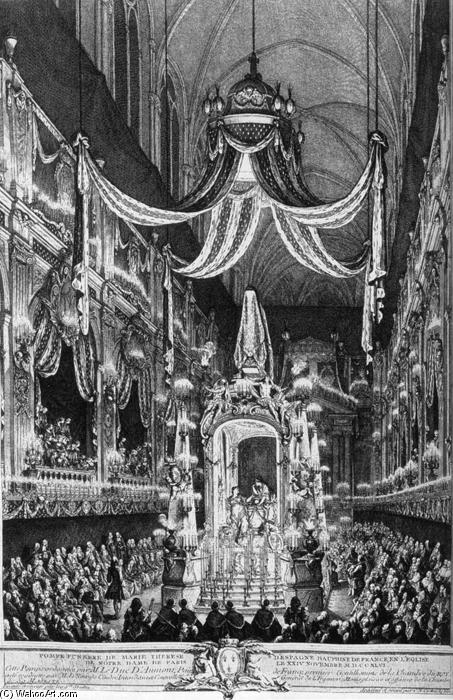
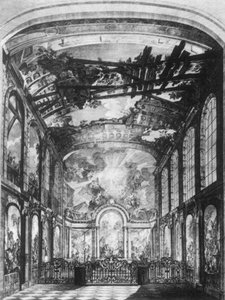
Charles Nicolas Cochin II’s engraving, “Funeral Pomp of the Dauphine,” offers a breathtaking glimpse into the opulent grandeur of 18th-century Parisian ceremonial art. Executed in November 1746, this masterful print captures the solemn magnificence surrounding the funeral procession honoring Marie-Thérèse of Spain, Louis XV's beloved daughter and wife, who tragically succumbed to childbirth complications. Cochin’s depiction transcends mere documentation; it embodies a profound artistic vision that reflects the era’s fascination with theatrical spectacle and religious devotion.A Symphony of Detail: Composition and Technique
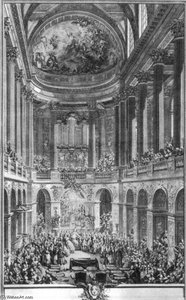
The engraving’s central focus is an elaborate altar adorned with a canopy—a hallmark of Rococo style—dominated by towering columns and statues representing saints, symbolizing piety and remembrance. Above hangs a colossal chandelier, casting shimmering light upon the scene and emphasizing its vertical scale, drawing the viewer's gaze upwards towards divine grace. Rows of pews flank the aisle leading to the altar, populated by figures draped in sumptuous fabrics – testament to the lavishness of the occasion. Cochin’s meticulous technique—primarily hatching and cross-hatching—is instrumental in conveying depth and tonal variation. Fine lines delineate architectural elements with precision, while textured surfaces mimic stone walls and drapery folds, creating a palpable sense of realism that transports the viewer into the cathedral's sacred space. The artist skillfully employs linear perspective to establish spatial depth, reinforcing the grandeur of Notre Dame Cathedral and immersing the audience in its solemn atmosphere.Historical Context: Royal Mourning and Artistic Patronage
The engraving’s creation coincided with a period of intense royal mourning following Marie-Thérèse's death—a poignant reminder of mortality within the gilded halls of Versailles. Louis XV, deeply affected by his daughter’s passing, commissioned Cochin to produce this monumental artwork as part of a broader effort to commemorate her life and honor her memory. Such commissions were commonplace during the Rococo era, where artists served as official draftsmen for the monarchy, tasked with documenting royal events and elevating their prestige through artistic representations. The engraving reflects the prevailing aesthetic sensibilities of the time—characterized by ornate decoration, idealized figures, and a preoccupation with emotional expression—demonstrating Cochin’s commitment to capturing both visual beauty and spiritual significance.Symbolism: Light, Darkness, and Divine Presence
The monochromatic palette—primarily shades of gray—contributes significantly to the engraving's emotive impact, fostering an atmosphere of solemn reverence and conveying the gravity of the funeral rites. The chandelier’s radiant light symbolizes divine illumination, guiding the viewer’s eye towards the altar and highlighting the sacred iconography depicted within. Conversely, shadows deepen the sense of melancholy and underscore the theme of loss—a deliberate artistic choice designed to evoke contemplation and honor the departed princess. Cochin's masterful rendering of sculptural figures embodies Christian symbolism, representing saints who intercede for Marie-Thérèse’s soul as she ascends into heaven. The overall composition reinforces this spiritual narrative, inviting viewers to contemplate themes of faith, grief, and eternal life.Emotional Resonance: A Moment Frozen in Time
“Funeral Pomp” transcends its historical context, resonating with audiences today through its ability to convey profound emotion—specifically sorrow and respect for the deceased. Cochin’s meticulous attention to detail captures not only the visual splendor of the cathedral but also the palpable atmosphere of mourning—a testament to his artistic skill in translating complex feelings into a timeless image. This engraving serves as an enduring symbol of royal piety and artistic excellence, inviting contemplation on themes of mortality and remembrance while showcasing the remarkable artistry of Charles Nicolas Cochin II.Srodna umetnička dela
Biografija umetnika
A Parisian Legacy: The Life and Art of Charles-Nicolas Cochin
Born into a family deeply entrenched in the artistic fabric of 18th-century Paris, Charles-Nicolas Cochin – often distinguished as Cochin le Jeune (the Younger) to avoid confusion with his father – emerged as a pivotal figure in French art. His birth on February 22nd, 1715, marked not just the arrival of another talented engraver, but the continuation of a dynasty. Both his father, Charles-Nicolas Cochin the Elder, and his mother, Louise-Magdeleine Horthemels, were accomplished engravers, providing young Charles with an immersive artistic education from his earliest years. This familial foundation was further enriched by connections to other prominent engraving families like the Tardieus and Belles, creating a network of expertise that nurtured his developing talent. Beyond technical skill, Cochin received a broad education, mastering Latin, English, and Italian, and engaging with philosophical thought – particularly the works of John Locke – which would subtly inform his later critical perspectives on art.From Royal Commissions to Shaping Neoclassical Taste
Cochin’s ascent within the French artistic establishment was remarkably swift. By 1737, he had already secured commissions from Louis XV to document significant royal events through engravings – births, marriages, and funerals at court. This appointment as designer and engraver to the *Menus-Plaisirs du Roi* solidified his position and provided a steady stream of work celebrating the grandeur of the monarchy. However, Cochin was far more than a skilled craftsman executing royal decrees. He possessed a multifaceted talent, excelling not only in engraving but also in design and portraiture. A turning point came with his participation in a study tour to Italy in 1749, accompanied by the Marquis de Marigny (brother of Madame de Pompadour), architect Jacques-Germain Soufflot, and art critic Jean-Bernard Le Blanc. This journey proved transformative, exposing Cochin to classical antiquity and fostering a growing appreciation for its principles of order and clarity. Upon his return, he became a driving force in promoting Neoclassical ideals within French art, challenging the prevailing Rococo style with its emphasis on ornamentation and frivolity.A Voice Within the Academy and Beyond
Cochin’s influence extended beyond his artistic production. His admission to the Académie Royale de Peinture et de Sculpture in 1751, followed by his appointment as Keeper of the King's Drawings in 1752 – succeeding Charles-Antoine Coypel – placed him at the heart of French art administration. This role granted him considerable power in shaping artistic taste and commissioning works for royal residences. He wasn’t merely an administrator; he actively fostered a new aesthetic, championing artists who embraced classical forms and themes. His position allowed him to guide the direction of French art, subtly shifting it away from the ornate Rococo towards the more restrained elegance of Neoclassicism. Cochin also engaged in critical writing on art, offering insightful commentary that reflected his evolving artistic philosophy. He wasn’t afraid to challenge conventions and advocate for a return to what he perceived as the timeless principles of classical beauty.Engravings, Paintings, and a Lasting Influence
While celebrated primarily as an engraver, Charles-Nicolas Cochin's artistic output was remarkably diverse. His engravings of La Fontaine’s *Fables* stand as enduring examples of his skill in narrative illustration, capturing the wit and moral lessons of the stories with delicate precision. He also produced numerous portraits, showcasing his ability to convey character and social standing through subtle details of pose and expression. Beyond engraving, Cochin demonstrated his versatility as a painter, notably with *Voyage d'Italie* (1758), a testament to his artistic exploration during his Italian sojourn. His work can be found in prominent collections such as the Musée des Beaux-Arts de Carcassonne, ensuring its accessibility for future generations. Cochin’s legacy extends beyond his individual artworks; he played a crucial role in shaping the aesthetic landscape of 18th-century France, bridging the gap between Rococo and Neoclassicism and leaving an indelible mark on the development of French art. He passed away in Paris on April 29th, 1790, but his influence continued to resonate through the artists he championed and the principles he advocated for – a testament to a life dedicated to artistic excellence and intellectual inquiry.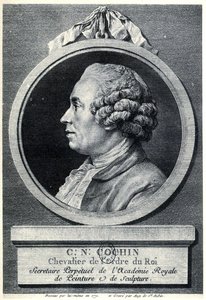
charles nicolas cochin
1715 - 1790 , France
Osnovne informacije
- Artistic Movement Or Style: Rococo, Neoclassical
- Artists Or Movements Influenced By This Artist: ['Neoclassicism']
- Artists Who Influenced This Artist:
- Charles-Nicolas Cochin the Elder
- Louise-Magdeleine Horthemels
- Date Of Birth: February 22, 1715
- Date Of Death: April 29, 1790
- Full Name: Charles-Nicolas Cochin
- Nationality: French
- Notable Artworks:
- La Fontaine's Fables
- Voyage d'Italie
- Portrait engravings
- Place Of Birth: Paris, France
Povezani članci
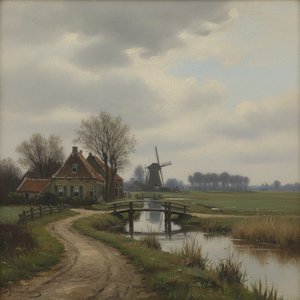
Jacob Henricus Maris: A Master of Dutch Atmospheric Realism & the Intimate Landscape
Explore the captivating world of Jacob Henricus Maris, a leading figure of the Dutch Hague School. Discover his atmospheric landscapes, signature brushstrokes & lasting influence on 19th-century art. Learn more at ArtsDot.

Mary Vaux Walcott: Botanical Precision & Artistic Vision in American Conservation
Discover the exquisite botanical watercolors of Mary Vaux Walcott, celebrated as the 'Audubon of Botany.' Explore her life, art, and lasting impact on American conservation through detailed illustrations & Smithsonian contributions.
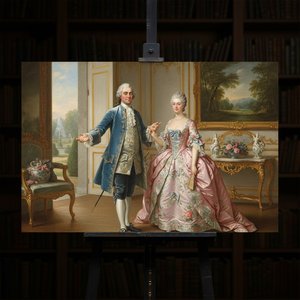
Charles-André van Loo: A Study in Rococo Portraiture & the French Court's Artistic Dynamics
Explore the elegant world of Charles-André van Loo, a master of Rococo portraiture at the French court. Discover his life, techniques, and enduring influence on 18th-century art. Hand-painted reproductions available.
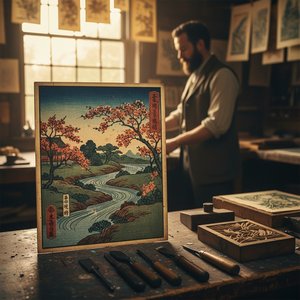
Charles Martin Hardie: A Pioneer of Colour Woodcut & British Printmaking Revival
Discover Charles Martin Hardie (1858-1916), a pivotal Scottish artist renowned for his evocative portraits and pioneering colour woodcut technique. Explore his life, work, and lasting influence on British printmaking.

Charles Fraser: A Life Immersed in Light and Landscape – Exploring the Scottish Colourist's Vision
Discover the captivating world of Charles Fraser (1782-1860), a leading American artist renowned for his serene landscapes and detailed portraits of Southern life. Explore his legacy & find museum-quality reproductions at ArtsDot.

