

 Pregledaj u prostoru
 Pošalji
 Podeli
 Detalji o delu

 Преузми
 Slični predmeti
 Rendgenski snimak
 Slajdovi
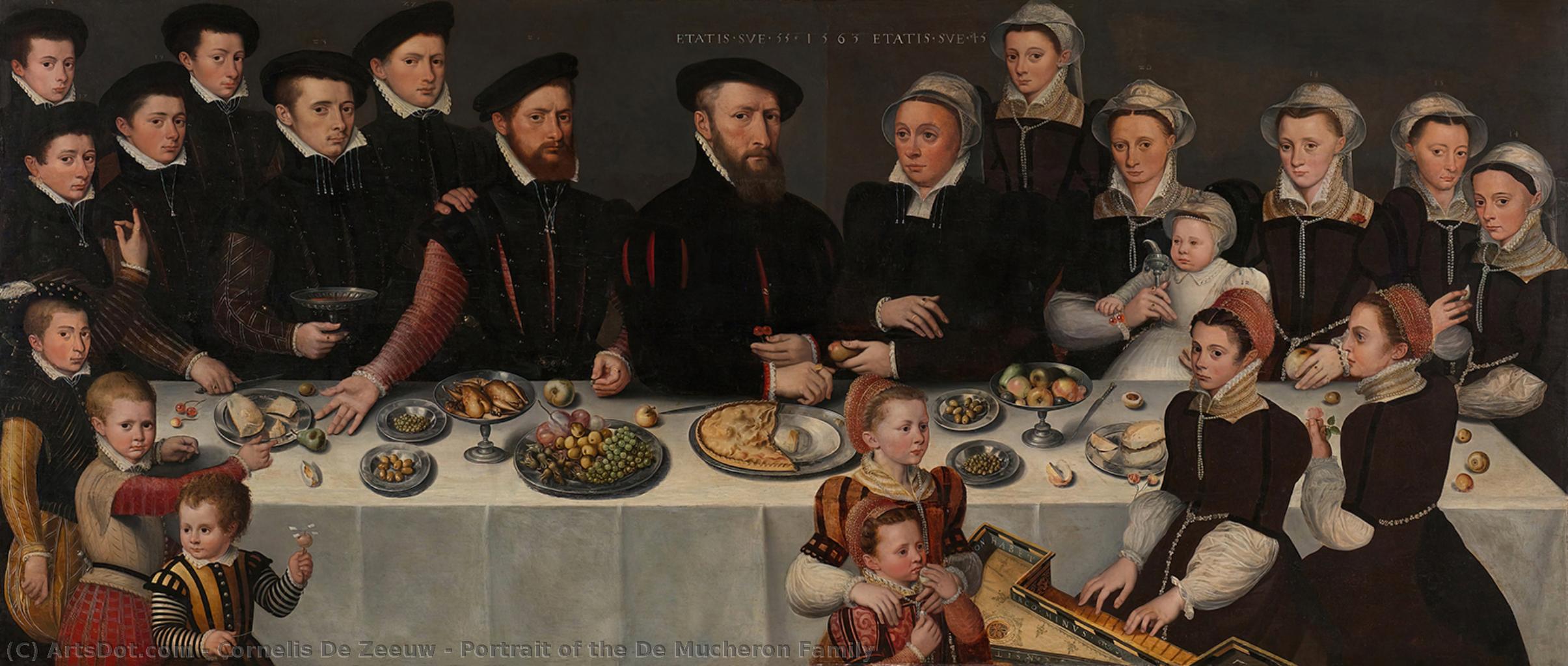
Portrait of the De Mucheron Family
 Oil
Oil- WallArt
- Northern Renaissance
 1563
1563- Early Modern
 108.0 x 247.0 cm
 Rijksmuseum
 Pročitaj više
Giclee štampa / Umetnički otisak
Giclée štampa ili print na platnu muzejskog kvaliteta uz brzu proizvodnju i fleksibilne opcije završne obrade. ( Kupi ručno naslikanu sliku Kupi digitalnu sliku)




P118B $10

P118H $10

P118W $10

P438Z $10

P508JH $12

P508YH $12

P805H $10

P805Z $10

P919BZ $10

P919G $10

P919XJ $10

P959ZH $10

P968JZ $12

W106C $8

W218G $10

W218JH $8

W218Y $10

W307PJ $10

W316G $10

W316PJ $8

W316Y $10

W398PJ $8

W4111J $10

W500HY $15

W500JH $15

W692G $12

W849H $8

W940BG $15

W953PJ $8




Izaberite jednu od naših unapred definisanih veličina koje odgovaraju originalnim proporcijama umetničkog dela.

Možete uneti sopstvene dimenzije kako biste umetničko delo prilagodili specifičnom okviru ili prostoru. Ako odabrani format ne odgovara proporcijama originalne slike, mi ćemo ili iscrtati deo dela ili proširiti sliku pomoću ogledane ivice ili jednobojnog popunjavanja. Digitalni prikaz će vam biti poslat na odobrenje pre početka proizvodnje.
Imajte na umu da pregled na ekranu ne odražava stvarno iscrtavanje ili proširivanje. Samo će prikaz (mockup) precizno pokazati finalnu kompoziciju.
Iako su prilagođene dimenzije dostupne, preporučujemo da odaberete dimenziju sa unapred definisane liste kako biste očuvali originalne proporcije.
Dostava širom sveta () za 2 nedelje umesto uobičajenih 4/5 nedelja. (27 август)

Besplatna ekspresna dostava širom sveta

Visokokvalitetno laneno platno

Kompletno osiguranje transporta

Garancija povraćaja carine i uvoznih dažbina

Garancija vernosti boja

Politika povrata u roku od 60 dana (samo u slučaju nedostataka)

Garancija povrata novca od 100%

Popust pri grupnoj kupovini
 Opcija sa staklom dostupna je samo za dimenzije manje od 110 cm

Portrait of the De Mucheron Family
Giclee štampa / Umetnički otisak
Dimenzije reprodukcije
-


Konačna cena
$ 62
Opis predmeta
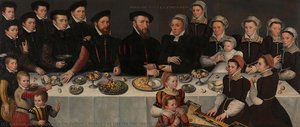
A Grand Gathering: The Intimacy of the De Mucheron Family
In the vast tapestry of the 16th-century Dutch Golden Age, few works capture the profound essence of domestic unity as exquisitely as Cornelis de Zeeuw’s Portrait of the De Mucheron Family. Painted in 1563, this monumental composition serves as much more than a mere record of faces; it is a breathtaking window into a bygone era of communal warmth and social stability. As the eye wanders across the expansive canvas, one is immediately struck by the sheer scale of the gathering. At least thirteen figures—men, women, and children—are woven into a singular, harmonious narrative, arranged around a bountiful dining table that stretches across the width of the frame like an altar to familial devotion.
The scene is set with a meticulous attention to detail that speaks to the artist's mastery of realism. The table itself is a landscape of abundance, laden with various bowls, cups, and spoons that suggest a moment of shared sustenance and celebration. There is a palpable sense of movement within the stillness; some figures are captured in quiet contemplation, while others stand poised as if caught mid-conversation. This careful arrangement creates an atmosphere that is both grand and deeply inviting, making the viewer feel less like a distant observer and more like an uninvited guest at a cherished family feast.
Mastery of Light and the Flemish Tradition
Cornelis de Zeeuw, working during a period of immense cultural transformation in the Netherlands and Flanders, utilized a technique that emphasizes both texture and light to breathe life into his subjects. The artist employs a subtle interplay of shadows and highlights to define the folds of heavy fabrics and the reflective surfaces of the pewter and ceramic vessels on the table. This precision does not merely serve a decorative purpose; it anchors the figures in a tangible, physical reality, lending the portrait an enduring weight and importance.
The stylistic approach reflects the burgeoning artistic developments of the mid-16th century, where the rigid formality of earlier portraiture began to give way to a more nuanced exploration of character and atmosphere. De Zeeuw’s ability to balance the individual identities of the thirteen subjects with the collective energy of the group is nothing short of remarkable. For the discerning collector or interior designer, this piece offers a sophisticated interplay of tones that can anchor a room, providing a focal point that is simultaneously intellectually stimulating and visually soothing.
A Legacy of Connection and Timeless Elegance
Beyond the technical brilliance, the Portrait of the De Mucheron Family carries a profound symbolic weight. In an era marked by significant social and religious shifts, such a painting functioned as a powerful statement of lineage, piety, and the enduring strength of the family unit. The abundance of food serves as a metaphor for prosperity and the blessings of a well-ordered household, while the close proximity of the figures underscores the importance of communal bonds.
For those seeking to infuse their living spaces with a sense of history and soul, a high-quality reproduction of this masterpiece offers an unparalleled opportunity. It brings into a modern interior the quiet dignity of the Dutch Golden Age, acting as a conversation piece that celebrates the timeless human desire for connection. Whether placed in a grand dining hall or a curated study, De Zeeuw’s work radiates a warmth that transcends centuries, reminding us that even in our fast-paced world, the most enduring treasures are those that celebrate togetherness.
Srodna umetnička dela



Biografija umetnika
A Quiet Master of the Dutch Golden Age: Cornelis de Zeeuw
Cornelis de Zeeuw, a name perhaps less immediately recognizable than some of his contemporaries, nevertheless occupies a significant and compelling position within the landscape of 16th-century Dutch painting. While biographical details remain somewhat elusive – a common characteristic for artists working prior to widespread documentation – the power and subtlety of his surviving works speak volumes about his skill and artistic sensibility. De Zeeuw flourished during a period of immense cultural and economic transformation in the Netherlands, a time when portraiture was not merely a representation of likeness but a powerful statement of social standing, piety, and individual identity. He appears to have been active primarily within the region of Flanders, absorbing influences from both the established Flemish tradition and the burgeoning artistic developments taking place further north. His paintings offer a fascinating window into the lives and aspirations of the merchant class and gentry who commissioned them, revealing a keen eye for detail and an understated psychological depth that sets his work apart.The Art of Likeness: Portraiture as Social Commentary
De Zeeuw’s oeuvre is dominated by portraiture, specifically half-length depictions of men and women often set against neutral backgrounds or within the intimate confines of their homes. He wasn't a painter of grand historical narratives or dramatic religious scenes; his focus lay in capturing the *essence* of his sitters – their character, their status, and their place within society. This is achieved not through ostentatious displays of wealth or elaborate symbolism (though these elements are sometimes present), but rather through meticulous attention to facial features, clothing textures, and subtle gestures. The fabrics he renders—velvets, silks, and furs—possess a remarkable tactile quality, suggesting both affluence and refinement. More importantly, De Zeeuw’s portraits convey a sense of quiet dignity and self-assurance, hinting at the inner lives of those portrayed. He was particularly adept at capturing the nuances of expression, imbuing his subjects with a palpable humanity that transcends mere physical representation. His skill in rendering skin tones and light is exceptional, creating a luminosity that draws the viewer into an intimate encounter with the sitter.Influences and Artistic Development
Tracing De Zeeuw’s artistic lineage reveals a complex interplay of influences. He clearly demonstrates a strong understanding of the Flemish portraiture tradition, particularly evident in his careful modeling of forms and his use of rich, saturated colors. The work of Jan van der Palm, another Flemish artist active around the same time, is often cited as a key influence, with stylistic similarities apparent in their compositions and techniques. However, De Zeeuw’s paintings also exhibit elements that foreshadow the developments of the Dutch Golden Age, such as a greater emphasis on realism and psychological insight. He wasn't simply copying existing styles; he was synthesizing them into something uniquely his own. His early works tend to be more formal and conventional, adhering closely to established portrait conventions. As his career progressed, however, he began to experiment with looser brushwork and more dynamic compositions, suggesting a growing confidence in his artistic voice.Major Achievements and Lasting Legacy
While De Zeeuw may not have produced the sheer volume of work associated with some of the most celebrated Dutch Masters, the quality and consistency of his paintings are undeniable. His portraits stand as compelling examples of 16th-century portraiture, offering valuable insights into the social and cultural values of the time. His ability to capture both the outward appearance and inner character of his sitters is a testament to his exceptional skill and artistic sensitivity. He was not merely a craftsman; he was an observer of human nature, capable of conveying complex emotions with remarkable subtlety. Although documentation regarding specific commissions remains scarce, it’s clear that De Zeeuw enjoyed patronage from prominent members of the merchant class and gentry in Flanders. His paintings were likely displayed proudly within their homes, serving as symbols of status, piety, and family identity. Today, his works are increasingly recognized for their artistic merit and historical significance, offering a glimpse into a fascinating period of Dutch art history.Rediscovering De Zeeuw: A Painter for the Modern Eye
The relative obscurity surrounding Cornelis de Zeeuw’s life and work has perhaps contributed to an underappreciation of his artistic achievements. However, recent scholarship and renewed interest in 16th-century Dutch painting are bringing his paintings back into the spotlight.- His portraits offer a refreshing alternative to the more flamboyant styles prevalent during this period.
- The quiet dignity and psychological depth of his work resonate with modern viewers seeking authenticity and emotional connection.
- De Zeeuw’s meticulous attention to detail and masterful technique serve as an inspiration for contemporary artists.
Povezani članci

Zlatno doba Holandske umetnosti: Top 10 remek dela za vaš dom
Otkrijte remek dela Holandskog zlatnog doba! Uronite u svet Rembrandta, Vermeera i drugih majstora. 10 ikoničnih slika koje su definisale umetnost. Inspiracija za vaš dom i kolekciju - ekskluzivne reprodukcije na ArtsDot.com!
Pieter de Hooch: Illuminating Dutch Domestic Life & Golden Age Charm
Explore the captivating world of Pieter de Hooch, a master of Dutch Golden Age painting. Discover his innovative use of light, intimate domestic scenes, and lasting influence on art history. Learn more at ArtsDot.
Willem van de Velde the Elder: Master of Maritime Painting & Chronicler of the Dutch Golden Age
Discover the captivating maritime paintings of Willem van de Velde the Elder, a master chronicler of the Dutch Golden Age. Explore his unparalleled realism and lasting influence on naval art history.

Golden Age Reflections: Dutch Baroque Painting & Cultural Innovation
Explore the Dutch Golden Age of painting! Discover key artists like Vermeer & ter Borch, their innovative techniques, and the rich cultural context behind these Baroque masterpieces. Learn about collecting & appreciating this iconic art period.

Illuminating Innovation: Exploring the Dutch Golden Age of Painting
Explore the Dutch Golden Age of painting with ArtsDot. Discover Rembrandt, Vermeer & other Masters. Learn about key characteristics, iconic artworks, and lasting influence. Expert insights for collectors & enthusiasts.

