

 Pregledaj u prostoru
 Pošalji
 Podeli
 Detalji o delu

 Преузми
 Slični predmeti
 Rendgenski snimak
 Slajdovi
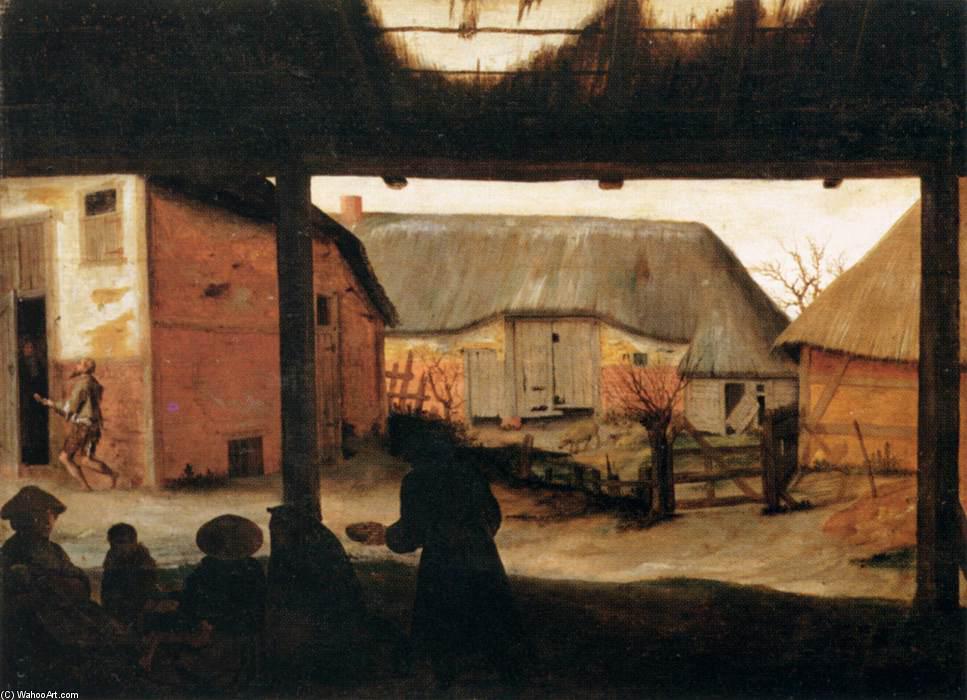
Farmyard with a Beggar
 Oil
Oil- WallArt
- Northern Renaissance
 1560
1560- Renaissance
 38.0 x 52.0 cm
 Louvre
 Pročitaj više
Ručno rađena uljana reprodukcija
Ručno oslikano uljanim bojama na platnu u dimenzijama i okviru po vašem izboru, izrađeno po porudžbini od strane naših umetnika. ( Kupi print Kupi digitalnu sliku)




P118B $10

P118H $10

P118W $10

P438Z $10

P508JH $12

P508YH $12

P805H $10

P805Z $10

P919BZ $10

P919G $10

P919XJ $10

P959ZH $10

P968JZ $12

W106C $8

W218G $10

W218JH $8

W218Y $10

W307PJ $10

W316G $10

W316PJ $8

W316Y $10

W398PJ $8

W4111J $10

W500HY $15

W500JH $15

W692G $12

W849H $8

W940BG $15

W953PJ $8




Izaberite jednu od naših unapred definisanih veličina koje odgovaraju originalnim proporcijama umetničkog dela.

Можете унети сопствене димензије како бисте прилагодили дело одређеном оквиру или простору. Ако одабрана величина не одговара пропорцијама оригинала, слика ће бити исечена или проширена додатним елементима који се ручно насликавају. Дигитални prikaz ће вам бити послат на одобрење пре почетка производње.
Имајте на уму да преглед на екрану не одражава стварно исецање или проширење. Само приказ (mockup) ће тачно приказати коначну композицију.
Иако су доступне прилагођене величине, препоручујемо да одаберете димензију из дефинисане листе како бисте сачували оригиналне пропорције.
Nakon narudžbine, tim ArtsDot.com će klijentu putem e-pošte poslati uputstva i dostaviti prikaz predloženog rešenja
Isporuka širom sveta () za 3/4 nedelje umesto uobičajenih 5 nedelja. (25 август). Bez kompromisa po pitanju kvaliteta.

Besplatna ekspresna dostava širom sveta

Visokokvalitetno laneno platno

Kompletno osiguranje transporta

Garancija povraćaja carine i uvoznih dažbina

Garancija vernosti boja

Politika povrata u roku od 60 dana (samo u slučaju nedostataka)

Garancija povrata novca od 100%

Popust pri grupnoj kupovini
 Opcija sa staklom dostupna je samo za dimenzije manje od 110 cm

Farmyard with a Beggar
Tehnika reprodukcije
Dimenzije reprodukcije
-


Konačna cena
$ 263
Opis umetničkog dela
A Glimpse into 16th Century Flemish Life
To stand before Cornelis van Dalem's Farmyard with a Beggar is to be transported across the centuries, directly into the heart of rural Flanders in the year 1560. This oil masterpiece, currently gracing the halls of the Musée du Louvre, is far more than a mere depiction of farm life; it is a richly textured tableau vivant, capturing the rhythm and quiet dignity of everyday existence. Van Dalem, a pivotal figure in the burgeoning landscape art movement of the Low Countries, possessed an unparalleled gift for rendering the mundane with profound artistry. His style is steeped in naturalism, compelling the viewer to examine every fold of cloth, every weathered stone, and every leaf cast by the sheltering tree.
Mastery of Light, Shadow, and Earth Tones
Technically, the painting is a breathtaking study in tonal harmony. Van Dalem employs a subdued palette dominated by rich earth tones—ochres, deep siennas, and muted greens—that lend the entire scene an immediate sense of rustic warmth. Observe how the artist manipulates light; it does not simply illuminate, but rather sculpts the space. The interplay between deep shadow and dappled sunlight creates an astonishing depth, giving the farmyard a palpable dimensionality that seems ready to breathe. This meticulous attention to texture, from the rough-hewn wood of the buildings to the soft drapery of the figures' garments, speaks volumes about his virtuosity as a painter.
The Humanism and Symbolism of the Scene
At the core of this captivating composition lies its narrative weight. The gathering under the tree suggests community, while the presence of the beggar—the title’s poignant focus—introduces an element of human struggle against the backdrop of agricultural bounty. This juxtaposition is key to understanding the painting's deeper resonance. In the context of 16th-century Humanism, such scenes often served as meditations on the cycle of life, nature's enduring power, and the varied fortunes of humanity. The farmyard itself becomes a potent symbol for sustenance and the continuity of life, grounding the viewer in both the material reality and the spiritual contemplation.
Bringing History Home: Reproduction for the Modern Collector
For those who wish to invite this historical depth into the intimacy of their own home or studio, reproductions of Farmyard with a Beggar offer an unparalleled opportunity. Owning a piece inspired by Van Dalem’s technique allows one to connect directly with the aesthetic sensibilities of the Northern Renaissance. Whether adorning a formal drawing-room or lending rustic elegance to a country setting, these hand-painted oil reproductions capture not just the image, but the very spirit—the quiet contemplation and enduring beauty—that made this original work so timeless.
Srodna umetnička dela

Biografija umetnika
Cornelis van Dalem: Pioneer of Landscape Art and Humanistic Vision
Cornelis van Dalem (1528-1573) stands as a pivotal figure in the burgeoning landscape art movement of the Low Countries during the mid-16th century. Though biographical details remain scarce, his impact on artistic innovation is undeniable—he fundamentally reshaped how artists depicted nature and imbued their canvases with humanist ideals that resonated deeply within the intellectual currents of his time. Born in Antwerp, Belgium, van Dalem descended from a noble lineage tracing back to Tholen, where his father operated as a cloth merchant and held a prominent position within the city’s chamber of rhetoric. This upbringing fostered a rich cultural environment, nurturing both Cornelis and his elder brother Lodewijk with a humanist education that would profoundly influence their artistic pursuits.- Early Training & Guild Membership: Van Dalem began his artistic apprenticeship around 1543 under the tutelage of Jan Adriaensens, establishing himself as a master in the guild of Saint Luke in 1556. Notably, he married Beatrix van Liedekercke that same year, securing a comfortable financial position despite eschewing painting as his primary occupation—he remained a merchant throughout his life.
- A Merchant Painter: Unlike many artists of his era who relied on patronage for sustenance, Cornelis van Dalem possessed considerable wealth and pursued art as a personal passion. This independence allowed him to invest in ambitious projects like the decoration of his Antwerp residence—a breathtaking spectacle featuring a monumental façade adorned with sculptures depicting Minerva and Mercury alongside busts of Durer and Jan van Eyck, proclaiming their artistic prestige.
Innovative Landscape Painting Techniques & Influences
Van Dalem distinguished himself from his contemporaries by introducing groundbreaking approaches to landscape painting. Rejecting the prevailing Mannerist style’s stylized representations, he embraced a more realistic depiction of natural forms—particularly rock formations—drawing inspiration from humanist scholarship and philosophical contemplation. He meticulously observed geological features, capturing their textures and contours with remarkable accuracy. This dedication to observation was further bolstered by his exposure to the artistic ideas circulating in Europe during this period, notably those championed by Albrecht Dürer and Jan van Eyck, whose mastery of detail served as a guiding influence. His work embodies a humanist spirit—a belief in human reason and understanding—that sought to elevate art beyond mere decorative embellishment.- Notable Works: Among his most celebrated compositions are ‘The Dawn of Civilization,’ a monumental panoramic landscape showcasing the grandeur of the natural world, and numerous depictions of dramatic rockscapes—particularly those found in Belgium and France. These paintings exemplify van Dalem’s commitment to capturing the sublime beauty of nature.
- Collaboration & Mentorship: He collaborated closely with Bartholomeus Spranger, a fellow artist who served as his pupil from 1560 to 1564. While Spranger's training focused on artistic craftsmanship—keeping his studio tidy—van Dalem instilled in him a broader appreciation for the intellectual dimensions of art.
Legacy & Historical Significance
Cornelis van Dalem’s contribution to landscape art transcends mere stylistic innovation; he fundamentally altered the artistic agenda. By prioritizing observation and incorporating humanist principles into his depictions of nature, he ushered in a new era of artistic expression—one that prioritized intellectual engagement alongside aesthetic beauty. His work stands as a testament to the transformative power of humanism during the Renaissance and cemented Antwerp’s reputation as a center for artistic experimentation. He remains an artist whose legacy continues to inspire admiration for his pioneering vision and unparalleled skill.
Cornelis van Dalem
1528 - 1573 , Belgium
Osnovne informacije
- Artistic Movement Or Style: Northern Mannerism
- Artists Or Movements Influenced By This Artist: ['Bartholomeus Spranger']
- Artists Who Influenced This Artist: ['Jan Adriaenssens']
- Date Of Birth: Antwerp, Belgium (1528)
- Date Of Death: 1573
- Full Name: Cornelis van Dalem
- Nationality: Flemish
- Notable Artworks:
- The Dawn of Civilization
- Landscape with Shepherd
- Place Of Birth: Antwerp
Povezani članci

Oil on Canvas: A Historical & Technical Exploration of a Timeless Artistic Medium
Explore the rich history & enduring techniques of oil painting on canvas. Discover the science behind its longevity, conservation practices, and contemporary relevance. Expert insights for art enthusiasts.

The Enduring Legacy of Oil on Canvas: Technique, History & Aesthetic Impact
Explore the rich history & techniques of oil painting – from Renaissance masters to Impressionism. Discover pigments, layering methods, and why this timeless medium endures. Expert insights for artists & art enthusiasts.

The Enduring Power of Painting: A Historical & Contemporary Exploration of Form and Emotion
Explore the rich history & enduring techniques of oil painting with ArtsDot. Discover masterpieces, learn about art collecting, and find authentic handmade reproductions crafted by skilled artists.
Glavna dela Severne Renesanse: 10 remek-dela koja su obeležila epohu (i vaš dom)
Otkrijte 10 remek dela Severne Renesanse koja su obeležila epohu! Jan van Eyck, Dürer i Bruegel – istražite priče iza ovih umetničkih majstorstava. Inspiracija za vaš dom i vrhunske reprodukcije na ArtsDot.com!

Sir Alfred Munnings' Masterpieces: 25 Paintings That Define Equine Art | ArtsDot
Explore 25 iconic Sir Alfred Munnings paintings! Discover the beauty of British Impressionism, equine art & rural England. Find museum-quality reproductions and elevate your home decor with ArtsDot. Explore the full collection online.

