

 Pregledaj u prostoru
 Pošalji
 Podeli
 Detalji o delu

 Преузми
 Slični predmeti
 Rendgenski snimak
 Slajdovi
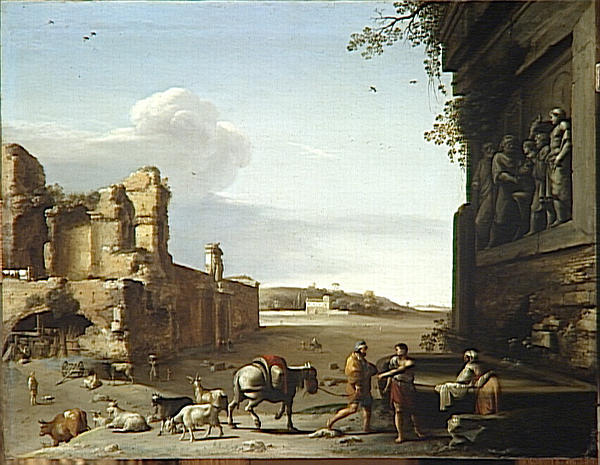
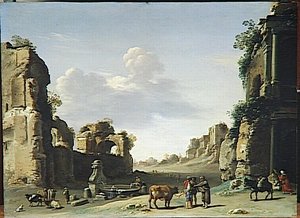
RUINES DE L'ANCIENNE ROME AVEC UN BAS RELIEF ANTIQUE


 Pročitaj više
Ručno rađena uljana reprodukcija
Ručno oslikano uljanim bojama na platnu u dimenzijama i okviru po vašem izboru, izrađeno po porudžbini od strane naših umetnika. ( Kupi print Kupi digitalnu sliku)




P118B $10

P118H $10

P118W $10

P438Z $10

P508JH $12

P508YH $12

P805H $10

P805Z $10

P919BZ $10

P919G $10

P919XJ $10

P959ZH $10

P968JZ $12

W106C $8

W218G $10

W218JH $8

W218Y $10

W307PJ $10

W316G $10

W316PJ $8

W316Y $10

W398PJ $8

W4111J $10

W500HY $15

W500JH $15

W692G $12

W849H $8

W940BG $15

W953PJ $8




Izaberite jednu od naših unapred definisanih veličina koje odgovaraju originalnim proporcijama umetničkog dela.

Можете унети сопствене димензије како бисте прилагодили дело одређеном оквиру или простору. Ако одабрана величина не одговара пропорцијама оригинала, слика ће бити исечена или проширена додатним елементима који се ручно насликавају. Дигитални prikaz ће вам бити послат на одобрење пре почетка производње.
Имајте на уму да преглед на екрану не одражава стварно исецање или проширење. Само приказ (mockup) ће тачно приказати коначну композицију.
Иако су доступне прилагођене величине, препоручујемо да одаберете димензију из дефинисане листе како бисте сачували оригиналне пропорције.
Nakon narudžbine, tim ArtsDot.com će klijentu putem e-pošte poslati uputstva i dostaviti prikaz predloženog rešenja
Isporuka širom sveta () za 3/4 nedelje umesto uobičajenih 5 nedelja. (22 август). Bez kompromisa po pitanju kvaliteta.

Besplatna ekspresna dostava širom sveta

Visokokvalitetno laneno platno

Kompletno osiguranje transporta

Garancija povraćaja carine i uvoznih dažbina

Garancija vernosti boja

Politika povrata u roku od 60 dana (samo u slučaju nedostataka)

Garancija povrata novca od 100%

Popust pri grupnoj kupovini
 Opcija sa staklom dostupna je samo za dimenzije manje od 110 cm

RUINES DE L'ANCIENNE ROME AVEC UN BAS RELIEF ANTIQUE
Tehnika reprodukcije
Dimenzije reprodukcije
-


Konačna cena
$ 363
Opis umetničkog dela
A Ruined Majesty: Cornelis van Poelenburch’s “Ruines de l'Ancienne Rome avec un bas relief antique”
Cornelis van Poelenburch’s “Ruines de l’Ancienne Rome avec un bas relief antique” isn’t merely a landscape painting; it’s a poignant meditation on time, memory, and the enduring allure of vanished grandeur. Completed around 1630, this oil-on-copper masterpiece transports us to the heart of ancient Rome, not as a vibrant metropolis but as a hauntingly beautiful ruin – a testament to both human ambition and inevitable decay. The painting’s power lies in its ability to evoke a profound sense of melancholy and contemplation, inviting viewers to consider their own place within the vast sweep of history.
Van Poelenburch, a pivotal figure in the Utrecht school of landscape painting, was deeply influenced by his time spent in Rome. He absorbed the classical ideals of beauty and proportion while simultaneously embracing the dramatic contrasts of light and shadow championed by Caravaggio. This dual influence is strikingly evident here; the composition echoes the balanced arrangements favored by Renaissance masters, yet the use of tenebrism – a hallmark of Caravaggist style – imbues the scene with an intense emotional charge. The muted palette, dominated by earthy browns, ochres, and subtle blues, creates a sense of atmospheric depth, drawing the eye into the receding landscape.
Composition and Perspective: A Journey Through Time
The painting’s composition is meticulously crafted to guide the viewer's gaze across the scene. The foreground is dominated by imposing Roman ruins – crumbling columns, fragmented walls, and weathered arches – that immediately establish a sense of scale and antiquity. These monumental structures are strategically placed to create a strong diagonal line, leading the eye towards the distant horizon where a hazy, atmospheric perspective suggests an endless expanse of countryside. The artist masterfully employs linear perspective, subtly converging lines to create the illusion of depth and distance, while simultaneously utilizing aerial perspective – softening colors and reducing detail in the background – to further enhance this effect.
Scattered throughout the landscape are figures—a small group of people and animals—adding a layer of narrative complexity. These figures, rendered with a delicate realism characteristic of van Poelenburch’s style, appear almost as if they are caught in a timeless moment, interacting with the ruins as if they were part of their daily lives. The inclusion of these human elements serves to remind us that even amidst the decay of civilization, life continues on.
Symbolism and Emotional Resonance
The ruins themselves are potent symbols – representing not just the physical decline of Rome but also the transience of power, wealth, and glory. They speak to the cyclical nature of history, suggesting that all empires eventually crumble, leaving behind only fragments of their former selves. Yet, within this sense of loss lies a strange beauty; the weathered stones possess an undeniable dignity, as if they are silently bearing witness to centuries of human drama.
The presence of animals – likely sheep and goats – further reinforces the painting’s themes of pastoral simplicity and connection with nature. They represent a return to a more primal existence, contrasting sharply with the artificiality and ambition of the Roman Empire. The overall effect is one of poignant beauty—a bittersweet reminder of the past and an invitation to contemplate our own mortality.
Technique and Materials: A Master’s Touch
Van Poelenburch's skill as a painter is evident in every brushstroke. He employs a traditional oil painting technique, layering thin glazes of paint to build up form and texture with remarkable precision. The surface of the copper panel—a material favored by Dutch artists at the time—adds a subtle sheen that enhances the richness of the colors. Close examination reveals the artist’s meticulous attention to detail – from the rough texture of the stone to the delicate folds of the clothing worn by the figures. The use of impasto, particularly in rendering the relief sculpture, adds a tactile quality to the painting, inviting viewers to reach out and touch its weathered surface.
This artwork is a remarkable example of Dutch Golden Age landscape painting, seamlessly blending classical influences with a distinctly personal vision. “Ruines de l’Ancienne Rome avec un bas relief antique” remains a captivating work of art, offering a timeless meditation on the beauty and fragility of human existence.
Srodna umetnička dela
Biografija umetnika
Rano detinjstvo i temelj formação
Cornelis van Poelenburgh, istaknuti holandski pejzažni slikar, rođen je u Utrehtu, u Holandiji, 1594. godine. Njegov umetnički put započeo je pod mentorstvom Abrahama Bloemaerta, čuvenog umetnika tog vremena, čija je stručna poduka postavila neophodne temelje za Van Poelenburghov budući uspeh i umetničku zrelost.Umetnička karijera i uticaji
Putovanja u Rim početkom 17. veka ostavila su dubok trag na njegov stvaralački duh, čineći ga vodećim predstavnikom prve generacije holandskih pejzažnih slikara aktivnih u Italiji. Njegova dela, često intimnog formata, prožeta su italijanskim pejzažima u kojima male figure oživljavaju biblijske ili mitološke scene, što je predstavljalo autentičan prikaz njegovog jedinstvenog stila. Istaknuta dela:- Satiri koji špijuniraju nimfe (nakon 1627. godine), karakterističan primer Van Poelenburghovog umeća, koji prikazuje arhaične pejzaže sa figurama u kupanju. (pogledajte na ArtsDot)
- Savet bogova (oko 1630. godine), slika koja prikazuje idealizovani brežuljkasti pejzaž i boginje inspirisane rimskim svetom, čije se nalazi u Muritshusu (Hag, Holandija). (pogledajte na ArtsDot)
Nasleđe i završne godine
Van Poelenburghovo delo uživalo je veliko priznanje među njegovim savremenicima, uključujući velikog vojvodu Toskanije i holandskog stadholera. Na kraju svog života, vratio se u Utreht, gde je preminuo 1667. godine, svega nekoliko godina nakon svog starog učitelja Abrahama Bloemaerta. Ključne tačke:- rođen u Utrehtu, Holandija, 1594. godine
- školovan kod Abrahama Bloemaerta
- pod snažnim uticajem boravka u Rimu
- poznat po malim italijanskim pejzažima sa figurama
- preminuo u Utrehtu 1667. godine pogledajte umetnička dela Cornelisa van Poelenburgha na ArtsDot saznajte više o Cornelisu van Poelenburghu na Wikipediji
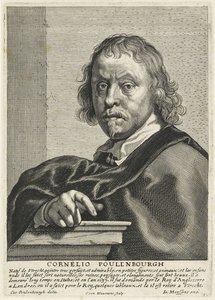
Kornelis Van Poelenbuh
1594 - 1667 , Holandija
Osnovne informacije
- Artistic Movement Or Style: Holandski pejzaž, Romanat
- Artists Or Movements Influenced By This Artist: ['Klod Loran']
- Artists Who Influenced This Artist: ['Abraham Bloemaert']
- Date Of Birth: 1594, Utreht, Holandija
- Date Of Death: 1667, Utreht, Holandija
- Full Name: Cornelis van Poelenburgh
- Nationality: Holandski
- Notable Artworks:
- Satiri špijuniraju nymphs
- Savet bogova
- Place Of Birth: Utreht, Holandija
Povezani članci
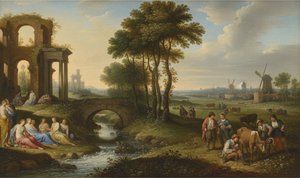
Cornelis van Poelenburch: Bridging Mannerism & the Dutch Baroque Landscape
Discover Cornelis van Poelenburch, a pivotal Dutch Baroque landscape painter bridging Mannerism & Italianate styles. Explore his life, key works, and lasting influence on 17th-century art with ArtsDot.
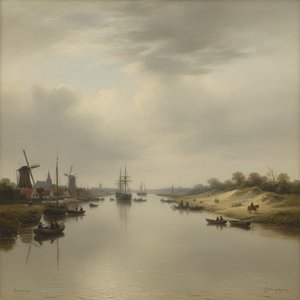
Jan van Goyen: Master of Dutch Landscape & Atmospheric Perspective
Discover Jan van Goyen, the master of Dutch landscape painting. Explore his subtle technique, atmospheric realism & lasting influence on art history. Learn about this 17th-century pioneer at ArtsDot.

Rembrandt van Rijn: 25 Majstorstava Svetla i Senke za Vaš Dom | ArtsDot
Uronite u svet Rembrandta van Rijna! Otkrijte 25 najlepših dela holandskog majstora – portrete, istorijske scene i biblijska platna. Kvalitetne reprodukcije slika za dekoraciju enterijera dostupne na ArtsDot.com.
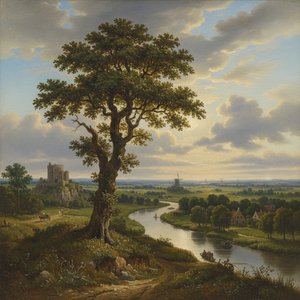
Jacob van Ruisdael: Master of Dutch Landscape & the Evocation of National Identity
Explore the life & work of Jacob van Ruisdael, the preeminent Dutch landscape painter. Discover his technical brilliance, symbolic depth, and lasting influence on art history. Learn about collecting Ruisdael's masterpieces.
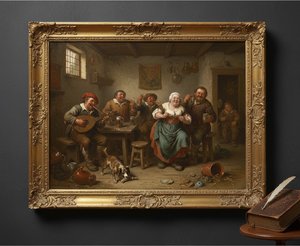
Adriaen van Ostade: A Master of Dutch Genre Painting & Social Commentary
Explore the life & work of Adriaen van Ostade, a leading Dutch Golden Age painter. Discover his realistic genre scenes, social commentary, and lasting influence on art history. Learn more at ArtsDot.

