


 Pregledaj u prostoru
 Pošalji
 Podeli
 Detalji o delu

 Преузми
 Slični predmeti
 Rendgenski snimak
 Slajdovi
Christ and St Therese in a Garland of Flowers
 Acrylic On Canvas
- WallArt
- Baroque Flower Painting
 130.0 x 105.0 cm
 Museo del Prado
 Pročitaj više
Ručno rađena uljana reprodukcija
Ručno oslikano uljanim bojama na platnu u dimenzijama i okviru po vašem izboru, izrađeno po porudžbini od strane naših umetnika. ( Kupi print Kupi digitalnu sliku)




P118B $10

P118H $10

P118W $10

P438Z $10

P508JH $12

P508YH $12

P805H $10

P805Z $10

P919BZ $10

P919G $10

P919XJ $10

P959ZH $10

P968JZ $12

W106C $8

W218G $10

W218JH $8

W218Y $10

W307PJ $10

W316G $10

W316PJ $8

W316Y $10

W398PJ $8

W4111J $10

W500HY $15

W500JH $15

W692G $12

W849H $8

W940BG $15

W953PJ $8




Izaberite jednu od naših unapred definisanih veličina koje odgovaraju originalnim proporcijama umetničkog dela.

Можете унети сопствене димензије како бисте прилагодили дело одређеном оквиру или простору. Ако одабрана величина не одговара пропорцијама оригинала, слика ће бити исечена или проширена додатним елементима који се ручно насликавају. Дигитални prikaz ће вам бити послат на одобрење пре почетка производње.
Имајте на уму да преглед на екрану не одражава стварно исецање или проширење. Само приказ (mockup) ће тачно приказати коначну композицију.
Иако су доступне прилагођене величине, препоручујемо да одаберете димензију из дефинисане листе како бисте сачували оригиналне пропорције.
Nakon narudžbine, tim ArtsDot.com će klijentu putem e-pošte poslati uputstva i dostaviti prikaz predloženog rešenja
Isporuka širom sveta () za 3/4 nedelje umesto uobičajenih 5 nedelja. (28 август). Bez kompromisa po pitanju kvaliteta.

Besplatna ekspresna dostava širom sveta

Visokokvalitetno laneno platno

Kompletno osiguranje transporta

Garancija povraćaja carine i uvoznih dažbina

Garancija vernosti boja

Politika povrata u roku od 60 dana (samo u slučaju nedostataka)

Garancija povrata novca od 100%

Popust pri grupnoj kupovini
 Opcija sa staklom dostupna je samo za dimenzije manje od 110 cm

Christ and St Therese in a Garland of Flowers
Tehnika reprodukcije
Dimenzije reprodukcije
-


Konačna cena
$ 263
A Symphony of Faith and Flora: Daniel Seghers’s “Christ and St Therese in a Garland of Flowers”
Daniel Seghers's "Christ and St Therese in a Garland of Flowers" is more than simply a beautiful depiction of two revered figures; it’s a meticulously crafted meditation on faith, beauty, and the interconnectedness of the earthly and divine. Painted around 1635, this exquisite work exemplifies the height of Flemish flower painting during the Counter-Reformation, showcasing Seghers's mastery of technique and his profound understanding of symbolism. The piece, now housed in the Museo Nacional del Prado in Madrid, invites viewers into a world brimming with vibrant color, intricate detail, and an undeniable sense of serenity. Measuring 130 x 105 cm, it’s a scale that allows for intimate contemplation of its rich textures and layered meanings.The Artist and His Time: Seghers's Place in the Flemish Renaissance
Born in Antwerp in 1590, Daniël Seghers was deeply embedded within the artistic and religious currents of his era. His early life, marked by upheaval following his father’s death and his mother’s conversion to Calvinism, shaped a trajectory that ultimately led him back to the Catholic fold and a career as a Jesuit brother. His apprenticeship under Jan Brueghel the Elder at the Guild of Saint Luke provided an invaluable foundation in composition and technique – particularly the burgeoning genre of flower painting. Seghers's work is inextricably linked to the Counter-Reformation, a period when art was increasingly used to reinforce religious doctrine and inspire piety. The lavish floral arrangements he created weren’t merely decorative; they were carefully chosen to evoke beauty, abundance, and the promise of eternal life – potent symbols for a faith seeking to reassert itself in a world grappling with change. His connection to the Jesuits further cemented his role as an artist serving a specific religious mission, utilizing visual splendor to communicate spiritual truths.A Garland of Symbolism: Flowers, Faith, and Divine Grace
The painting’s central element – the profusion of flowers – is laden with symbolic weight. Seghers wasn't simply depicting a collection of blossoms; he was employing them as visual metaphors for faith, grace, and the cycles of life and death. The vibrant reds, yellows, and pinks aren’t haphazardly chosen; they represent specific virtues and theological concepts. Roses, often associated with Mary and divine love, are prominently featured alongside lilies, symbolizing purity and the soul's ascent to heaven. The inclusion of a bird, perched delicately in the upper left corner, adds another layer of meaning – representing the Holy Spirit, a vital element of the Trinity. The careful arrangement of these flowers within a garland structure itself is significant, mirroring the interwoven nature of faith, hope, and charity. Furthermore, Seghers’s choice to depict flowers at their peak bloom speaks to the transient beauty of earthly existence and the promise of eternal life offered through religious devotion.Technique and Style: The Brilliance of Flemish Flower Painting
Seghers's skill as a painter is immediately apparent in the meticulous detail and luminous quality of his work. Executed on copper, a material prized for its durability and ability to hold fine details, the painting showcases his mastery of oil paint. The flowers are rendered with astonishing realism – each petal delicately defined, each leaf meticulously observed. However, Seghers doesn’t simply aim for photographic accuracy; he employs a subtle sfumato technique, creating soft transitions between colors and forms that lend the scene an ethereal quality. The dark background further enhances the brilliance of the floral arrangements, drawing the viewer's eye to their vibrant beauty. His work is deeply influenced by Jan Brueghel the Elder, particularly in his use of light and shadow, but Seghers develops a distinct style characterized by a heightened sense of naturalism and an almost sculptural quality to the flowers themselves.A Timeless Masterpiece: Reproduction and Appreciation
ArtsDot offers meticulously hand-painted reproductions of “Christ and St Therese in a Garland of Flowers,” capturing the essence of Seghers’s original masterpiece with unparalleled fidelity. Our skilled artisans recreate every nuance of color, texture, and detail, ensuring that your reproduction is not merely a copy but a faithful interpretation of this extraordinary work. Whether displayed in a private residence or a corporate setting, this stunning artwork will serve as a constant reminder of the beauty, faith, and enduring power of art. Consider commissioning a ArtsDot reproduction to bring the serenity and symbolic richness of Seghers’s garland into your space – a testament to both artistic genius and spiritual devotion.Srodna umetnička dela
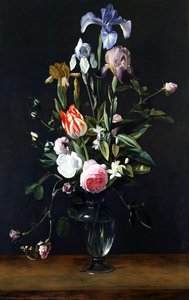
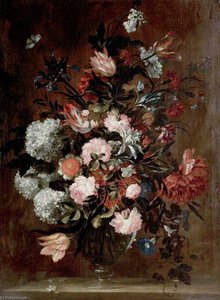
Biografija umetnika
A Life in Flowers and Faith
Daniël Seghers, a name synonymous with the exquisite beauty of 17th-century Flemish flower painting, was more than just an artist; he was a man deeply entwined with the religious currents and artistic fervor of his time. Born in Antwerp in 1590, a city then pulsating with Renaissance energy, Seghers’s life unfolded against a backdrop of shifting allegiances and profound spiritual awakening. His early years were marked by upheaval – the death of his father, Pieter, and his mother's subsequent conversion to Calvinism prompted a relocation to the Dutch Republic around 1601, likely settling in Utrecht. This period, though shrouded in some mystery regarding his initial artistic training, undoubtedly laid the groundwork for his future mastery. By 1611, however, Antwerp beckoned once more, and Seghers formally entered the studio of Jan Brueghel the Elder within the prestigious Guild of Saint Luke. This apprenticeship proved pivotal, immersing him in the established conventions of Flemish painting and shaping his nascent style.Conversion, Collaboration, and Artistic Flourishing
A defining moment arrived in 1614 with Seghers’s re-conversion to Catholicism, a decision that irrevocably altered the course of his life and art. He embraced the Jesuit order in Mechelen, dedicating himself to a path of faith and service. While debate lingers regarding whether he was formally ordained as a priest, his commitment to the religious life profoundly influenced his artistic trajectory. His work became imbued with a spiritual depth, reflecting the Counter-Reformation’s emphasis on piety and emotional resonance. His talent quickly gained recognition, leading to commissions such as the two flower garland paintings created for the Cathedral of St. Michael and St. Gudula in Brussels in 1621. A sojourn to Rome between 1625 and 1627 proved invaluable. There, he collaborated with some of the era’s most celebrated painters, notably assisting Nicolas Poussin on religious paintings and contributing a flower garland for Cardinal Ludovisi's commission alongside Domenichino. This exposure to Roman artistic circles broadened his horizons and refined his technique before his return to Antwerp in 1627, where he continued painting prolifically until his death.The Art of the Garland: Innovation and Style
Seghers didn’t merely replicate the flower garland tradition established by Jan Brueghel the Elder; he elevated it to new heights of artistry and symbolism. While initially influenced by his master's style, Seghers gradually moved towards a more naturalistic depiction of flowers, evolving from uniform garlands to arrangements composed of diverse groupings. His later works are characterized by vibrant colors, a sculptural quality, and a dramatic interplay of light and shadow, with blossoms illuminated against dark backgrounds. He possessed a keen eye for detail, favoring locally-grown roses and tulips often depicted just before full bloom, capturing their ephemeral beauty. A distinctive innovation was his incorporation of stone cartouches as framing elements within his compositions, adding architectural depth and visual interest. Furthermore, Seghers created unique “pietà” garlands featuring thistles, thorns, and other thorny plants – poignant symbols of Christ’s suffering and a testament to his devout faith. He frequently employed oil on copper, a popular support for cabinet paintings prized for its smooth surface and ability to showcase intricate detail.Patronage, Legacy, and Enduring Appeal
The exquisite quality of Seghers's work attracted the attention of Europe’s most discerning patrons. Cardinal-Infante Ferdinand of Austria, Archduke Leopold Wilhelm of Austria, Queen Christina of Sweden, and King Charles II of England all sought his paintings for their collections. This aristocratic patronage not only secured his financial stability but also cemented his reputation as a leading artist of his time. Seghers was also a generous mentor, sharing his knowledge with several notable artists including Jan Philip van Thielen, Ottmar Elliger, Ignace Raeth, and Andries Bosman, ensuring the continuation of his artistic legacy. His contribution to the flower garland genre is undeniable; he transformed it from mere decoration into a vehicle for profound symbolic meaning and technical mastery. His meticulous attention to detail, vibrant color palettes, and innovative compositions secured his place as a pivotal figure in 17th-century Flemish art. Today, Daniel Seghers’s floral still lifes continue to captivate audiences with their timeless beauty and enduring spiritual resonance, offering a glimpse into a world where faith, artistry, and the fleeting splendor of nature converge.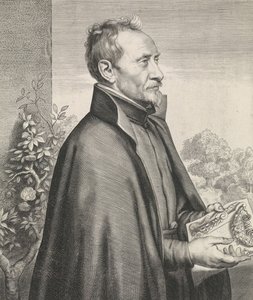
Daniel Seghers
1590 - 1661 , Belgium
Osnovne informacije
- Artistic Movement Or Style: Baroque, Still life
- Artists Or Movements Influenced By This Artist:
- Jan Philip van Thielen
- Ottmar Elliger
- Artists Who Influenced This Artist: ['Jan Brueghel the Elder']
- Date Of Birth: 1590
- Date Of Death: 1661
- Full Name: Daniel Seghers
- Nationality: Flemish
- Notable Artworks:
- Wreath of Pink Roses
- Flowers in a Glass Vase
- Garland of Flowers
- Place Of Birth: Antwerp, Belgium
Povezani članci
El Greco: 25 Remek-dela koji definišu Viziju i Duh (Reprodukcije za vaš Dom)
Istražite 25 remek-dela El Greka! Otkrijte priče iza njegovih ikoničnih slika, baroknog stila i duboke spiritualnosti. Reprodukcije vrhunskog kvaliteta za vaš dom na ArtsDot.com.

The Visceral Stage: Exploring Dramatic Narratives & Emotional Intensity in Baroque Art
Explore the dramatic world of Baroque art! Discover iconic masters like Caravaggio & Rembrandt, their techniques, and the movement's lasting impact. Expert insights for collectors & enthusiasts at ArtsDot.

The Dramatic Flourish: Exploring the Baroque Movement's Enduring Legacy in Art History
Explore the dramatic world of Baroque art! Discover iconic artists like Caravaggio & Rubens, defining techniques, and its lasting impact on art history. Expert insights for collectors & enthusiasts at ArtsDot.

Барокна драма: Уношење величине и емоција у савремене ентеријере
Откријте барокну драму и унесите величину у ваш ентеријер! ArtsDot нуди ручно насликане репродукције, персонализоване портрете и стручне консултације за љубитеље класичне уметности. Потражите савршено дело већ данас!

Barok Majstor dela: Top 10 Umjetničkih Remeka za Vaš Dom
Otkrijte 10 remek dela koja su definisala baroknu umetnost! Karavagio, Bernini i više – istražite priče iza ovih ikoničnih slika. Inspiracija za vaš dom? Pogledajte kolekciju na ArtsDot.com!

