 Pregledaj u prostoru
 Pošalji
 Podeli
 Detalji o delu

 Преузми
 Slični predmeti
 Rendgenski snimak
 Slajdovi
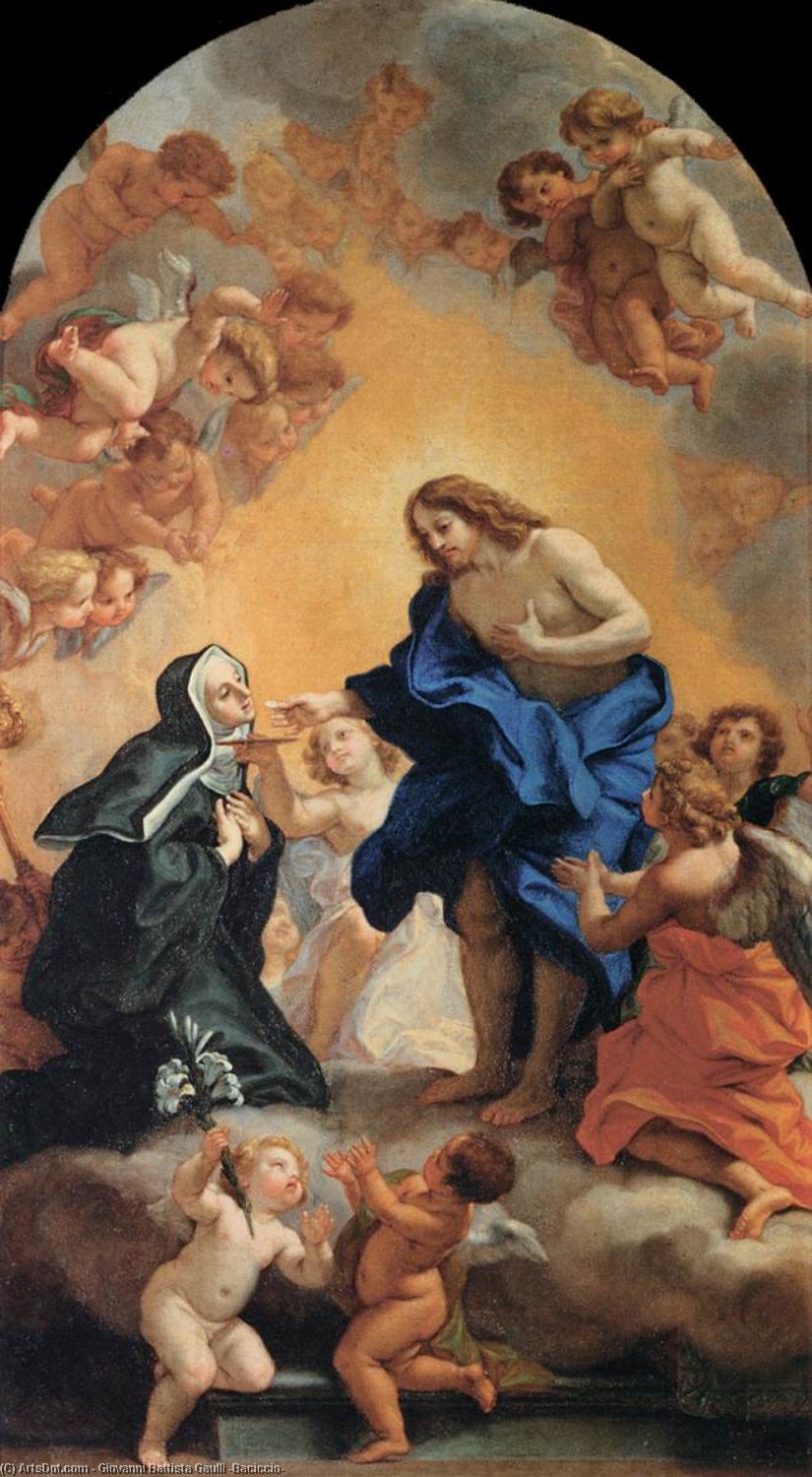
A Blessed Abbes Receiving the Host from the Hands of Christ
 Acrylic On Canvas
- WallArt
- Baroque Illusionism
 1690
1690 75.0 x 43.0 cm
 Louvre
 Pročitaj više
Giclee štampa / Umetnički otisak
Giclée štampa ili print na platnu muzejskog kvaliteta uz brzu proizvodnju i fleksibilne opcije završne obrade. ( Kupi ručno naslikanu sliku Kupi digitalnu sliku)




P118B $10

P118H $10

P118W $10

P438Z $10

P508JH $12

P508YH $12

P805H $10

P805Z $10

P919BZ $10

P919G $10

P919XJ $10

P959ZH $10

P968JZ $12

W106C $8

W218G $10

W218JH $8

W218Y $10

W307PJ $10

W316G $10

W316PJ $8

W316Y $10

W398PJ $8

W4111J $10

W500HY $15

W500JH $15

W692G $12

W849H $8

W940BG $15

W953PJ $8




Izaberite jednu od naših unapred definisanih veličina koje odgovaraju originalnim proporcijama umetničkog dela.

Možete uneti sopstvene dimenzije kako biste umetničko delo prilagodili specifičnom okviru ili prostoru. Ako odabrani format ne odgovara proporcijama originalne slike, mi ćemo ili iscrtati deo dela ili proširiti sliku pomoću ogledane ivice ili jednobojnog popunjavanja. Digitalni prikaz će vam biti poslat na odobrenje pre početka proizvodnje.
Imajte na umu da pregled na ekranu ne odražava stvarno iscrtavanje ili proširivanje. Samo će prikaz (mockup) precizno pokazati finalnu kompoziciju.
Iako su prilagođene dimenzije dostupne, preporučujemo da odaberete dimenziju sa unapred definisane liste kako biste očuvali originalne proporcije.
Dostava širom sveta () za 2 nedelje umesto uobičajenih 4/5 nedelja. (28 август)

Besplatna ekspresna dostava širom sveta

Visokokvalitetno laneno platno

Kompletno osiguranje transporta

Garancija povraćaja carine i uvoznih dažbina

Garancija vernosti boja

Politika povrata u roku od 60 dana (samo u slučaju nedostataka)

Garancija povrata novca od 100%

Popust pri grupnoj kupovini
 Opcija sa staklom dostupna je samo za dimenzije manje od 110 cm

A Blessed Abbes Receiving the Host from the Hands of Christ
Giclee štampa / Umetnički otisak
Dimenzije reprodukcije
-


Konačna cena
$ 62
A Window Into Baroque Spirituality: Giovanni Battista Gaulli’s “Christ Giving the Host to a Holy Abbess”
Giovanni Battista Gaulli (Detto Baciccio), born in Genoa around 1639, stands as a testament to the transformative power of artistic mentorship. His formative years coincided with the zenith of Baroque grandeur, fostered by the influence of Gian Lorenzo Bernini’s atelier – an environment where theatrical illusionism and sculptural magnificence reigned supreme. This profound connection to Bernini's vision would indelibly shape Gaulli’s distinctive style, characterized by a masterful orchestration of color and light designed to elicit awe and reverence. While biographical details remain somewhat sparse, his unwavering commitment to honing his craft swiftly cemented his position amongst Rome’s elite artistic figures.The Illusionistic Technique: Mastering Light and Color
Gaulli's approach to painting wasn’t merely decorative; it was fundamentally rooted in Bernini’s groundbreaking technique of illusionism – a method that sought to transcend the boundaries of pigment and canvas, creating an immersive experience for the viewer. He achieved this remarkable feat through meticulous layering of translucent glazes, painstakingly applied to build up luminous surfaces that seemed to radiate from within. This painstaking process allowed him to capture the ethereal glow of angelic light and imbue the scene with a palpable sense of divine presence. The artist’s palette was carefully considered, favoring rich hues – predominantly reds and golds – symbolizing piety and majesty—colors deliberately chosen to elevate the spiritual significance of the artwork.A Symbolism Steeped in Faith: Representing Divine Grace
The composition itself is laden with symbolic resonance, reflecting the core tenets of Catholic faith during the Baroque period. At its heart lies Jesus Christ, depicted holding aloft the Eucharist – the consecrated bread and wine symbolizing divine grace—a gesture conveying unwavering devotion and humility. Surrounding him are angels, embodying purity and celestial splendor, their outstretched hands mirroring Christ’s offering. The inclusion of a holy abbess represents the Church's steadfast guardianship of sacred traditions and underscores the importance of spiritual leadership. Furthermore, the infant Jesus symbolizes divine incarnation and embodies hope for salvation—elements meticulously arranged to communicate a profound theological message.Historical Context: Rome Under Papal Patronage
Painted circa 1690, “Christ Giving the Host to a Holy Abbess” emerged during a period of fervent papal patronage – an era marked by ambitious architectural projects and artistic endeavors aimed at glorifying God and reaffirming papal authority. The Baroque style flourished under Pope Innocent XII, who recognized Gaulli’s talent and commissioned him for numerous significant commissions throughout Rome. This royal endorsement ensured that artists like Gaulli could pursue their creative ambitions without constraint—a circumstance that fostered unparalleled innovation and stylistic experimentation. The artwork stands as a tangible manifestation of the era's spiritual fervor and reflects the broader cultural landscape of papal Rome.Emotional Impact: Inspiring Reverence and Contemplation
Ultimately, Gaulli’s masterpiece transcends mere visual representation; it aspires to evoke profound emotional responses in its audience—inspiring reverence and fostering contemplation. The luminous colors and masterful illusionistic technique transport viewers into a realm of divine beauty, prompting introspection and reaffirming faith's enduring power. As one gazes upon the scene, the viewer is invited to contemplate the sacrificial love of Christ and the unwavering devotion embodied by the abbess—elements designed to resonate deeply within the human spirit. “Christ Giving the Host to a Holy Abbess” remains an enduring testament to Baroque artistry’s capacity to elevate the soul and illuminate the path toward spiritual enlightenment.Srodna umetnička dela


Biografija umetnika
The Architect of Illusion: The Life and Legacy of Giovanni Battista Gaulli
In the grand, theatrical theater of the Roman Baroque, few names command as much awe as Giovanni Battista Gaulli. Known affectionately to his contemporaries and history as Baciccio—a Genoese diminutive meaning “the little painter”—Gaulli did not merely paint surfaces; he dissolved them. Born in Genoa on May 8, 1639, his early life was shaped by the vibrant artistic currents of Northern Italy, yet it was his migration to Rome in 1657 that would forever alter the trajectory of Western art. This move placed him at the very heart of the Counter-Reformation's visual propaganda, where the goal of art was to overwhelm the senses and transport the soul toward the divine.
The foundation of Gaulli’s genius was laid within the orbit of the legendary Gian Lorenzo Bernini. Immersing himself in Bernini’s atelier, Gaulli absorbed the principles of sculptural grandeur and theatrical illusionism that defined the High Baroque. He learned to view a canvas not as a flat plane, but as a window into an infinite, celestial space. This profound influence is evident in his mastery of chiaroscuro, where the dramatic interplay between deep shadow and piercing light serves to sculpt figures with a weight and presence that rivals marble. By blending the painterly richness of masters like Rubens and Van Dyck with the structural drama of Bernini, Gaulli developed a style that prioritized emotional resonance and spiritual ecstasy over mere anatomical precision.
A Master of Celestial Spectacle
Gaulli’s most enduring achievements are found in his monumental frescoes, works that transformed the ceilings of Rome into portals to the heavens. His ability to execute quadratura—the technique of painting architectural perspectives that appear to extend the real space of a building—reached its zenith in the great churches of the city. Perhaps most breathtaking is his work in the Il Gesù church, specifically the Adoration of the Name of Jesus. In this masterpiece, Gaulli achieved a dizzying sense of movement; clouds seem to spill over the edges of the frame, and saints and angels appear to tumble through the very air of the nave, bathed in a holy, radiant light that blurs the line between the earthly and the eternal.
Beyond these vast ceiling compositions, Gaulli’s talent extended to more intimate, yet equally powerful, devotional works. His St John the Baptist, created around 1676, demonstrates his ability to capture intense human emotion through a realistic lens, utilizing vibrant colors and dynamic poses to engage the viewer's empathy. Whether working on a massive scale for papal commissions or crafting poignant altarpieces, his hand was always recognizable by its energy, its luminous palette, and an almost restless sense of motion.
Historical Significance and Artistic Triumph
The career of Baciccio represents the pinnacle of the High Baroque era, acting as a bridge between the heavy, muscular drama of the mid-17th century and the lighter, more decorative flourishes of the early Rococo. His ability to manipulate light and space left an indelible mark on the Roman school of painting, influencing generations of artists who sought to capture the sublime. As he moved through the late 17th century, his works became increasingly complex, pushing the boundaries of what could be achieved with pigment and plaster.
When Gaulli passed away in Rome on April 2, 1709, he left behind a legacy that continues to haunt the corridors of Italy's most sacred basilicas. To study his work is to witness the triumph of illusion; he remains an artist who understood that the true purpose of art was not just to show the world as it is, but to reveal the magnificent, unseen glory of the divine.

detto baciccio giovanni battista gaulli
1639 - 1709
Osnovne informacije
- Artistic Movement Or Style: High Baroque
- Artists Or Movements Influenced By This Artist: Baroque art
- Artists Who Influenced This Artist: Gian Lorenzo Bernini
- Date Of Birth: May 8, 1639
- Date Of Death: 1709
- Full Name: Giovanni Battista Gaulli (detto baciccio)
- Nationality: Italian
- Notable Artworks:
- St. Agnes is received into heaven
- The continence of Scipio
- Cupola decoration
- Place Of Birth: Genoa, Italy