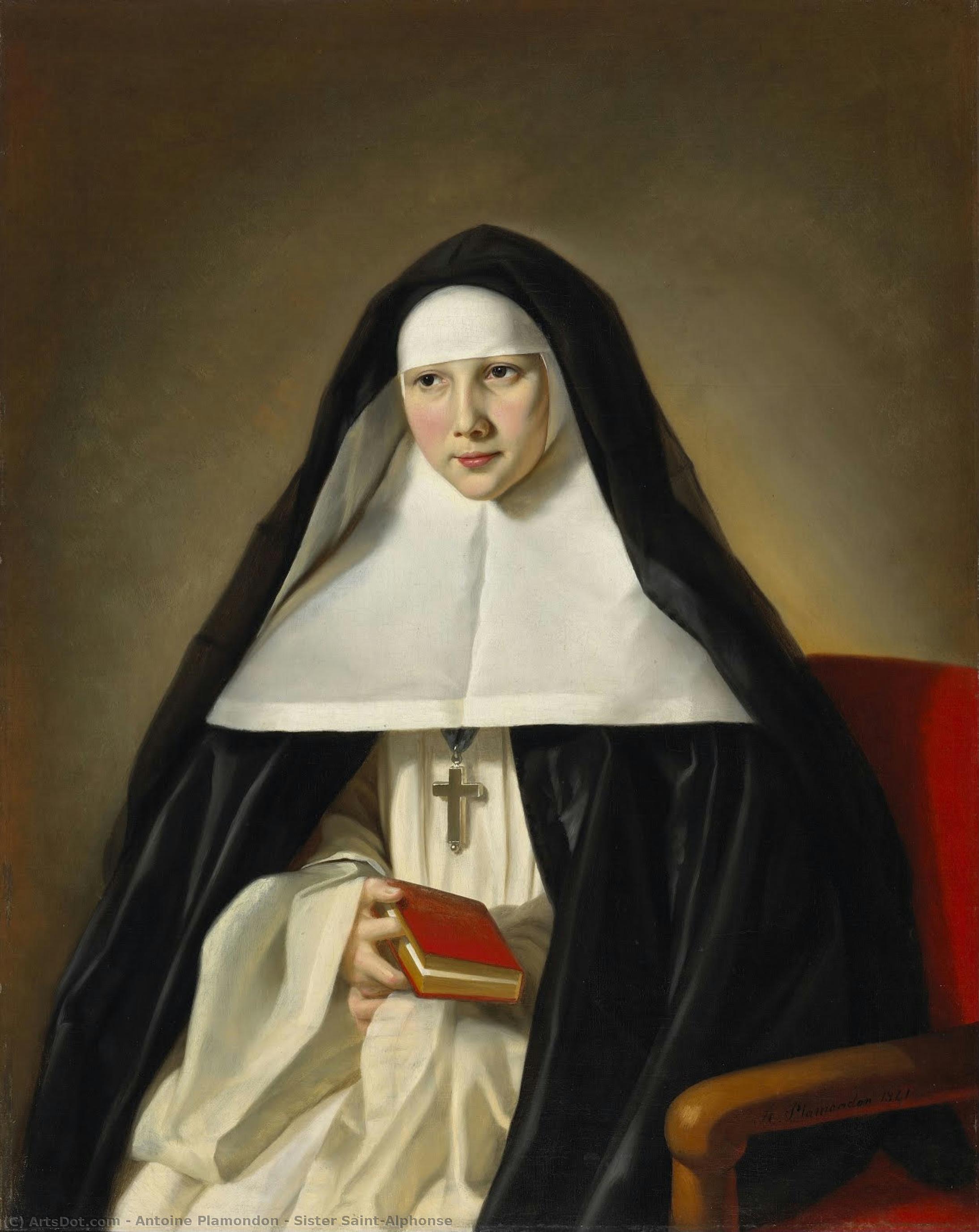
Antoine Plamondon’s serene portrait captures Sister Saint-Alphonse in contemplative repose, embodying Quebec’s rich artistic heritage during the Romantic era. Her solemn gaze and richly adorned habit invite viewers to appreciate this masterful depiction of faith and devotion.
A Portrait of Faith: Antoine Plamondon’s Sister Saint-Alphonse
Antoine Plamondon's “Sister Saint-Alphonse,” completed in 1841, stands as a testament to Quebec’s burgeoning artistic landscape during the Victorian era and embodies the spiritual fervor of its time. This striking portrait captures the solemn gaze of a nun—Saint Alphonse—a figure revered for her piety and devotion—a subject frequently explored by artists seeking to convey moral virtue.
- Subject Matter: The painting focuses on Saint Alphonse, a Dominican nun known for her unwavering faith and charitable works. Her presence is deliberately rendered with dignity and seriousness, reflecting the values upheld within the Catholic Church during Plamondon’s era.
- Style & Technique: Plamondon adheres to Neoclassical principles, prioritizing clarity of form and idealized representation. The composition employs a pyramidal structure, directing the viewer's eye upwards towards Saint Alphonse’s face—a hallmark of artistic conventions aimed at conveying nobility and spiritual contemplation. He skillfully utilizes chiaroscuro – dramatic contrasts between light and shadow – to sculpt Saint Alphonse’s figure and imbue it with depth and emotional resonance.
The muted gray background serves as a crucial element in enhancing the impact of the portrait. It minimizes distractions, allowing Plamondon to concentrate on capturing Saint Alphonse's countenance and conveying her inner tranquility. The inclusion of two chairs subtly reinforces the contemplative atmosphere, suggesting a moment of quiet reflection.
- Symbolism: Beyond its formal beauty, “Sister Saint-Alphonse” carries symbolic weight. The nun’s habit—a symbol of religious devotion—represents humility and purity. The book in her hand signifies knowledge and spiritual contemplation – a cornerstone of monastic life. Crucially, the cross adorning her neck symbolizes Christian faith and redemption.
- Historical Context: Created during a period marked by significant social reformations and artistic revival, Plamondon’s work reflects the broader cultural preoccupation with morality and piety prevalent in Quebec society. It aligns with the stylistic trends of Parisian ateliers at the time, demonstrating Plamondon's engagement with European artistic currents.
The meticulous attention to detail—from the folds of Saint Alphonse’s veil to the subtle shading on her face—underscores Plamondon’s mastery of technique and his commitment to portraying human dignity with grace. “Sister Saint-Alphonse” continues to inspire admiration for its serene beauty and profound spiritual message, offering a glimpse into Quebec’s artistic heritage and the enduring power of faith.