A Pastoral Reverie: The Luminous World of Claude Lorrain
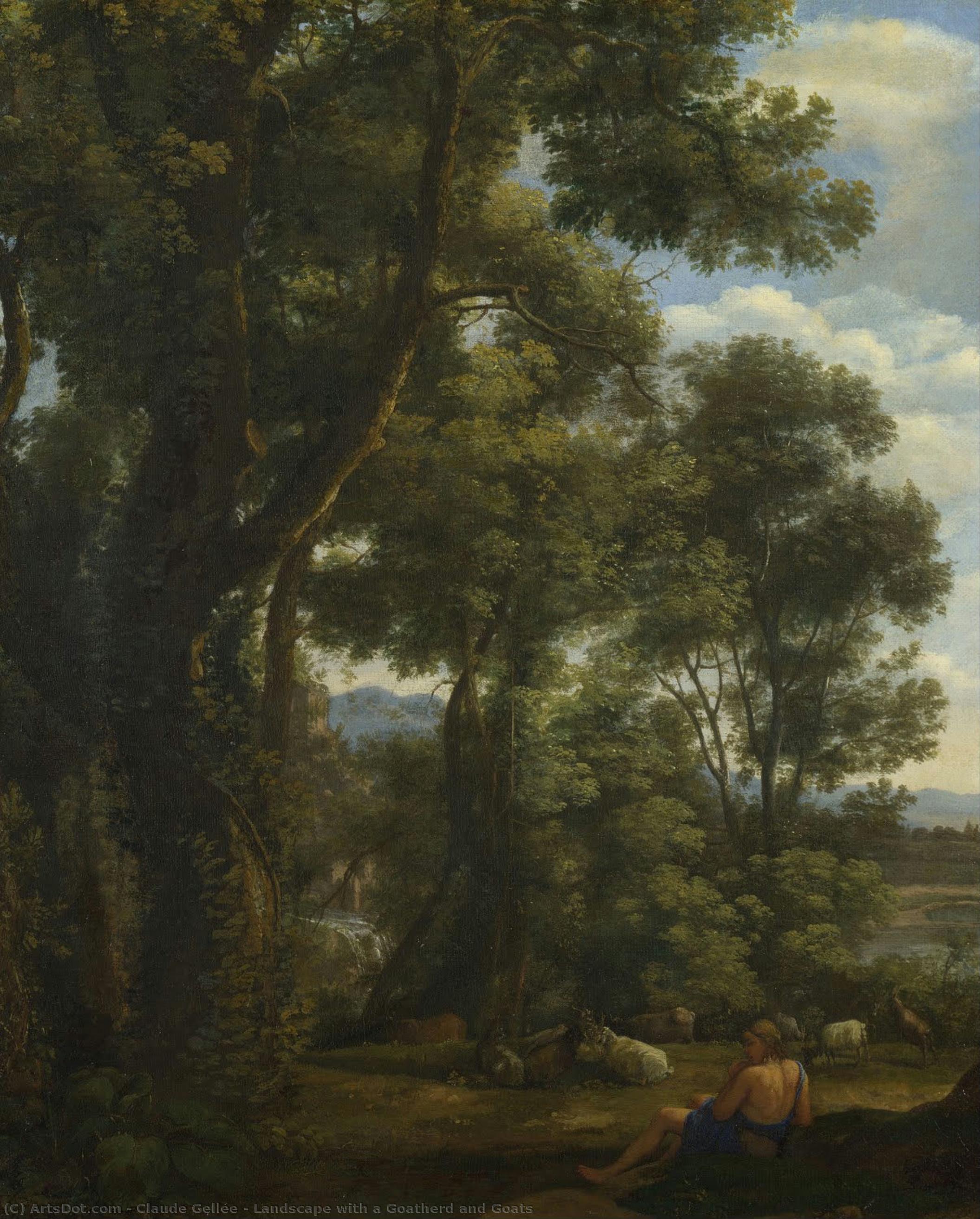
In the quietude of a sun-drenched hillside, where the boundaries between the earthly and the divine seem to dissolve, lies the heart of Claude Lorrain’s Landscape with a Goatherd and Goats. Painted in 1636, this masterpiece serves as a quintessential window into the Baroque era, a time when landscape painting began to transcend mere documentation to become a vessel for spiritual contemplation. As one gazes upon the tranquil scene, there is an immediate sense of being transported to a lost Arcadia. The composition is anchored by a solitary goatherd, resting amidst a lush tapestry of greenery, surrounded by the gentle presence of goats and sheep. It is not merely a depiction of rural life, but a carefully orchestrated tableau designed to evoke profound feelings of serenity, harmony, and an eternal, peaceful stillness.
The true magic of this work resides in Lorrain’s revolutionary command over light and atmosphere. Moving away from the rigid, linear perspectives of the Renaissance, Lorrain pioneered the use of atmospheric perspective, a technique that breathes life into the distance. By subtly blurring colors and softening details as they recede toward the horizon, he creates a palpable sense of depth and luminosity. The artist employed a meticulous layering process, beginning with delicate chalk underdrawings followed by thin, translucent washes of oil paint. This method allows the light to appear as if it is emanating from within the canvas itself, capturing the ephemeral, golden glow of a fading afternoon. For the discerning collector or interior designer, this technique offers a unique visual depth that can transform a room, providing a focal point that feels both expansive and intimate.
Symbolism and the Classical Ideal
Beyond its breathtaking aesthetic, the painting is steeped in the humanist ideals of classical antiquity. The figure of the goatherd is far more than a simple rustic laborer; he serves as a symbol of pastoral virtue, representing simplicity, humility, and a profound communion with the natural world. In the context of 17th-century Rome, where Lorrain developed his style under the influence of influential patrons like Cardinal Barberini, such landscapes were intended to foster piety and moral reflection. The towering cypress trees and rolling meadows are not merely scenery but elements of a larger narrative about the beauty of God's creation and the nobility found in a life lived in rhythm with nature.
For those seeking to infuse their living spaces with inspiration, this reproduction offers more than just decoration; it offers an emotional sanctuary. The painting’s ability to evoke a sense of timelessness makes it a versatile choice for sophisticated interiors, whether placed in a contemporary gallery-style setting or a more traditional, classical study. It invites the viewer to pause, to breathe, and to reconnect with the quiet majesty of the natural world. Owning a piece that captures such a masterful balance of light, history, and emotion is an opportunity to bring a fragment of the Baroque golden age into the modern home.