A Window into Leiden’s Golden Age
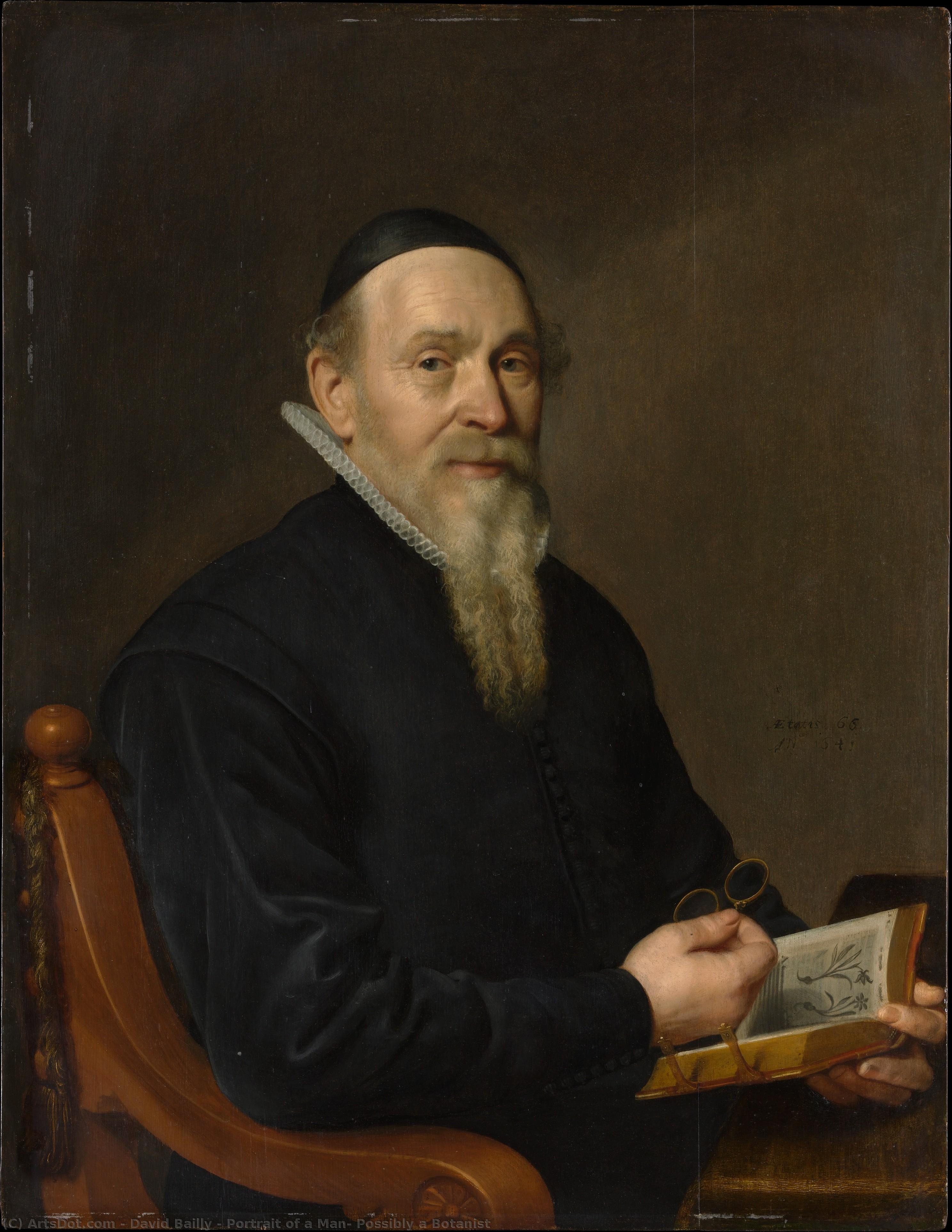
In the heart of the Dutch Golden Age, a period defined by unparalleled intellectual fervor and artistic brilliance, David Bailly captured more than just a likeness; he captured an era. His 1641 masterpiece, Portrait of a Man, Possibly a Botanist, serves as a profound window into the scholarly soul of Leiden. This captivating oil painting invites viewers to step back into a time when the pursuit of knowledge was a sacred endeavor. The sitter, an elderly gentleman with a gaze that suggests deep contemplation, sits enveloped in the quiet dignity of his station. Through Bailly’s masterful hand, we encounter a man whose very presence resonates with the weight of wisdom and the curiosity of a scientific mind.
The painting is a triumph of chiaroscuro, where the dramatic interplay between light and shadow breathes life into the composition. Soft, directional light sculpts the contours of the man’s weathered face and the heavy folds of his dark attire, creating a sense of three-dimensional presence that feels almost tactile. This technique does more than provide depth; it creates an atmosphere of intimacy and reverence, drawing the observer into the private, silent world of the scholar. The smooth, purposeful brushstrokes characteristic of Bailly’s mature style lend a luminous quality to the pigments, ensuring that even the darkest shadows possess a subtle, inner glow.
Symbolism and the Language of Discovery
Beyond the mere depiction of a person, the work is rich with the symbolic language of the seventeenth-century scientific revolution. The man holds an open book, a deliberate gesture that serves as the focal point of his identity. Within its pages, Bailly has meticulously rendered two detailed depictions of narcissus flowers. This subtle inclusion is far from accidental; it acts as a botanical signature, suggesting the sitter’s devotion to the study of nature. In this era, botany was not merely a hobby but a vital branch of scientific inquiry, and the presence of these delicate blooms transforms the portrait into a tribute to the observant eye.
The composition itself speaks to the stability and intellectual rigor of the period. The seated posture, the heavy furniture, and the scholarly props all contribute to a narrative of permanence and established truth. For the modern collector or interior designer, this painting offers a profound emotional anchor. It brings a sense of historical gravity and quiet sophistication to any space, making it an ideal centerpiece for a library, study, or a curated gallery wall where themes of heritage and intellect are celebrated.
An Enduring Legacy for the Discerning Collector
To possess a reproduction of this caliber is to invite the spirit of the Dutch masters into one's home. David Bailly’s ability to merge the precision of scientific observation with the emotional depth of portraiture makes this work a timeless treasure. Whether you are drawn to the intricate textures of the man's clothing, the delicate botanical details, or the evocative mood of the Golden Age, this painting offers an unparalleled opportunity for aesthetic enrichment.
For those seeking to inspire guests or create a sanctuary of thought, this artwork stands as a testament to the enduring power of art to bridge the centuries. It is not merely a decoration, but a conversation piece that celebrates the human thirst for understanding and the eternal beauty found in the natural world.