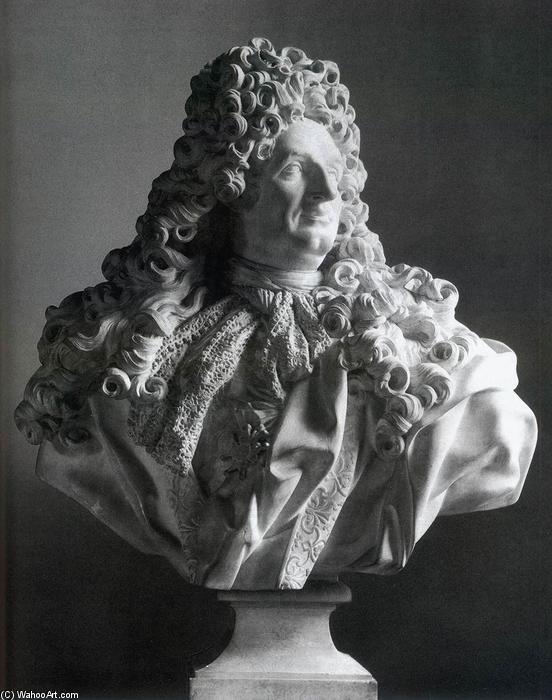
The Stoic Dignity of Jules Hardouin-Mansart
Jean-Louis Lemoyne’s meticulously crafted marble bust of Jules Hardouin-Mansart stands as more than just a portrait; it's a carefully constructed embodiment of 18th-century power, intellect, and the enduring legacy of a transformative architect. Completed in 1703, this remarkable sculpture captures the essence of a man who profoundly shaped the visual landscape of France – a figure whose influence resonates even today through the grandeur of Versailles and beyond.
Hardouin-Mansart, a pivotal figure during the reign of Louis XIV, was renowned not only for his architectural prowess but also for his diplomatic skill and ability to manage vast projects with remarkable efficiency. The bust itself reflects this multifaceted nature; it’s a formal representation of a man accustomed to command, yet imbued with an underlying sense of thoughtful contemplation. Lemoyne, a student of the esteemed Antoine Coysevox, masterfully employed the classical techniques honed at the prestigious Prix de Rome, ensuring a faithful and dignified depiction of his subject.
A Symphony of Form and Texture
The sculpture’s strength lies in its masterful manipulation of form and texture. The smooth, cool surface of the marble itself speaks to Hardouin-Mansart's status – a material reserved for those of considerable importance. Lemoyne skillfully rendered the folds of the elaborate wig, a hallmark of 18th-century fashion, with subtle variations in tone that suggest both its luxurious weight and intricate detail. The carefully sculpted clothing, rich in brocade and lace, further emphasizes his position within the courtly circles of Versailles.
Notice particularly the strong lines defining the face – a deliberate choice by Lemoyne to convey a sense of authority and resolve. The slightly furrowed brow and steady gaze suggest an intellect engaged in deep thought, hinting at the architect’s meticulous planning and strategic vision. The subtle modeling of the jawline and cheekbones adds depth and realism, preventing the portrait from feeling overly stylized or idealized.
Symbolism and Context
Beyond its technical brilliance, the bust is laden with symbolic meaning. The elaborate wig, a symbol of wealth and social standing, underscores Hardouin-Mansart’s elevated position within French society. The carefully chosen attire – rich fabrics and intricate details – speaks to his influence and patronage. Furthermore, the portrait itself was commissioned during a period of immense architectural activity under Louis XIV, reflecting the king's desire to project an image of power and magnificence throughout France.
It’s important to remember that this bust wasn’t merely a likeness; it was a carefully crafted statement about Hardouin-Mansart’s role as a key architect in shaping the French monarchy. His work at Versailles, including the Hall of Mirrors and the Grand Trianon, cemented his legacy as one of the most influential architects of the Baroque era.
A Legacy Preserved
Today, this remarkable sculpture resides within the Louvre Museum, a testament to its enduring artistic merit. Lemoyne’s portrait captures not just the physical appearance of Jules Hardouin-Mansart but also the spirit of an architect who left an indelible mark on French history and art. It remains a powerful reminder of the intersection between artistry, power, and the lasting impact of architectural vision.
Consider commissioning a high-quality reproduction to bring this iconic image into your own space – a tangible connection to one of France’s most celebrated figures and a stunning addition to any collection or interior design scheme.