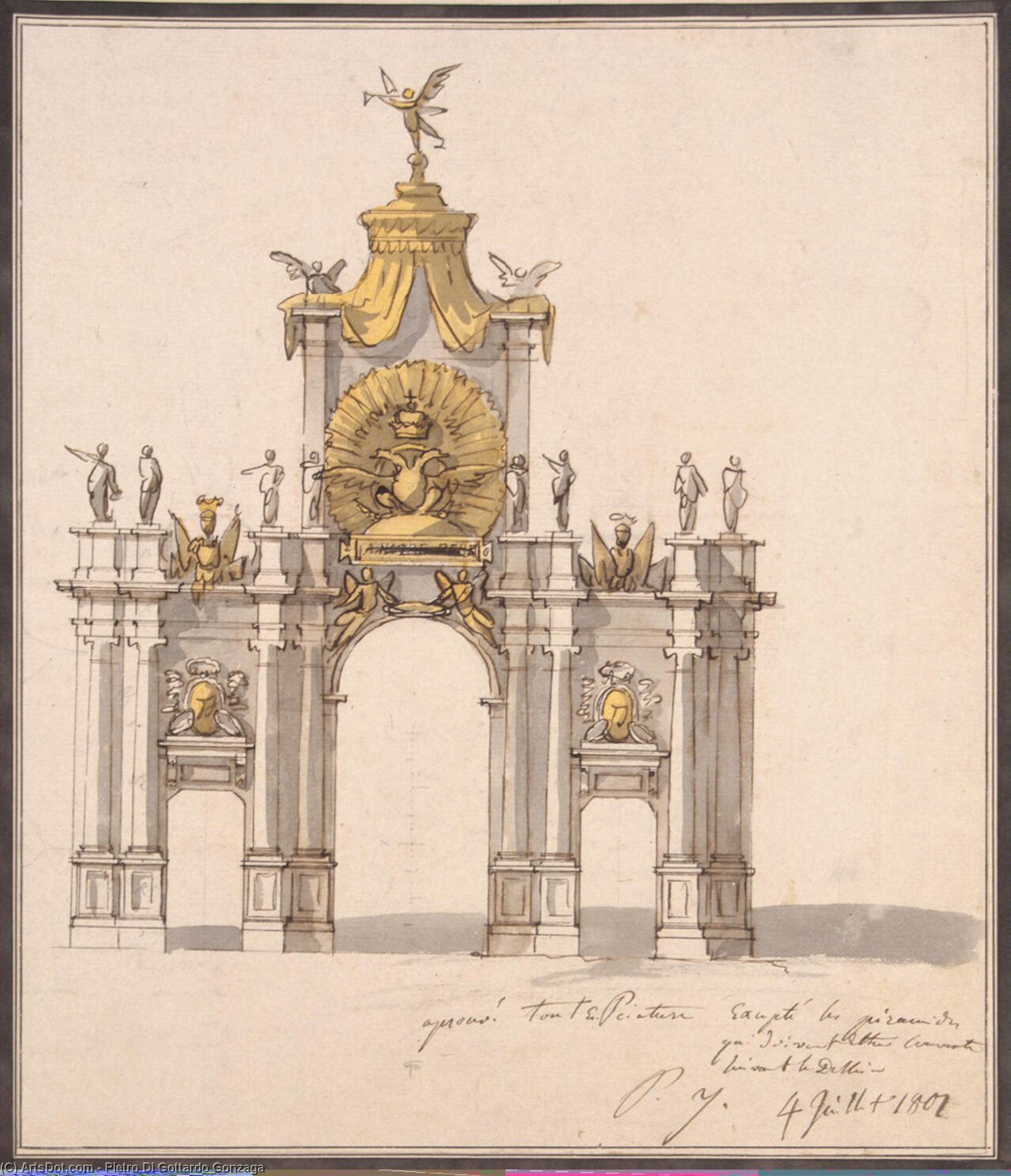
Design of the Decoration for the Triumphal Red Gate in Moscow
Pietro di Gottardo Gonzaga’s “Design of the Decoration for the Triumphal Red Gate in Moscow” stands as a testament to Venetian artistic sensibilities during the Enlightenment, capturing not merely architectural grandeur but also the spirit of imperial ambition. Executed in 1797, this drawing—a cornerstone of Gonzaga's oeuvre—offers a glimpse into his meticulous approach to temple design and decorative art, reflecting a fascination with classical principles blended seamlessly with innovative optical illusions.
- Subject Matter: The artwork depicts a triumphal arch, symbolizing victory and commemorating the coronation ceremony of Pavel I. Its central element is a clock, representing time’s passage and emphasizing the importance of historical events.
- Style: Gonzaga's style embodies Romanticism—characterized by emotional intensity and imaginative vision—yet grounded in precise observation and technical mastery. He skillfully employs chiaroscuro art and trompe-l'œil techniques to create a captivating illusion of depth and realism.
- Technique: Crafted with pen, brush, Indian ink, watercolor, and ink, Gonzaga’s drawing demonstrates exceptional draughtsmanship. The artist meticulously rendered every detail, capturing the textures and nuances of stone and sculpture with remarkable accuracy.
The historical context is crucial to understanding the artwork's significance. Commissioned during Pavel I’s reign—a period marked by fervent patriotism and a desire to assert Russia’s prestige on the European stage—the design served as an emblem of imperial power and artistic excellence. Gonzaga’s decision to incorporate symbolic elements like birds, perched atop the arch, underscores the aspiration for transcendence and harmony between man and nature – values prevalent in Romantic thought.
Symbolism: The clock symbolizes time's relentless march forward, reminding viewers of the coronation ceremony's historical importance. The birds represent freedom and nobility, elevating the design beyond mere architectural representation to convey a deeper philosophical message about aspiration and divine grace. Gonzaga’s masterful use of trompe-l'œil enhances these symbolic meanings by blurring the boundaries between reality and illusion.
Emotional Impact: Viewing “Design of the Decoration for the Triumphal Red Gate in Moscow” evokes feelings of awe and admiration for both artistic skill and historical grandeur. The drawing’s luminous chiaroscuro creates a dramatic atmosphere, inviting contemplation on themes of triumph, permanence, and beauty—elements that resonate powerfully with audiences today. Gonzaga's work continues to inspire interior designers seeking elegant and evocative decorative motifs, demonstrating the enduring legacy of Venetian art.
- Size: 365 x 320 cm
- Date: 1797
Gonzaga’s meticulous attention to detail—evident in his masterful rendering of stone and sculpture—solidifies his reputation as a visionary artist who successfully fused classical ideals with Romantic fervor. This drawing remains an unforgettable illustration of Venetian artistic heritage, captivating viewers with its beauty and conveying profound symbolic messages about the passage of time and the pursuit of noble aspirations.