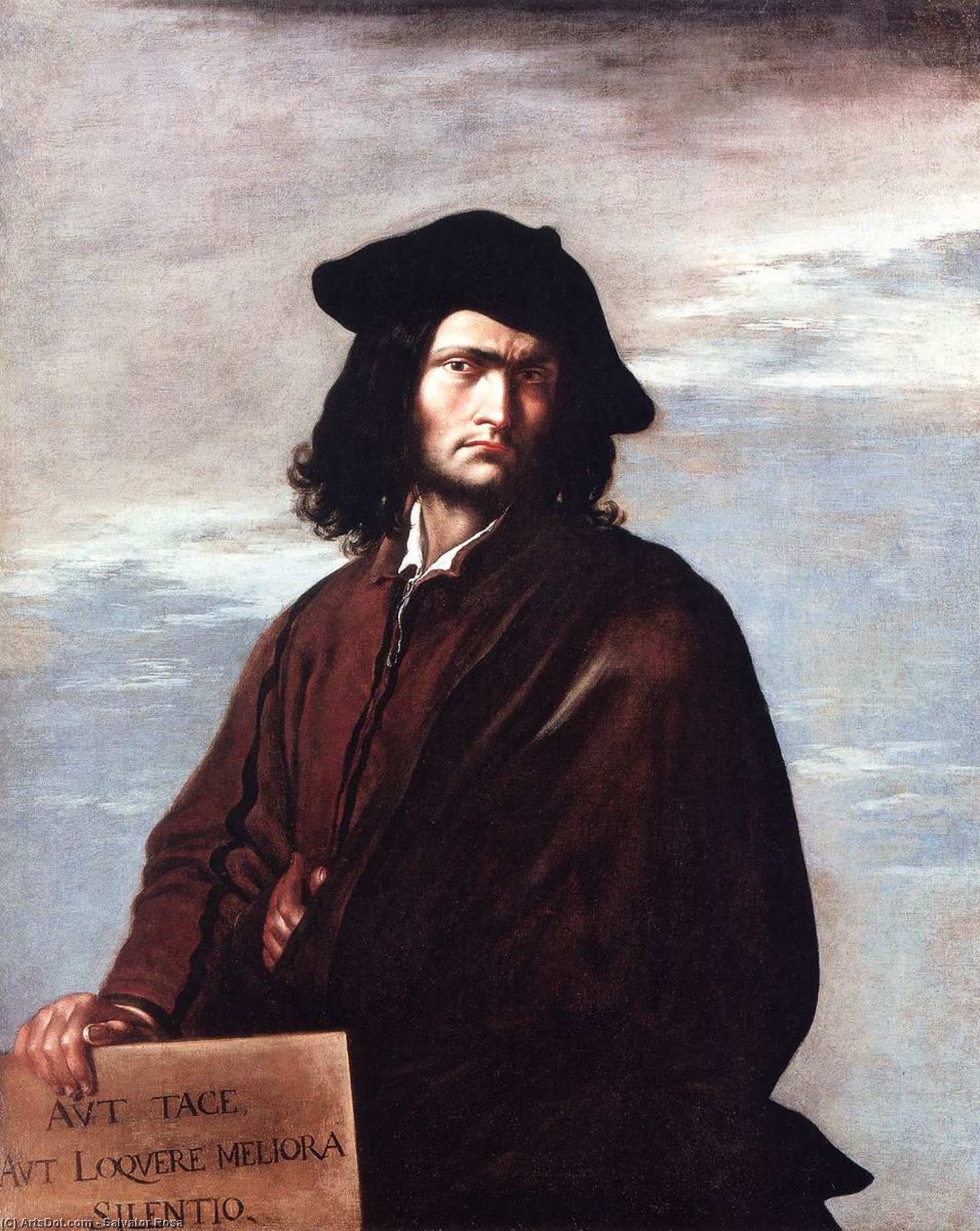
Salvator Rosa’s ‘Self-Portrait as Philosopher of Silence,’ painted around 1645, showcases the artist's profound engagement with philosophical thought and his distinctive Baroque style. Featuring a contemplative gaze, cypress wreath, and inscribed skull, it embodies themes of silence, wisdom, and mortality—a poignant meditation on human existence.
Istražite dramatične barokne pejzaže i filozofska dela Salvatora Roze (1615-1673). Italijanski slikar, pesnik i grafičar poznat po buntovnom duhu i uticaju na umetnike poput Luke Đordana. Otkrijte njegova remek-dela!
Otkrijte evropsku umetnost od 13. do 19. veka u Nacionalnoj galeriji Londona! Saznajte više o remek-delima Van Goga, Rembranta i drugih – ulaz je besplatan!
Ujedinjeno Kraljevstvo
London
Nacionalna Galerija
Rembrandtova 'Devica sa staklenikom'
Preko 2.300 slika
Muzej umetnosti
1824
Da bi se prikazala savremena britanska umetnost.
2
Koji je osnovni cilj Nacionalne Galerije?
Salvator Rosa’s Silent Reflection: An Exploration of Philosophy and Landscape
Salvator Rosa stands apart from his contemporaries as an artist who defied convention and embraced the raw beauty of nature alongside profound philosophical contemplation. Born in Arenella, Naples, in 1615, Rosa's artistic journey was marked by a rebellious spirit that challenged established aesthetic norms—a characteristic that earned him both admiration and censure within the intellectual circles of his time. He cultivated an extraordinary versatility, mastering painting, printmaking, poetry, acting, and music, cementing his legacy as one of Italy’s most multifaceted creative figures.
Rosa's distinctive style is instantly recognizable: he eschewed polished surfaces and idealized forms in favor of dramatic landscapes imbued with turbulent skies and rugged terrain—a stylistic choice that reflects his fascination with the untamed wilderness and its capacity to inspire awe and introspection. Influenced by artists like Ribera and Poussin, Rosa nevertheless forged a path uniquely his own, prioritizing emotional intensity over formal adherence to classical ideals. This approach is vividly demonstrated in works such as “Torture of Prometheus,” where he depicts Zeus’s cruel punishment of the Titan Prometheus with unflinching realism—a testament to his commitment to portraying human suffering and moral dilemmas with uncompromising honesty.
The painting "Self-Portrait as Philosopher of Silence," created around 1645, exemplifies Rosa's artistic vision perfectly. It is a masterful depiction of himself standing against a stormy sky, holding aloft a tablet inscribed with the Latin phrase “Aut tace / Aut Loquere meliora / Silentiio” (“Either be silent or say something better than silence”). This enigmatic maxim encapsulates Rosa’s philosophical stance—a belief that true wisdom lies in restraint and thoughtful deliberation. The artist's gaze is directed downwards, conveying a solemn seriousness as he confronts the viewer with an expression of melancholy contemplation.
Rosa’s meticulous technique—characterized by rapid brushstrokes and a masterful manipulation of light and shadow—contributes significantly to the painting’s emotional impact. He employs a palette dominated by muted browns and greys, mirroring the bleakness of the landscape and reinforcing the pervasive sense of sorrow that permeates the composition. The inclusion of a skull symbolizes mortality and serves as a poignant reminder of the ephemeral nature of human existence—a theme recurrent throughout Rosa's oeuvre.
“Self-Portrait as Philosopher of Silence” is more than just a depiction of an individual; it’s a meditation on the relationship between silence and eloquence, between contemplation and action. Rosa invites us to consider the profound wisdom inherent in quiet reflection—a perspective that aligns with Stoic philosophy and underscores the importance of inner resilience amidst external adversity. This artwork continues to resonate with audiences today, offering a timeless message about confronting existential anxieties with courage and grace.
- Artist: Salvator Rosa
- Born Year: 1615
- Death Year: 1673
- Birth City: Arenella
- Birth Country: Italy
- Style: Baroque
- Technique: Oil on Canvas
- Size: 116 x 94 cm
- Date: 1641
- Historical Context: Seventeenth-Century Italy – Artistic Rebellion and Philosophical Inquiry
- Symbolism: Skull (Mortality), Tablet (“Silence”), Cypress wreath (Mourning)
- Emotional Impact: Contemplation, Sorrow, Resilience
- ArtsDot.com Reproduction Availability:
- High-Quality Hand-Painted Reproductions Available