Vilijam Eti (1787-1849): Otkrijte život i dela ovog britanskog slikara, poznatog po dramatičnim istorijskim kompozicijama i pionirskom prikazivanju nagih figura. Istražite njegovu umetnost koja je izazvala kontroverze, ali ostavila trajan utisak!
National Trust
(Kambridž, Ujedinjeno Kraljevstvo)
Istražite bogato nasleđe i predivnu prirodu Kembridžšira! Otkrijte velelepna imanja, drevne močvare i živopisne vrtove Nacionalnog povereništva – putovanje kroz vreme vas očekuje.
A Study in Victorian Sensibility: Examining William Etty’s Academic Nude
William Etty, despite not commanding the same immediate fame as his Romantic contemporaries like Turner or Constable, stands as a cornerstone of British art history—specifically within the realm of the nude portrait. Born in York in 1787, into a family involved in baking, Etty's formative years instilled a disciplined practicality that would paradoxically fuel his artistic ambition. His apprenticeship at Hull Printing established a grounding in craftsmanship alongside an unwavering fascination with drawing, ultimately guiding him toward London and the Royal Academy Schools where he honed his skills under Thomas Lawrence’s mentorship. This confluence of influences shaped Etty into an artist profoundly attuned to both observation and emotion—a duality that characterizes much of his oeuvre.
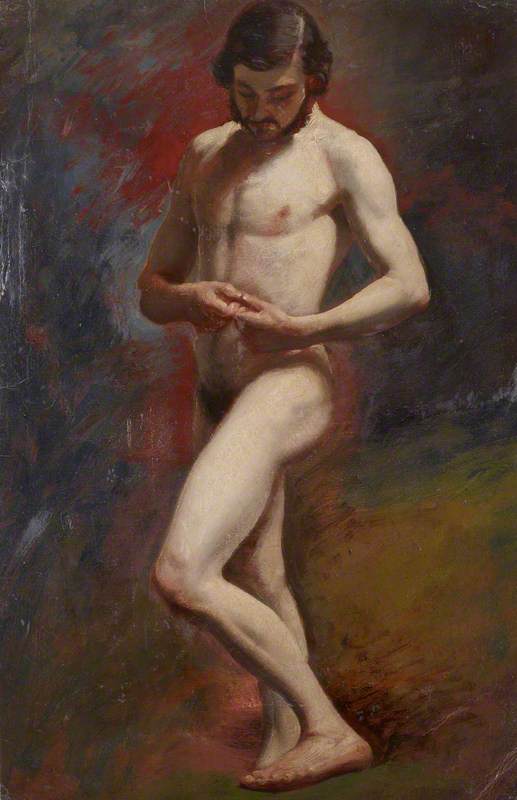
- Subject Matter: The painting depicts a male nude figure positioned against a stark red backdrop, emphasizing the vulnerability and physicality inherent in the human form.
- Style: Etty’s style aligns with Academic Painting, prioritizing anatomical accuracy and idealized beauty—a stylistic convention prevalent during Victorian England.
Technique & Material Considerations
Etty's meticulous approach to technique is evident in the detailed rendering of musculature and skin texture. He employed oil paints on canvas, utilizing glazing techniques to achieve subtle tonal variations and luminosity—a hallmark of Victorian artistic practice. The artist’s careful attention to detail speaks volumes about his commitment to capturing the essence of human anatomy with scientific precision while simultaneously conveying a sense of profound contemplation. Furthermore, the deliberate choice of red as a background color isn't merely decorative; it serves to heighten visual impact and symbolically represents passion and vitality—elements frequently explored in Victorian art.
Historical Context & Artistic Significance
The painting emerged during a period marked by significant societal shifts concerning representations of the human nude. While Romantic artists championed expressive emotion and dramatic gesture, Etty’s work embraced a more restrained aesthetic rooted in classical ideals. This stylistic divergence reflects broader debates about artistic purpose—was art meant to inspire awe or to cultivate moral contemplation? Etty's insistence on anatomical correctness positioned him as a champion of scientific observation within the artistic community, challenging prevailing notions of beauty and prompting viewers to consider the complexities of human experience.
Symbolism & Emotional Resonance
Beyond its technical merits, “Academic Study of a Male Nude Standing” resonates with deeper symbolic meanings. The pose itself—one foot raised—suggests both physical strength and intellectual curiosity—mirroring Etty’s own character and reflecting Victorian anxieties about masculinity and self-control. The gaze downward at the hand embodies introspection and an awareness of one's own physicality, inviting viewers to contemplate themes of vulnerability and contemplation. Ultimately, Etty’s masterpiece transcends mere visual representation; it encapsulates a nuanced understanding of human psychology and embodies the spirit of its time—a testament to his enduring artistic legacy.