

 Pregledaj u prostoru
 Pošalji
 Podeli
 Detalji o delu

 Преузми
 Slični predmeti
 Rendgenski snimak
 Slajdovi
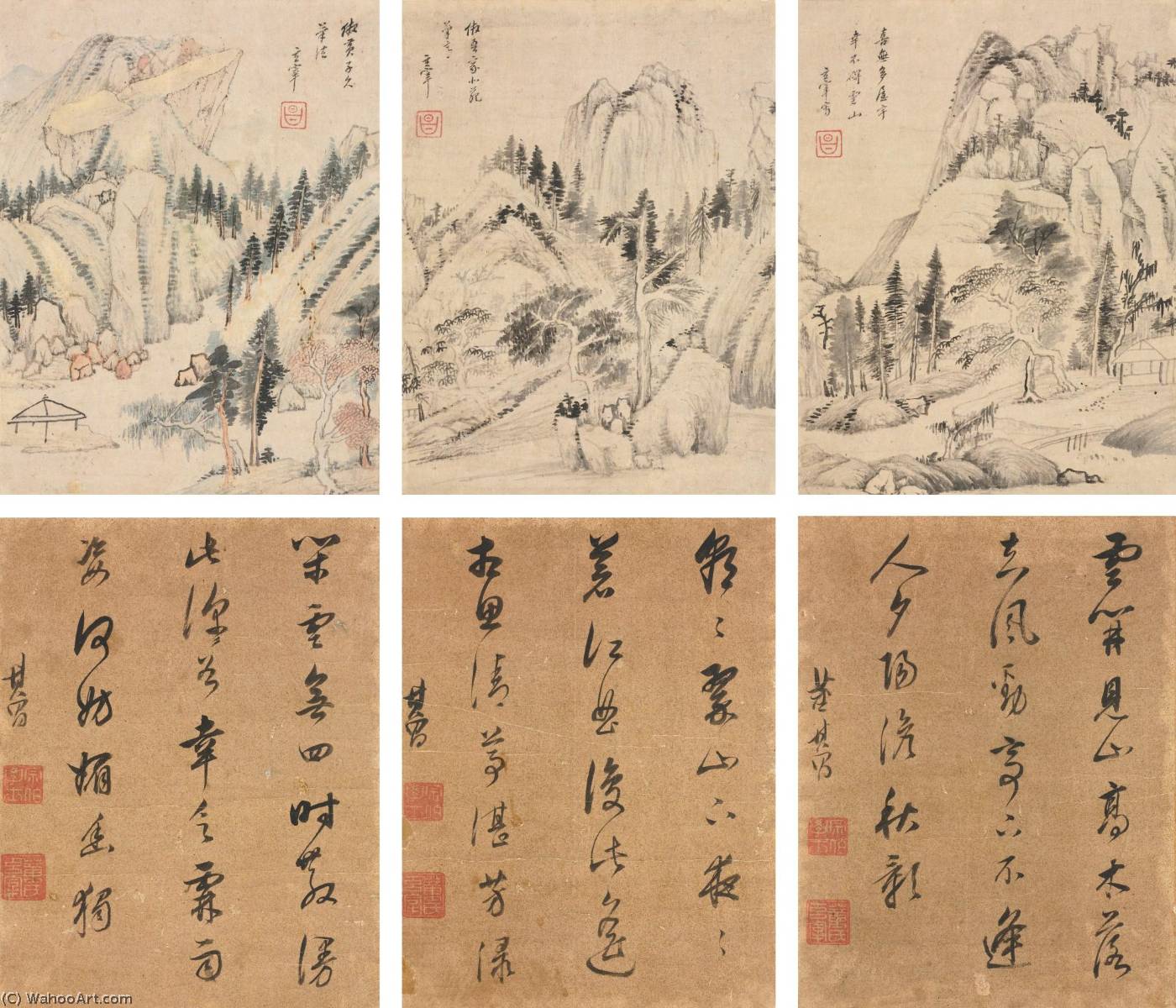
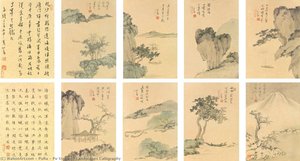
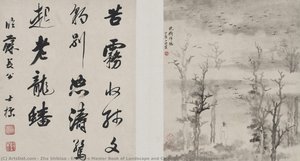
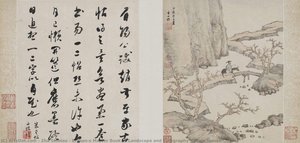
LANDSCAPE AND CALLIGRAPHY
 Traditional Chinese Painting
 32.0 x 24.0 cm
 Pročitaj više
Kupite digitalnu sliku visoke rezolucije i poboljšanog kvaliteta, koja je znatno superiornija od onoga što vidite u online prikazu.
Svaka datoteka je pedantno pripremljena od strane naših stručnjaka koristeći napredne alate i profesionalnu ručnu retušu. Osiguravamo da svaka slika ima izuzetnu oštrinu, preciznu reprodukciju boja i fine detalje.
Konačna datoteka se dostavlja putem e-pošte u roku od 72 sata, optimizovana za neposrednu upotrebu u profesionalnim, izdavačkim i štamparskim okruženjima. To je isti kvalitet kojem veruju vrhunski studiji dizajna, izdavači i galerije.
Digitalna slika
Preuzmite datoteku visoke rezolucije za ličnu upotrebu, štampanje i kreativne projekte. ( Kupi print Kupi ručno naslikanu sliku)
Uključeno uz svaku porudžbinu digitalne slike
Profesionalna digitalna isporuka, zagarantovana
Kada odaberete ArtsDot.com, ne dobijate samo sliku – vi primate profesionalno unapređeno digitalno umetničko delo, izrađeno sa najvećom preciznošću i uz garanciju zadovoljstva. Evo svega što automatski dolazi uz vašu porudžbinu:

Brza dostava putem e-pošte
Vaša digitalna slika visoke rezolucije biće vam poslata putem e-pošte u roku od 72 sata od poručivanja – spremna za trenutnu upotrebu.

Digitalna datoteka unapređena veštačkom inteligencijom
Vaše umetničko delo je profesionalno optimizovano korišćenjem naprednih AI alata i ručne obrade, čime se osiguravaju maksimalni detalji, oštrina i preciznost boja.

Besplatna ponovna isporuka doživotno
Slučajno ste obrisali ili izgubili svoju datoteku? Ne brinite – poslaćemo vam je ponovo u bilo kom trenutku, potpuno besplatno.

Bez troškova uvoza – zauvek
Uživajte u svojim umetničkim delima trenutno, bez carine, dažbina ili troškova dostave – digitalni download je uvek bez poreza.

Garancija vernosti boja
Uz pomoć profesionalnih alata i upravljanja bojama, osiguravamo da vaša digitalna slika što vernije odražava originalne boje.

Garancija zadovoljstva u roku od 60 dana
Ako niste zadovoljni svojom digitalnom slikom, revidirat ćemo je ili vratiti 100% novca u roku od 60 dana – bez ikakvih pitanja.

100% garancija povrata novca
Niste zadovoljni? Obezbedite pun povrat novca u roku od 60 dana od trenutka kada ste primili svoju digitalnu datoteku – bez suvišnih pitanja.

Popusti na velike porudžbine
Kupite 3 slike, uštedite 10% - Kupite 5 slika, uštedite 15% - Kupite 10+ slika, uštedite 20%. Odlično za kreativne projekte, galerije i agencije.
Srodna umetnička dela

Biografija umetnika
A Life Dedicated to Ink: The World of Dong Qichang
Dong Qichang (1555–1636) was more than just a painter; he was the embodiment of the late Ming dynasty scholar-official, a man whose life was inextricably woven with calligraphy, painting, and a profound dedication to art theory. Born in Huating, near modern Shanghai, into a modest scholarly family, Dong’s early ambition lay not in artistic pursuits but in securing a position within the imperial bureaucracy. His initial attempts at the civil service examinations proved unsuccessful, largely due to his perceived clumsiness in calligraphy – an irony considering he would later become celebrated as one of China's greatest calligraphers. This setback spurred him into rigorous self-improvement, mastering not only brushwork but also the rich traditions of Chinese literary and artistic expression.
Dong’s perseverance paid off when he passed the highest level of the imperial examinations at age 34, launching a career that saw him rise through the ranks of the Ming government. However, his official life was not without its turbulence. He faced controversies stemming from his uncompromising standards and occasionally abrasive personality, leading to periods of retirement and even an incident where his home was attacked by an angry mob after he reportedly insulted women seeking redress for grievances. Despite these challenges, Dong remained steadfast in his artistic pursuits, viewing them as integral to his identity and a means of expressing his deeply held philosophical beliefs.
The Two Schools and the Southern Ideal
Dong Qichang’s most enduring legacy lies not solely in his paintings but in his groundbreaking art theory. He posited a division within Chinese landscape painting into two distinct schools: the “Northern School” and the “Southern School.” This categorization, initially suggested by his friend Mo Shilong, wasn't based on geography but rather on philosophical underpinnings rooted in Chan Buddhism. The Northern School, he argued, emphasized meticulous detail, vibrant colors, and a gradual acquisition of skill – focusing on technical proficiency and appealing to broader tastes. In contrast, the Southern School prioritized expressive brushwork, calligraphic spontaneity, and an intuitive grasp of essence, embodying the spirit of scholar-amateurs who painted for self-cultivation rather than commercial gain.
He championed the Southern School as the true heir to Chinese artistic tradition, believing its practitioners achieved a more profound understanding through direct expression. Central to this ideal was calligraphy itself – seen not merely as decorative writing but as a manifestation of the artist’s inner character and spiritual state. Dong admired masters like Mi Fu and Ni Zan, viewing them as exemplars of this individualistic style. He believed that artists should build upon the foundations laid by these predecessors, transforming tradition rather than simply imitating it, achieving a form of “sudden enlightenment” through their work.
A Unique Landscape Style: Distortion and Expression
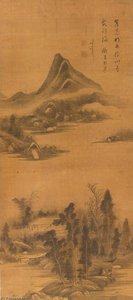
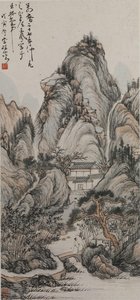
Dong Qichang’s own paintings reflect his theoretical convictions. He deliberately avoided slickness or sentimentality, opting instead for landscapes characterized by intentionally distorted spatial features and a focus on expressive brushwork. While rooted in the traditions of earlier Yuan dynasty masters – particularly the “Four Masters” – his work was distinctly personal. He wasn't striving for photographic realism but rather for an evocation of atmosphere, mood, and spiritual resonance.
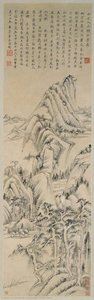
His sketchbook, containing early studies of rocks and trees, provides a rare glimpse into his analytical process. These deceptively simple sketches reveal his meticulous observation of nature and his exploration of different compositional possibilities. Mature works like “Autumn Mountains” showcase his masterful ink wash technique, creating serene landscapes that invite contemplation. His paintings often feature towering mountains shrouded in mist, winding rivers, and sparsely populated scenes – all rendered with a delicate balance of control and spontaneity.
Legacy and Influence
Dong Qichang’s influence on subsequent generations of Chinese artists was profound. His theories regarding the Northern and Southern schools became deeply ingrained in aesthetic discourse, shaping the direction of landscape painting for centuries to come. He inspired a wave of “individualist” painters who sought to emulate his expressive style and philosophical approach.
The early Qing dynasty witnessed the rise of several prominent artists – including the “Four Monks” and the “Four Wangs” – who were directly influenced by Dong’s work. Collectors, particularly those in affluent regions like Sungchiang and Yangchou, eagerly sought out his paintings and those of his followers, further solidifying his reputation as a master. Even today, Dong Qichang is revered as one of the most important figures in Chinese art history – a scholar-official whose dedication to ink and brush transformed not only painting but also the very way artists understood their place within tradition.
- Major Themes: Scholar culture, Chan Buddhism, landscape aesthetics, individual expression
- Influences: Zhao Mengfu, Wen Zhengming, Mi Fu, Ni Zan, Yuan Dynasty Masters
- Key Characteristics: Distorted spatial features, expressive brushwork, ink wash technique, calligraphic spontaneity
dong qichang
1555 - 1636
Kratke činjenice
- Artistic Movement Or Style: Literati painting
- Artists Or Movements Influenced By This Artist:
- Qing Dynasty artists
- Individualist painters
- Artists Who Influenced This Artist:
- Zhao Mengfu
- Wen Zhengming
- Mi Fu
- Ni Zan
- Date Of Birth: 1555
- Date Of Death: 1636
- Full Name: Dong Qichang
- Nationality: Chinese
- Notable Artworks:
- Autumn Mountains
- Shaded Dwellings
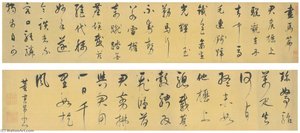
- Landscapes and Poems
- Place Of Birth: Huating, China

