

 Pregledaj u prostoru
 Pošalji
 Podeli
 Detalji o delu

 Преузми
 Slični predmeti
 Rendgenski snimak
 Slajdovi
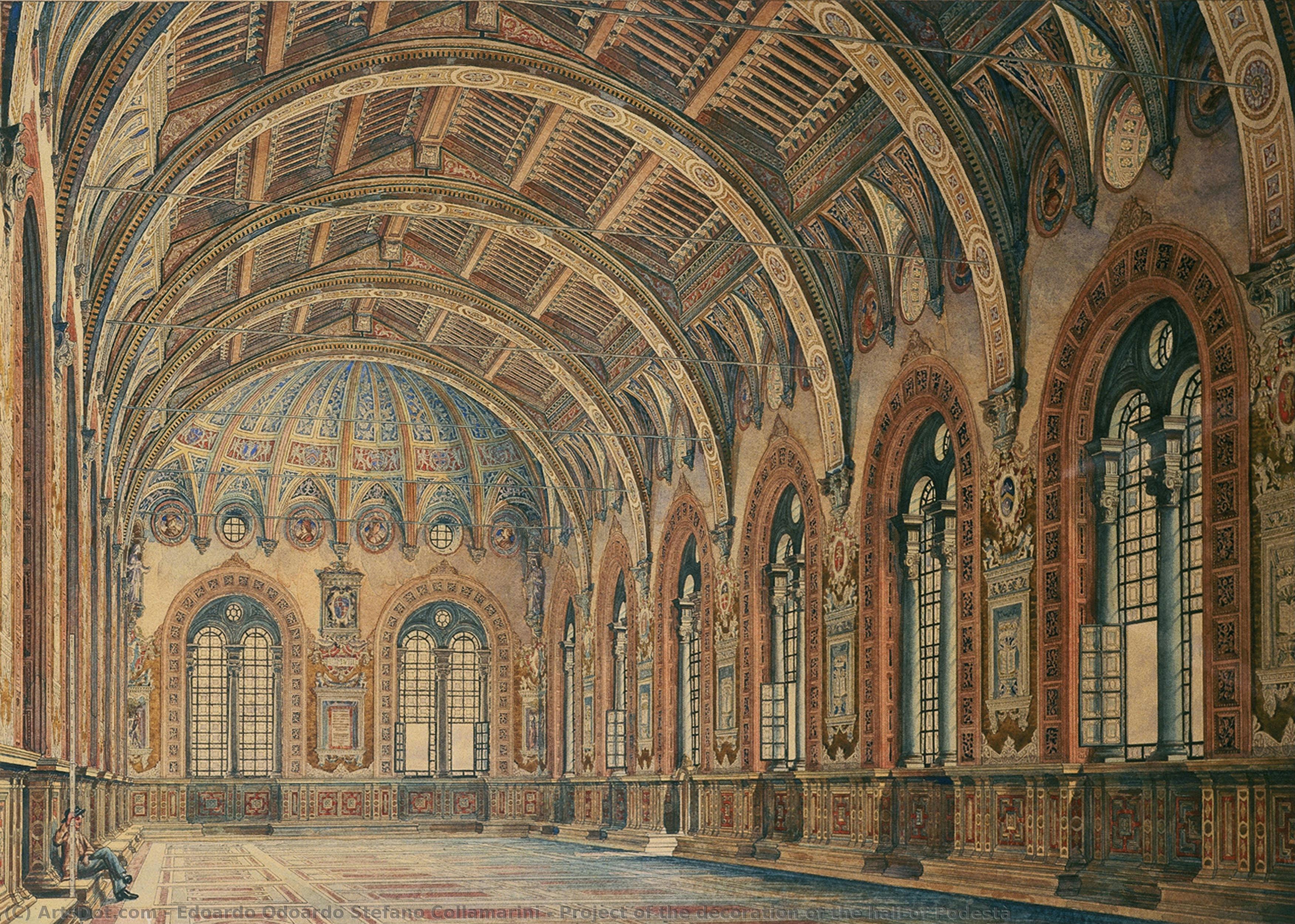
Project of the decoration of the hall of Podestà


 Pročitaj više
Kupite digitalnu sliku visoke rezolucije i poboljšanog kvaliteta, koja je znatno superiornija od onoga što vidite u online prikazu.
Svaka datoteka je pedantno pripremljena od strane naših stručnjaka koristeći napredne alate i profesionalnu ručnu retušu. Osiguravamo da svaka slika ima izuzetnu oštrinu, preciznu reprodukciju boja i fine detalje.
Konačna datoteka se dostavlja putem e-pošte u roku od 72 sata, optimizovana za neposrednu upotrebu u profesionalnim, izdavačkim i štamparskim okruženjima. To je isti kvalitet kojem veruju vrhunski studiji dizajna, izdavači i galerije.
Digitalna slika
Preuzmite datoteku visoke rezolucije za ličnu upotrebu, štampanje i kreativne projekte. ( Kupi print Kupi ručno naslikanu sliku)
Uključeno uz svaku porudžbinu digitalne slike
Profesionalna digitalna isporuka, zagarantovana
Kada odaberete ArtsDot.com, ne dobijate samo sliku – vi primate profesionalno unapređeno digitalno umetničko delo, izrađeno sa najvećom preciznošću i uz garanciju zadovoljstva. Evo svega što automatski dolazi uz vašu porudžbinu:

Brza dostava putem e-pošte
Vaša digitalna slika visoke rezolucije biće vam poslata putem e-pošte u roku od 72 sata od poručivanja – spremna za trenutnu upotrebu.

Digitalna datoteka unapređena veštačkom inteligencijom
Vaše umetničko delo je profesionalno optimizovano korišćenjem naprednih AI alata i ručne obrade, čime se osiguravaju maksimalni detalji, oštrina i preciznost boja.

Besplatna ponovna isporuka doživotno
Slučajno ste obrisali ili izgubili svoju datoteku? Ne brinite – poslaćemo vam je ponovo u bilo kom trenutku, potpuno besplatno.

Bez troškova uvoza – zauvek
Uživajte u svojim umetničkim delima trenutno, bez carine, dažbina ili troškova dostave – digitalni download je uvek bez poreza.

Garancija vernosti boja
Uz pomoć profesionalnih alata i upravljanja bojama, osiguravamo da vaša digitalna slika što vernije odražava originalne boje.

Garancija zadovoljstva u roku od 100 dana
Ako niste zadovoljni svojom digitalnom slikom, revidirat ćemo je ili vratiti 100% novca u roku od 100 dana – bez ikakvih pitanja.

100% garancija povrata novca
Niste zadovoljni? Obezbedite pun povrat novca u roku od 100 dana od trenutka kada ste primili svoju digitalnu datoteku – bez suvišnih pitanja.

Popusti na velike porudžbine
Kupite 3 slike, uštedite 10% - Kupite 5 slika, uštedite 15% - Kupite 10+ slika, uštedite 20%. Odlično za kreativne projekte, galerije i agencije.
A Vision of Grandeur: The Architectural Majesty of Collamarini
In the sweeping expanse of "Project of the decoration of the hall of Podestà," we are invited into a realm where stone and spirit converge. Created in 1911 by the visionary Italian architect Edoard Odoardo Stefano Collamarini, this work serves as more than a mere blueprint; it is a window into a lost era of monumental splendor. The painting captures the breathtaking interior of a cathedral-like hall, defined by soaring arched ceilings and an intricate web of ornate decorations that guide the eye upward toward the heavens. Through his masterful use of perspective, Collamarini creates a profound sense of depth, where massive pillars anchor the composition while light filters through distant windows, bathing the sacred space in a soft, ethereal glow.
The scene is brought to life by the presence of numerous figures scattered throughout the hall, their small scale emphasizing the overwhelming magnitude of the architecture. Some wander in quiet contemplation, while others gather in groups, suggesting a vibrant communal life centered around this magnificent structure. This interplay between the monumental and the human creates a rhythmic movement across the canvas, transforming a static architectural study into a living, breathing narrative of devotion and social gathering.
The Intersection of Faith and Form
Collamarini’s artistic identity was deeply rooted in his ability to translate Christian ideals into tangible, breathtaking forms. As an architect of "Christian Visions," he possessed a unique talent for utilizing Art Nouveau flourishes and classical grandeur to evoke a sense of the divine. In this particular project, one can observe how the structural elements—the rhythmic repetition of arches and the strength of the vertical supports—symbolize stability and eternal truth. The light, playing across the textured surfaces of the hall, acts as a metaphor for enlightenment, piercing through the shadows of the earthly realm to touch the souls of those within.
For the discerning collector or interior designer, this piece offers an unparalleled opportunity to introduce a sense of historical weight and spiritual serenity into a contemporary space. The painting’s ability to command attention through its scale and complexity makes it a perfect centerpiece for grand foyers, libraries, or formal dining rooms. It does not merely decorate a wall; it expands the boundaries of a room, offering a view into an era where every architectural detail was a deliberate prayer in stone.
A Timeless Legacy for the Modern Collector
Owning a reproduction of such a significant work allows one to preserve the legacy of Bologna’s illustrious architectural history. The technical mastery displayed in the depiction of light, shadow, and atmospheric perspective provides a rich sensory experience that remains as captivating today as it was in 1911. Whether you are drawn to the intricate decorative motifs or the emotional resonance of the gathered crowds, this artwork serves as an enduring testament to Collamarini’s genius.
Integrating this piece into a curated collection provides:
- A sense of historical continuity that connects modern interiors with the classical traditions of Italy.
- An atmospheric focal point capable of evoking feelings of awe, peace, and intellectual curiosity.
- A sophisticated aesthetic layer that complements both traditional period rooms and minimalist modern settings through its complex textures and grand scale.
Srodna umetnička dela
Biografija umetnika
The Visionary Architect of Sacred Spaces
Edoardo Odoardo Stefano Collamarini, born in the historic heart of Bologna in 1863, was far more than a mere designer of structures; he was an architect of Christian visions. His life, which concluded in his beloved Bologna in 1928, was defined by a profound intellectual engagement with the intersection of spiritual meaning and aesthetic grandeur. Collamarini possessed a rare ability to translate the intangible essence of faith into tangible, monumental forms, creating spaces that did not merely house worshippers but actively engaged their souls through light, proportion, and symbolic depth.
His artistic journey began within the prestigious halls of the Accademia di Belle Arti in Bologna. It was here that his early aptitude for architectural design blossomed, nurtured by a vibrant local atmosphere that celebrated both classical heritage and emerging modern sensibilities. However, Collamarini’s true education extended far beyond the classroom. He sought out mentors who challenged his perceptions, most notably the controversial restorer Alfonso Rubbiani. From Rubbiani, Collamarini inherited an appreciation for architectural theatricality—a daring willingness to manipulate space and style to evoke emotional responses. This influence, combined with a nuanced reading of Eugène Viollet-le-Duc’s theories on structural honesty, allowed him to develop a style that respected historical integrity while embracing the expressive potential of new materials.
A Synthesis of Tradition and Innovation
As his career progressed, Collamarini’s work became a sophisticated dialogue between the past and the present. While he drew heavily from the rich tapestry of Italian history, he avoided the trap of mere imitation. His approach was characterized by a careful curation of styles, blending elements of the Neo-Byzantine with the flowing, organic lines of Art Nouveau. This synthesis is perhaps most evident in his religious commissions, where he sought to create environments that felt both ancient and eternally contemporary.
His mastery was particularly evident in his detailed architectural studies and large-scale projects. His ability to manipulate perspective and detail can be seen in works such as:
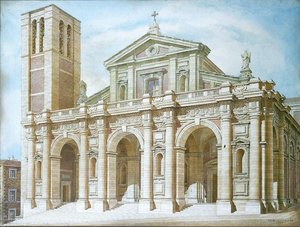
- Three projects for the facade of the basilica of St. Lorenzo in Florence: A masterful Renaissance study executed in watercolor and pen, demonstrating a profound command over light and structural complexity.
- The Church of St. Lorenzo in Florence: A testament to his ability to envision monumental religious architecture that commands presence through balanced design.
Beyond the grand facades, Collamarini’s early work decorating tombs in the Certosa di Bologna provided him with a foundational understanding of how architecture interacts with memory and mortality. These intimate, somber commissions prepared him for the monumental task of designing churches like the Sacro Cuore di Gesù, where his architectural language reached its most spiritual zenith.
Legacy of a Spiritual Craftsman
The historical significance of Edoardo Collamarini lies in his role as a bridge between eras. He stood at the crossroads of traditional craftsmanship and the burgeoning modern movement, proving that architecture could serve as a powerful medium for religious expression in a changing world. His work remains a vital chapter in the history of Italian architecture, representing a period when the built environment was used to capture the sublime.
Today, his legacy is preserved not only in the stone and mortar of the buildings he envisioned but in the enduring beauty of his architectural drawings. Through these works, we witness a creator who viewed every line and every arch as an opportunity to touch the divine, leaving behind a blueprint of how art and faith can inhabit the same physical space.
edoardo odoardo stefano collamarini
1863 - 1928 , Italy
Kratke činjenice
- Artistic Movement Or Style: Christian themes, Art Nouveau
- Artists Or Movements Influenced By This Artist: ['Art Nouveau']
- Artists Who Influenced This Artist:
- Viollet-le-Duc
- Giosuè Carducci
- Alfonso Rubbiani
- Date Of Birth: September 13, 1863
- Date Of Death: September 25, 1928
- Full Name: Edoardo Odoardo Stefano Collamarini
- Nationality: Italian
- Notable Artworks:
- Talon Chapel
- Sacro Cuore di Gesù
- Santuario della Madonna del Sangue
- Place Of Birth: Bologna, Italy