

 Pregledaj u prostoru
 Pošalji
 Podeli
 Detalji o delu

 Преузми
 Slični predmeti
 Rendgenski snimak
 Slajdovi
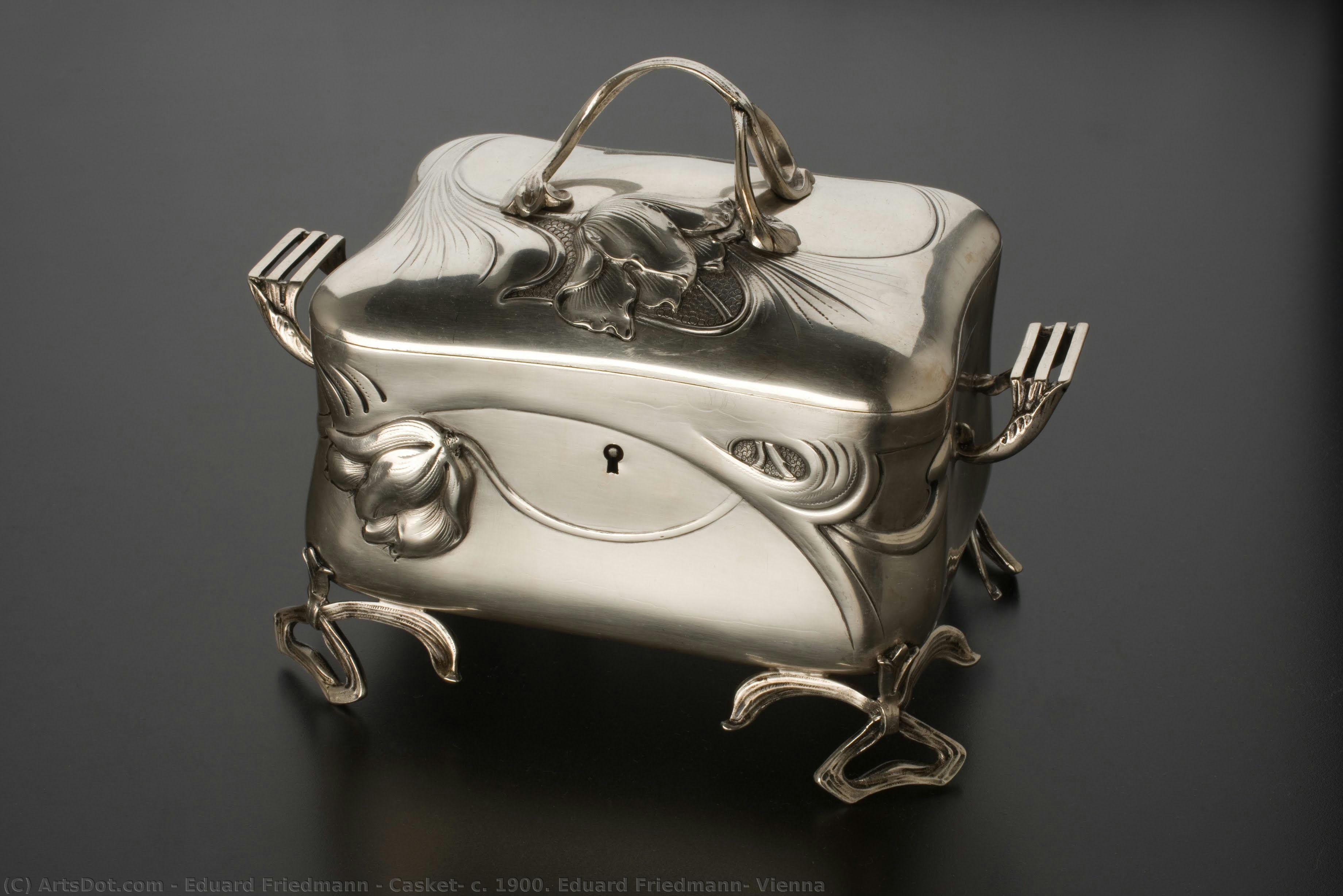
Casket, c. 1900. Eduard Friedmann, Vienna
 1900
1900 14.0 x 18.0 cm
 Museum of Decorative Arts
 Pročitaj više
Giclee štampa / Umetnički otisak
Giclée štampa ili print na platnu muzejskog kvaliteta uz brzu proizvodnju i fleksibilne opcije završne obrade. ( Kupi ručno naslikanu sliku Kupi digitalnu sliku)




































Izaberite jednu od naših unapred definisanih veličina koje odgovaraju originalnim proporcijama umetničkog dela.

Možete uneti sopstvene dimenzije kako biste umetničko delo prilagodili specifičnom okviru ili prostoru. Ako odabrani format ne odgovara proporcijama originalne slike, mi ćemo ili iscrtati deo dela ili proširiti sliku pomoću ogledane ivice ili jednobojnog popunjavanja. Digitalni prikaz će vam biti poslat na odobrenje pre početka proizvodnje.
Imajte na umu da pregled na ekranu ne odražava stvarno iscrtavanje ili proširivanje. Samo će prikaz (mockup) precizno pokazati finalnu kompoziciju.
Iako su prilagođene dimenzije dostupne, preporučujemo da odaberete dimenziju sa unapred definisane liste kako biste očuvali originalne proporcije.
Dostava širom sveta () za 2 nedelje umesto uobičajenih 4/5 nedelja. (6 септембар)

Besplatna ekspresna dostava širom sveta

Visokokvalitetno laneno platno

Kompletno osiguranje transporta

Garancija povraćaja carine i uvoznih dažbina

Garancija vernosti boja

Politika povrata u roku od 100 dana (samo u slučaju nedostataka)

Garancija povrata novca od 100%

Popust pri grupnoj kupovini
 Opcija sa staklom dostupna je samo za dimenzije manje od 110 cm

Casket, c. 1900. Eduard Friedmann, Vienna
Giclee štampa / Umetnički otisak
Dimenzije reprodukcije
-


Konačna cena
$ 62
Srodna umetnička dela








Biografija umetnika
The Silver Alchemist of Vienna: The Life and Legacy of Eduard Friedmann
In the heart of fin-de-siècle Vienna, a city vibrating with the tension between imperial grandeur and avant-garde rebellion, Eduard Friedmann (1853–1924) emerged as a master of form and substance. While many artists sought to capture the fleeting light of the Danube through canvas and oil, Friedmann turned his gaze toward the enduring luster of precious metals. As a silversmith and decorative artist, he did not merely create objects; he sculpted narratives in silver, bridging the gap between the meticulous realism of the late Victorian era and the ethereal, flowing dreamscapes of Art Nouveau.
Friedmann’s artistic journey was deeply rooted in the academic traditions of his homeland, yet it was marked by a profound departure from mere ornamentation. His formative years were shaped by the mentorship of Carl Eduard Schuch, a renowned landscape painter whose commitment to tonal precision and realistic observation provided Friedmann with a rigorous technical foundation. From Schuch, Friedmann learned the importance of structural integrity and the subtle interplay of light—lessons he would later translate from the brush to the hammer and chasing tool. This early training instilled in him a reverence for detail that allowed his silverwork to possess a lifelike, almost breathing quality.
A Symphony of Metal and Symbolism
By 1881, Friedmann had established a workshop that would become a cornerstone of the Viennese decorative arts scene. His work during this period represents a masterful synthesis of technical prowess and imaginative depth. While his contemporaries often leaned into the purely decorative aspects of the Art Nouveau movement, Friedmann sought to imbue his silver pieces with a soul. He moved beyond the simple application of floral motifs, instead weaving complex layers of mythology, folklore, and Christian iconography into the very fabric of his creations.
To behold a piece by Friedmann is to engage in a silent dialogue with history and myth. His silver caskets, ornate tableware, and decorative sculptures were characterized by:
- Organic Fluidity: The use of sinuous, flowing lines that mimic the natural growth of vines and blossoms, a hallmark of the Secessionist spirit.
- Narrative Depth: The integration of symbolic figures and allegorical scenes that invite the viewer to contemplate deeper spiritual or folkloric truths.
- Technical Brilliance: An exceptional command over textures, ranging from highly polished surfaces that reflect light like water to matte, chased details that provide a sense of ancient weight.
Enduring Influence and Historical Significance
Friedmann’s contributions to the Austrian decorative arts were recognized by the most prestigious institutions of his time. His participation in the annual exhibitions at the MAK (Gesellschaft für angewandte Kunst Wien) served as a testament to his status as an innovator. Through these showcases, he helped redefine the boundaries of what silver could achieve, elevating functional objects to the status of fine art. His work stood as a bridge between the heavy, historical revivals of the mid-19th century and the modern, streamlined aesthetics that would emerge in the following decades.
Though his career spanned the transition from the late Victorian era through the early Weimar Republic, the essence of Friedmann’s work remains timeless. He captured a specific moment in European history when craftsmanship was being reimagened for a new century—a time when the artisan sought to find beauty in the intersection of the physical and the metaphysical. Today, his legacy lives on in the exquisite pieces that continue to fascinate collectors, serving as luminous reminders of Vienna's golden age of artistry.
eduard friedmann
Austria
Osnovne informacije
- Artistic Movement Or Style: Art Nouveau Jewelry
- Full Name: Eduard Friedmann
- Nationality: Austrian
- Notable Artworks: ['A silver standing mirror with floral motifs']
- Place Of Birth: Vienna, Austria