 Pregledaj u prostoru
 Pošalji
 Podeli
 Detalji o delu

 Преузми
 Slični predmeti
 Rendgenski snimak
 Slajdovi
 Stats
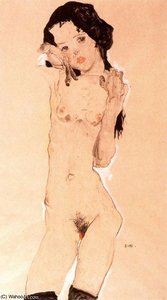
StatsNude black-haired girl

 Pročitaj više
Giclee štampa / Umetnički otisak
Giclée štampa ili print na platnu muzejskog kvaliteta uz brzu proizvodnju i fleksibilne opcije završne obrade. ( Kupi ručno naslikanu sliku Switch to Digital Image)




P118B $10

P118H $10

P118W $10

P438Z $10

P508JH $12

P508YH $12

P805H $10

P805Z $10

P919BZ $10

P919G $10

P919XJ $10

P959ZH $10

P968JZ $12

W106C $8

W218G $10

W218JH $8

W218Y $10

W307PJ $10

W316G $10

W316PJ $8

W316Y $10

W398PJ $8

W4111J $10

W500HY $15

W500JH $15

W692G $12

W849H $8

W940BG $15

W953PJ $8




Izaberite jednu od naših unapred definisanih veličina koje odgovaraju originalnim proporcijama umetničkog dela.

Možete uneti sopstvene dimenzije kako biste umetničko delo prilagodili specifičnom okviru ili prostoru. Ako odabrani format ne odgovara proporcijama originalne slike, mi ćemo ili iscrtati deo dela ili proširiti sliku pomoću ogledane ivice ili jednobojnog popunjavanja. Digitalni prikaz će vam biti poslat na odobrenje pre početka proizvodnje.
Imajte na umu da pregled na ekranu ne odražava stvarno iscrtavanje ili proširivanje. Samo će prikaz (mockup) precizno pokazati finalnu kompoziciju.
Iako su prilagođene dimenzije dostupne, preporučujemo da odaberete dimenziju sa unapred definisane liste kako biste očuvali originalne proporcije.
Dostava širom sveta () za 2 nedelje umesto uobičajenih 4/5 nedelja. (8 септембар)

Besplatna ekspresna dostava širom sveta

Visokokvalitetno laneno platno

Kompletno osiguranje transporta

Garancija povraćaja carine i uvoznih dažbina

Garancija vernosti boja

Politika povraćaja u roku od 100 dana (isključivo u slučaju nedostataka)

Garancija povrata novca od 100%

Popust pri grupnoj kupovini
 Opcija sa staklom dostupna je samo za dimenzije manje od 110 cm

Nude black-haired girl
Giclee štampa / Umetnički otisak
Dimenzije reprodukcije
-


Konačna cena
$ 62
A Study in Vulnerability: Egon Schiele’s ‘Nude Black-Haired Girl’
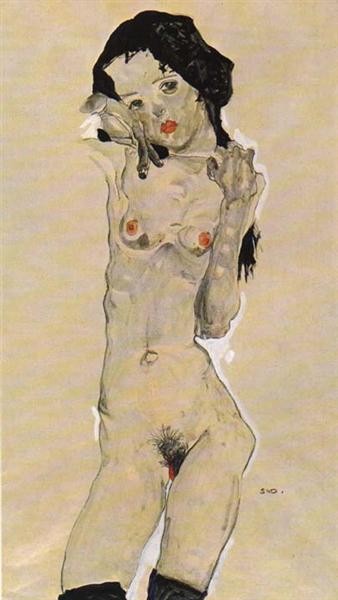
Egon Schiele's “Nude Black-Haired Girl,” a hauntingly intimate portrait rendered in the late 1910s, stands as a pivotal work within the artist’s intensely personal and emotionally charged oeuvre. More than simply a depiction of a nude figure, it’s an exploration of vulnerability, introspection, and the precarious balance between life and death – themes that would increasingly dominate Schiele's artistic vision during his tragically short career. The painting immediately commands attention with its stark simplicity and unsettling directness; a young woman, almost unnervingly still, occupies the center of the composition, her dark hair cascading across her shoulders in a deliberate, slightly defiant gesture.
Schiele’s distinctive style is powerfully evident here. He employs a technique heavily influenced by Expressionism, prioritizing subjective emotion and distorted forms over photographic realism. Loose, expressive brushstrokes create a sense of movement and immediacy, while thick black outlines delineate the figure's contours with an almost sculptural quality. These lines aren’t merely delineating form; they actively separate the subject from the muted beige background, intensifying her isolation and vulnerability. The use of watercolor or gouache on paper lends a fluidity to the paint application, suggesting both delicacy and underlying tension – a visual echo of the emotional complexity at play.
The Language of Line and Form
Schiele’s masterful manipulation of line is central to the painting's impact. The stark black outlines aren’t simply boundaries; they are active participants in the narrative, creating a sense of unease and drawing the viewer into the figure’s gaze. Notice how these lines subtly emphasize the curves of her body – the gentle slope of her shoulders, the delicate arch of her back – yet simultaneously hint at underlying fragility. The simplification of shapes, moving away from realistic representation, allows Schiele to focus on conveying a deeper psychological state. This deliberate abstraction amplifies the painting’s emotional resonance, inviting viewers to project their own feelings and interpretations onto the image.
The composition itself contributes significantly to this effect. The figure is positioned slightly off-center, creating a dynamic imbalance that mirrors the internal turmoil suggested by her expression. Her gaze is averted, not confrontational, suggesting a quiet contemplation – perhaps even a melancholy awareness of mortality. The minimal perspective—a flattened space devoid of traditional depth—further enhances the sense of intimacy and immediacy, as if we are witnesses to a private moment.
Symbolism and Context
Considering Schiele’s life and artistic trajectory, “Nude Black-Haired Girl” can be understood within the context of his preoccupation with death, illness, and the human condition. The early loss of his father, who succumbed to syphilis, profoundly impacted Schiele's work, fueling a fascination with mortality and the fragility of existence. This painting resonates with that broader theme, embodying a sense of vulnerability and quiet desperation. The train motif, a recurring element in Schiele’s art, subtly appears here—perhaps representing journeys, both physical and metaphorical, towards an uncertain destination.
Furthermore, it's important to note the historical context of 1910-1918 Vienna – a period marked by social upheaval, artistic experimentation, and a growing sense of anxiety. Schiele’s work reflects this atmosphere, capturing the emotional intensity and psychological complexities of his time. The painting’s raw honesty and unflinching portrayal of human vulnerability continue to resonate with viewers today, solidifying its place as a significant masterpiece of Expressionist art.
A Timeless Portrait of Introspection
“Nude Black-Haired Girl” is more than just a depiction of a nude figure; it’s a profound meditation on the human condition. Schiele's masterful use of line, simplified forms, and evocative brushwork creates an image that is both unsettling and deeply moving. A reproduction of this work offers a unique opportunity to experience the intensity of Schiele’s vision – a testament to his ability to capture not just the outward appearance of the body, but also the complex emotions and psychological states within.
Srodna umetnička dela
Biografija umetnika
A Life Forged in Expression
Born in 1890 in the Austrian town of Tulln an der Donau, Egon Schiele’s life was a tempestuous journey marked by both extraordinary artistic vision and profound personal hardship. His early years were shadowed by illness and loss; his father succumbed to syphilis when Egon was just fourteen, a tragedy that would deeply resonate within his work, fueling an obsession with mortality and the fragility of existence. Raised initially by his mother and then under the somewhat controlling guardianship of his uncle Leopold Czihaczek, Schiele’s childhood lacked conventional stability but fostered a fiercely independent spirit. Even as a boy, he displayed an intense fascination with trains—a motif that subtly reappeared in later paintings—and a burgeoning talent for drawing, though this was initially met with disapproval from his father who saw it as a distraction from more practical pursuits. The early death of his sister Elvira also cast a long shadow over the young artist’s psyche. These formative experiences instilled within him a sensitivity and an emotional rawness that would become hallmarks of his artistic expression, a constant grappling with themes of life, death, and the human condition.
The Crucible of Vienna: Artistic Development
Schiele's formal artistic training began at the Kunstgewerbeschule (School of Arts and Crafts) in Vienna, but he quickly found himself stifled by its conservative approach. He transferred to the Akademie der bildenden Künste (Academy of Fine Arts), only to become further disillusioned with its rigid academic traditions. This dissatisfaction led him to abandon formal training altogether, choosing instead to forge his own path, a testament to his unwavering artistic conviction. The influence of Gustav Klimt was pivotal during these early years; Schiele admired Klimt’s decorative style and exploration of symbolism, even receiving mentorship from the established artist. However, Schiele soon diverged from Klimt's aesthetic, developing a distinctly individual voice characterized by its stark honesty and psychological intensity. He co-founded the Neues Wiener Kunstgruppe (New Viennese Art Group) in 1909, aligning himself with other progressive artists who challenged the prevailing artistic norms. His early works, often unsettling portraits and self-portraits, began to emerge as powerful statements of emotional turmoil, featuring distorted figures and a palpable sense of vulnerability. These paintings were not merely representations of physical form but explorations of the inner landscape—the anxieties, desires, and fears that haunted the human psyche.
Raw Emotion and Unflinching Truth
Egon Schiele’s art is immediately recognizable for its raw honesty and psychological depth. He fearlessly confronted themes often considered taboo – sexuality, death, anxiety, isolation – with an unflinching gaze. His distinctive style features elongated figures, contorted poses, and expressive lines that convey a sense of unease and emotional intensity. The human form, particularly the nude, became his primary subject, not as an object of idealized beauty but as a vessel for exploring the complexities of human experience. Self-portraits constitute a significant portion of his oeuvre, offering intimate glimpses into his inner world—a world often marked by loneliness and self-doubt. He didn’t shy away from depicting himself in unflattering or vulnerable poses, revealing a profound level of self-awareness and introspection. Beyond self-portraiture, Schiele created numerous portraits of others, capturing their likenesses with an unsettling realism that seemed to penetrate beneath the surface. His landscapes, while less central to his work than his figurative paintings, demonstrate his mastery of form and color, often reflecting the same emotional intensity as his portraits. The use of line is particularly striking in Schiele’s work; it's not merely a tool for defining shape but an expressive force that conveys emotion and psychological tension. Recurring motifs like the *Physalis plant* – symbolizing death and transience with its delicate, papery husk – further underscore this preoccupation with mortality.
A Legacy Cut Short: Achievements & Significance
Despite facing censorship and legal challenges – including a brief imprisonment for allegedly corrupting minors with his art – Schiele gained recognition within Vienna’s avant-garde circles. His work challenged the conventions of the time, provoking both admiration and outrage. By the time of his untimely death during the Spanish flu pandemic in 1918 at the age of twenty-eight, he had established himself as a leading figure in Austrian Expressionism. Significant works such as Self-Portrait with Physalis, Couple Embracing, and Field Landscape (Kreuzberg near Krumau) stand as testaments to his artistic genius. His influence on subsequent generations of artists is undeniable, particularly those interested in exploring psychological themes and challenging conventional artistic norms. Schiele’s bold approach to form and subject matter continues to resonate with audiences today, making him one of the most important and influential figures in early 20th-century art. His paintings are now held in major museum collections worldwide, including the Leopold Museum in Vienna and the Egon Schiele Art Centrum in Český Krumlov, ensuring his artistic legacy endures. He left behind a body of work that is not merely aesthetically compelling but profoundly human—a testament to the power of art to confront the complexities of existence with honesty, courage, and unwavering vision.
- Key Themes: Mortality, sexuality, isolation, psychological turmoil.
- Influences: Gustav Klimt, Viennese Secession, personal trauma.
- Style Characteristics: Elongated figures, contorted poses, expressive lines, raw emotion.
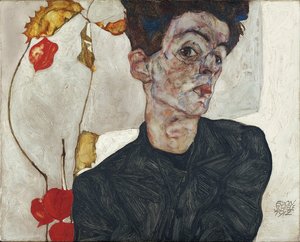
Егон Шиле
1890 - 1918 , Австрија
Osnovne informacije
- Artistic Movement Or Style: Ekspresionizam
- Artists Who Influenced This Artist: ['Gustav Klimt']
- Date Of Birth: 1890
- Date Of Death: 1918
- Full Name: Egon Schiele
- Nationality: Austrijski
- Notable Artworks:
- Samoportret sa fizišalijom
- Par ljubavi
- Polje pejzaž
- Place Of Birth: Tulln, Austria
Povezani članci

Dark Masterpieces: 10 Iconic Paintings Dominated by Black Tones |
Explore 10 iconic paintings dominated by black tones, from Rembrandt’s chiaroscuro to Goya's dark expressions. Discover the stories behind these masterpieces & find museum-quality art reproductions for your home at .
Glavna dela ekspresionizma: 10 remek-dela koja su definisala umetnički pokret
Otkrijte 10 remek-dela ekspresionizma! Uronite u svet Edvarda Muncha, Ernsta Ludwiga Kirchnera i drugih. Istaknute umetničke slike, intenzivne boje i emocionalni izraz. Pronađite inspiraciju za svoj enterijer na ArtsDot.com – vrhunski izbor reprodukcija slika!
Egon Schiele: 25 Remek-dela Ekspresionizma za Vaš Dom | ArtsDot
Istražite 25 remek-dela Egona Schielea – ekspresionističkih portreta i slika koje odražavaju duboke emocije. Kupite reprodukcije vrhunskog kvaliteta za dekoraciju enterijera na ArtsDot.com! Otkrijte celu kolekciju online.
Egon Schiele: Expressionism, Anxiety & the Modern Condition – A Comprehensive Exploration
Explore the emotionally charged world of Egon Schiele (1890-1918). Discover his Expressionist masterpieces, psychological themes, and lasting impact on modern art. A comprehensive guide for collectors & enthusiasts.
Expressionist Painting: 10 Masterpieces That Defined a Movement | ArtsDot
Explore 10 Expressionist paintings that revolutionized art! Discover Munch, Kirchner & Kandinsky's iconic works. Find museum-quality reproductions and vibrant canvas prints to elevate your home decor on ArtsDot.com.