

 Pregledaj u prostoru
 Pošalji
 Podeli
 Detalji o delu

 Преузми
 Slični predmeti
 Rendgenski snimak
 Slajdovi
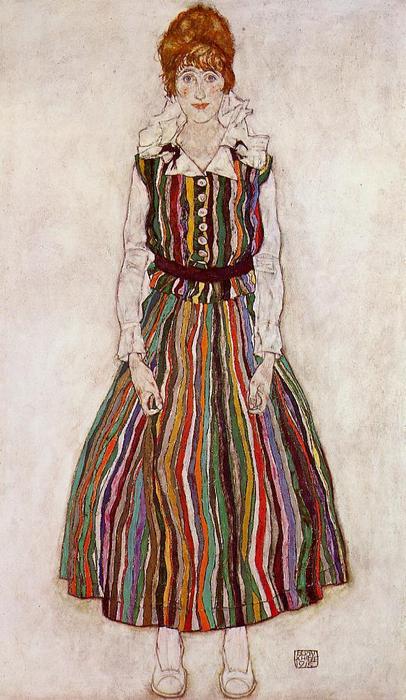
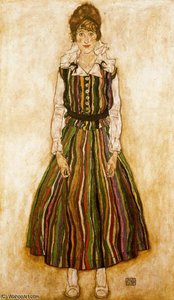
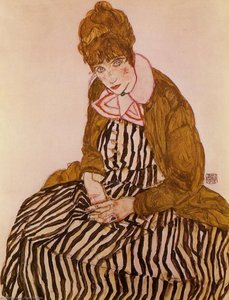
Portrait of Edith Schiele in a Striped Dress


 Pročitaj više
Kupite digitalnu sliku visoke rezolucije i poboljšanog kvaliteta, koja je znatno superiornija od onoga što vidite u online prikazu.
Svaka datoteka je pedantno pripremljena od strane naših stručnjaka koristeći napredne alate i profesionalnu ručnu retušu. Osiguravamo da svaka slika ima izuzetnu oštrinu, preciznu reprodukciju boja i fine detalje.
Konačna datoteka se dostavlja putem e-pošte u roku od 72 sata, optimizovana za neposrednu upotrebu u profesionalnim, izdavačkim i štamparskim okruženjima. To je isti kvalitet kojem veruju vrhunski studiji dizajna, izdavači i galerije.
Digitalna slika
Preuzmite datoteku visoke rezolucije za ličnu upotrebu, štampanje i kreativne projekte. ( Kupi print Kupi ručno naslikanu sliku)
Uključeno uz svaku porudžbinu digitalne slike
Profesionalna digitalna isporuka, zagarantovana
Kada odaberete ArtsDot.com, ne dobijate samo sliku – vi primate profesionalno unapređeno digitalno umetničko delo, izrađeno sa najvećom preciznošću i uz garanciju zadovoljstva. Evo svega što automatski dolazi uz vašu porudžbinu:

Brza dostava putem e-pošte
Vaša digitalna slika visoke rezolucije biće vam poslata putem e-pošte u roku od 72 sata od poručivanja – spremna za trenutnu upotrebu.

Digitalna datoteka unapređena veštačkom inteligencijom
Vaše umetničko delo je profesionalno optimizovano korišćenjem naprednih AI alata i ručne obrade, čime se osiguravaju maksimalni detalji, oštrina i preciznost boja.

Besplatna ponovna isporuka doživotno
Slučajno ste obrisali ili izgubili svoju datoteku? Ne brinite – poslaćemo vam je ponovo u bilo kom trenutku, potpuno besplatno.

Bez troškova uvoza – zauvek
Uživajte u svojim umetničkim delima trenutno, bez carine, dažbina ili troškova dostave – digitalni download je uvek bez poreza.

Garancija vernosti boja
Uz pomoć profesionalnih alata i upravljanja bojama, osiguravamo da vaša digitalna slika što vernije odražava originalne boje.

Garancija zadovoljstva u roku od 60 dana
Ako niste zadovoljni svojom digitalnom slikom, revidirat ćemo je ili vratiti 100% novca u roku od 60 dana – bez ikakvih pitanja.

100% garancija povrata novca
Niste zadovoljni? Obezbedite pun povrat novca u roku od 60 dana od trenutka kada ste primili svoju digitalnu datoteku – bez suvišnih pitanja.

Popusti na velike porudžbine
Kupite 3 slike, uštedite 10% - Kupite 5 slika, uštedite 15% - Kupite 10+ slika, uštedite 20%. Odlično za kreativne projekte, galerije i agencije.
Opis kolekcionarskog dela
A Portrait of Intensity: Egon Schiele’s ‘Portrait of Edith Schiele in a Striped Dress’
Egon Schiele's “Portrait of Edith Schiele in a Striped Dress,” painted in 1915, isn’t merely a likeness; it’s a raw distillation of emotion captured on canvas. This arresting image, currently residing within the Haags Gemeentemuseum’s collection, offers a profound glimpse into the artist's world – a world steeped in melancholy, introspection, and an unsettling fascination with the human condition. The painting immediately commands attention through its bold use of color and distorted forms, hallmarks of Schiele’s signature Expressionist style. The vibrant red and green stripes of Edith’s dress aren’t simply decorative; they pulsate with a nervous energy, mirroring perhaps the emotional turbulence simmering beneath the surface.
The Artist and His Subject: A Marriage of Souls
Schiele's relationship with his wife, Edith, was both intensely loving and profoundly fraught. Their marriage, occurring in 1913, provided a crucial anchor for Schiele during a period of intense personal struggle. This portrait isn’t a celebration of idyllic domesticity; instead, it feels like an intimate study of a shared vulnerability. Edith herself, a model known for her own artistic pursuits and striking beauty, is presented with a directness that borders on unflinching honesty. Her posture – hands resting confidently on her hips – speaks to a quiet strength, yet her gaze holds a hint of sadness, a subtle acknowledgment of the anxieties inherent in their lives. The connection between artist and subject is palpable; Schiele seems less interested in creating a conventional portrait and more focused on conveying the complex interplay of emotions within their shared space.
Expressionist Techniques: Distortion as Revelation
Schiele’s technique is deliberately unsettling. He employs loose, almost frantic brushstrokes—a characteristic of Expressionism—to build up layers of color and texture. The forms are subtly distorted, particularly in the rendering of Edith's face and body. This isn’t a pursuit of photographic realism; rather, it’s an attempt to externalize inner feelings. The elongated limbs, the slightly skewed perspective, all contribute to a sense of unease and psychological depth. Notice how the background is rendered with minimal detail – a simple wall acting as a neutral backdrop that doesn't distract from the central figure. This strategic simplicity further emphasizes Edith’s presence and amplifies the emotional weight of the scene.
Symbolism and Mortality: Echoes of Schiele’s Worldview
Born in 1890, Egon Schiele's life was tragically cut short at just 28 years old. The shadow of his father’s illness – a devastating case of syphilis – profoundly impacted his artistic vision and fueled an enduring preoccupation with themes of mortality, disease, and the fragility of human existence. This portrait can be interpreted through this lens; Edith’s presence feels almost ephemeral, as if she is caught in a fleeting moment before succumbing to some unseen fate. The subtle hints of melancholy in her expression, combined with Schiele's characteristic distortions, create an atmosphere of quiet contemplation on the transient nature of beauty and life itself. The painting serves as a poignant reminder of the artist’s own precarious existence and his willingness to confront difficult truths through his art.
High-quality reproductions of “Portrait of Edith Schiele in a Striped Dress” are available at https://ArtsDot.com, offering art enthusiasts the opportunity to bring this powerful and evocative masterpiece into their homes or offices. For further exploration of Egon Schiele’s life and work, we encourage you to visit the Leopold Museum in Vienna: /art/list/?Filter=A@D3B39D-The-Leopold-Museum-Vienna-Austria.
Srodna umetnička dela
Biografija umetnika
A Life Forged in Expression
Born in 1890 in the Austrian town of Tulln an der Donau, Egon Schiele’s life was a tempestuous journey marked by both extraordinary artistic vision and profound personal hardship. His early years were shadowed by illness and loss; his father succumbed to syphilis when Egon was just fourteen, a tragedy that would deeply resonate within his work, fueling an obsession with mortality and the fragility of existence. Raised initially by his mother and then under the somewhat controlling guardianship of his uncle Leopold Czihaczek, Schiele’s childhood lacked conventional stability but fostered a fiercely independent spirit. Even as a boy, he displayed an intense fascination with trains—a motif that subtly reappeared in later paintings—and a burgeoning talent for drawing, though this was initially met with disapproval from his father who saw it as a distraction from more practical pursuits. The early death of his sister Elvira also cast a long shadow over the young artist’s psyche. These formative experiences instilled within him a sensitivity and an emotional rawness that would become hallmarks of his artistic expression, a constant grappling with themes of life, death, and the human condition.
The Crucible of Vienna: Artistic Development
Schiele's formal artistic training began at the Kunstgewerbeschule (School of Arts and Crafts) in Vienna, but he quickly found himself stifled by its conservative approach. He transferred to the Akademie der bildenden Künste (Academy of Fine Arts), only to become further disillusioned with its rigid academic traditions. This dissatisfaction led him to abandon formal training altogether, choosing instead to forge his own path, a testament to his unwavering artistic conviction. The influence of Gustav Klimt was pivotal during these early years; Schiele admired Klimt’s decorative style and exploration of symbolism, even receiving mentorship from the established artist. However, Schiele soon diverged from Klimt's aesthetic, developing a distinctly individual voice characterized by its stark honesty and psychological intensity. He co-founded the Neues Wiener Kunstgruppe (New Viennese Art Group) in 1909, aligning himself with other progressive artists who challenged the prevailing artistic norms. His early works, often unsettling portraits and self-portraits, began to emerge as powerful statements of emotional turmoil, featuring distorted figures and a palpable sense of vulnerability. These paintings were not merely representations of physical form but explorations of the inner landscape—the anxieties, desires, and fears that haunted the human psyche.
Raw Emotion and Unflinching Truth
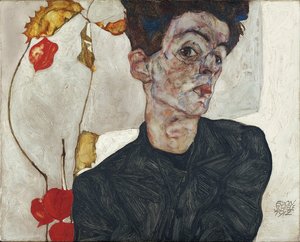
Egon Schiele’s art is immediately recognizable for its raw honesty and psychological depth. He fearlessly confronted themes often considered taboo – sexuality, death, anxiety, isolation – with an unflinching gaze. His distinctive style features elongated figures, contorted poses, and expressive lines that convey a sense of unease and emotional intensity. The human form, particularly the nude, became his primary subject, not as an object of idealized beauty but as a vessel for exploring the complexities of human experience. Self-portraits constitute a significant portion of his oeuvre, offering intimate glimpses into his inner world—a world often marked by loneliness and self-doubt. He didn’t shy away from depicting himself in unflattering or vulnerable poses, revealing a profound level of self-awareness and introspection. Beyond self-portraiture, Schiele created numerous portraits of others, capturing their likenesses with an unsettling realism that seemed to penetrate beneath the surface. His landscapes, while less central to his work than his figurative paintings, demonstrate his mastery of form and color, often reflecting the same emotional intensity as his portraits. The use of line is particularly striking in Schiele’s work; it's not merely a tool for defining shape but an expressive force that conveys emotion and psychological tension. Recurring motifs like the *Physalis plant* – symbolizing death and transience with its delicate, papery husk – further underscore this preoccupation with mortality.
A Legacy Cut Short: Achievements & Significance
Despite facing censorship and legal challenges – including a brief imprisonment for allegedly corrupting minors with his art – Schiele gained recognition within Vienna’s avant-garde circles. His work challenged the conventions of the time, provoking both admiration and outrage. By the time of his untimely death during the Spanish flu pandemic in 1918 at the age of twenty-eight, he had established himself as a leading figure in Austrian Expressionism. Significant works such as Self-Portrait with Physalis, Couple Embracing, and Field Landscape (Kreuzberg near Krumau) stand as testaments to his artistic genius. His influence on subsequent generations of artists is undeniable, particularly those interested in exploring psychological themes and challenging conventional artistic norms. Schiele’s bold approach to form and subject matter continues to resonate with audiences today, making him one of the most important and influential figures in early 20th-century art. His paintings are now held in major museum collections worldwide, including the Leopold Museum in Vienna and the Egon Schiele Art Centrum in Český Krumlov, ensuring his artistic legacy endures. He left behind a body of work that is not merely aesthetically compelling but profoundly human—a testament to the power of art to confront the complexities of existence with honesty, courage, and unwavering vision.
- Key Themes: Mortality, sexuality, isolation, psychological turmoil.
- Influences: Gustav Klimt, Viennese Secession, personal trauma.
- Style Characteristics: Elongated figures, contorted poses, expressive lines, raw emotion.
Егон Шиле
1890 - 1918 , Австрија
Kratke činjenice
- Artistic Movement Or Style: Ekspresionizam
- Artists Who Influenced This Artist: ['Gustav Klimt']
- Date Of Birth: 1890
- Date Of Death: 1918
- Full Name: Egon Schiele
- Nationality: Austrijski
- Notable Artworks:
- Samoportret sa fizišalijom
- Par ljubavi
- Polje pejzaž
- Place Of Birth: Tulln, Austria

