 Pregledaj u prostoru
 Pošalji
 Podeli
 Detalji o delu

 Преузми
 Slični predmeti
 Rendgenski snimak
 Slajdovi
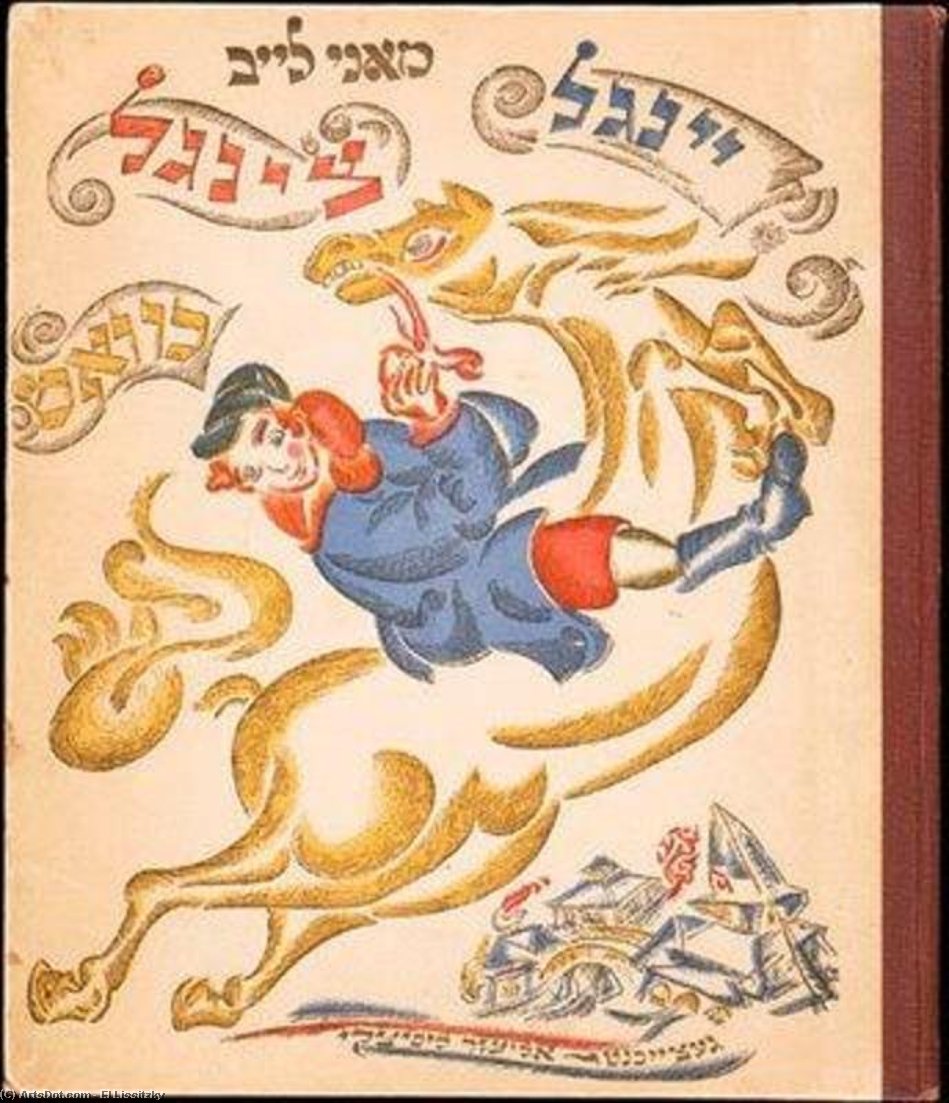
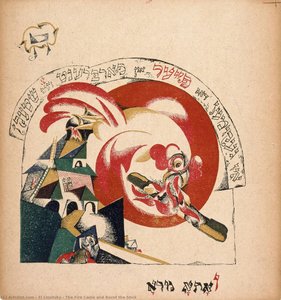
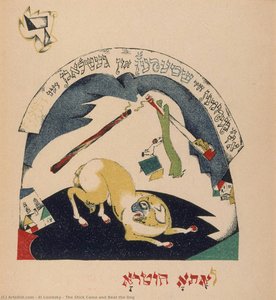
Book cover for 'Ingle-Tsingl-Khvat' by Mani Leib


 Pročitaj više
Ručno rađena uljana reprodukcija
Ručno oslikano uljanim bojama na platnu u dimenzijama i okviru po vašem izboru, izrađeno po porudžbini od strane naših umetnika. ( Kupi print Kupi digitalnu sliku)




P118B $10

P118H $10

P118W $10

P438Z $10

P508JH $12

P508YH $12

P805H $10

P805Z $10

P919BZ $10

P919G $10

P919XJ $10

P959ZH $10

P968JZ $12

W106C $8

W218G $10

W218JH $8

W218Y $10

W307PJ $10

W316G $10

W316PJ $8

W316Y $10

W398PJ $8

W4111J $10

W500HY $15

W500JH $15

W692G $12

W849H $8

W940BG $15

W953PJ $8




Izaberite jednu od naših unapred definisanih veličina koje odgovaraju originalnim proporcijama umetničkog dela.

Можете унети сопствене димензије како бисте прилагодили дело одређеном оквиру или простору. Ако одабрана величина не одговара пропорцијама оригинала, слика ће бити исечена или проширена додатним елементима који се ручно насликавају. Дигитални prikaz ће вам бити послат на одобрење пре почетка производње.
Имајте на уму да преглед на екрану не одражава стварно исецање или проширење. Само приказ (mockup) ће тачно приказати коначну композицију.
Иако су доступне прилагођене величине, препоручујемо да одаберете димензију из дефинисане листе како бисте сачували оригиналне пропорције.
Nakon narudžbine, tim ArtsDot.com će klijentu putem e-pošte poslati uputstva i dostaviti prikaz predloženog rešenja
Isporuka širom sveta () za 3/4 nedelje umesto uobičajenih 5 nedelja. (23 август). Bez kompromisa po pitanju kvaliteta.

Besplatna ekspresna dostava širom sveta

Visokokvalitetno laneno platno

Kompletno osiguranje transporta

Garancija povraćaja carine i uvoznih dažbina

Garancija vernosti boja

Politika povrata u roku od 60 dana (samo u slučaju nedostataka)

Garancija povrata novca od 100%

Popust pri grupnoj kupovini
 Opcija sa staklom dostupna je samo za dimenzije manje od 110 cm

Book cover for 'Ingle-Tsingl-Khvat' by Mani Leib
Tehnika reprodukcije
Dimenzije reprodukcije
-


Konačna cena
$ 263
Opis umetničkog dela
A Portrait of Resilience: Exploring El Lissitzky’s ‘Book Cover for Ingle-Tsingl-Khvat’
El Lissitzky's 'Book Cover for Ingle-Tsingl-Khvat,' created in 1918, transcends mere illustration; it embodies a potent distillation of revolutionary idealism and Jewish cultural heritage. This striking image captures a solitary rider atop a horse—a figure rendered with meticulous geometric abstraction—against a backdrop punctuated by birds, a clock, and a book, elements laden with symbolic significance that speak to the anxieties and aspirations of its time. The painting’s enduring appeal lies not only in its visual dynamism but also in its ability to convey a complex narrative about identity and perseverance amidst societal upheaval.- Subject Matter & Composition: Lissitzky's depiction centers around a single male figure positioned prominently on horseback, symbolizing strength and movement—themes central to the Russian Revolution. The horse’s placement on the left establishes a visual hierarchy, directing the viewer’s gaze towards the rider’s unwavering posture.
- Style & Technique: Lissitzky's signature style is characterized by Constructivism, an artistic movement that championed geometric abstraction as a tool for conveying social and political ideas. The artist employs precise lines and planes to construct the horse and rider, eschewing traditional representational techniques in favor of simplified forms that prioritize clarity and impact.
Historical Context: The Dawn of Revolution & Jewish Diaspora Concerns
The painting’s genesis coincides with the tumultuous period following Russia's Bolshevik takeover in 1917. Lissitzky, deeply invested in Zionist ideals—a movement advocating for the establishment of a Jewish homeland—was acutely aware of the challenges faced by his fellow Jews navigating the complexities of Soviet society. The inclusion of birds – often interpreted as symbols of freedom and aspiration – reflects this broader preoccupation with diaspora concerns and the yearning for liberation from oppression. Simultaneously, the clock represents time passing relentlessly onward, mirroring the urgency felt by revolutionaries striving to reshape the world.- Symbolism: Beyond its immediate visual elements, ‘Book Cover’ operates on multiple symbolic levels. The horse embodies resilience and determination, qualities crucial for overcoming obstacles. The birds signify hope and spiritual renewal, mirroring the Zionist dream of rebuilding Jewish life in Palestine.
- Color Palette & Texture: Lissitzky utilizes a restrained color palette—primarily blues and whites—creating an atmosphere of calm contemplation despite the underlying tension of the historical context. The texture is deliberately smooth and flat, furthering the Constructivist aesthetic’s emphasis on clarity and geometric precision.
Emotional Impact & Artistic Legacy
‘Book Cover for Ingle-Tsingl-Khvat’ resonates powerfully with viewers today due to its ability to evoke feelings of quiet contemplation alongside a palpable sense of determination. Lissitzky's masterful manipulation of form and symbolism transcends the specifics of his time, offering an enduring meditation on themes of identity, resistance, and the pursuit of utopian ideals. It stands as a testament to Constructivism’s ambition to transform art into a vehicle for social change—a legacy that continues to inspire artists and designers seeking innovative ways to communicate complex ideas through visual language. Its reproduction allows collectors and interior decorators alike to appreciate Lissitzky's groundbreaking contribution to modern art.Srodna umetnička dela
Biografija umetnika
El Lissitzky (1890–1941): Russian Avant-garde Artist & Designer
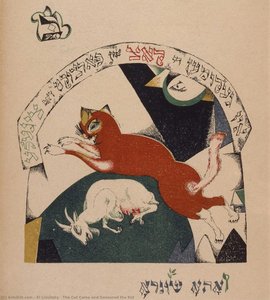
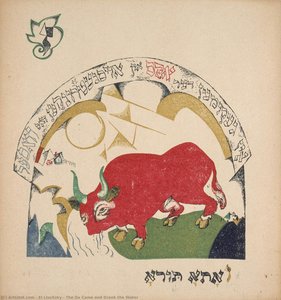
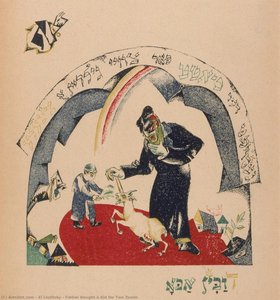
El Lissitzky, born Lazar Markovich Lissitzky in 1890 in the small Russian town of Pochinok, near Smolensk, Russia, emerged as a pivotal figure in the tumultuous landscape of early 20th-century art. His journey was one of constant reinvention, driven by a fervent belief in the power of art to shape society and reflect the dynamism of the modern world. From his initial training as an architect and engineer – pursuits hampered by restrictions placed upon Jewish students – Lissitzky’s path diverged towards artistic expression, initially through illustrations steeped in Jewish folklore. These early works, like his cover for ‘Chad Gadya’, reveal a nascent talent already grappling with narrative and visual storytelling, hinting at the profound cultural roots that would continue to inform his aesthetic. A move to Berlin and Darmstadt broadened his horizons, but it was upon returning to Russia that Lissitzky truly found his artistic voice, becoming inextricably linked with the revolutionary fervor sweeping through the nation.Early Years & Artistic Formation
Lazar Markovich Lissitzky’s formative years were marked by a profound engagement with Jewish culture and tradition. Born into a family of intellectuals—his father Mordukh Zalmanov was a well-educated travel agent who possessed fluency in English and German—Lissitzky benefited from an upbringing that fostered intellectual curiosity and artistic appreciation. He began his formal education at the age of 15, maintaining a teaching career for most of his life, demonstrating a lifelong dedication to disseminating knowledge and fostering creativity. His initial training encompassed architecture and engineering, disciplines that would later inform his groundbreaking approach to design—a perspective shaped by limitations imposed upon Jewish students during Tsarist Russia. Recognizing the importance of visual storytelling, Lissitzky turned to illustration, producing evocative images rooted in Yiddish folklore, notably his celebrated cover for ‘Chad Gadya’ (1917), a poignant retelling of the Passover seder song “One Kid.” This early work foreshadowed Lissitzky's distinctive style—a fusion of Cubo-Futurism and Jewish symbolism—establishing him as an artist deeply attuned to cultural heritage. His travels to Germany, France, Italy, and Belgium broadened his artistic horizons and exposed him to influential European movements.The Suprematist Revolution & Kazimir Malevich’s Influence
A transformative encounter occurred in Vitebsk (now Vitsyebsk), Belarus, where Lissitzky encountered Kazimir Malevich—the architect of Suprematism, a radical movement dedicated to pure geometric abstraction. This meeting ignited Lissitzky's passion for abstraction and cemented his allegiance to Malevich’s uncompromising vision. Together with Malevich and fellow artists, Lissitzky established UNovis (UNOVIS), Vitebsk Group of Constructive Artists—a collective committed to disseminating Suprematist principles through teaching and artistic production. Lissitzky didn’t merely replicate Malevich's style; he forged his own distinctive path, developing *Proun*, a series that blended Suprematism with Constructivism—a daring experiment in spatial representation and architectural design. Proun challenged conventional notions of painting and sculpture, striving to capture the essence of space itself through dynamic compositions featuring intersecting planes and geometric forms. Lissitzky’s unwavering belief in art as a catalyst for social transformation fueled his artistic endeavors—a conviction that would resonate throughout his career. Malevich's influence extended beyond stylistic considerations; it instilled in Lissitzky a fundamental ethos centered on intellectual rigor, uncompromising honesty, and the pursuit of universal visual language.Proun: Spatial Exploration & Architectural Vision
The Proun series represents Lissitzky’s most ambitious exploration of spatial relationships—a bold assertion that art could transcend representational limitations and engage with the very structure of space itself. Departing from traditional painting techniques, Lissitzky employed a unique method combining drawing, painting, sculpture, and architectural design—a holistic approach reflecting his conviction that artistic expression should encompass multiple dimensions. Proun’s geometric forms—primarily squares, rectangles, circles, and triangles—were arranged in complex configurations that resembled architectural blueprints or exploded diagrams—visual representations of spatial transformations. Lissitzky reasoned that the future of art lay in its ability to harmonize with architecture—a vision articulated eloquently in his manifesto “The Space Must Be a Kind of Showcase…” He sought to create environments that fostered contemplation and inspired innovation—challenging established conventions regarding gallery spaces and promoting a new aesthetic sensibility rooted in geometric abstraction. Lissitzky’s Proun series stands as a testament to his intellectual curiosity, artistic daring, and unwavering commitment to pushing the boundaries of visual expression—a legacy that continues to inspire artists and designers worldwide.Typography, Exhibition Design & Propaganda: Artistic Engagement
Beyond his pioneering explorations of spatial representation, Lissitzky revolutionized typography—creating innovative fonts and graphic designs that conveyed complex ideas with clarity and elegance. He recognized that effective communication demanded meticulous attention to visual form—a conviction that guided his work on posters, books, and exhibition displays—often serving as a visual communicator for Soviet propaganda efforts. Lissitzky’s masterful use of color, shape, and text—combined with an uncompromising commitment to social responsibility—established him as one of the foremost designers of his era. His iconic poster “The Constructor” (1924)—a striking depiction of a stylized hammer and sickle—became emblematic of Soviet ideology—a powerful visual statement reflecting the nation’s aspirations for industrial progress and collective action. Lissitzky's exhibition designs—particularly those conceived for the Bauhaus in Weimar—challenged conventional gallery spaces—creating immersive environments that actively engaged viewers—promoting a new aesthetic sensibility rooted in geometric abstraction and functionalism. His work profoundly influenced subsequent generations of artists and designers—solidifying his place as a visionary who reshaped the visual landscape of the 20th century. Lissitzky’s legacy extends far beyond his artistic creations—serving as an inspiration for those striving to harness art's transformative potential—a testament to his enduring influence on cultural discourse and aesthetic innovation.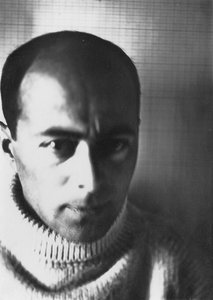
Ел Лисицкий
1890 - 1941 , Руси́я
Osnovne informacije
- Artistic Movement Or Style:
- Suprematism
- Konstruktivizam
- Artists Or Movements Influenced By This Artist: ['Bauhaus']
- Artists Who Influenced This Artist: ['Kazimir Malevich']
- Date Of Birth: Nov 23, 1890
- Date Of Death: Dec 30, 1941
- Full Name: El Lissitzky
- Nationality: Rusija
- Notable Artworks:
- Izgraditel'
- Pokrov
- Place Of Birth: Pochinok, Russia
Povezani članci

Top 10 dela geometrijske apstrakcije koje morate videti | ArtsDot.com
Istražite 10 remek-dela geometrijske apstrakcije – Mondrian, Malevič i Kandinski. Otkrijte priče iza ovih ikoničnih slika i pronađite inspiraciju za dekoraciju enterijera sa ArtsDot.com! Reprodukcije vrhunskog kvaliteta.
Beyond Form & Color: Geometric Abstraction's Evolution in 20th/21st Century Art
Explore the evolution of geometric abstraction from Cubism to contemporary art. Discover key artists like Malevich & Mondrian, investment insights, and expert collecting advice at ArtsDot.
Beyond Form & Color: Geometric Abstraction's Enduring Legacy in Art History
Explore the captivating world of geometric abstraction! Discover its origins, key artists like Malevich & Mondrian, and why this movement remains highly valued by art collectors today. Expert insights at ArtsDot.

Kandinsky's Masterpieces: 25 Paintings That Define Abstract Art | ArtsDot
Journey through Wassily Kandinsky's 25 most iconic abstract paintings. Explore his revolutionary use of color, form & spiritual expressionism. Find museum-quality Kandinsky reproductions and elevate your home decor with ArtsDot.com. Discover all masterpieces on ArtsDot.com!
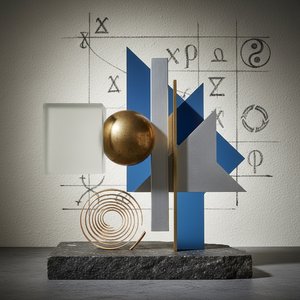
Beyond Form: Exploring the Philosophical Foundations of Geometric Abstraction
Explore the philosophical roots & artistic evolution of geometric abstraction with ArtsDot. Discover Mondrian, Malevich, De Stijl & more. Expert insights for collectors and art enthusiasts.