

 Pregledaj u prostoru
 Pošalji
 Podeli
 Detalji o delu

 Преузми
 Slični predmeti
 Rendgenski snimak
 Slajdovi
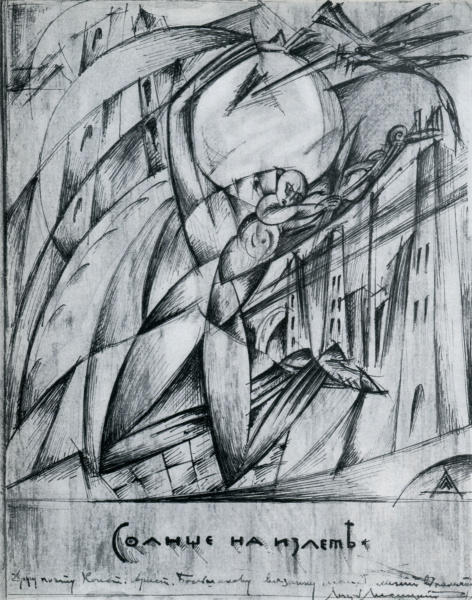
Flying Sun


 Pročitaj više
Kupite digitalnu sliku visoke rezolucije i poboljšanog kvaliteta, koja je znatno superiornija od onoga što vidite u online prikazu.
Svaka datoteka je pedantno pripremljena od strane naših stručnjaka koristeći napredne alate i profesionalnu ručnu retušu. Osiguravamo da svaka slika ima izuzetnu oštrinu, preciznu reprodukciju boja i fine detalje.
Konačna datoteka se dostavlja putem e-pošte u roku od 72 sata, optimizovana za neposrednu upotrebu u profesionalnim, izdavačkim i štamparskim okruženjima. To je isti kvalitet kojem veruju vrhunski studiji dizajna, izdavači i galerije.
Digitalna slika
Preuzmite datoteku visoke rezolucije za ličnu upotrebu, štampanje i kreativne projekte. ( Kupi print Kupi ručno naslikanu sliku)
Uključeno uz svaku porudžbinu digitalne slike
Profesionalna digitalna isporuka, zagarantovana
Kada odaberete ArtsDot.com, ne dobijate samo sliku – vi primate profesionalno unapređeno digitalno umetničko delo, izrađeno sa najvećom preciznošću i uz garanciju zadovoljstva. Evo svega što automatski dolazi uz vašu porudžbinu:

Brza dostava putem e-pošte
Vaša digitalna slika visoke rezolucije biće vam poslata putem e-pošte u roku od 72 sata od poručivanja – spremna za trenutnu upotrebu.

Digitalna datoteka unapređena veštačkom inteligencijom
Vaše umetničko delo je profesionalno optimizovano korišćenjem naprednih AI alata i ručne obrade, čime se osiguravaju maksimalni detalji, oštrina i preciznost boja.

Besplatna ponovna isporuka doživotno
Slučajno ste obrisali ili izgubili svoju datoteku? Ne brinite – poslaćemo vam je ponovo u bilo kom trenutku, potpuno besplatno.

Bez troškova uvoza – zauvek
Uživajte u svojim umetničkim delima trenutno, bez carine, dažbina ili troškova dostave – digitalni download je uvek bez poreza.

Garancija vernosti boja
Uz pomoć profesionalnih alata i upravljanja bojama, osiguravamo da vaša digitalna slika što vernije odražava originalne boje.

Garancija zadovoljstva od 100 dana
Ako niste zadovoljni svojom digitalnom slikom, izvršićemo reviziju ili ćemo vam vratiti 100% novca u roku od 100 dana – bez ikakvih pitanja.

100% garancija povrata novca
Niste zadovoljni? Dobijte puni povraćaj novca u roku od 100 dana od prijema digitalne datoteke – bez suvišnih pitanja.

Popusti na velike porudžbine
Kupite 3 slike, uštedite 10% - Kupite 5 slika, uštedite 15% - Kupite 10+ slika, uštedite 20%. Odlično za kreativne projekte, galerije i agencije.
A Dance of Geometry and Spirit: El Lissitzky’s “Flying Sun”
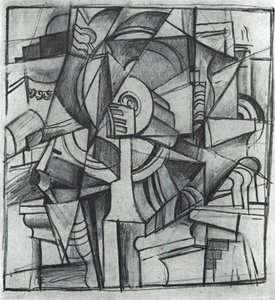
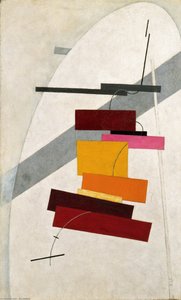
El Lissitzky's "Flying Sun," created in 1916 during the vibrant crucible of Cubo-Futurist experimentation, isn’t merely a depiction of a sun; it’s an embodiment of a revolutionary artistic vision. This black and white drawing, now available as a meticulously hand-painted reproduction at ArtsDot.com, transcends representational art to become a powerful exploration of dynamism, movement, and the very essence of modern existence. Lissitzky, a key figure in the Russian avant-garde, sought to dismantle traditional artistic conventions and build a new visual language rooted in geometric abstraction – a pursuit powerfully realized within this single, arresting composition.
The artwork immediately commands attention with its dynamic arrangement. A central, bird-like form dominates the upper register, seemingly suspended mid-flight, wings outstretched as if caught in an eternal upward surge. Surrounding this primary figure are angular shapes – a complex interplay of triangles, rectangles, and curves – that simultaneously evoke architectural structures and stylized landscapes. These aren’t static elements; they appear to be actively engaged in a spatial dance, creating a sense of depth and layering that defies traditional perspective. Lissitzky masterfully employs lines not just as outlines but as active participants in the composition, guiding the viewer's eye through a fragmented yet cohesive visual experience.
The Language of Line: Hatching and Suprematism
Lissitzky’s technique is characterized by an almost obsessive attention to line. Bold, dark lines define the shapes with unwavering precision, creating dramatic contrasts that heighten their impact. Crucially, he utilizes hatching and cross-hatching – a meticulous layering of parallel lines – to build up tonal variations and suggest texture within the forms. This isn’t simply about depicting surface; it's about imbuing the artwork with a palpable sense of volume and materiality. The illusion of shading is achieved through this masterful manipulation of line weight and density, lending a remarkable three-dimensionality to what could easily have remained a flat composition.
The work firmly aligns itself with Suprematism, a movement pioneered by Kazimir Malevich that prioritized pure geometric forms over representational imagery. Lissitzky’s “Flying Sun” exemplifies this principle – the focus is entirely on the fundamental shapes themselves and their relationships to one another. The absence of recognizable figures or landscapes allows the viewer to engage with the artwork on an intellectual and emotional level, interpreting its symbolic meaning through the purely visual elements.
Symbolism and the Spirit of Flight
The title itself, “Flying Sun,” immediately imbues the work with layers of symbolism. The sun, a potent archetype across cultures, represents not just light but also energy, life force, and spiritual ascension. Within Lissitzky’s composition, the central figure's flight can be interpreted as an aspiration towards transcendence – a yearning for something beyond the earthly realm. The surrounding geometric forms might represent the structures of society or the challenges faced in navigating the modern world, while the sun itself symbolizes hope and renewal.
Considering Lissitzky’s broader context—his involvement in Constructivism and his belief in art's capacity to shape a new social order—"Flying Sun" can be viewed as an expression of revolutionary fervor. It’s a visual manifesto, advocating for a shift towards a more rational and dynamic world through the power of abstract form. The emotional impact is undeniably one of dynamism, tension, and a profound sense of movement – a feeling that resonates even today within this timeless masterpiece. ArtsDot.com offers exceptional hand-painted reproductions, allowing you to experience the full force of Lissitzky’s vision in stunning detail.
Srodna umetnička dela
Biografija umetnika
El Lissitzky (1890–1941): Russian Avant-garde Artist & Designer
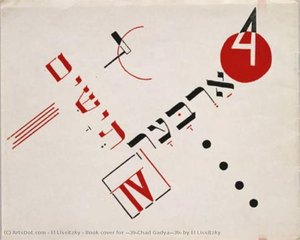
El Lissitzky, born Lazar Markovich Lissitzky in 1890 in the small Russian town of Pochinok, near Smolensk, Russia, emerged as a pivotal figure in the tumultuous landscape of early 20th-century art. His journey was one of constant reinvention, driven by a fervent belief in the power of art to shape society and reflect the dynamism of the modern world. From his initial training as an architect and engineer – pursuits hampered by restrictions placed upon Jewish students – Lissitzky’s path diverged towards artistic expression, initially through illustrations steeped in Jewish folklore. These early works, like his cover for ‘Chad Gadya’, reveal a nascent talent already grappling with narrative and visual storytelling, hinting at the profound cultural roots that would continue to inform his aesthetic. A move to Berlin and Darmstadt broadened his horizons, but it was upon returning to Russia that Lissitzky truly found his artistic voice, becoming inextricably linked with the revolutionary fervor sweeping through the nation.Early Years & Artistic Formation
Lazar Markovich Lissitzky’s formative years were marked by a profound engagement with Jewish culture and tradition. Born into a family of intellectuals—his father Mordukh Zalmanov was a well-educated travel agent who possessed fluency in English and German—Lissitzky benefited from an upbringing that fostered intellectual curiosity and artistic appreciation. He began his formal education at the age of 15, maintaining a teaching career for most of his life, demonstrating a lifelong dedication to disseminating knowledge and fostering creativity. His initial training encompassed architecture and engineering, disciplines that would later inform his groundbreaking approach to design—a perspective shaped by limitations imposed upon Jewish students during Tsarist Russia. Recognizing the importance of visual storytelling, Lissitzky turned to illustration, producing evocative images rooted in Yiddish folklore, notably his celebrated cover for ‘Chad Gadya’ (1917), a poignant retelling of the Passover seder song “One Kid.” This early work foreshadowed Lissitzky's distinctive style—a fusion of Cubo-Futurism and Jewish symbolism—establishing him as an artist deeply attuned to cultural heritage. His travels to Germany, France, Italy, and Belgium broadened his artistic horizons and exposed him to influential European movements.The Suprematist Revolution & Kazimir Malevich’s Influence
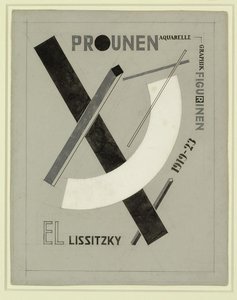
A transformative encounter occurred in Vitebsk (now Vitsyebsk), Belarus, where Lissitzky encountered Kazimir Malevich—the architect of Suprematism, a radical movement dedicated to pure geometric abstraction. This meeting ignited Lissitzky's passion for abstraction and cemented his allegiance to Malevich’s uncompromising vision. Together with Malevich and fellow artists, Lissitzky established UNovis (UNOVIS), Vitebsk Group of Constructive Artists—a collective committed to disseminating Suprematist principles through teaching and artistic production. Lissitzky didn’t merely replicate Malevich's style; he forged his own distinctive path, developing *Proun*, a series that blended Suprematism with Constructivism—a daring experiment in spatial representation and architectural design. Proun challenged conventional notions of painting and sculpture, striving to capture the essence of space itself through dynamic compositions featuring intersecting planes and geometric forms. Lissitzky’s unwavering belief in art as a catalyst for social transformation fueled his artistic endeavors—a conviction that would resonate throughout his career. Malevich's influence extended beyond stylistic considerations; it instilled in Lissitzky a fundamental ethos centered on intellectual rigor, uncompromising honesty, and the pursuit of universal visual language.Proun: Spatial Exploration & Architectural Vision
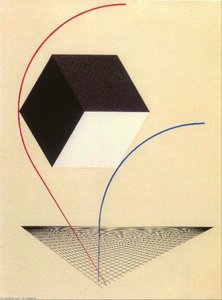
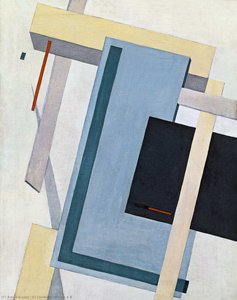
The Proun series represents Lissitzky’s most ambitious exploration of spatial relationships—a bold assertion that art could transcend representational limitations and engage with the very structure of space itself. Departing from traditional painting techniques, Lissitzky employed a unique method combining drawing, painting, sculpture, and architectural design—a holistic approach reflecting his conviction that artistic expression should encompass multiple dimensions. Proun’s geometric forms—primarily squares, rectangles, circles, and triangles—were arranged in complex configurations that resembled architectural blueprints or exploded diagrams—visual representations of spatial transformations. Lissitzky reasoned that the future of art lay in its ability to harmonize with architecture—a vision articulated eloquently in his manifesto “The Space Must Be a Kind of Showcase…” He sought to create environments that fostered contemplation and inspired innovation—challenging established conventions regarding gallery spaces and promoting a new aesthetic sensibility rooted in geometric abstraction. Lissitzky’s Proun series stands as a testament to his intellectual curiosity, artistic daring, and unwavering commitment to pushing the boundaries of visual expression—a legacy that continues to inspire artists and designers worldwide.Typography, Exhibition Design & Propaganda: Artistic Engagement
Beyond his pioneering explorations of spatial representation, Lissitzky revolutionized typography—creating innovative fonts and graphic designs that conveyed complex ideas with clarity and elegance. He recognized that effective communication demanded meticulous attention to visual form—a conviction that guided his work on posters, books, and exhibition displays—often serving as a visual communicator for Soviet propaganda efforts. Lissitzky’s masterful use of color, shape, and text—combined with an uncompromising commitment to social responsibility—established him as one of the foremost designers of his era. His iconic poster “The Constructor” (1924)—a striking depiction of a stylized hammer and sickle—became emblematic of Soviet ideology—a powerful visual statement reflecting the nation’s aspirations for industrial progress and collective action. Lissitzky's exhibition designs—particularly those conceived for the Bauhaus in Weimar—challenged conventional gallery spaces—creating immersive environments that actively engaged viewers—promoting a new aesthetic sensibility rooted in geometric abstraction and functionalism. His work profoundly influenced subsequent generations of artists and designers—solidifying his place as a visionary who reshaped the visual landscape of the 20th century. Lissitzky’s legacy extends far beyond his artistic creations—serving as an inspiration for those striving to harness art's transformative potential—a testament to his enduring influence on cultural discourse and aesthetic innovation.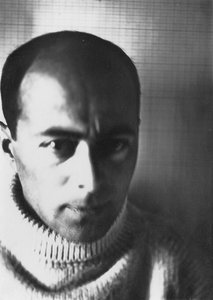
Ел Лисицкий
1890 - 1941 , Руси́я
Kratke činjenice
- Artistic Movement Or Style:
- Suprematism
- Konstruktivizam
- Artists Or Movements Influenced By This Artist: ['Bauhaus']
- Artists Who Influenced This Artist: ['Kazimir Malevich']
- Date Of Birth: Nov 23, 1890
- Date Of Death: Dec 30, 1941
- Full Name: El Lissitzky
- Nationality: Rusija
- Notable Artworks:
- Izgraditel'
- Pokrov
- Place Of Birth: Pochinok, Russia