

 Pregledaj u prostoru
 Pošalji
 Podeli
 Detalji o delu

 Преузми
 Slični predmeti
 Rendgenski snimak
 Slajdovi
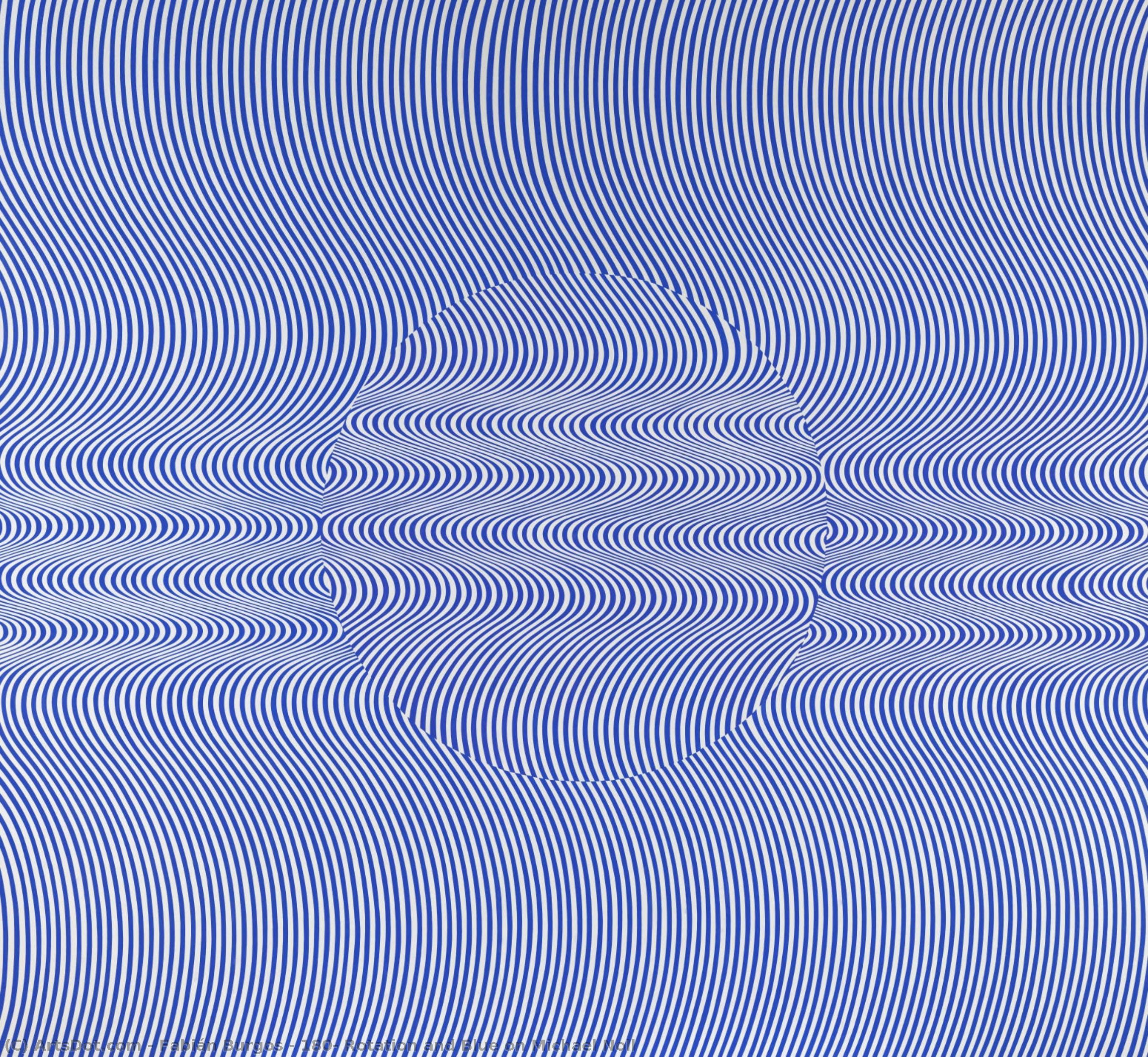
180° Rotation and Blue on Michael Noll
 Oil On Canvas
- WallArt
- Neocinetismo óptico
 2014
2014- Contemporary
 194.0 x 209.0 cm
 MACBA - Muzej savremene umetnosti u Buenos Ajresu
 Pročitaj više
Giclee štampa / Umetnički otisak
Giclée štampa ili print na platnu muzejskog kvaliteta uz brzu proizvodnju i fleksibilne opcije završne obrade. ( Kupi ručno naslikanu sliku Kupi digitalnu sliku)




































Izaberite jednu od naših unapred definisanih veličina koje odgovaraju originalnim proporcijama umetničkog dela.

Možete uneti sopstvene dimenzije kako biste umetničko delo prilagodili specifičnom okviru ili prostoru. Ako odabrani format ne odgovara proporcijama originalne slike, mi ćemo ili iscrtati deo dela ili proširiti sliku pomoću ogledane ivice ili jednobojnog popunjavanja. Digitalni prikaz će vam biti poslat na odobrenje pre početka proizvodnje.
Imajte na umu da pregled na ekranu ne odražava stvarno iscrtavanje ili proširivanje. Samo će prikaz (mockup) precizno pokazati finalnu kompoziciju.
Iako su prilagođene dimenzije dostupne, preporučujemo da odaberete dimenziju sa unapred definisane liste kako biste očuvali originalne proporcije.
Dostava širom sveta () za 2 nedelje umesto uobičajenih 4/5 nedelja. (23 август)

Besplatna ekspresna dostava širom sveta

Visokokvalitetno laneno platno

Kompletno osiguranje transporta

Garancija povraćaja carine i uvoznih dažbina

Garancija vernosti boja

Politika povrata u roku od 60 dana (samo u slučaju nedostataka)

Garancija povrata novca od 100%

Popust pri grupnoj kupovini
 Opcija sa staklom dostupna je samo za dimenzije manje od 110 cm

180° Rotation and Blue on Michael Noll
Giclee štampa / Umetnički otisak
Dimenzije reprodukcije
-


Konačna cena
$ 62
Opis predmeta
A Symphony of Perception: The Luminous World of Fabián Burgos
In the vast landscape of contemporary art, few works possess the immediate, hypnotic power to command a room quite like "180° Rotation and Blue on Michael Noll." Created in 2014 by the Argentine master Fabián Burgos, this monumental oil on canvas is far more than a mere arrangement of pigment; it is an architectural feat of light and geometry. As one stands before its expansive 194 x 209 cm surface, the boundaries between the physical canvas and the viewer's perception begin to dissolve. The painting serves as a premier example of neocinetismo óptico, a style where the artist acts as an architect of illusion, constructing a reality that shifts and breathes with every movement of the eye.
The visual journey begins with a profound immersion into deep, resonant blues, layered with precision to create an unfathomable sense of depth. White stripes traverse the composition, not as static lines, but as rhythmic pulses of light that generate a mesmerizing optical vibration. This interplay of high-contrast tones creates a kinetic energy, suggesting a rotation that feels both mathematical and organic. The technique employed by Burgos is one of extreme discipline; through the meticulous application of oil, he achieves a smoothness that allows the eye to glide across the surface, caught in the rhythmic dance of stripes that seem to recede and advance simultaneously.
The Architecture of Illusion and Emotion
To understand this masterpiece, one must look toward the artist's roots in Buenos Aires and his foundational training under luminaries such as Luis Felipe Noé. Burgos brings a structural rigor to his work, treating the canvas as a space for experimentation with optical phenomena. The title itself hints at a dialogue with technological and mathematical concepts—referencing the rotation and the influence of Michael Noll—suggesting that the artwork is a bridge between the organic human eye and the calculated precision of digital logic. This tension between the fluid nature of light and the rigid geometry of the stripes creates a psychological resonance that is both stimulating and meditative.
For the discerning collector or interior designer, this piece offers an unparalleled opportunity to introduce a focal point of intellectual and aesthetic sophistication. The painting does not merely decorate a wall; it transforms the atmosphere of a space, injecting it with a sense of movement and modern elegance. Whether placed in a minimalist gallery setting or a grand contemporary living area, the work invites contemplation, challenging the viewer to question the stability of what they see. It is an investment in an experience—a permanent invitation to witness the eternal dance of color, light, and motion.
Srodna umetnička dela

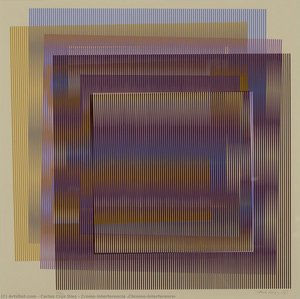
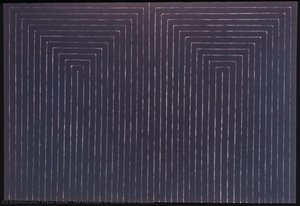
Biografija umetnika
Fabian Burgos: Architect of Optical Illusions
Fabian Burgos, born in Buenos Aires, Argentina, in 1962, is a compelling figure within contemporary art, renowned for his pioneering work in the neocinetismo óptico style. This distinctive approach to painting centers on manipulating color and light to create mesmerizing optical effects – an illusionistic dance that draws the viewer into a world of shifting perspectives and dynamic forms. Burgos’s journey as an artist began with foundational training at the workshops of Luis Felipe Noé and Ahuva Szlimowicz, experiences that shaped his early artistic sensibilities and provided a crucial grounding in technique. His participation in prestigious scholarship programs like the Fundacion Antorchas further solidified his commitment to artistic exploration and development. His work isn’t simply about representation; it's an active engagement with perception itself, inviting viewers to become participants in the artwork’s constructed reality.The Neocinetismo Óptico Style: A Visual Symphony
At the heart of Burgos’s practice lies neocinetismo óptico – a style he largely developed independently, though influenced by earlier pioneers like Josef Albers and László Moholy-Nagy. This technique goes beyond traditional color theory, utilizing precise arrangements of hues and values to generate an illusion of movement, depth, and spatial complexity within a two-dimensional plane. Burgos masterfully employs geometric patterns – often circles, squares, and lines – as the building blocks of these optical illusions. He meticulously controls the relationships between colors, creating areas of simultaneous contrast that stimulate the eye’s natural tendency to seek stability and order. The result is not static images but rather dynamic visual experiences, akin to a carefully choreographed dance of light and color. His work in pieces like “180° Rotation and Blue on Michael Noll” and "Speed" exemplifies this approach, demonstrating his ability to harness the power of optical perception to create captivating and intellectually stimulating artworks. The use of vibrant, saturated colors is key, intensifying the effect and pushing the boundaries of visual experience.Key Works and Exhibitions: A Growing Recognition
Burgos’s artistic trajectory has been marked by a consistent dedication to experimentation and a growing recognition within the international art community. His work has been featured in prominent galleries and museums across Argentina, France, and the United States, including the Museo de Arte Contemporáneo de Buenos Aires (MACBA), Galería Vasari, and the Museo Moderno. Significant exhibitions include “Eternal Instant” at MACBA in 2014, showcasing his exploration of temporal perception through geometric abstraction, and "Comiéndose a Raúl" in 2013, which delved into themes of identity and transformation. Notably, he created monumental murals for the Brickell Heights and Brickell Lux buildings in Miami in 2017, extending his visual language to public spaces and engaging with urban environments. His work has been consistently praised for its innovative approach to color theory, geometric composition, and its ability to challenge conventional notions of representation. The artist’s participation in numerous workshops and art clinics further cemented his reputation as a leading figure in the field.Influences and Artistic Philosophy
Burgos's artistic vision is deeply rooted in a fascination with perception and the relationship between the viewer and the artwork. He cites influences ranging from early 20th-century abstract artists like Piet Mondrian, whose exploration of geometric forms and color relationships resonated profoundly with his own approach, to the principles of optical art developed by Josef Albers. He is particularly interested in how our brains actively construct visual reality, constantly seeking patterns and making assumptions about what we see. Burgos’s work can be interpreted as a meditation on this process – an attempt to disrupt our expectations and reveal the underlying mechanisms of perception. He frequently speaks of an “equilibrium” between opposing forces—truth and falsehood, emptiness and fullness—a concept that informs his deliberate use of contrasting colors and geometric forms. His exploration of space is not merely representational but rather a conceptual investigation into how we experience depth and dimension through visual cues.Legacy and Continuing Exploration
Fabian Burgos remains an active and evolving artist, continually pushing the boundaries of neocinetismo óptico. His work continues to be exhibited internationally, solidifying his position as a significant voice in contemporary art. His commitment to experimentation, coupled with his deep understanding of color theory and optical perception, ensures that his artistic practice will continue to generate captivating visual experiences for years to come. The artist’s website, https://ArtsDot.com, offers a comprehensive overview of his work, providing valuable insights into the techniques and concepts behind his mesmerizing paintings. Burgos's legacy lies not only in his individual artworks but also in his contribution to the development of neocinetismo óptico – a style that continues to inspire artists and captivate audiences worldwide.
fabián burgos
1962 - , Argentina
Osnovne informacije
- Artistic Movement Or Style: Neocinetismo óptico
- Artists Or Movements Influenced By This Artist: ['Geometric art']
- Artists Who Influenced This Artist:
- Mondrian
- Luis Felipe Noé
- Date Of Birth: 1962
- Full Name: Fabian Burgos
- Nationality: Argentinian
- Notable Artworks:
- That
- 180° Rotation
- Speed
- Place Of Birth: Buenos Aires, Argentina
Povezani članci

White on Canvas: 10 Masterpieces & Timeless Elegance for Your Home Decor
Explore 10 iconic white paintings by Monet, Whistler & Rothko! Discover the stories behind these serene masterpieces and their impact on art history. Find museum-quality reproductions for your home decor at .

Slate Blue Masterpieces: 10 Iconic Paintings & Timeless Home Decor Ideas
Immerse yourself in the captivating world of slate blue! Explore 10 iconic paintings by Monet, Van Gogh & Renoir. Discover their stories, techniques & find museum-quality art reproductions for your home at .
The Allure of Azure: Exploring the Symbolic & Aesthetic Depths of Blue in Art History
Explore the rich history of blue in art! Discover its symbolism, from ancient pigments to modern masterpieces by Kandinsky & Seurat. Uncover the psychological impact and cultural meanings behind this captivating hue.
The Subtleties of White: Exploring Absence, Light & Symbolism in Art History
Explore the profound symbolism & history of white in art! From ancient purity to modern abstraction, discover how artists have used absence & light. Expert insights from ArtsDot.
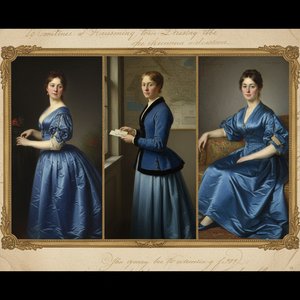
Azure Visions: Exploring Representations of the Blue Dress in Western Art History
Explore the rich history of the blue dress in Western art! Discover its symbolism, from Renaissance masterpieces to modern interpretations by artists like Martin & Schiele. Uncover cultural meanings and artistic techniques.

