

 Pregledaj u prostoru
 Pošalji
 Podeli
 Detalji o delu

 Преузми
 Slični predmeti
 Rendgenski snimak
 Slajdovi
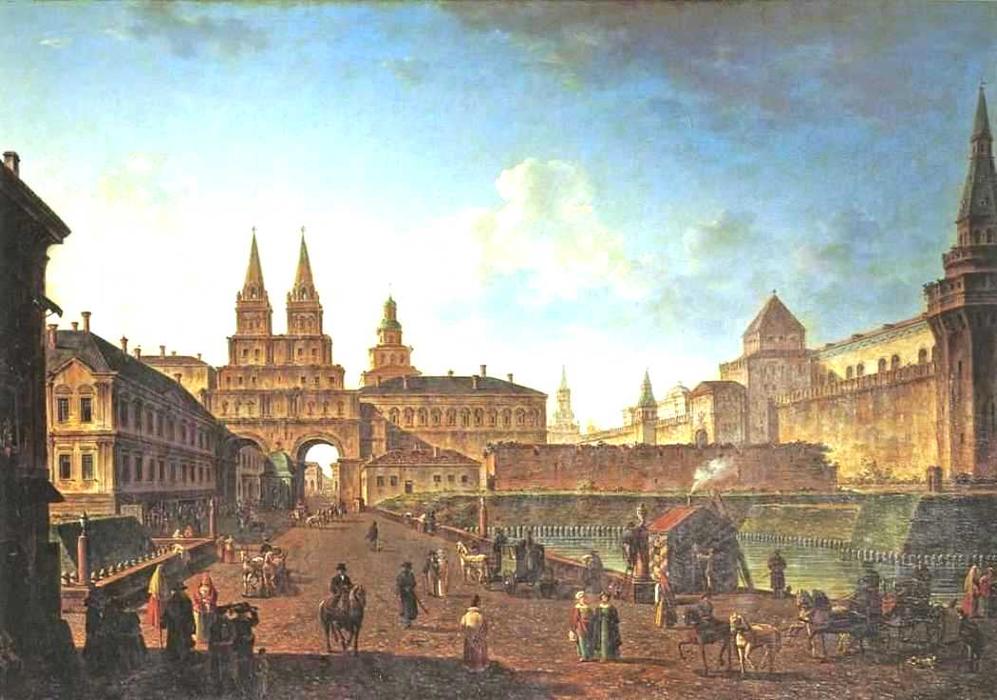
View of the Voskresenskie and Nikolskie Gate and Neglinniy Brige from Tverskaia Street in Moscow
 Oil On Canvas
- WallArt
- Veduta
 1811
1811- 19th Century
 78.0 x 110.0 cm
 Третьяковская галерея
 Pročitaj više
Giclee štampa / Umetnički otisak
Giclée štampa ili print na platnu muzejskog kvaliteta uz brzu proizvodnju i fleksibilne opcije završne obrade. ( Kupi ručno naslikanu sliku Kupi digitalnu sliku)




P118B $10

P118H $10

P118W $10

P438Z $10

P508JH $12

P508YH $12

P805H $10

P805Z $10

P919BZ $10

P919G $10

P919XJ $10

P959ZH $10

P968JZ $12

W106C $8

W218G $10

W218JH $8

W218Y $10

W307PJ $10

W316G $10

W316PJ $8

W316Y $10

W398PJ $8

W4111J $10

W500HY $15

W500JH $15

W692G $12

W849H $8

W940BG $15

W953PJ $8




Izaberite jednu od naših unapred definisanih veličina koje odgovaraju originalnim proporcijama umetničkog dela.

Možete uneti sopstvene dimenzije kako biste umetničko delo prilagodili specifičnom okviru ili prostoru. Ako odabrani format ne odgovara proporcijama originalne slike, mi ćemo ili iscrtati deo dela ili proširiti sliku pomoću ogledane ivice ili jednobojnog popunjavanja. Digitalni prikaz će vam biti poslat na odobrenje pre početka proizvodnje.
Imajte na umu da pregled na ekranu ne odražava stvarno iscrtavanje ili proširivanje. Samo će prikaz (mockup) precizno pokazati finalnu kompoziciju.
Iako su prilagođene dimenzije dostupne, preporučujemo da odaberete dimenziju sa unapred definisane liste kako biste očuvali originalne proporcije.
Dostava širom sveta () za 2 nedelje umesto uobičajenih 4/5 nedelja. (4 септембар)

Besplatna ekspresna dostava širom sveta

Visokokvalitetno laneno platno

Kompletno osiguranje transporta

Garancija povraćaja carine i uvoznih dažbina

Garancija vernosti boja

Politika povrata u roku od 60 dana (samo u slučaju nedostataka)

Garancija povrata novca od 100%

Popust pri grupnoj kupovini
 Opcija sa staklom dostupna je samo za dimenzije manje od 110 cm

View of the Voskresenskie and Nikolskie Gate and Neglinniy Brige from Tverskaia Street in Moscow
Giclee štampa / Umetnički otisak
Dimenzije reprodukcije
-


Konačna cena
$ 62
A Window into Imperial Moscow
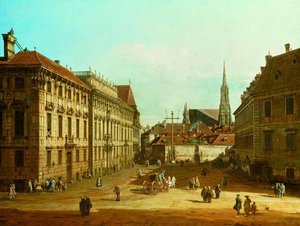
In his 1811 masterpiece, View of the Voskresenskie and Nikolskie Gate and Neglinniy Brige from Tverskaia Street in Moscow, Fedor Yakovlevich Alekseev invites us to step through a portal into a bygone era of Russian grandeur. Often referred to as the "Russian Canaletto," Alekseev possessed a rare ability to transform architectural documentation into emotive storytelling. This particular canvas captures a vibrant moment on Tverskaia Street, where the heavy, historical weight of Moscow’s gates meets the rhythmic pulse of daily urban life. The composition is anchored by a majestic, castle-like structure that looms in the background, serving as a silent sentinel over the bustling scene below. Through his masterful use of perspective, Alekseev guides the viewer's eye across the Neglinniy Bridge, creating a profound sense of depth that makes the city feel both expansive and intimately reachable.
The technical brilliance of this work lies in its delicate balance between structural precision and atmospheric softness. Utilizing oil on canvas, Alekseev employs a rich and vibrant color palette that breathes life into the stone and mortar of the imperial capital. One can observe the meticulous attention to detail in the way light interacts with the various surfaces—the subtle shadows cast by the bridges and the luminous quality of the sky that suggests a clear, bright day in early 19th-century Russia. The artist does not merely paint buildings; he paints the very air that surrounds them. This technique allows the architectural landmarks to feel less like static monuments and more like living components of an evolving metropolis.
The Pulse of the City and Artistic Legacy
Beyond the impressive architecture, the true soul of the painting resides in its human element. Alekseev populates his cityscape with a lively group of pedestrians, some captured mid-stride and others carrying handbags, adding a layer of kinetic energy to the composition. These small, carefully rendered figures provide a sense of scale and movement, transforming a topographical view into a social narrative. They represent the heartbeat of Moscow—the ordinary citizens navigating the extraordinary landscape of their empire. This infusion of life prevents the painting from feeling like a cold architectural study, instead imbuing it with a warmth that resonates with anyone who has ever found beauty in the organized chaos of a city street.
For collectors and interior designers, this painting offers much more than historical interest; it provides a sophisticated focal point for any curated space. The work’s ability to evoke nostalgia and a sense of timelessness makes it an ideal centerpiece for rooms that celebrate classical elegance or historical depth. Whether placed in a grand library or a contemporary living area, a high-quality reproduction of this piece brings with it the prestige of the Tretyakov Gallery and the romantic spirit of the Russian Enlightenment. Owning such a work is an invitation to contemplate the enduring beauty of urban heritage and the masterful hand of an artist who truly understood the architectural soul of his nation.
Srodna umetnička dela

Biografija umetnika
The Russian Canaletto: The Visionary World of Fedor Alekseev
Fedor Yakovlevich Alekseev (1753-1824) stands as a cornerstone of 18th-century Russian art, recognized primarily for his breathtaking depictions of Moscow and St. Petersburg—landscapes that earned him the prestigious moniker “The Russian Canaletto.” This title serves as a profound testament to his unparalleled skill in capturing the grandeur and serenity of the European vedute tradition. Born in Saint Petersburg during an era of immense cultural transformation, Alekseev’s artistic journey unfolded against the backdrop of Russia's burgeoning Enlightenment. His life was dedicated to documenting the architectural soul of a nation, translating the stone and mortar of imperial monuments into luminous, breathing canvases that captured both the physical reality and the atmospheric spirit of his time.
The foundations of Alekseev’s mastery were laid during his formative years in the imperial capital. While the specific details of his early childhood remain somewhat elusive, his professional trajectory was significantly shaped by his apprenticeship under Mikhail Vasilievich Zabolotsky. A celebrated figure in the Petersburg art scene, Zabolotsky instilled in Alekseev the rigorous principles of Neoclassicism and the necessity of meticulous observation. This training became the bedrock of his oeuvre, allowing him to approach a landscape not merely as a scenic view, but as a structured composition governed by mathematical precision and light. Through this disciplined lens, Alekseev learned to balance the architectural accuracy required by the era with a poetic sensibility that breathed life into every street corner and riverbank.
A Legacy of Imperial Grandeur and Architectural Splendor
Alekseev’s fame solidified through his monumental series of paintings documenting the architectural splendor of Moscow. These canvases, imbued with a palpable sense of civic pride, meticulously rendered the Kremlin, St. Basil’s Cathedral, and various bustling squares. His approach mirrored that of his Venetian counterparts, prioritizing an astonishing level of detail alongside compositional harmony. In these works, one does not simply see buildings; one experiences the weight of history and the rhythmic pulse of a city. His Moscow landscapes serve as vital historical documents, capturing a version of the city that remains frozen in time, showcasing the intricate textures of stone and the dramatic interplay of shadow and sunlight.
Parallel to his Muscovite triumphs were his equally impressive depictions of St. Petersburg—a city undergoing rapid, often radical, transformation during his lifetime. Reflecting the intellectual optimism of the Enlightenment, Alekseev skillfully portrayed the waterfront palaces and sweeping embankments that defined the imperial capital. His paintings of the Admiralty and the Palace Embankment are particularly noted for their subtle tonal gradations and masterful use of perspective. By capturing the way light dances across the Neva River and reflects off the neoclassical facades, he mirrored the era's fascination with progress and innovation. Whether documenting the Stock Exchange or the view from the Fortress of St. Peter and Paul, his work consistently projected an image of imperial Russia’s power, stability, and aesthetic sophistication.
Technique, Style, and Historical Significance
The enduring allure of Alekseev’s work lies in his painstaking technique and execution. His process was characterized by a disciplined, layered approach to glazing, which allowed him to achieve a luminous depth that few of his contemporaries could replicate. This method enabled him to capture the atmospheric nuances of the Russian climate—the soft, hazy light of a summer morning or the crisp, biting clarity of a winter afternoon. His ability to render complex architectural details while maintaining a sense of atmospheric unity is what truly distinguishes his hand. Every brushstroke was an exercise in precision, designed to guide the viewer's eye through the vast perspectives of his urban vistas.
Ultimately, the historical significance of Fedor Alekseev extends far beyond mere documentation. He was a bridge between the classical traditions of Europe and the emerging national identity of Russia. Through his eyes, the sprawling landscapes of Moscow, St. Petersburg, and even Kherson were elevated to the status of high art, worthy of the same reverence afforded to the great Italian masters. His legacy lives on in the way we perceive the historical architecture of Russia today; he did not just paint cities, he crafted an enduring visual memory of an empire at its zenith. For collectors and historians alike, his paintings remain windows into a lost world of imperial elegance and architectural triumph.
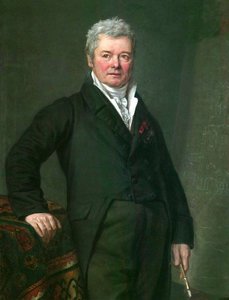
fedor yakovlevich alekseev
1753 - 1824 , Russia
Osnovne informacije
- Artistic Movement Or Style: Neoclassical
- Artists Or Movements Influenced By This Artist: ['Venetian Painting']
- Artists Who Influenced This Artist: ['Canaletto']
- Date Of Birth: Saint Petersburg, Russia (1753)
- Date Of Death: 1824
- Full Name: Fedor Yakovlevich Alekseev
- Nationality: Russian
- Notable Artworks:
- View of Nikolaev
- The Cathedral Square in the Moscow Kremlin
- View of Voskresenskie and Nikolskie Gate
- Place Of Birth: Saint Petersburg
Povezani članci
Ivan Bilibin: A Synthesis of Folklore, Modernism & National Identity in Russian Illustration
Explore the enchanting world of Ivan Bilibin, a master Russian illustrator who synthesized folklore, Art Nouveau & national identity. Discover his iconic fairy tale illustrations and legacy with ArtsDot.
Vladimir Makovsky: Realism, Social Commentary & Russian Life in Late 19th-Century Painting
Explore the captivating world of Vladimir Makovsky, a leading Russian realist painter. Discover his insightful depictions of 19th-century life, social commentary & legacy with ArtsDot.

Victor Vasnetsov: Myth, Nationalism & the Revival of Russian Fairy Tale Painting
Explore the captivating world of Victor Vasnetsov, a co-founder of Russian folklorist painting. Discover his iconic works, influence on national identity, and lasting legacy in this expert guide.
Konstantin Korovin: A Master of Russian Impressionism & Evocative Light
Explore the captivating world of Konstantin Korovin, a leading Russian Impressionist painter renowned for his vibrant landscapes & innovative theater designs. Discover his life, legacy, and enduring artistic impact.

Mikhail Nesterov: Spiritual Quests & Symbolic Landscapes of Russian Symbolism
Explore the captivating world of Mikhail Nesterov, a pioneer of Russian Symbolism. Discover his spiritual themes, iconic paintings like 'The Hermit,' and lasting influence on Russian art history. Learn more at ArtsDot.

