
- Početna strana

- Digitalna slika
- félix bonfils (1831-1885), médiathèque de l'architecture et du patrimoine photographique de l'etat français
 Pošalji
 Podeli
 Detalji o delu

 Преузми
 Slični predmeti
 Slajdovi
Sites éternels. Le Temple de Bêl


 Pročitaj više
Kupite digitalnu sliku visoke rezolucije i poboljšanog kvaliteta, koja je znatno superiornija od onoga što vidite u online prikazu.
Svaka datoteka je pedantno pripremljena od strane naših stručnjaka koristeći napredne alate i profesionalnu ručnu retušu. Osiguravamo da svaka slika ima izuzetnu oštrinu, preciznu reprodukciju boja i fine detalje.
Konačna datoteka se dostavlja putem e-pošte u roku od 72 sata, optimizovana za neposrednu upotrebu u profesionalnim, izdavačkim i štamparskim okruženjima. To je isti kvalitet kojem veruju vrhunski studiji dizajna, izdavači i galerije.
Digitalna slika
Preuzmite datoteku visoke rezolucije za ličnu upotrebu, štampanje i kreativne projekte. ( Kupi print Kupi ručno naslikanu sliku)
Uključeno uz svaku porudžbinu digitalne slike
Profesionalna digitalna isporuka, zagarantovana
Kada odaberete ArtsDot.com, ne dobijate samo sliku – vi primate profesionalno unapređeno digitalno umetničko delo, izrađeno sa najvećom preciznošću i uz garanciju zadovoljstva. Evo svega što automatski dolazi uz vašu porudžbinu:

Brza dostava putem e-pošte
Vaša digitalna slika visoke rezolucije biće vam poslata putem e-pošte u roku od 72 sata od poručivanja – spremna za trenutnu upotrebu.

Digitalna datoteka unapređena veštačkom inteligencijom
Vaše umetničko delo je profesionalno optimizovano korišćenjem naprednih AI alata i ručne obrade, čime se osiguravaju maksimalni detalji, oštrina i preciznost boja.

Besplatna ponovna isporuka doživotno
Slučajno ste obrisali ili izgubili svoju datoteku? Ne brinite – poslaćemo vam je ponovo u bilo kom trenutku, potpuno besplatno.

Bez troškova uvoza – zauvek
Uživajte u svojim umetničkim delima trenutno, bez carine, dažbina ili troškova dostave – digitalni download je uvek bez poreza.

Garancija vernosti boja
Uz pomoć profesionalnih alata i upravljanja bojama, osiguravamo da vaša digitalna slika što vernije odražava originalne boje.

Garancija zadovoljstva u roku od 60 dana
Ako niste zadovoljni svojom digitalnom slikom, revidirat ćemo je ili vratiti 100% novca u roku od 60 dana – bez ikakvih pitanja.

100% garancija povrata novca
Niste zadovoljni? Obezbedite pun povrat novca u roku od 60 dana od trenutka kada ste primili svoju digitalnu datoteku – bez suvišnih pitanja.

Popusti na velike porudžbine
Kupite 3 slike, uštedite 10% - Kupite 5 slika, uštedite 15% - Kupite 10+ slika, uštedite 20%. Odlično za kreativne projekte, galerije i agencije.
Opis kolekcionarskog dela
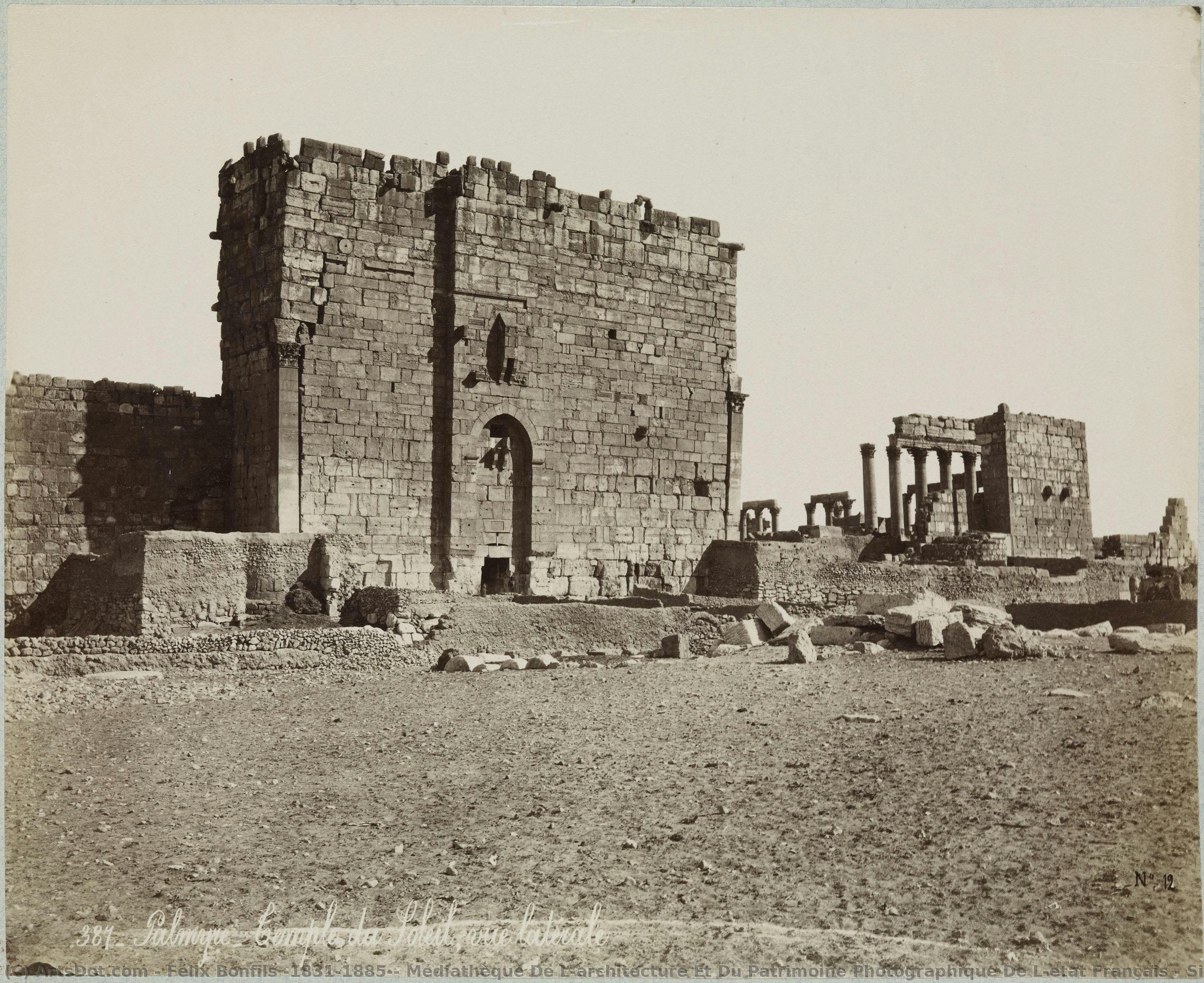
A Glimpse into Lost Worlds: Félix Bonfils and *Sites éternels. Le Temple de Bêl*
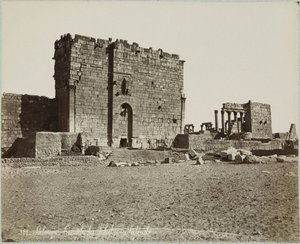
Félix Bonfils’s photograph, *Sites éternels. Le Temple de Bêl*, isn't merely a depiction of an ancient ruin; it’s a portal to a vanished civilization, a poignant meditation on the passage of time and the enduring allure of forgotten grandeur. Captured in stark black and white during his extensive travels through the Middle East in the 1860s and 70s, this image transports us to Palmyre, Syria – once home to one of the most magnificent cities of antiquity, a testament to the Seleucid Empire’s ambition and artistic prowess.
The photograph itself is dominated by a colossal stone structure, its weathered facade hinting at centuries of exposure to sun, wind, and sand. Columns, though partially collapsed, still stand proud, their intricate carvings whispering tales of skilled artisans and forgotten rituals. The composition draws the eye upwards, emphasizing the building’s imposing height and suggesting an almost overwhelming sense of scale – a deliberate strategy by Bonfils to convey both the monument's physical presence and its symbolic weight within the landscape. Notice the careful use of light and shadow; it sculpts the stone, revealing textures and contours that deepen our appreciation for the material itself.
The Photographer’s Vision: Bonfils and the Rise of Orientalist Photography
Félix Bonfils was a pivotal figure in the development of photographic representation of the Middle East. He wasn't simply documenting; he was actively shaping how Western audiences perceived these distant lands. Born in Saint-Hippolyte-du-Harcoët, France, in 1831, Bonfils initially trained as a binder and printer before dedicating himself to photography, influenced by the techniques of Niépce de Saint Victor. His decision to relocate to Lebanon marked a significant departure from traditional European travel photography, which often focused on grand landscapes or portraits of dignitaries. Instead, Bonfils immersed himself in the daily life and architectural heritage of the region, creating images that were both aesthetically compelling and historically informative.
Bonfils’s work falls squarely within the burgeoning field of Orientalism – a term now often debated but which at the time represented an attempt to understand and represent cultures outside Europe. However, Bonfils' approach was more nuanced than simple exoticization. He collaborated with local photographers, employed bilingual captions, and meticulously documented the sites he visited, demonstrating a genuine interest in preserving these historical treasures for posterity. His studio became a hub of activity, employing assistants and distributing prints to a wide audience – including art collectors, archaeologists, and wealthy travelers eager to acquire souvenirs of their journeys.
Symbolism and the Echoes of Antiquity
The title *Sites éternels*—Eternal Sites—immediately establishes a thematic core. It speaks not just to the physical longevity of the ruins but also to the enduring power of memory, history, and human ambition. The temple itself embodies this concept: a tangible link to a civilization that flourished centuries ago, yet continues to resonate with an almost palpable sense of presence. The crumbling state of the structure isn’t presented as a sign of decay, but rather as evidence of time's relentless passage—a poignant reminder of mortality and the impermanence of earthly achievements.
The photograph also evokes a sense of melancholy and loss. Palmyre was ultimately destroyed by Roman forces in 198 BC, its wealth and influence erased from the map. Bonfils’s image serves as a visual elegy for this lost city, inviting us to contemplate the rise and fall of empires and the enduring legacy of human endeavor. The starkness of the black and white palette further amplifies this emotional resonance, stripping away any superficial distractions and focusing our attention on the fundamental elements of form, texture, and light.
A Legacy in Reproduction: Bringing *Sites éternels* to Your Space
ArtsDot.com offers high-quality reproductions of *Sites éternels. Le Temple de Bêl*, allowing you to bring this evocative image into your home or office. Whether you choose a standard print, a custom size, or an artistic rendering, our meticulous attention to detail ensures that the photograph’s beauty and historical significance are faithfully preserved. Consider how this powerful image can serve as a focal point in your décor—a subtle reminder of the enduring mysteries of the past and the timeless allure of ancient civilizations.
Srodna umetnička dela

Biografija umetnika
A Visionary Through the Lens: The Legacy of Félix Bonfils
In the golden age of 19th-century exploration, few figures captured the soul of the Orient as intimately or as enduringly as Félix Bonfils. Born in 1831, Bonfils emerged not merely as a photographer, but as a visual chronicler of a world that seemed, to the Western eye, both timeless and exotic. His work, deeply rooted in the tradition of Orientalism, transcends simple documentation; it offers a window into the light, texture, and profound historical weight of the Middle East. Through his lens, the crumbling ruins of ancient civilizations and the vibrant daily rhythms of Levantine life were preserved in silver and shadow, creating a photographic archive that remains indispensable to our understanding of the region's cultural heritage.
The genesis of the Bonfils legacy is inextricably linked to the concept of the Maison Bonfils, a family enterprise that turned photography into a profound artistic and commercial endeavor. Alongside collaborators such as Lydie and Adrien Bonfils, Félix helped establish a studio that functioned as both an artistic workshop and a vital historical repository. His approach was characterized by a meticulous eye for composition and an ability to capture the interplay of light upon desert sands and ancient stone. Whether documenting the monumental scale of the Temple of Bel in Palmyra or the delicate details of local attire, his images possess a narrative depth that invites the viewer to step across the threshold of time.
The Art of Orientalism and Historical Documentation
The work of Félix Bonfils is often categorized within the movement of Orientalism, yet his contribution goes far beyond the mere exoticization of distant lands. While his photographs certainly catered to the 19th-century European fascination with the "mysterious East," they also possess a rigorous documentary quality. His compositions frequently highlight:
- Architectural Grandeur: The sweeping vistas of Islamic architecture and the haunting remains of Roman and Palmyrene ruins, captured with a reverence for their structural majesty.
- Cultural Portraiture: Intimate studies of people, capturing the dignity and character of various ethnic groups through clothing, gesture, and expression.
- Biblical Landscapes: The recreation of scenes that resonated with the religious consciousness of his era, blending historical reality with spiritual imagination.
- Atmospheric Light: A masterful use of natural light to evoke the heat of the desert and the stillness of ancient sanctuaries.
This duality—between the romanticized vision and the ethnographic record—is what gives his oeuvre such lasting power. He did not just photograph landscapes; he photographed the weight of history itself. His ability to frame a ruined temple within its natural, often harsh, environment allowed him to communicate the concept of eternal sites, where the past and present exist in a continuous, breathtaking loop.
A Lasting Impact on Photographic History
The historical significance of Félix Bonfils cannot be overstated. As a pioneer of early photographic processes in the Middle East, he helped lay the groundwork for much of the visual history we possess today. His studio's output became a primary source for scholars, travelers, and artists alike, shaping the Western perception of the Levant for generations. The preservation of his work within institutions like the Médiathèque de l'architecture et du patrimoine photographique ensures that his vision continues to inspire contemporary fascination with the intersection of art, history, and technology.
Ultimately, the life and work of Félix Bonfils represent a bridge between eras. Through his mastery of the medium, he transformed the ephemeral moments of 19th-century life into permanent icons of human achievement and natural beauty. His photographs remain more than mere relics; they are living testimonies to a world of profound complexity, captured by a man who saw the eternal within the transient.
Kratke činjenice
- Artistic Movement Or Style: Romanticism
- Artists Or Movements Influenced By This Artist:
- Victor Hugo
- Romanticism
- Artists Who Influenced This Artist:
- Théodore Géricault
- Raphael
- Michelangelo
- Date Of Birth: April 26, 1798
- Date Of Death: July 13, 1863
- Full Name: Eugène Delacroix
- Nationality: French
- Notable Artworks:
- Dante and Virgil in Hell
- Massacre at Scio
- Death of Sardanapalus
- Liberty Leading the People
- Place Of Birth: Charenton-Saint-Maurice, France

