

 Pregledaj u prostoru
 Pošalji
 Podeli
 Detalji o delu

 Преузми
 Slični predmeti
 Rendgenski snimak
 Slajdovi
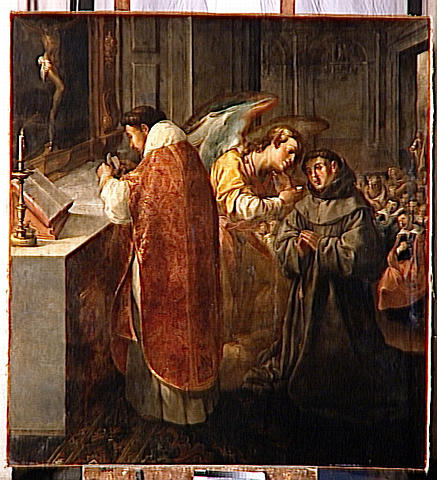
Свети Боновантур примањем Евхаристије од руке анђела


 Pročitaj više
Kupite digitalnu sliku visoke rezolucije i poboljšanog kvaliteta, koja je znatno superiornija od onoga što vidite u online prikazu.
Svaka datoteka je pedantno pripremljena od strane naših stručnjaka koristeći napredne alate i profesionalnu ručnu retušu. Osiguravamo da svaka slika ima izuzetnu oštrinu, preciznu reprodukciju boja i fine detalje.
Konačna datoteka se dostavlja putem e-pošte u roku od 72 sata, optimizovana za neposrednu upotrebu u profesionalnim, izdavačkim i štamparskim okruženjima. To je isti kvalitet kojem veruju vrhunski studiji dizajna, izdavači i galerije.
Digitalna slika
Preuzmite datoteku visoke rezolucije za ličnu upotrebu, štampanje i kreativne projekte. ( Kupi print Kupi ručno naslikanu sliku)
Uključeno uz svaku porudžbinu digitalne slike
Profesionalna digitalna isporuka, zagarantovana
Kada odaberete ArtsDot.com, ne dobijate samo sliku – vi primate profesionalno unapređeno digitalno umetničko delo, izrađeno sa najvećom preciznošću i uz garanciju zadovoljstva. Evo svega što automatski dolazi uz vašu porudžbinu:

Brza dostava putem e-pošte
Vaša digitalna slika visoke rezolucije biće vam poslata putem e-pošte u roku od 72 sata od poručivanja – spremna za trenutnu upotrebu.

Digitalna datoteka unapređena veštačkom inteligencijom
Vaše umetničko delo je profesionalno optimizovano korišćenjem naprednih AI alata i ručne obrade, čime se osiguravaju maksimalni detalji, oštrina i preciznost boja.

Besplatna ponovna isporuka doživotno
Slučajno ste obrisali ili izgubili svoju datoteku? Ne brinite – poslaćemo vam je ponovo u bilo kom trenutku, potpuno besplatno.

Bez troškova uvoza – zauvek
Uživajte u svojim umetničkim delima trenutno, bez carine, dažbina ili troškova dostave – digitalni download je uvek bez poreza.

Garancija vernosti boja
Uz pomoć profesionalnih alata i upravljanja bojama, osiguravamo da vaša digitalna slika što vernije odražava originalne boje.

Garancija zadovoljstva u roku od 60 dana
Ako niste zadovoljni svojom digitalnom slikom, revidirat ćemo je ili vratiti 100% novca u roku od 60 dana – bez ikakvih pitanja.

100% garancija povrata novca
Niste zadovoljni? Obezbedite pun povrat novca u roku od 60 dana od trenutka kada ste primili svoju digitalnu datoteku – bez suvišnih pitanja.

Popusti na velike porudžbine
Kupite 3 slike, uštedite 10% - Kupite 5 slika, uštedite 15% - Kupite 10+ slika, uštedite 20%. Odlično za kreativne projekte, galerije i agencije.
Saint Bonaventure Recevant La Communion Des Mains D'Un Ange – Une Symphonie Baroque de Foi et Lumière
La peinture intitulée « Saint Bonaventure Recevant La Communion Des Mains D’Un Ange » représente une scène religieuse emblématique du XVIe siècle, incarnant les valeurs esthétiques et spirituelles caractéristiques du baroque espagnol. Créée vers 1628 par Francisco de Herrera le Vieux, cette œuvre est aujourd'hui conservée au Musée du Louvre Département des Peintures à Paris, témoignant ainsi d’une richesse artistique et historique exceptionnelle. ### Une Œuvre Fondatrice de l’École Sévillane et Son Style Dramatique Francisco de Herrera el Viejo occupe une place centrale dans l’histoire de l’art espagnol, considéré comme un pionnier du baroque émotionnel et fondateur de l'École sévillane. Cette école, marquée par une esthétique audacieuse et une maîtrise technique inégalée, cherchait à exprimer la puissance divine et les sentiments humains avec une intensité remarquable. Herrera, fidèle à cette tradition artistique, adopte une approche baroque caractérisée par une lumière dramatique et contrastée, des couleurs vives et saturées, ainsi qu'une attention minutieuse aux détails anatomiques et aux effets de texture. Cette peinture illustre parfaitement ces principes esthétiques, offrant au spectateur une expérience visuelle profonde et émouvante. ### Technique et Composition : Une Réflexion Sur la Foi et L’Espiritualité La technique utilisée par Herrera est celle de l'huile sur toile, une méthode privilégiée pour capturer les nuances subtiles de lumière et d'ombre et donner aux œuvres une profondeur impressionnante. La composition est soigneusement orchestrée pour mettre en scène Saint Bonaventure au centre de la scène, recevant la communion des mains d’un ange dans un espace architectural intérieur richement décoré. Les lignes courbes et les plis des robes contribuent à créer une atmosphère dynamique et expressive, tandis que la lumière douce provenant du haut illumine le visage du saint et l'ange, symbolisant ainsi la grâce divine et la révélation spirituelle. La présence d’autres religieux dans l’arrière-plan renforce le contexte religieux de l’œuvre et souligne son caractère sacré. ### Symbolisme Religieux : L’Ange Comme Messager De Dieu Et La Communion Comme Acte D'Union Avec Le Divin Au cœur de cette peinture réside un profond symbole religieux : l’ange, représentant Dieu lui-même, offre la communion à Saint Bonaventure. Cette scène évoque les rites liturgiques médiévaux et renaissants où la communion est considérée comme une véritable union avec le sacré mystère chrétien. La couleur rouge du habit de Saint Bonaventure symbolise la passion et la victoire sur le péché, tandis que le blanc de l’ange représente la pureté et la lumière divine. L'ensemble de la composition vise à transmettre un message d'espoir et de rédemption, célébrant ainsi la foi chrétienne et son appel à la contemplation spirituelle. ### Héritage Artistique et Préservation Au Louvre : Un Témoin De La Génie Baroque Espagnole « Saint Bonaventure Recevant La Communion Des Mains D’Un Ange » demeure une œuvre majeure de l'art baroque espagnol, dont le talent artistique et la maîtrise technique continuent d’inspirer les artistes contemporains. Sa présence au Musée du Louvre Département des Peintures témoigne de son importance historique et esthétique et permet aux visiteurs de découvrir un chef-d’œuvre emblématique de cette période artistique exceptionnelle. Une reproduction haute qualité offre ainsi une opportunité unique de profiter de la beauté et de la puissance émotionnelle de cette peinture originale, perpétuant ainsi le patrimoine culturel français et espagnol.Srodna umetnička dela
Biografija umetnika
The Soul of the Seville School: The Life and Legacy of Francisco de Herrera le Vieux
To encounter the works of Francisco de Herrera le Vieux is to witness the very moment when the restrained elegance of Mannerism surrendered to the breathtaking drama of the Baroque. Born in the vibrant artistic hub of Seville around 1590, Herrera emerged as a pivotal figure who did not merely participate in the Spanish Renaissance but actively helped redefine its emotional boundaries. His journey was one of profound transformation, bridging the gap between stylized, intellectual abstraction and a new, visceral reality that sought to touch the very soul of the viewer. As a foundational pillar of the Seville School, his brushwork became a vessel for spiritual fervor, turning canvas into a stage for divine intervention.
The formative years of Herrera were steeped in the rich, competitive atmosphere of Seville, a city flourishing under the patronage of the Habsburg reign. It was within the prestigious Escuela Real de San Fernando that his talent began to coalesce, shaped by an environment shared with other luminaries such as Diego Velázquez and Juan Carreton Céspedes. This period of intense training instilled in him a reverence for meticulous observation and a technical command over light and shadow. While his contemporaries often sought perfection through line and form, Herrera leaned into the burgeoning influence of Caravaggio, embracing the revolutionary use of chiaroscuro to create compositions that felt less like static images and more like theatrical, living moments.
A Master of Divine Drama and Technical Brilliance
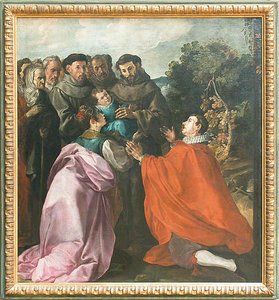
The true essence of Herrera’s genius lies in his ability to render the miraculous with a tangible, earthly weight. His religious compositions are far more than mere illustrations of scripture; they are immersive spiritual experiences. In masterpieces such as Guérison de saint Bonaventure enfant par saint François, one observes a masterclass in Baroque energy. The artist utilizes dynamic arrangements and a palette dominated by warm earth tones—ochres, deep reds, and burnished browns—to ground the supernatural within a recognizable reality. His handling of light is particularly evocative; it does not simply illuminate the scene but seems to emanate from the divine action itself, casting dramatic highlights that pull the viewer into the sacred narrative.
Beyond the spiritual impact, Herrera’s technical prowess provided a blueprint for future generations of Spanish painters. He possessed an unparalleled ability to manipulate texture and volume through the strategic use of impasto and delicate glazes. This allowed him to capture the profound contrast between the soft luminescence of human skin and the heavy, tactile folds of velvet and liturgical robes. In works like Saint Basile dictant sa doctrine, his command over narrative density is evident, as figures emerge from deep, mysterious shadows in clusters that suggest both scholarly weight and divine inspiration. Every brushstroke serves a dual purpose: to build physical form and to heighten the emotional tension of the scene.
Historical Significance and Artistic Heritage
The historical importance of Francisco de Herrera le Vieux cannot be overstated, as his stylistic evolution mirrored the broader shift in European art toward emotional authenticity. By moving away from the rigid formalism of his predecessors, he helped establish a visual language for the Counter-Reformation—a language of movement, light, and palpable piety. His influence acted as a bridge, connecting the classical traditions of the Renaissance to the exuberant, high-drama era of the Baroque.
His legacy is woven into the very fabric of Spanish art history through several key contributions:
- Founding the Seville School: Alongside Velázquez, he helped establish Seville as one of the most influential artistic centers in Europe.
- Pioneering Baroque Emotion: He was instrumental in transitioning art from intellectual abstraction to a style characterized by dramatic lighting and intense human emotion.
- Technical Innovation: His sophisticated use of chiaroscuro and textural layering influenced the development of the Spanish Baroque aesthetic.
- Spiritual Narrative: He redefined religious iconography, making the divine feel accessible, physical, and profoundly moving for the faithful.
Though his life ended in 1656, the echoes of Herrera’s dramatic vision continue to resonate. He remains a titan of the Spanish Golden Age, an artist who understood that to truly depict the divine, one must first master the profound, beautiful, and often turbulent reality of the human experience.
francisco de herrera le vieux
1590 - 1656
Kratke činjenice
- Artistic Movement Or Style: Baroque
- Artists Or Movements Influenced By This Artist: ['Diego Velázquez']
- Date Of Death: 1656
- Full Name: Francisco de Herrera le Vieux
- Nationality: Spanish
- Notable Artworks:
- The Last Judgment
- Holy Family
- Place Of Birth: Seville, Spain

