

 Pregledaj u prostoru
 Pošalji
 Podeli
 Detalji o delu

 Преузми
 Slični predmeti
 Rendgenski snimak
 Slajdovi
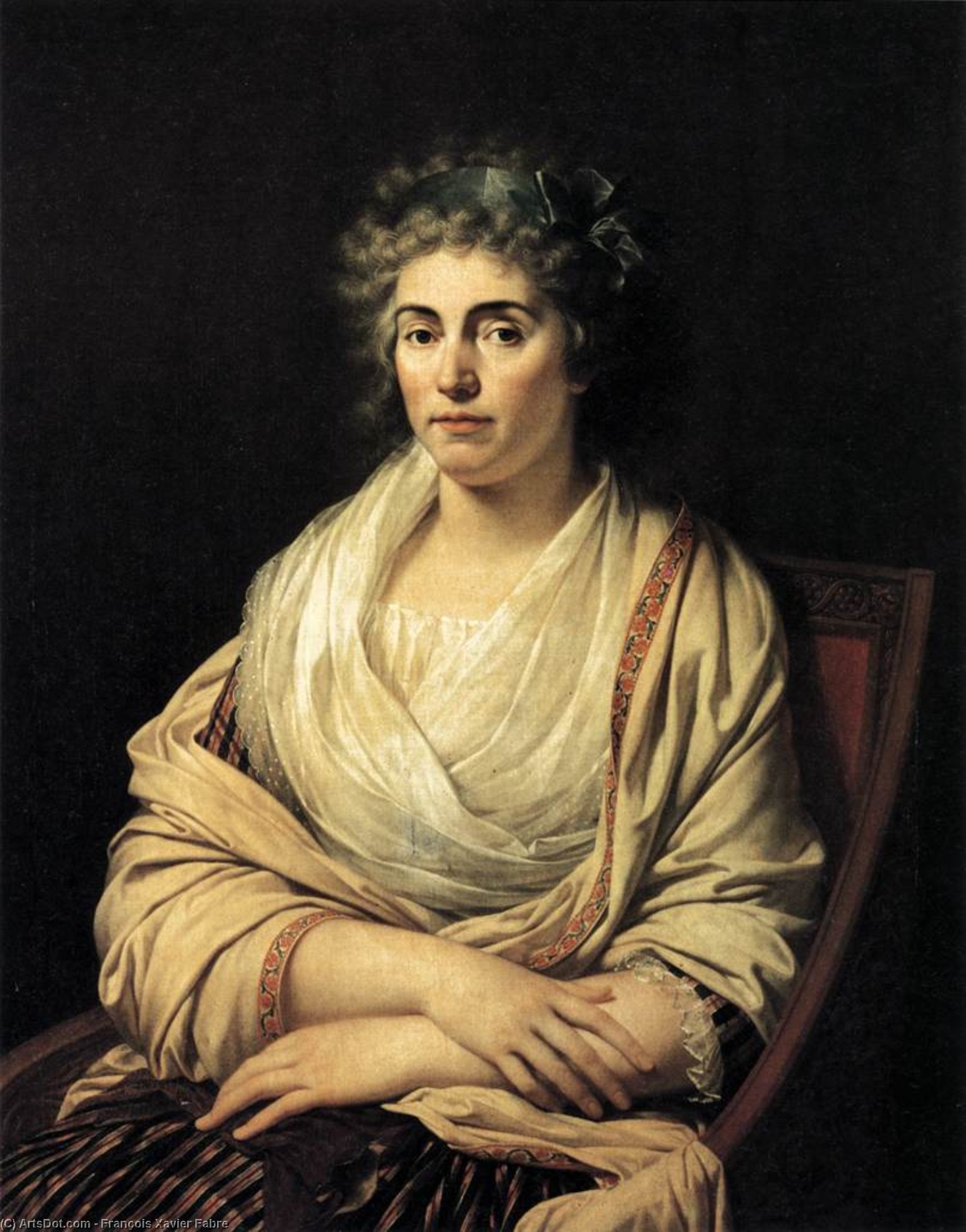
Portrait of the Countess d'Albany
 Acrylic On Canvas
- WallArt
- Neoclassical Style
 1793
1793 93.0 x 73.0 cm
 Галерија Уфици
 Pročitaj više
Kupite digitalnu sliku visoke rezolucije i poboljšanog kvaliteta, koja je znatno superiornija od onoga što vidite u online prikazu.
Svaka datoteka je pedantno pripremljena od strane naših stručnjaka koristeći napredne alate i profesionalnu ručnu retušu. Osiguravamo da svaka slika ima izuzetnu oštrinu, preciznu reprodukciju boja i fine detalje.
Konačna datoteka se dostavlja putem e-pošte u roku od 72 sata, optimizovana za neposrednu upotrebu u profesionalnim, izdavačkim i štamparskim okruženjima. To je isti kvalitet kojem veruju vrhunski studiji dizajna, izdavači i galerije.
Digitalna slika
Preuzmite datoteku visoke rezolucije za ličnu upotrebu, štampanje i kreativne projekte. ( Kupi print Kupi ručno naslikanu sliku)
Uključeno uz svaku porudžbinu digitalne slike
Profesionalna digitalna isporuka, zagarantovana
Kada odaberete ArtsDot.com, ne dobijate samo sliku – vi primate profesionalno unapređeno digitalno umetničko delo, izrađeno sa najvećom preciznošću i uz garanciju zadovoljstva. Evo svega što automatski dolazi uz vašu porudžbinu:

Brza dostava putem e-pošte
Vaša digitalna slika visoke rezolucije biće vam poslata putem e-pošte u roku od 72 sata od poručivanja – spremna za trenutnu upotrebu.

Digitalna datoteka unapređena veštačkom inteligencijom
Vaše umetničko delo je profesionalno optimizovano korišćenjem naprednih AI alata i ručne obrade, čime se osiguravaju maksimalni detalji, oštrina i preciznost boja.

Besplatna ponovna isporuka doživotno
Slučajno ste obrisali ili izgubili svoju datoteku? Ne brinite – poslaćemo vam je ponovo u bilo kom trenutku, potpuno besplatno.

Bez troškova uvoza – zauvek
Uživajte u svojim umetničkim delima trenutno, bez carine, dažbina ili troškova dostave – digitalni download je uvek bez poreza.

Garancija vernosti boja
Uz pomoć profesionalnih alata i upravljanja bojama, osiguravamo da vaša digitalna slika što vernije odražava originalne boje.

Garancija zadovoljstva u roku od 60 dana
Ako niste zadovoljni svojom digitalnom slikom, revidirat ćemo je ili vratiti 100% novca u roku od 60 dana – bez ikakvih pitanja.

100% garancija povrata novca
Niste zadovoljni? Obezbedite pun povrat novca u roku od 60 dana od trenutka kada ste primili svoju digitalnu datoteku – bez suvišnih pitanja.

Popusti na velike porudžbine
Kupite 3 slike, uštedite 10% - Kupite 5 slika, uštedite 15% - Kupite 10+ slika, uštedite 20%. Odlično za kreativne projekte, galerije i agencije.
Opis kolekcionarskog dela
A Portrait Steeped in Florentine Grace: François Xavier Fabre’s Countess d'Albany
François Xavier Fabre’s “Portrait of the Countess d’Albany,” completed in 1793, stands as a testament to the enduring influence of Neoclassicism while simultaneously reflecting the artistic fervor of Florence during its golden age. Executed with meticulous precision and imbued with subtle emotional resonance, this painting captures not merely likeness but an essence of aristocratic refinement – a fascination that continues to captivate audiences today. The artwork’s serene composition—a woman seated gracefully in a chair against a backdrop reminiscent of Florentine palazzo interiors—immediately establishes a sense of dignified composure.- Subject Matter: Louise Stolberg d’Albany, a prominent figure in European society during the Napoleonic era, is depicted with quiet dignity. Her posture exudes confidence and poise, reflecting her status as a noblewoman engaged in intellectual pursuits.
- Style & Technique: Fabre adheres rigorously to the principles of Neoclassicism championed by Jacques-Louis David. The artist employs chiaroscuro—the dramatic interplay of light and shadow—to sculpt the figure’s form, emphasizing musculature and creating depth within the canvas. Brushstrokes are smooth and controlled, prioritizing accuracy and restraint over expressive flourishes.
- Historical Context: Painted shortly after Napoleon's ascent to power, “Portrait of the Countess d’Albany” embodies the aesthetic ideals prevalent in Florence at that time—a revival of classical forms and a celebration of humanist values. The Florentine setting subtly underscores themes of virtue and intellectual contemplation.
- Recommended Reproduction: ArtsDot offers exceptional high-quality reproductions of Fabre’s “Portrait of the Countess d’Albany,” allowing you to experience the artwork's beauty and nuance in your own home or office.
- Explore Related Artworks: Discover other captivating portraits from the Neoclassical era on our website – Portrait of Vittorio Alfieri and Louise Stolberg d’Albany
Srodna umetnička dela



Biografija umetnika
A Life Bridging Neoclassicism and Florentine Society
François-Xavier Fabre, born in Montpellier, France, in 1766, occupies a fascinating position within the landscape of late 18th and early 19th century European art. His journey began with rigorous academic training at his hometown’s art academy, laying a solid foundation before he sought further refinement in the heart of Paris. It was there, within the studio of Jacques-Louis David – the leading light of Neoclassicism – that Fabre truly found his artistic direction. This mentorship proved pivotal, instilling in him a dedication to precise draftsmanship, balanced composition, and a restrained emotional palette that would characterize much of his subsequent work. Fabre’s early promise was recognized with the prestigious Prix de Rome in 1787, an award that promised opportunity for study in Italy; however, fate intervened in the form of the French Revolution. Rather than returning to a France consumed by upheaval, Fabre chose to remain in Florence, a decision that would profoundly shape his artistic career and personal life.Florentine Years: Patronage and Artistic Flourishing
Florence welcomed Fabre with open arms, quickly establishing him as a respected member of the Florentine Academy and a sought-after instructor. The city’s vibrant cultural scene, coupled with its influx of aristocratic patrons and discerning travelers, provided fertile ground for his talents to blossom. He became particularly adept at portraiture, capturing the likenesses of prominent figures with an elegant realism that resonated deeply within Florentine society. His ability to convey both physical resemblance and psychological depth earned him a loyal clientele. Beyond portraiture, Fabre continued to explore historical and mythological subjects, demonstrating a mastery of composition and narrative detail honed during his time under David’s tutelage. A significant chapter in Fabre's personal life unfolded through his connection with the renowned dramatist Vittorio Alfieri. Following Alfieri’s death, Fabre is believed to have married his widow, Princess Louise of Stolberg-Gedern, Countess of Albany – a union that dramatically altered his circumstances. The inheritance received upon her passing in 1824 allowed Fabre to realize a long-held ambition: the establishment of an art school in Montpellier, ensuring the continuation of artistic education within his native city.Artistic Style and Notable Works
Fabre’s style is immediately recognizable for its Neoclassical elegance tempered by a distinctly Italianate sensibility. While deeply influenced by David's emphasis on clarity and form, Fabre infused his work with a warmer palette and a more nuanced approach to characterization. The Dying Saint Sebastian (1789), created early in his career, exemplifies this blend of influences – the anatomical precision and dramatic lighting reminiscent of David are present, yet softened by a subtle emotionality. Later works, such as The Judgment of Paris (1808) and The Death of Narcissus (1814), demonstrate his continued exploration of classical themes with increasing sophistication in composition and color. However, it is perhaps his portraits that best reveal Fabre’s artistic strengths. Portrait of Vittorio Alfieri and Louise Stolberg d’Albany (1793) stands as a testament to his ability to capture not only physical likeness but also the complex relationship between its subjects. Similarly, Portrait of Marquis Annibale Sommariva showcases his skill in rendering textures and conveying a sense of aristocratic dignity. His painting Allen Smith Contemplating across the Arno, Florence, is an excellent example of his ability to capture both the sitter’s personality and the atmosphere of the city itself.A Lasting Legacy: The Musée Fabre and Historical Significance
François-Xavier Fabre's commitment to art extended far beyond his own creative endeavors. His bequest of his extensive art collection to the town of Montpellier upon his death in 1837 stands as a remarkable act of civic generosity. This gift formed the cornerstone of what would become the Musée Fabre, a renowned institution that continues to showcase European paintings from the 15th to the 20th centuries – including masterpieces by David, Rubens, and Courbet alongside his own works. Fabre’s legacy is therefore twofold: as a skilled practitioner of Neoclassical painting and as a visionary benefactor who ensured access to art for generations to come. He represents a crucial link between the classical traditions championed by David and the evolving artistic sensibilities of the 19th century, embodying a spirit of both dedication to established principles and openness to new influences. His portraits offer invaluable insights into the social and cultural landscape of his time, while his patronage solidified Montpellier’s position as a center for artistic appreciation and education.
françois xavier fabre
1766 - 1837

