

 Pregledaj u prostoru
 Pošalji
 Podeli
 Detalji o delu

 Преузми
 Slični predmeti
 Rendgenski snimak
 Slajdovi
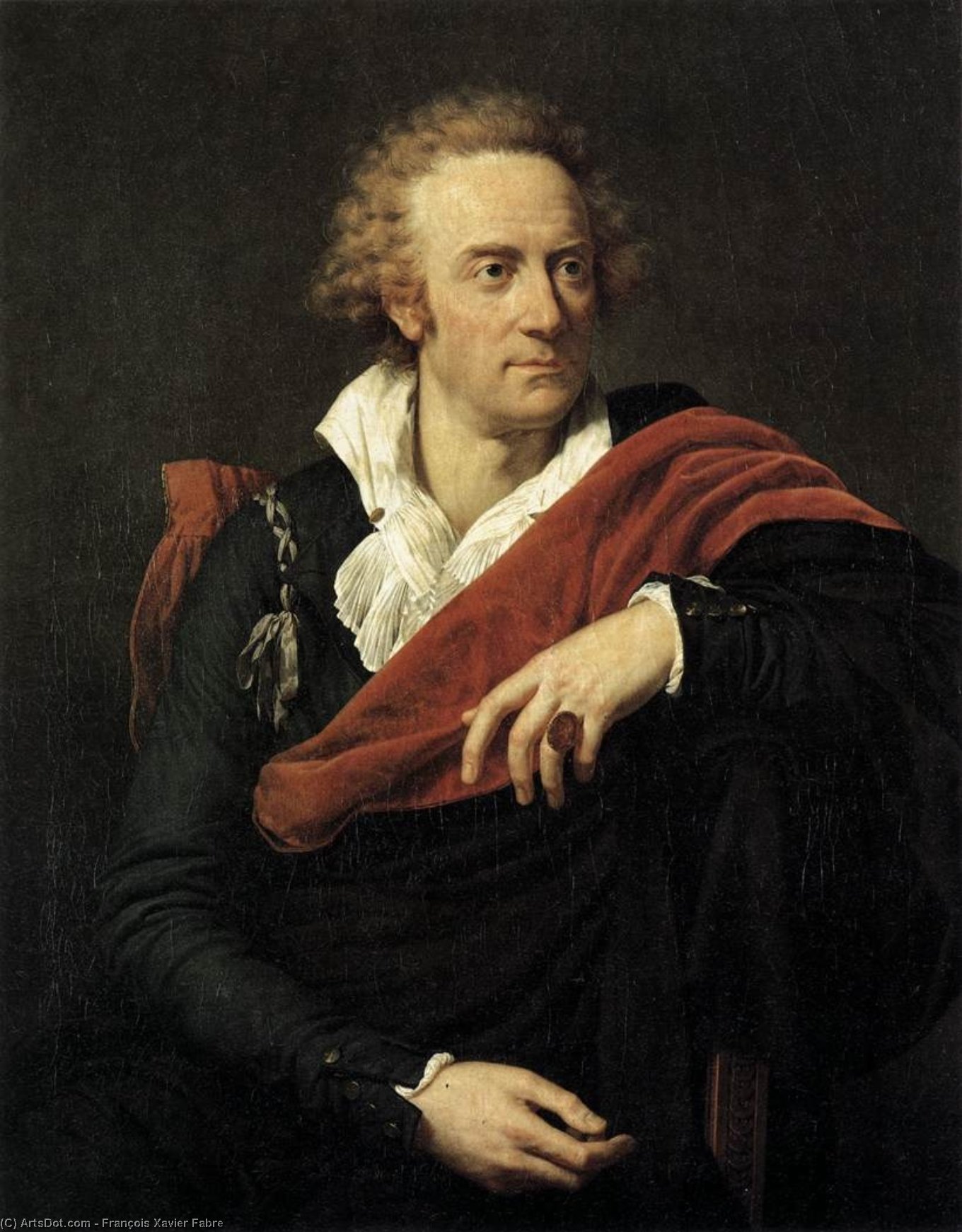
Portrait of Vittorio Alfieri
 Oil
Oil- WallArt
- Neoclassicism
 1793
1793 93.0 x 73.0 cm
 Галерија Уфици
 Pročitaj više
Kupite digitalnu sliku visoke rezolucije i poboljšanog kvaliteta, koja je znatno superiornija od onoga što vidite u online prikazu.
Svaka datoteka je pedantno pripremljena od strane naših stručnjaka koristeći napredne alate i profesionalnu ručnu retušu. Osiguravamo da svaka slika ima izuzetnu oštrinu, preciznu reprodukciju boja i fine detalje.
Konačna datoteka se dostavlja putem e-pošte u roku od 72 sata, optimizovana za neposrednu upotrebu u profesionalnim, izdavačkim i štamparskim okruženjima. To je isti kvalitet kojem veruju vrhunski studiji dizajna, izdavači i galerije.
Digitalna slika
Preuzmite datoteku visoke rezolucije za ličnu upotrebu, štampanje i kreativne projekte. ( Kupi print Kupi ručno naslikanu sliku)
Uključeno uz svaku porudžbinu digitalne slike
Profesionalna digitalna isporuka, zagarantovana
Kada odaberete ArtsDot.com, ne dobijate samo sliku – vi primate profesionalno unapređeno digitalno umetničko delo, izrađeno sa najvećom preciznošću i uz garanciju zadovoljstva. Evo svega što automatski dolazi uz vašu porudžbinu:

Brza dostava putem e-pošte
Vaša digitalna slika visoke rezolucije biće vam poslata putem e-pošte u roku od 72 sata od poručivanja – spremna za trenutnu upotrebu.

Digitalna datoteka unapređena veštačkom inteligencijom
Vaše umetničko delo je profesionalno optimizovano korišćenjem naprednih AI alata i ručne obrade, čime se osiguravaju maksimalni detalji, oštrina i preciznost boja.

Besplatna ponovna isporuka doživotno
Slučajno ste obrisali ili izgubili svoju datoteku? Ne brinite – poslaćemo vam je ponovo u bilo kom trenutku, potpuno besplatno.

Bez troškova uvoza – zauvek
Uživajte u svojim umetničkim delima trenutno, bez carine, dažbina ili troškova dostave – digitalni download je uvek bez poreza.

Garancija vernosti boja
Uz pomoć profesionalnih alata i upravljanja bojama, osiguravamo da vaša digitalna slika što vernije odražava originalne boje.

Garancija zadovoljstva u roku od 60 dana
Ako niste zadovoljni svojom digitalnom slikom, revidirat ćemo je ili vratiti 100% novca u roku od 60 dana – bez ikakvih pitanja.

100% garancija povrata novca
Niste zadovoljni? Obezbedite pun povrat novca u roku od 60 dana od trenutka kada ste primili svoju digitalnu datoteku – bez suvišnih pitanja.

Popusti na velike porudžbine
Kupite 3 slike, uštedite 10% - Kupite 5 slika, uštedite 15% - Kupite 10+ slika, uštedite 20%. Odlično za kreativne projekte, galerije i agencije.
Opis kolekcionarskog dela
A Moment of Contemplation: François-Xavier Fabre’s Portrait of Vittorio Alfieri
François-Xavier Fabre's 1793 portrait of Vittorio Alfieri is more than just a likeness; it’s a carefully constructed tableau of intellect, melancholy, and the spirit of the Enlightenment. Executed in the rich tradition of Neoclassicism, this painting offers a profound glimpse into the life of a pivotal Italian poet and political thinker. Fabre, trained under the exacting hand of Jacques-Louis David, masterfully employs classical principles – balance, order, and a restrained emotional palette – to capture Alfieri’s commanding presence within a darkened, symbolic space.
The subject himself, Vittorio Alfieri, was a towering figure in 19th-century Italian literature. A passionate advocate for republican ideals and a celebrated tragedian, Alfieri's life was marked by both intellectual brilliance and profound personal struggles. Fabre’s portrait doesn’t simply depict him; it embodies his complex character – the intensity of his convictions juxtaposed with an underlying sense of sorrow. The somber lighting, originating from the upper left, casts dramatic shadows that accentuate the lines of Alfieri's face, lending a palpable weight to his expression.
The Language of Form and Color
Fabre’s technical skill is immediately evident in the meticulous rendering of detail. The brushstrokes are layered and deliberate, creating a remarkable sense of texture – particularly noticeable in the folds of the red shawl draped across Alfieri's shoulders and the intricate patterns of his ruffled shirt. The use of rich reds, blacks, whites, and browns establishes a powerful contrast, drawing the eye to key areas while simultaneously grounding the composition within a dark, almost theatrical space. The artist’s mastery of chiaroscuro – the dramatic interplay of light and shadow – is central to the painting's impact, imbuing Alfieri with an aura of both authority and vulnerability.
The composition itself adheres closely to Neoclassical principles. Alfieri is positioned centrally within a vertical axis, emphasizing his stature and gravitas. The background, deliberately indistinct, serves not as a distraction but rather as a stage upon which Alfieri’s personality unfolds. The shapes are predominantly organic – the rounded features of his face, the flowing fabric – yet they are rendered with precise lines, reflecting the Neoclassical commitment to order and clarity.
Symbolism and Historical Context
Beyond its technical brilliance, the portrait is laden with symbolic meaning. The red shawl, a vibrant splash of color against the dark backdrop, could represent passion, defiance, or perhaps even the blood spilled in the pursuit of liberty – themes central to Alfieri’s life and work. The ruffled shirt, characteristic of the late 18th and early 19th centuries, subtly anchors the portrait within its historical context. It speaks to a period of dramatic social and political change, mirroring the turbulence of Alfieri's own era.
Fabre’s decision to paint Alfieri in a seated pose suggests contemplation and introspection – qualities that align perfectly with the poet’s intellectual pursuits. The overall effect is one of profound seriousness, inviting viewers to engage with Alfieri’s complex legacy and contemplate the enduring power of ideas.
Bringing Fabre's Masterpiece Home
ArtsDot offers exquisite hand-painted reproductions of François-Xavier Fabre’s “Portrait of Vittorio Alfieri,” allowing you to experience this iconic artwork in stunning detail. Each reproduction is created by skilled artisans, meticulously replicating the artist’s techniques and capturing the painting's original luminosity and emotional depth. Whether displayed as a statement piece in your home or office, or as an investment for discerning collectors, this reproduction provides a tangible connection to one of Neoclassicism’s most compelling portraits.
Srodna umetnička dela
Biografija umetnika
A Life Bridging Neoclassicism and Florentine Society
François-Xavier Fabre, born in Montpellier, France, in 1766, occupies a fascinating position within the landscape of late 18th and early 19th century European art. His journey began with rigorous academic training at his hometown’s art academy, laying a solid foundation before he sought further refinement in the heart of Paris. It was there, within the studio of Jacques-Louis David – the leading light of Neoclassicism – that Fabre truly found his artistic direction. This mentorship proved pivotal, instilling in him a dedication to precise draftsmanship, balanced composition, and a restrained emotional palette that would characterize much of his subsequent work. Fabre’s early promise was recognized with the prestigious Prix de Rome in 1787, an award that promised opportunity for study in Italy; however, fate intervened in the form of the French Revolution. Rather than returning to a France consumed by upheaval, Fabre chose to remain in Florence, a decision that would profoundly shape his artistic career and personal life.Florentine Years: Patronage and Artistic Flourishing
Florence welcomed Fabre with open arms, quickly establishing him as a respected member of the Florentine Academy and a sought-after instructor. The city’s vibrant cultural scene, coupled with its influx of aristocratic patrons and discerning travelers, provided fertile ground for his talents to blossom. He became particularly adept at portraiture, capturing the likenesses of prominent figures with an elegant realism that resonated deeply within Florentine society. His ability to convey both physical resemblance and psychological depth earned him a loyal clientele. Beyond portraiture, Fabre continued to explore historical and mythological subjects, demonstrating a mastery of composition and narrative detail honed during his time under David’s tutelage. A significant chapter in Fabre's personal life unfolded through his connection with the renowned dramatist Vittorio Alfieri. Following Alfieri’s death, Fabre is believed to have married his widow, Princess Louise of Stolberg-Gedern, Countess of Albany – a union that dramatically altered his circumstances. The inheritance received upon her passing in 1824 allowed Fabre to realize a long-held ambition: the establishment of an art school in Montpellier, ensuring the continuation of artistic education within his native city.Artistic Style and Notable Works
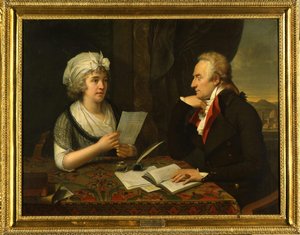
Fabre’s style is immediately recognizable for its Neoclassical elegance tempered by a distinctly Italianate sensibility. While deeply influenced by David's emphasis on clarity and form, Fabre infused his work with a warmer palette and a more nuanced approach to characterization. The Dying Saint Sebastian (1789), created early in his career, exemplifies this blend of influences – the anatomical precision and dramatic lighting reminiscent of David are present, yet softened by a subtle emotionality. Later works, such as The Judgment of Paris (1808) and The Death of Narcissus (1814), demonstrate his continued exploration of classical themes with increasing sophistication in composition and color. However, it is perhaps his portraits that best reveal Fabre’s artistic strengths. Portrait of Vittorio Alfieri and Louise Stolberg d’Albany (1793) stands as a testament to his ability to capture not only physical likeness but also the complex relationship between its subjects. Similarly, Portrait of Marquis Annibale Sommariva showcases his skill in rendering textures and conveying a sense of aristocratic dignity. His painting Allen Smith Contemplating across the Arno, Florence, is an excellent example of his ability to capture both the sitter’s personality and the atmosphere of the city itself.A Lasting Legacy: The Musée Fabre and Historical Significance
François-Xavier Fabre's commitment to art extended far beyond his own creative endeavors. His bequest of his extensive art collection to the town of Montpellier upon his death in 1837 stands as a remarkable act of civic generosity. This gift formed the cornerstone of what would become the Musée Fabre, a renowned institution that continues to showcase European paintings from the 15th to the 20th centuries – including masterpieces by David, Rubens, and Courbet alongside his own works. Fabre’s legacy is therefore twofold: as a skilled practitioner of Neoclassical painting and as a visionary benefactor who ensured access to art for generations to come. He represents a crucial link between the classical traditions championed by David and the evolving artistic sensibilities of the 19th century, embodying a spirit of both dedication to established principles and openness to new influences. His portraits offer invaluable insights into the social and cultural landscape of his time, while his patronage solidified Montpellier’s position as a center for artistic appreciation and education.
françois xavier fabre
1766 - 1837

