

 Pregledaj u prostoru
 Pošalji
 Podeli
 Detalji o delu

 Преузми
 Slični predmeti
 Rendgenski snimak
 Slajdovi
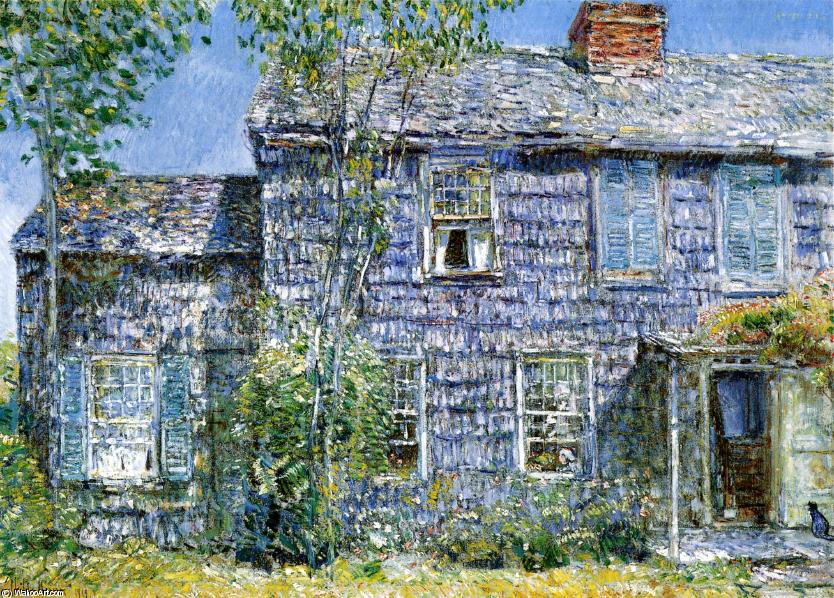
East Hampton, L.I. (also known as Old Mumford House)


 Pročitaj više
Kupite digitalnu sliku visoke rezolucije i poboljšanog kvaliteta, koja je znatno superiornija od onoga što vidite u online prikazu.
Svaka datoteka je pedantno pripremljena od strane naših stručnjaka koristeći napredne alate i profesionalnu ručnu retušu. Osiguravamo da svaka slika ima izuzetnu oštrinu, preciznu reprodukciju boja i fine detalje.
Konačna datoteka se dostavlja putem e-pošte u roku od 72 sata, optimizovana za neposrednu upotrebu u profesionalnim, izdavačkim i štamparskim okruženjima. To je isti kvalitet kojem veruju vrhunski studiji dizajna, izdavači i galerije.
Digitalna slika
Preuzmite datoteku visoke rezolucije za ličnu upotrebu, štampanje i kreativne projekte. ( Kupi print Kupi ručno naslikanu sliku)
Uključeno uz svaku porudžbinu digitalne slike
Profesionalna digitalna isporuka, zagarantovana
Kada odaberete ArtsDot.com, ne dobijate samo sliku – vi primate profesionalno unapređeno digitalno umetničko delo, izrađeno sa najvećom preciznošću i uz garanciju zadovoljstva. Evo svega što automatski dolazi uz vašu porudžbinu:

Brza dostava putem e-pošte
Vaša digitalna slika visoke rezolucije biće vam poslata putem e-pošte u roku od 72 sata od poručivanja – spremna za trenutnu upotrebu.

Digitalna datoteka unapređena veštačkom inteligencijom
Vaše umetničko delo je profesionalno optimizovano korišćenjem naprednih AI alata i ručne obrade, čime se osiguravaju maksimalni detalji, oštrina i preciznost boja.

Besplatna ponovna isporuka doživotno
Slučajno ste obrisali ili izgubili svoju datoteku? Ne brinite – poslaćemo vam je ponovo u bilo kom trenutku, potpuno besplatno.

Bez troškova uvoza – zauvek
Uživajte u svojim umetničkim delima trenutno, bez carine, dažbina ili troškova dostave – digitalni download je uvek bez poreza.

Garancija vernosti boja
Uz pomoć profesionalnih alata i upravljanja bojama, osiguravamo da vaša digitalna slika što vernije odražava originalne boje.

Garancija zadovoljstva u roku od 60 dana
Ako niste zadovoljni svojom digitalnom slikom, revidirat ćemo je ili vratiti 100% novca u roku od 60 dana – bez ikakvih pitanja.

100% garancija povrata novca
Niste zadovoljni? Obezbedite pun povrat novca u roku od 60 dana od trenutka kada ste primili svoju digitalnu datoteku – bez suvišnih pitanja.

Popusti na velike porudžbine
Kupite 3 slike, uštedite 10% - Kupite 5 slika, uštedite 15% - Kupite 10+ slika, uštedite 20%. Odlično za kreativne projekte, galerije i agencije.
Opis kolekcionarskog dela
East Hampton, L.I. (also known as Old Mumford House) - A Glimpse of American Impressionism
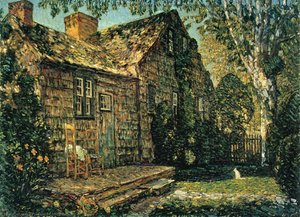
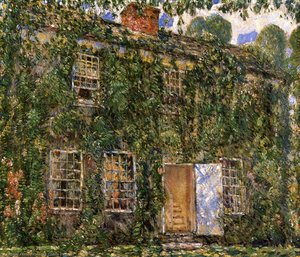
Frederick Childe Hassam's "East Hampton, L.I. (also known as Old Mumford House)," painted in 1919, is a captivating representation of rural New England life rendered through the lens of American Impressionism. This oil on canvas masterpiece transports viewers to a serene and timeless setting, showcasing the artist’s skill in capturing light, atmosphere, and the essence of everyday beauty.
Artistic Style and Technique
Hassam's work is firmly rooted in Impressionism, a movement that prioritized capturing fleeting moments and sensory experiences over strict realism. In this painting, he employs loose, expressive brushstrokes to convey a sense of movement and vibrancy. The colors are luminous and blended seamlessly, creating an atmospheric effect that softens the edges of forms. Notice how the blue siding of the house isn't rendered with sharp lines but rather suggested through layers of color, allowing light to play across its surface. The visible texture created by the impasto technique—the thick application of paint—adds depth and visual interest, further enhancing the impressionistic quality.
Subject Matter and Historical Context
The subject is a weathered, two-story house, identified as the Old Mumford House in East Hampton, Long Island. This location held significance as a symbol of established New England communities during the early 20th century. The painting was created in 1919, a period following World War I when there was a renewed appreciation for domesticity and simpler pleasures. Hassam’s choice to depict this unassuming house reflects a broader cultural shift towards valuing tranquility and stability after years of global conflict. The presence of the small black cat near the doorway adds a touch of warmth and familiarity, further grounding the scene in everyday life.
Symbolism and Emotional Impact
Beyond its aesthetic appeal, "East Hampton, L.I." carries symbolic weight. The house itself can be interpreted as representing stability, heritage, and the enduring spirit of rural America. The surrounding trees and foliage symbolize nature's embrace and the harmony between human habitation and the natural world. The diffused lighting suggests a sense of peace and quiet contemplation. Emotionally, the painting evokes feelings of nostalgia, tranquility, and appreciation for the simple beauty of everyday life. It invites viewers to pause and reflect on the enduring values of community, home, and connection to nature.
Similar Works and Legacy
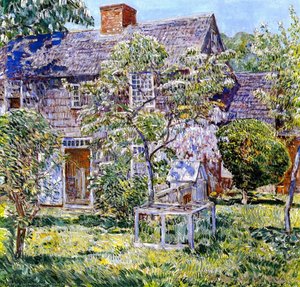
Hassam’s artistic style is evident in other notable works such as "Old Mumford House, Easthampton" and "Rigger's Shop, Provincetown." These paintings share a similar focus on capturing atmospheric light and depicting scenes of American life. Frederick Childe Hassam left behind a significant legacy as one of the leading figures in American Impressionism, influencing generations of artists with his vibrant depictions of urban and rural landscapes.
- View East Hampton, L.I. on ArtsDot.com
- Learn more about Frederick Childe Hassam on Wikipedia
- Discover other works by Frederick Childe Hassam on ArtsDot.com
Srodna umetnička dela
Biografija umetnika
A Pioneer of American Impressionism: The Life and Art of Frederick Childe Hassam
Frederick Childe Hassam was an American Impressionist painter, noted for his urban and coastal scenes. Along with Mary Cassatt and John Henry Twachtman, he championed artistic independence and helped to establish Impressionism as a legitimate movement within the United States. His unwavering commitment to capturing light and color—traits that would define his entire oeuvre—secured his place among the most influential figures in American art history. Born in Boston on October 17, 1859, Hassam’s early life was marked by an innate fascination with drawing and painting. Unlike many aspiring artists of his time who pursued formal training abroad, Hassam honed his skills primarily through self-study and practical experience, initially honing his craft as an illustrator for publications like *Harper's Weekly* and *Scribner’s Monthly*. This formative period instilled in him a keen observational eye—a characteristic that would become central to his distinctive artistic style. He possessed a remarkable ability to distill complex visual information into simplified forms, prioritizing clarity of composition and tonal harmony above elaborate ornamentation.Early Career and Influences: From Illustration to Landscape Painting
Hassam’s initial professional endeavors focused on illustration work for periodicals, providing him with invaluable experience in capturing fleeting moments and conveying narrative through visual imagery. This early exposure to printmaking techniques—particularly etching—influenced his later artistic explorations and contributed to the development of his signature tonalist style. He drew inspiration from European Impressionists like Claude Monet and Edgar Degas, absorbing their innovative approaches to color and brushwork while simultaneously forging a path toward artistic expression that was uniquely American. Monet’s exploration of atmospheric effects—particularly the interplay of light and shadow—served as a guiding principle for Hassam's landscapes, encouraging him to prioritize tonal gradations over precise delineation. Similarly, Degas’s depictions of dancers—characterized by dynamic poses and subtle gestures—inspired Hassam’s interest in capturing movement and conveying emotion through visual form.The Urban Landscape: Capturing the Spirit of Modern New York
Hassam's artistic vision centered on portraying the vibrant energy of urban life, particularly New York City. He recognized that Impressionism could transcend mere topographical representation, transforming ordinary scenes into evocative expressions of mood and atmosphere. His paintings—such as *The Soaring Staircase* (1895) and *Fifth Avenue at Dusk* (1897)—capture the bustling activity of city streets with remarkable precision and sensitivity. Hassam skillfully employed color palettes that mirrored the changing light conditions, creating luminous compositions that conveyed a palpable sense of immediacy. He wasn’t merely documenting architectural structures; he was conveying the psychological impact of urban environments—the exhilaration of movement, the quiet contemplation of domestic interiors, and the social interactions that shaped daily life.Notable Achievements: Artistic Independence and Recognition
Hassam's unwavering dedication to artistic independence culminated in his involvement with “The Ten American Painters,” a collective founded in 1897 as a defiant assertion against the conservative biases of the Society of American Artists. This group—which included luminaries like John Henry Twachtman, Willard Leroy Metcalf, and Edmund Tarbell—challenged prevailing academic conventions and championed a more progressive aesthetic sensibility. Hassam served as the inaugural president of The Ten, solidifying his leadership role within the burgeoning American art scene. His commitment to portraying American subjects—particularly landscapes and urban vistas—earned him widespread acclaim and cemented his reputation as one of the foremost Impressionist painters of his era.Legacy: An Enduring Influence on Subsequent Artists
Frederick Childe Hassam passed away in East Hampton, New York, on August 27, 1935, leaving behind a prodigious artistic legacy that continues to inspire artists today. His pioneering exploration of tonalism—characterized by subtle gradations of color and meticulous attention to detail—established a distinctive stylistic tradition within American Impressionism. Hassam’s unwavering belief in capturing the essence of his time—the dynamism of urban life and the beauty of the natural world—remains profoundly relevant, reminding us that art can serve as both a reflection of history and a catalyst for creative innovation. His paintings—particularly those depicting American flags—stand as enduring symbols of patriotism and civic pride, securing his place among the most revered figures in American artistic heritage.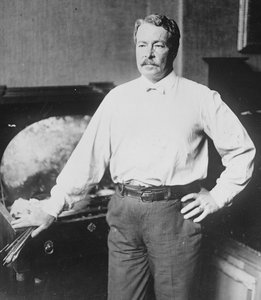
Фредерик Хассам
1859 - 1935 , САД
Kratke činjenice
- Artistic Movement Or Style: Импресионизам
- Artists Or Movements Influenced By This Artist: ['Импресионизам']
- Artists Who Influenced This Artist: ['Клод Моне']
- Date Of Birth: Октобар 17, 1859
- Date Of Death: Август 27, 1935
- Full Name: Frederick Childe Hassam
- Nationality: Американац
- Notable Artworks:
- Мајда у Мисти
- МТ. Бекон при Неубургу
- Јежукс Бокс
- Глостер
- Соната
- Place Of Birth: Бостон, САД

