

 Pošalji
 Podeli
 Detalji o delu

 Преузми
 Slični predmeti
 Slajdovi
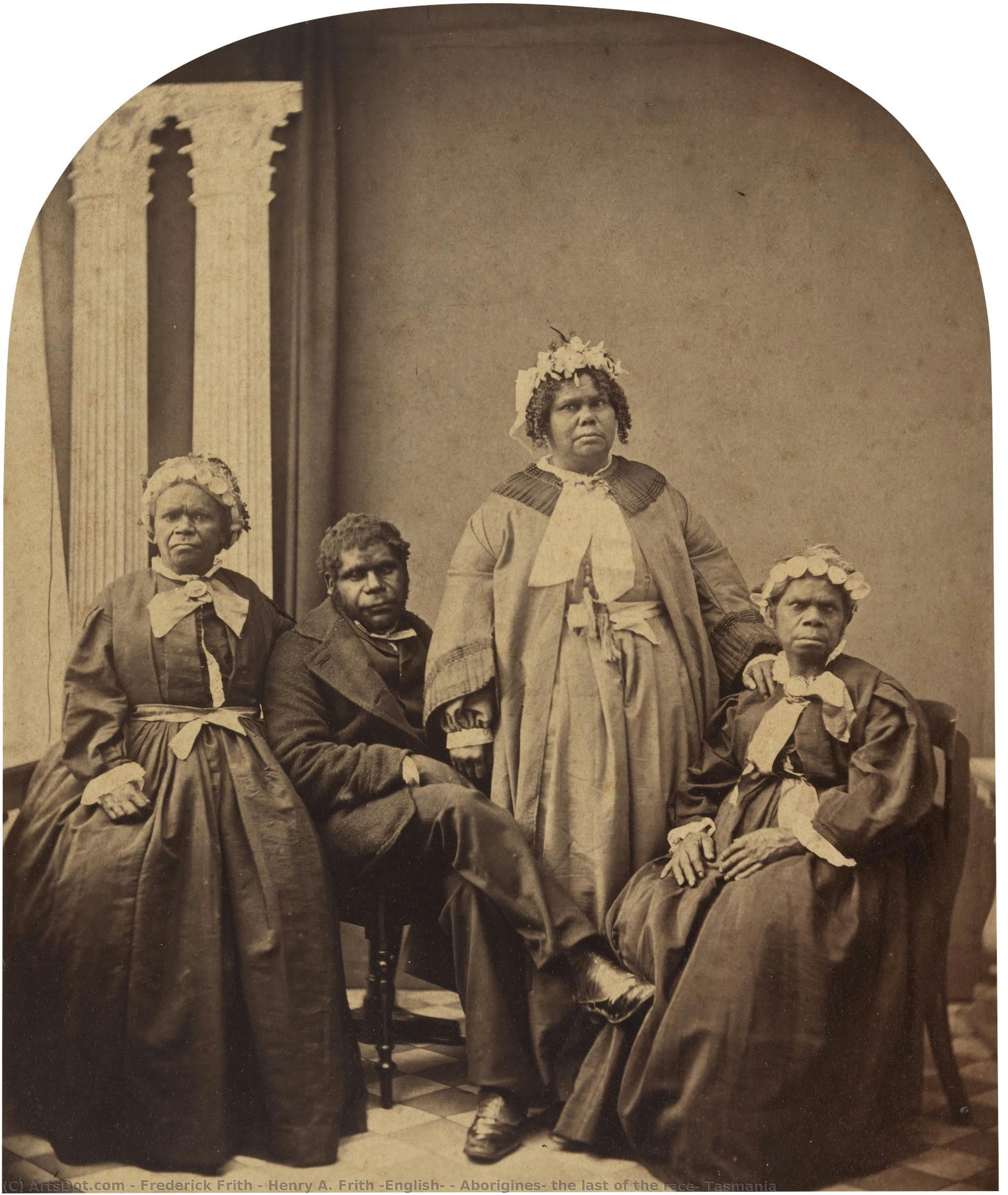
Aborigines, the last of the race, Tasmania
 Black and White Photography
- Photo
 1866
1866- 19th Century
 31.0 x 28.0 cm
 National Portrait Gallery
 Pročitaj više
Ručno rađena uljana reprodukcija
Ručno oslikano uljanim bojama na platnu u dimenzijama i okviru po vašem izboru, izrađeno po porudžbini od strane naših umetnika. ( Kupi print Kupi digitalnu sliku)




































Izaberite jednu od naših unapred definisanih veličina koje odgovaraju originalnim proporcijama umetničkog dela.

Можете унети сопствене димензије како бисте прилагодили дело одређеном оквиру или простору. Ако одабрана величина не одговара пропорцијама оригинала, слика ће бити исечена или проширена додатним елементима који се ручно насликавају. Дигитални prikaz ће вам бити послат на одобрење пре почетка производње.
Имајте на уму да преглед на екрану не одражава стварно исецање или проширење. Само приказ (mockup) ће тачно приказати коначну композицију.
Иако су доступне прилагођене величине, препоручујемо да одаберете димензију из дефинисане листе како бисте сачували оригиналне пропорције.
Nakon narudžbine, tim ArtsDot.com će klijentu putem e-pošte poslati uputstva i dostaviti prikaz predloženog rešenja
Isporuka širom sveta () za 3/4 nedelje umesto uobičajenih 5 nedelja. (31 август). Bez kompromisa po pitanju kvaliteta.

Besplatna ekspresna dostava širom sveta

Visokokvalitetno laneno platno

Kompletno osiguranje transporta

Garancija povraćaja carine i uvoznih dažbina

Garancija vernosti boja

Politika povrata u roku od 60 dana (samo u slučaju nedostataka)

Garancija povrata novca od 100%

Popust pri grupnoj kupovini
 Opcija sa staklom dostupna je samo za dimenzije manje od 110 cm

Aborigines, the last of the race, Tasmania
Tehnika reprodukcije
Dimenzije reprodukcije
-


Konačna cena
$ 263
A Haunting Glimpse into a Vanishing World
In the quiet, monochromatic depths of "Aborigines, the last of the race, Tasmania," we are invited to witness a moment frozen in time, captured by the pioneering eyes of Frederick and Henry A. Frith. This 1866 photograph serves as more than just a historical record; it is a profound, somber meditation on loss and the inexorable passage of time. The image presents four individuals seated in a formal arrangement, their presence commanding a heavy, contemplative silence. Dressed in the structured, old-fashioned attire of the Victorian era—complete with the stiff collars and ties characteristic of mid-19th-century colonial society—the subjects exist in a state of poised stillness. There is an undeniable tension between their traditional identity and the Western clothing they wear, a visual metaphor for the cultural shifts occurring during this turbulent period of Australian history.
The composition of the piece is masterfully balanced, utilizing a semi-circular arrangement that draws the viewer’s gaze inward toward the center of the group. The placement of the chairs—some tucked to the periphery and others anchoring the foreground—creates a sense of depth within the two-dimensional frame. Through the delicate interplay of light and shadow inherent in early photographic processes, the Frith brothers have imbued the subjects with a sculptural quality. Every fold in the fabric, every subtle expression on their faces, and the stark contrast of the black and white tones contribute to an atmosphere of dignified melancholy. For the collector, this work offers a window into the soul of a bygone era, capturing a sense of gravity that is rarely found in contemporary imagery.
The Intersection of Artistry and History
To understand the emotional weight of this photograph, one must consider the historical context of the mid-1860s. The title itself carries a heavy, tragic connotation, reflecting the colonial perspectives and the devastating impact of settlement on the Indigenous populations of Tasmania. As an art piece, it functions as a poignant document of a community facing existential change. The technique employed by the Frith brothers—blending the precision of early photography with the compositional sensibilities of portrait painting—allows the viewer to connect with the humanity of the subjects. They are not merely specimens of history; they are individuals possessing a quiet strength and a visible, enduring dignity.
For interior designers and curators of fine art reproductions, this piece offers an unparalleled opportunity to introduce a sense of historical depth and intellectual rigor to a space. The monochromatic palette makes it a versatile choice for sophisticated, curated environments, where it can serve as a focal point of conversation and reflection. Whether placed in a library, a study, or a gallery-style living room, the photograph evokes a timeless elegance. It is an acquisition for those who appreciate art that does not merely decorate a wall but tells a story—a story of resilience, of cultural collision, and of the haunting beauty found in the most profound of human tragedies.
Srodna umetnička dela
Biografija umetnika
A Dual Legacy: The Frith Brothers – Art, Engineering, and Colonial Visions
The story of Frederick Frith and Henry A. Frith is a compelling narrative of Victorian enterprise and artistic pursuit, interwoven across the landscapes of England, Australia, and Ireland. These brothers, born nearly two decades apart, carved distinct yet occasionally collaborative paths, one as a painter and photographer capturing the burgeoning colonial world, the other as an engineer and prolific translator bridging cultures through literature. Their lives exemplify the diverse ambitions and intellectual currents of 19th-century Britain, revealing how artistic vision and technical innovation could flourish within a single family. Frederick, born in London in 1819, initially followed a traditional path for artists of his time, honing his skills in painting before embracing the emerging medium of photography. He established himself as a portraitist and animal painter, exhibiting in England before seeking new horizons in Australia during the mid-19th century. The allure of the Australian colonies – Tasmania and Victoria – offered both opportunity and a unique subject matter for an artist attuned to detail and light.From Brushstrokes to Chromatypes: Frederick Frith’s Artistic Journey
Arriving in Australia, Frederick quickly established himself as a sought-after portraitist, catering to the growing colonial society's desire for representations of themselves and their world. However, it was his embrace of photography that truly marked his contribution to Australian art history. In Hobart, Tasmania, he partnered with John Mathieson Sharp, forming a studio known as the Chromatype Gallery. This collaboration proved pivotal, pioneering a unique process where photographs were meticulously hand-colored with oil paints, watercolors, and pastels – a technique akin to photo-crayotypes. The resulting “chromatypes” offered a vibrant alternative to monochrome photography, blending artistic skill with mechanical reproduction. These works weren’t merely copies of reality; they were interpretations, imbued with the painterly sensibilities of Frederick Frith. The partnership produced striking portraits and panoramic views of Tasmania, capturing the island's rugged beauty and nascent colonial life. The panoramas, in particular, represent an early attempt to document and disseminate images of the Australian landscape to a wider audience. Though only a limited number of these chromatypes survive today, they stand as testaments to Frith’s innovative spirit and his ability to merge artistic disciplines. His work often reflected the prevailing Victorian fascination with naturalism and detailed observation, evident in his meticulous depictions of animals and human subjects.The Engineer's Pen: Henry A. Frith and the Power of Translation
While Frederick captured images, his younger brother, Henry Albert Frith (born 1840), pursued a different path – one rooted in engineering and language. Based primarily in Ireland, Henry distinguished himself as a translator, bringing the works of prominent European authors to an English-speaking audience. Most notably, he became renowned for his translations of Jules Verne’s novels, playing a crucial role in popularizing Verne's visionary science fiction within Britain. However, Henry was far more than just a translator; he was a prolific writer in his own right, authoring nearly 200 works encompassing novels, instructional texts, and further translations. His output demonstrates a remarkable versatility and intellectual curiosity, reflecting the Victorian era’s emphasis on self-improvement and knowledge dissemination. His engineering background likely informed his meticulous approach to translation, ensuring accuracy and clarity while preserving the spirit of the original text.Collaboration and Divergence: A Brotherly Bond
Despite their differing professions, the Frith brothers maintained a connection, particularly during Frederick’s time in Australia. They collaborated on ventures in Melbourne and Hobart, with Henry providing logistical support and potentially contributing his organizational skills to Frederick's artistic endeavors. This collaborative spirit highlights a shared entrepreneurial drive and a willingness to leverage each other’s strengths. However, their paths ultimately diverged as Frederick continued to focus on his art while Henry established himself as a literary figure in Ireland. Frederick eventually returned to Victoria, continuing his painting practice until his death in 1871. Henry lived on for another four decades, leaving behind a substantial body of translated and original works before passing away in 1917.A Lasting Impression: Legacy and Historical Significance
The Frith brothers’ legacy lies not only in their individual achievements but also in the unique interplay between art, engineering, and colonial experience that defined their lives. Frederick's pioneering work with chromatypes represents an important chapter in the history of Australian photography, demonstrating how artistic techniques could be applied to a new medium. His portraits and landscapes offer valuable insights into 19th-century colonial society and its relationship with the natural world. Henry’s translations played a significant role in shaping British literary tastes, introducing readers to groundbreaking works of science fiction and adventure. Their story serves as a reminder that creativity and innovation can manifest in diverse forms, and that collaboration – even between individuals pursuing seemingly disparate paths – can yield remarkable results. The Frith brothers stand as compelling figures within the broader narrative of Victorian ambition, artistic exploration, and the forging of new identities in the colonial landscape.
frederick frith & henry a. frith (english)
1819 - 1871 , United Kingdom
Osnovne informacije
- Artistic Movement Or Style: Painting, Photography
- Date Of Birth: 1819 (Frederick)
- Date Of Death: 1871 (Frederick)
- Full Name: Frederick Frith & Henry A. Frith
- Nationality: British
- Notable Artworks: ['Aborigines, the last of the race']
- Place Of Birth: London, UK
Povezani članci

Monochrome Visions: Exploring the Aesthetic & Historical Significance of Black & White Photography
Explore the rich history & artistic power of black and white photography. From early techniques to iconic masters like Ansel Adams, discover why monochrome continues to captivate art lovers today. Expert insights for collectors.

White on Canvas: 10 Masterpieces & Timeless Elegance for Your Home Decor
Explore 10 iconic white paintings by Monet, Whistler & Rothko! Discover the stories behind these serene masterpieces and their impact on art history. Find museum-quality reproductions for your home decor at .
Beyond the Lens: Photography's Enduring Influence on Modern & Contemporary Art
Explore photography's pivotal role in shaping modern & contemporary art. Discover key movements, influential artists like Stieglitz, and expert collecting advice from ArtsDot.

Dark Masterpieces: 10 Iconic Paintings Dominated by Black Tones |
Explore 10 iconic paintings dominated by black tones, from Rembrandt’s chiaroscuro to Goya's dark expressions. Discover the stories behind these masterpieces & find museum-quality art reproductions for your home at .

Pictorialism: A Search for Artistic Photography's Soul – Aesthetics, Techniques & Legacy
Explore the captivating world of Pictorialism – a pivotal movement that transformed photography into fine art. Discover key artists like Stieglitz & Käsebier, techniques, and collecting tips from experts.

