

 Pregledaj u prostoru
 Pošalji
 Podeli
 Detalji o delu

 Преузми
 Slični predmeti
 Rendgenski snimak
 Slajdovi
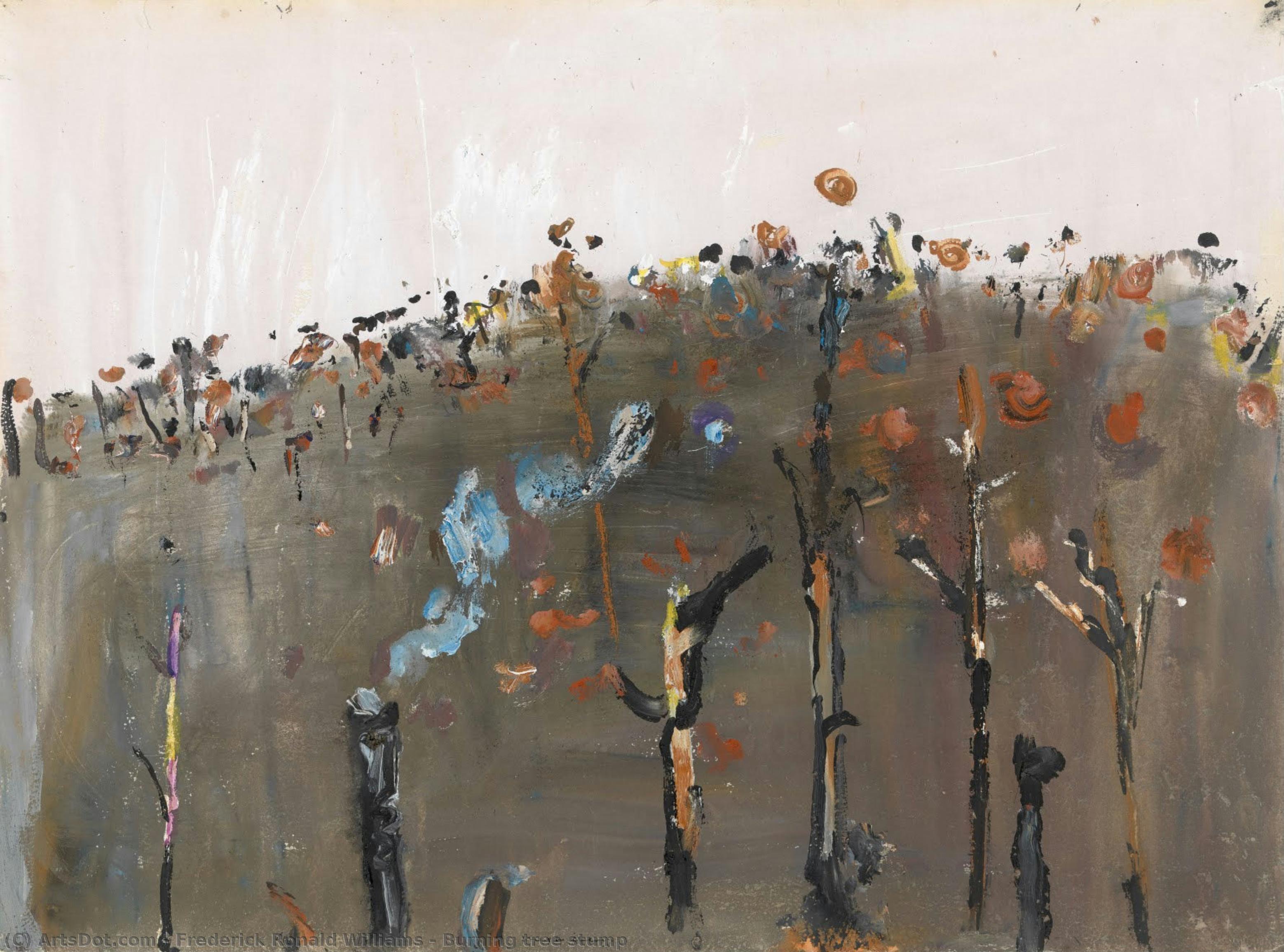
Burning tree stump
 Oil On Canvas
- WallArt
- Abstract Expressionism
 1968
1968- Modern
 57.0 x 76.0 cm
 Nacionalna galerija Viktorije
 Pročitaj više
Giclee štampa / Umetnički otisak
Giclée štampa ili print na platnu muzejskog kvaliteta uz brzu proizvodnju i fleksibilne opcije završne obrade. ( Kupi ručno naslikanu sliku Kupi digitalnu sliku)




P118B $10

P118H $10

P118W $10

P438Z $10

P508JH $12

P508YH $12

P805H $10

P805Z $10

P919BZ $10

P919G $10

P919XJ $10

P959ZH $10

P968JZ $12

W106C $8

W218G $10

W218JH $8

W218Y $10

W307PJ $10

W316G $10

W316PJ $8

W316Y $10

W398PJ $8

W4111J $10

W500HY $15

W500JH $15

W692G $12

W849H $8

W940BG $15

W953PJ $8




Izaberite jednu od naših unapred definisanih veličina koje odgovaraju originalnim proporcijama umetničkog dela.

Možete uneti sopstvene dimenzije kako biste umetničko delo prilagodili specifičnom okviru ili prostoru. Ako odabrani format ne odgovara proporcijama originalne slike, mi ćemo ili iscrtati deo dela ili proširiti sliku pomoću ogledane ivice ili jednobojnog popunjavanja. Digitalni prikaz će vam biti poslat na odobrenje pre početka proizvodnje.
Imajte na umu da pregled na ekranu ne odražava stvarno iscrtavanje ili proširivanje. Samo će prikaz (mockup) precizno pokazati finalnu kompoziciju.
Iako su prilagođene dimenzije dostupne, preporučujemo da odaberete dimenziju sa unapred definisane liste kako biste očuvali originalne proporcije.
Dostava širom sveta () za 2 nedelje umesto uobičajenih 4/5 nedelja. (7 септембар)

Besplatna ekspresna dostava širom sveta

Visokokvalitetno laneno platno

Kompletno osiguranje transporta

Garancija povraćaja carine i uvoznih dažbina

Garancija vernosti boja

Politika povraćaja u roku od 100 dana (isključivo u slučaju nedostataka)

Garancija povrata novca od 100%

Popust pri grupnoj kupovini
 Opcija sa staklom dostupna je samo za dimenzije manje od 110 cm

Burning tree stump
Giclee štampa / Umetnički otisak
Dimenzije reprodukcije
-


Konačna cena
$ 62
The Embers of Memory: Reimagining Fred Williams
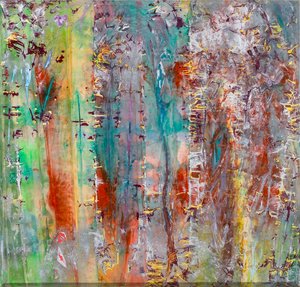
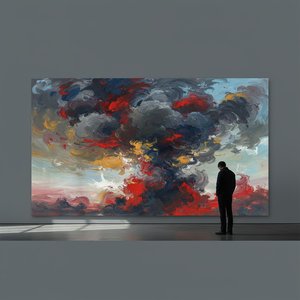
In the evocative depths of "Burning Tree Stump" (1968), the viewer is not merely observing a landscape, but is instead pulled into the visceral heart of an Australian bushfire. Frederick Ronald Williams, one of Australia’s most profound twentieth-century landscapists, achieves here a masterful synthesis of abstract expressionism and raw, elemental truth. The painting does not rely on the literal depiction of flame or smoke; rather, it utilizes a sophisticated language of layered forms and muted tones to capture the very essence of destruction and rebirth. As the eye wanders across the canvas, one encounters a densely populated scene where shapes emerge from a field like ghosts of the bush, creating a sense of movement that is both chaotic and strangely rhythmic.
The technique employed by Williams is nothing short of hypnotic. Utilizing a wet-on-wet approach, he allows oil paints to bleed and merge directly upon the canvas, a method that facilitates the organic, amorphous shapes that define this piece. There is a beautiful tension between thick, tactile impasto patches and delicate, translucent washes, providing a structural depth that invites close inspection. The perspective is intentionally flattened, eschewing traditional linear depth in favor of a gestural abstraction where space is suggested through shifts in color density and the overlapping of organic forms. This creates an immersive experience, as if the viewer is standing amidst the swirling heat and settling ash of a landscape in transition.
A Palette of Somber Elegance
For the discerning collector or interior designer, the color story of "Burning Tree Stump" offers a sophisticated anchor for any high-end space. The palette is dominated by a soulful arrangement of muted browns, charcoal grays, and soft off-whites, evoking the scorched earth and heavy skies of an overcast Australian afternoon. Yet, within this somber atmosphere, Williams introduces subtle, unexpected punctuations of blue and hints of crimson. These small splashes of color act as emotional sparks, preventing the composition from becoming static and instead imbuing it with a flickering, living energy.
Beyond its aesthetic brilliance, the painting carries a profound symbolic weight. It speaks to the collective experience of a continent shaped by fire, touching upon themes of anonymity, resilience, and the disorientation of nature's most powerful forces. The way the figures—or perhaps they are merely fragments of trees and earth—cluster in the foreground creates a sense of being part of a larger, shared consciousness. To possess a reproduction of this work is to bring more than just decoration into a room; it is to invite a conversation about history, the raw power of the natural world, and the enduring beauty found within the aftermath of change.
Srodna umetnička dela
Biografija umetnika
**early life and training**
fred williams, one of australia's most renowned artists, was born on january 23, 1927, in richmond, a suburb of melbourne. his early life led him to an apprenticeship with a company fitting out shops and making boxes. however, his true passion lay in the arts. at 16, he began taking classes at the national gallery school under william dargie, and later studied painting with george bell, a modernist painter.**artistic development and influences**
williams' early work was characterized by small-scale figurative pieces, often depicting elements of london life and music hall performers. his time in london from 1950 to 1956, studying at the chelsea school of art and taking an etching course at the central school of arts and crafts, significantly influenced his style. he was particularly drawn to the work of cézanne, which can be seen in his later landscape paintings.**notable exhibitions and achievements**
* **fred williams - landscapes of a continent** at the museum of modern art in new york (1977) * over 70 solo exhibitions in australian galleries * featured in recent australian painting at the whitechapel gallery, london, and australian painting: colonial, impressionism, modern at the tate gallery**artistic legacy**
williams' transition to landscape painting upon his return to melbourne in 1957 marked a significant turning point in his career. his etchings, which he began producing during his time in london, also showcased his versatility as an artist.- key works: * sandridge (part of the national gallery of australia's collection) * capriccio with ruins of the roman forum (featured in the art gallery of south australia)
- museums featuring his work: * national gallery of victoria (melbourne, australia) * art gallery of new south wales (sydney, australia) * art gallery of south australia (adelaide, australia)
- online resources: * [https://ArtsDot.com/@/fredwilliams](https://ArtsDot.com/@/fredwilliams) - view his artworks and biography on ArtsDot * [https://www.wikiart.org/en/fred-williams](https://www.wikiart.org/en/fred-williams) - explore more of his paintings and legacy
**conclusion**
frederick ronald williams, known for his captivating landscape paintings, left an indelible mark on the australian art scene. his journey from a humble apprenticeship to becoming one of the country's most celebrated artists is a testament to his dedication and passion for the arts. **important dates:** * january 23, 1927 - born in richmond, melbourne * april 22, 1982 - passed away at the age of 55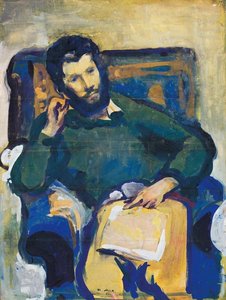
frederick ronald williams
1927 - 1982 , Australia
Osnovne informacije
- Artistic Movement Or Style: Landscape Painting; Etching; Modernist Painter
- Artists Who Influenced This Artist: Cézanne
- Date Of Birth: January 23, 1927
- Full Name: Frederick Ronald Williams
- Nationality: Australian
- Notable Artworks:
- Sandridge
- Capriccio with ruins of the roman forum
- Place Of Birth: Richmond, Australia
Povezani članci

Abstraktni Ekspresionizam: 10 Remek Dela Koja Su Definisala Pokret
Otkrijte 10 remek dela koja su definisala apstraktni ekspresionizam! Istražite dela Pola Krausa, Džejson Poloka i drugih. Saznajte priče iza umetnosti i inspirisanje za dekoraciju doma. Eksplorirajte kolekciju na ArtsDot.com!

Kandinsky's Masterpieces: 25 Paintings That Define Abstract Art | ArtsDot
Journey through Wassily Kandinsky's 25 most iconic abstract paintings. Explore his revolutionary use of color, form & spiritual expressionism. Find museum-quality Kandinsky reproductions and elevate your home decor with ArtsDot.com. Discover all masterpieces on ArtsDot.com!
Beyond Representation: Exploring the Emotional Landscape of Abstract Expressionism
Explore the profound emotional world of Abstract Expressionism with ArtsDot. Discover key artists like Pollock & Rothko, learn about collecting, and find museum-quality reproductions to inspire your space.

Top 10 dela geometrijske apstrakcije koje morate videti | ArtsDot.com
Istražite 10 remek-dela geometrijske apstrakcije – Mondrian, Malevič i Kandinski. Otkrijte priče iza ovih ikoničnih slika i pronađite inspiraciju za dekoraciju enterijera sa ArtsDot.com! Reprodukcije vrhunskog kvaliteta.

Glavna dela koja su definisala Romantični pejzaž: 10 remek-dela za vaš dom
Otkrijte 10 remek-dela romantičnog pejzažnog slikarstva! Uronite u svet Claude Lorraina, Caspara David Friedricha i Turnera. Ispričane priče umetnosti, inspiracija za dekoraciju doma. Kvalitetne reprodukcije na ArtsDot.com – istražite celu kolekciju online!