

 Pregledaj u prostoru
 Pošalji
 Podeli
 Detalji o delu

 Преузми
 Slični predmeti
 Rendgenski snimak
 Slajdovi
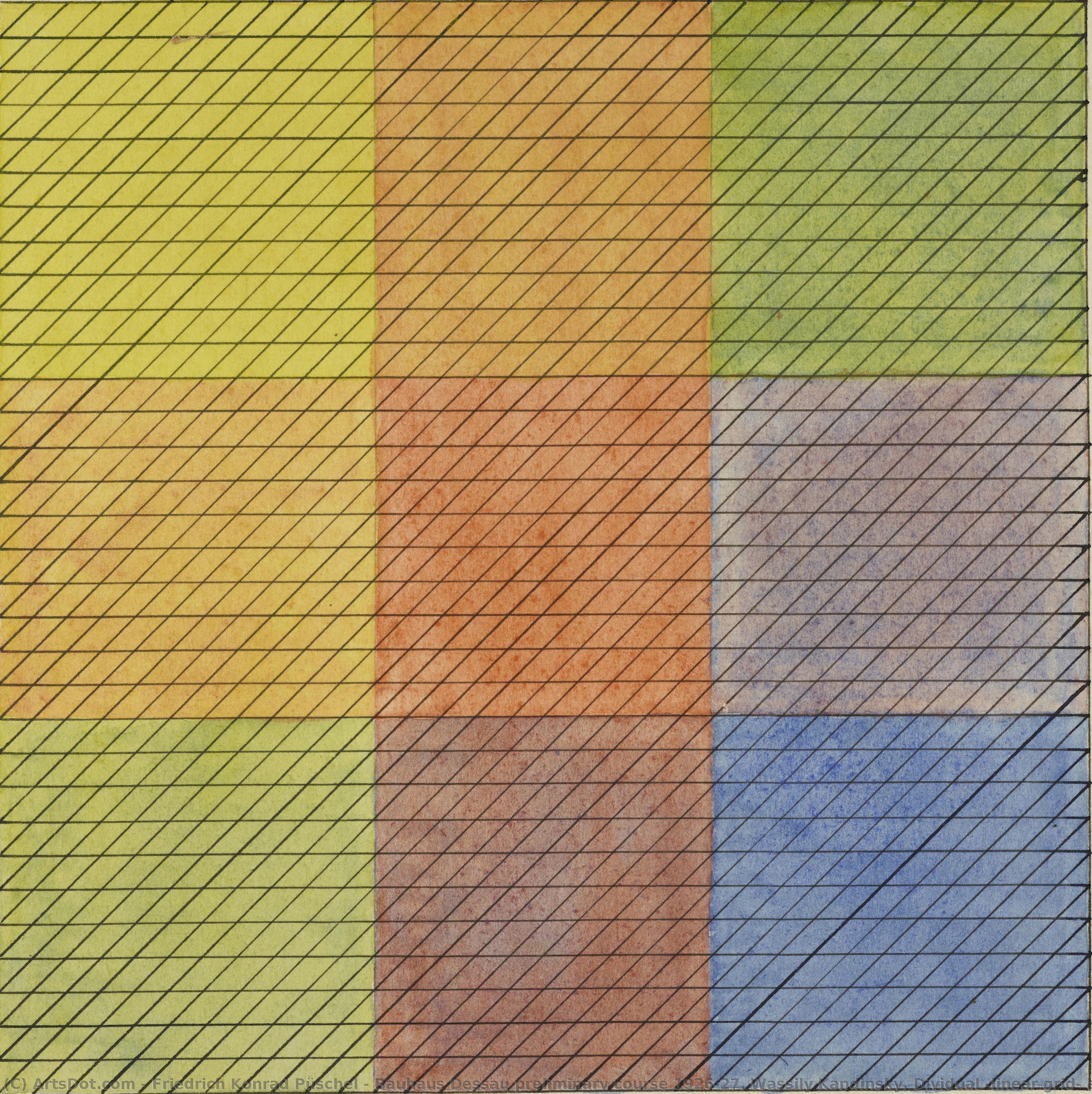
Bauhaus Dessau preliminary course 1926/27. Wassily Kandinsky. Dividual (linear grid) and inividual (colour) design
 Watercolor
- WallArt
- Bauhaus Expressionism
 1927
1927 21.0 x 29.0 cm
 Bauhaus Dessau Foundation
 Pročitaj više
Kupite digitalnu sliku visoke rezolucije i poboljšanog kvaliteta, koja je znatno superiornija od onoga što vidite u online prikazu.
Svaka datoteka je pedantno pripremljena od strane naših stručnjaka koristeći napredne alate i profesionalnu ručnu retušu. Osiguravamo da svaka slika ima izuzetnu oštrinu, preciznu reprodukciju boja i fine detalje.
Konačna datoteka se dostavlja putem e-pošte u roku od 72 sata, optimizovana za neposrednu upotrebu u profesionalnim, izdavačkim i štamparskim okruženjima. To je isti kvalitet kojem veruju vrhunski studiji dizajna, izdavači i galerije.
Digitalna slika
Preuzmite datoteku visoke rezolucije za ličnu upotrebu, štampanje i kreativne projekte. ( Kupi print Kupi ručno naslikanu sliku)
Uključeno uz svaku porudžbinu digitalne slike
Profesionalna digitalna isporuka, zagarantovana
Kada odaberete ArtsDot.com, ne dobijate samo sliku – vi primate profesionalno unapređeno digitalno umetničko delo, izrađeno sa najvećom preciznošću i uz garanciju zadovoljstva. Evo svega što automatski dolazi uz vašu porudžbinu:

Brza dostava putem e-pošte
Vaša digitalna slika visoke rezolucije biće vam poslata putem e-pošte u roku od 72 sata od poručivanja – spremna za trenutnu upotrebu.

Digitalna datoteka unapređena veštačkom inteligencijom
Vaše umetničko delo je profesionalno optimizovano korišćenjem naprednih AI alata i ručne obrade, čime se osiguravaju maksimalni detalji, oštrina i preciznost boja.

Besplatna ponovna isporuka doživotno
Slučajno ste obrisali ili izgubili svoju datoteku? Ne brinite – poslaćemo vam je ponovo u bilo kom trenutku, potpuno besplatno.

Bez troškova uvoza – zauvek
Uživajte u svojim umetničkim delima trenutno, bez carine, dažbina ili troškova dostave – digitalni download je uvek bez poreza.

Garancija vernosti boja
Uz pomoć profesionalnih alata i upravljanja bojama, osiguravamo da vaša digitalna slika što vernije odražava originalne boje.

Garancija zadovoljstva u roku od 60 dana
Ako niste zadovoljni svojom digitalnom slikom, revidirat ćemo je ili vratiti 100% novca u roku od 60 dana – bez ikakvih pitanja.

100% garancija povrata novca
Niste zadovoljni? Obezbedite pun povrat novca u roku od 60 dana od trenutka kada ste primili svoju digitalnu datoteku – bez suvišnih pitanja.

Popusti na velike porudžbine
Kupite 3 slike, uštedite 10% - Kupite 5 slika, uštedite 15% - Kupite 10+ slika, uštedite 20%. Odlično za kreativne projekte, galerije i agencije.
Opis kolekcionarskog dela
A Symphony in Geometry: Exploring Kandinsky's Bauhaus Vision
To gaze upon this vibrant composition is to step directly into the intellectual crucible of early 20th-century modernism—the legendary Bauhaus movement. This piece, echoing Wassily Kandinsky’s seminal work, "Bauhaus Dessau preliminary course 1926/27," is not merely an arrangement of colored squares; it is a visual manifesto. It speaks to the revolutionary belief that art and life could be seamlessly integrated, that pure abstraction held the key to modern harmony. The grid structure itself acts as both constraint and liberation, suggesting an underlying mathematical order while simultaneously exploding with chromatic energy.
The Language of Color and Form
Technically, the work presents a mesmerizing interplay between defined geometry and fluid watercolor washes. One can almost feel the delicate touch of the artist's brush as the colors—the assertive yellows, the grounding blues, the energetic oranges, and the serene greens—bleed into one another across the meticulously laid-out grid. This technique allows the hard lines of the architectural concept to soften at the edges, creating a dynamic tension that is utterly captivating. It suggests movement; the eye cannot rest on any single square for long, instead being guided through pathways of color interaction.
Historical Echoes: Bauhaus and Modernity
Dating from 1927, this piece captures the very spirit of Dessau during its most experimental period. The Bauhaus was more than a school; it was a philosophy that sought to unify art with industrial design. Kandinsky’s inclusion here is pivotal, as his abstract explorations provided the theoretical underpinning for how color and form could communicate emotion without recourse to traditional subject matter. For the collector or designer, owning this reproduction is owning a piece of architectural theory rendered in paint—a conversation starter that speaks volumes about an appreciation for modernist ideals.
Symbolism and Emotional Resonance
The contrast between the rigid grid and the free-flowing color symbolizes the tension inherent in progress itself: the need for structure versus the yearning for spontaneous expression. Symbolically, each colored square can be interpreted as a distinct element of human experience—a moment of joy (yellow), depth (blue), vitality (orange), or growth (green). The overall effect is one of exhilarating balance; it is intellectually stimulating yet emotionally uplifting. It promises that even within the most structured environment, there remains room for vibrant, unpredictable beauty.
Bringing Bauhaus Vibrancy Home
For interior design applications, this artwork serves as a perfect chromatic anchor. Its inherent dynamism means it complements both minimalist, stark modern spaces and richly textured environments alike. Reproducing this piece allows one to infuse a corner of a room with the sophisticated energy of avant-garde art history. It is an investment in visual dialogue—a reminder that beauty can be found in pure concept.
Srodna umetnička dela



Biografija umetnika
early life and education
friedrich konrad püschel, a german architect, town planner, and university professor, was born in 1907 in dessau, germany. he attended the renowned bauhaus design school, where he honed his skills in architecture and design.career highlights
püschel's illustrious career spanned across east germany, the soviet union, and north korea. as a university professor, he shared his expertise with numerous students, shaping the minds of future architects and designers. his work in town planning and architecture left an indelible mark on the countries where he worked.notable contributions
- the museum formerly collection bernhard koehler (berlin, germany): püschel's work was influenced by various art collections, including this renowned museum. although many of its artworks were lost or destroyed during world war ii, some surviving pieces can be found in museums worldwide.
- kunsthaus buhler stuttgart, germany: as a prominent figure in the architecture world, püschel's work was likely influenced by this esteemed art museum. kunsthaus buhler boasts an impressive collection of german and french art from the 19th century to the present day.
- unter den linden, berlin, germany: as a prominent architect, püschel might have worked on projects in this historic boulevard, home to several world-renowned museums. his contributions to the city's architecture are a testament to his skill and dedication.
legacy
friedrich konrad püschel passed away in 1997, leaving behind a legacy of innovative architectural designs and a lasting impact on the world of art and design. his work continues to inspire new generations of architects, town planners, and university professors. view more artworks by friedrich konrad püschel on https://ArtsDot.com/@/friedrich-konrad-puschel- discover the museum formerly collection bernhard koehler (berlin, germany) and its significance in the art world: /en/art/show/art-d3bmnh-en/
- explore the kunsthaus buhler stuttgart, germany and its impressive collection: /en/art/show/art-d3b469-en/
- learn more about the unter den linden, berlin, germany and its cultural significance: https://ArtsDot.com/@@/a@d3c97p-the-museum-unter-den-linden-berlin-germany
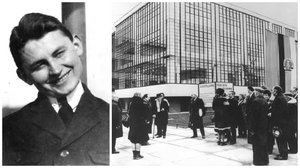
friedrich konrad püschel
1907 - 1997 , Germany
Kratke činjenice
- Artistic Movement Or Style: Surrealism, Mexican folk art
- Artists Or Movements Influenced By This Artist: ['Mexican muralism']
- Artists Who Influenced This Artist: ['Diego Rivera']
- Date Of Birth: July 6, 1907
- Date Of Death: July 13, 1954
- Full Name: Magdalena Carmen Frida Kahlo y Calderón
- Nationality: Mexican
- Notable Artworks:
- The Two Fridas
- Henry Ford Hospital
- Self-Portrait with Thorn Necklace and Hummingbird
- Place Of Birth: Coyoacán, Mexico City

