

 Pregledaj u prostoru
 Pošalji
 Podeli
 Detalji o delu

 Преузми
 Slični predmeti
 Rendgenski snimak
 Slajdovi
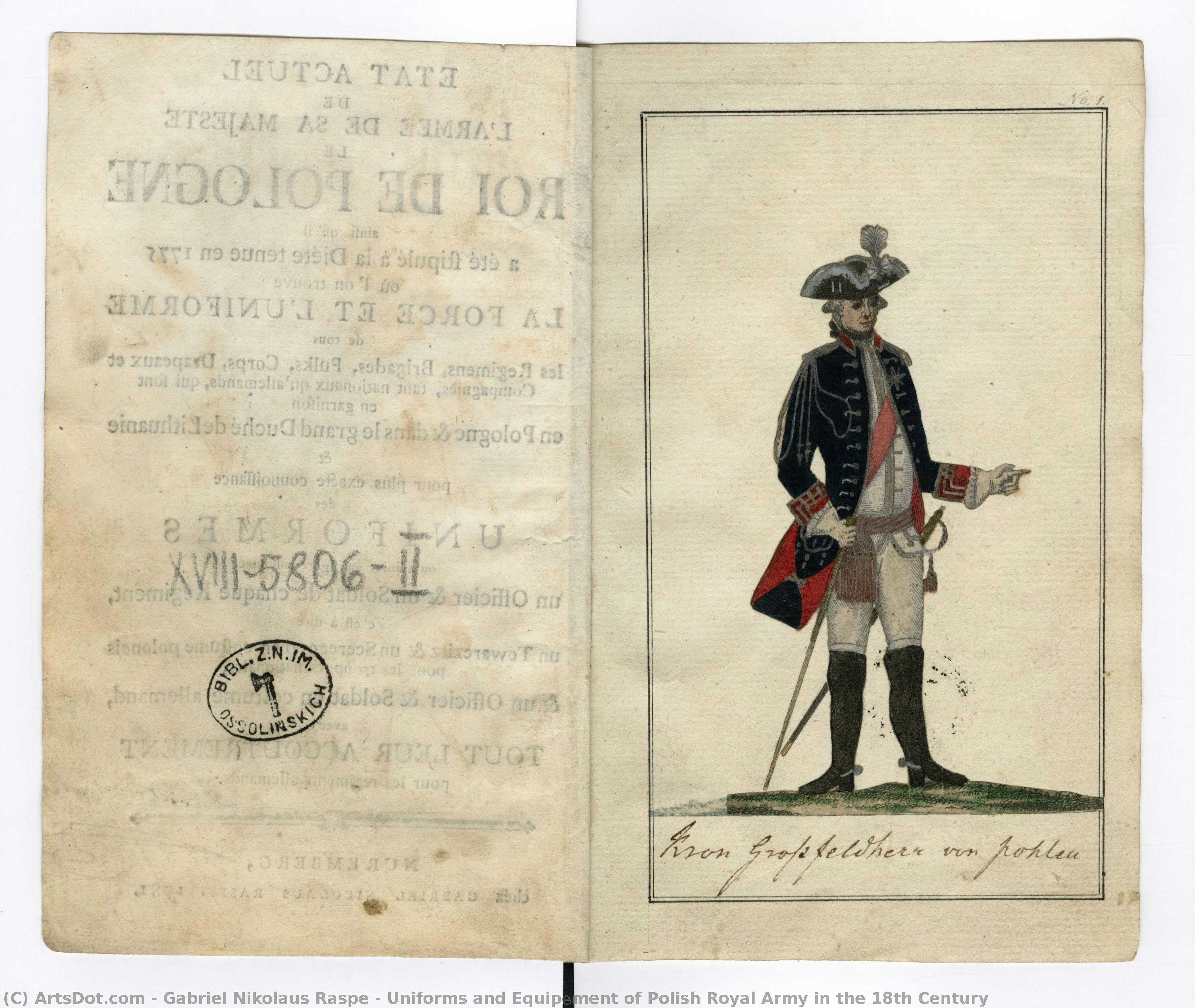
Uniforms and Equipement of Polish Royal Army in the 18th Century


 Pročitaj više
Kupite digitalnu sliku visoke rezolucije i poboljšanog kvaliteta, koja je znatno superiornija od onoga što vidite u online prikazu.
Svaka datoteka je pedantno pripremljena od strane naših stručnjaka koristeći napredne alate i profesionalnu ručnu retušu. Osiguravamo da svaka slika ima izuzetnu oštrinu, preciznu reprodukciju boja i fine detalje.
Konačna datoteka se dostavlja putem e-pošte u roku od 72 sata, optimizovana za neposrednu upotrebu u profesionalnim, izdavačkim i štamparskim okruženjima. To je isti kvalitet kojem veruju vrhunski studiji dizajna, izdavači i galerije.
Digitalna slika
Preuzmite datoteku visoke rezolucije za ličnu upotrebu, štampanje i kreativne projekte. ( Kupi print Kupi ručno naslikanu sliku)
Uključeno uz svaku porudžbinu digitalne slike
Profesionalna digitalna isporuka, zagarantovana
Kada odaberete ArtsDot.com, ne dobijate samo sliku – vi primate profesionalno unapređeno digitalno umetničko delo, izrađeno sa najvećom preciznošću i uz garanciju zadovoljstva. Evo svega što automatski dolazi uz vašu porudžbinu:

Brza dostava putem e-pošte
Vaša digitalna slika visoke rezolucije biće vam poslata putem e-pošte u roku od 72 sata od poručivanja – spremna za trenutnu upotrebu.

Digitalna datoteka unapređena veštačkom inteligencijom
Vaše umetničko delo je profesionalno optimizovano korišćenjem naprednih AI alata i ručne obrade, čime se osiguravaju maksimalni detalji, oštrina i preciznost boja.

Besplatna ponovna isporuka doživotno
Slučajno ste obrisali ili izgubili svoju datoteku? Ne brinite – poslaćemo vam je ponovo u bilo kom trenutku, potpuno besplatno.

Bez troškova uvoza – zauvek
Uživajte u svojim umetničkim delima trenutno, bez carine, dažbina ili troškova dostave – digitalni download je uvek bez poreza.

Garancija vernosti boja
Uz pomoć profesionalnih alata i upravljanja bojama, osiguravamo da vaša digitalna slika što vernije odražava originalne boje.

Garancija zadovoljstva u roku od 60 dana
Ako niste zadovoljni svojom digitalnom slikom, revidirat ćemo je ili vratiti 100% novca u roku od 60 dana – bez ikakvih pitanja.

100% garancija povrata novca
Niste zadovoljni? Obezbedite pun povrat novca u roku od 60 dana od trenutka kada ste primili svoju digitalnu datoteku – bez suvišnih pitanja.

Popusti na velike porudžbine
Kupite 3 slike, uštedite 10% - Kupite 5 slika, uštedite 15% - Kupite 10+ slika, uštedite 20%. Odlično za kreativne projekte, galerije i agencije.
A Window into Eighteenth-Century Valor
In the delicate lines of Gabriel Nikolaus Raspe’s 1781 engraving, "Uniforms and Equipment of Polish Royal Army in the 18th Century," we find much more than a mere historical record; we encounter a frozen moment of martial elegance and national identity. The artwork presents a striking figure, a soldier poised on the precipice of action, captured with a singular sense of readiness. As he stands balanced on one leg, his other foot raised in a gesture that suggests both a momentary pause and an impending stride, the viewer is drawn into the rhythmic tension of military life during the late Enlightenment. This piece serves as a profound testament to the meticulous artistry required to document the grandeur of the Polish Royal Army, blending the precision of a technical manual with the soul of a portrait.
The technique employed by Raspe—the masterful art of engraving—is central to the emotional and visual impact of the work. Through the careful manipulation of metal plates, likely copper, the artist achieved a level of detail that allows the eye to wander through the intricate textures of 18th-century military attire. One can almost feel the weight of the heavy fabrics, the sharp edge of the drawn sword, and the structured silhouette of the soldier's hat. The interplay of light and shadow, rendered through fine hatching and cross-hatching, creates a sense of three-dimensional depth that breathes life into the monochromatic medium. For the collector, this technique offers a sophisticated aesthetic that speaks to the timeless beauty of classical printmaking.
Historical Resonance and Aesthetic Splendor
To gaze upon this work is to step back into the complex geopolitical landscape of 1781. As a German publisher and art dealer with a keen eye for heraldry and military detail, Raspe possessed the unique ability to translate the pride of the Polish Royal Army into a visual language accessible to the European intelligentsia. The subject matter carries deep symbolic weight, representing not just the equipment of war, but the very fabric of sovereignty and the disciplined spirit of a nation. Every button, strap, and fold of cloth serves as a historical marker, preserving a vanished era of military splendor for future generations.
For the discerning interior designer or art enthusiast, this reproduction offers an unparalleled opportunity to introduce a sense of academic prestige and historical gravity into a living space. The artwork’s structured composition and fine linework make it an ideal centerpiece for a library, a study, or a formal gallery wall. It provides a sophisticated focal point that invites conversation, bridging the gap between historical scholarship and contemporary luxury. Owning such a piece is not merely about decoration; it is about curating a legacy of culture, strength, and the enduring human fascination with the artistry of the past.
Srodna umetnička dela
Biografija umetnika
Early Life and Apprenticeship in the German Book Trade
Gabriel Nikolaus Raspe, born on December 4th, 1712, in the small estate of Crelpa near Neustadt an der Orla, Germany, emerged from a world steeped in practical administration rather than artistic pursuit. His father served as the steward of the Brandenstein estate and later held civic office in Laucha an der Unstrut, providing a stable but decidedly un-bohemian upbringing for the young Raspe. His mother’s lineage connected him to a family of clergymen, hinting at a tradition of intellectual rigor. This background instilled in him a meticulousness that would later characterize his work as both publisher and art dealer. After initial schooling at the Lateinschule in Naumburg, Raspe embarked on an apprenticeship within the bustling German book trade—a path common for ambitious young men of the era seeking to engage with the burgeoning world of ideas and commerce.
His journey took him through several prominent bookstores: first Weygand’s in Helmstedt, then Zimmermann’s in Wittenberg and Zerbst. These experiences were formative, exposing him to diverse publications and the intricacies of book distribution. However, it was his appointment in 1739 to manage the esteemed Stein bookstore in Nuremberg that truly marked a turning point. Following the death of Johann Stein's widow, Raspe married Stein’s daughter and assumed full control of the business alongside his brother-in-law. This wasn’t merely an inheritance; it was an opportunity to forge his own path within the art world.
The Rise as a Publisher and Art Dealer
Nuremberg in the 18th century was a vibrant hub for printing, craftsmanship, and collecting. Raspe quickly established himself not just as a bookseller but as a publisher of considerable note. He wasn’t content to simply distribute existing works; he actively sought out projects that aligned with his growing interests—particularly those involving detailed visual representation. His most significant contribution lay in the publication of Siebmacher's Wappenbuch, a comprehensive roll of arms that became an invaluable resource for heraldry scholars and enthusiasts throughout German-speaking regions. This undertaking demonstrated not only his organizational skills but also his appreciation for meticulous detail and historical accuracy.
Beyond the *Wappenbuch*, Raspe’s business expanded to encompass art dealing, a field where he cultivated connections with collectors and artists alike. He possessed an astute eye for quality and a knack for identifying works of merit—a talent that allowed him to build a reputation as a trusted source for discerning buyers. While not himself a painter or sculptor, Raspe understood the power of visual imagery and its importance in conveying information and status.
Military Illustrations and Polish Royal Army Uniforms
Raspe’s legacy is most vividly remembered today for his exceptional collection of military illustrations, specifically those depicting the uniforms of the Polish Royal Army during the 18th century. These weren't simply decorative depictions; they were painstakingly accurate records of a rapidly changing world of military fashion and organization. The plates showcase an extraordinary level of detail—from the cut of the coats and breeches to the intricate embellishments on buttons and buckles, offering invaluable insights into the lives of soldiers and officers.
The precise origins of this fascination remain somewhat obscure, but it’s likely driven by a combination of factors. The Polish-Saxon War (1733–1738) had recently concluded, sparking interest in military affairs across Europe. Furthermore, the Polish court was known for its elaborate displays of power and prestige, making its army a compelling subject for artistic documentation. Raspe’s illustrations weren't created in isolation; they were likely commissioned by collectors or military officials seeking to preserve a visual record of this era.
Legacy and Historical Significance
Gabriel Nikolaus Raspe died on October 25th, 1785, in Nuremberg, leaving behind a substantial body of work that continues to captivate scholars and art enthusiasts. His contribution extends beyond the aesthetic beauty of his illustrations; he provided an unparalleled glimpse into the material culture of the 18th century—a period marked by significant political upheaval and social change.
- Preservation of Visual History: Raspe’s meticulous documentation of Polish Royal Army uniforms offers a unique window into the lives of soldiers, officers, and the broader military landscape of the era. His work serves as an invaluable resource for historians studying 18th-century warfare, fashion, and social customs.
- Influence on Heraldry: The publication of *Siebmacher's Wappenbuch* under his direction cemented its position as a cornerstone of heraldic scholarship. It remains a vital source for understanding the complex symbolism and traditions associated with European coats of arms.
- Bridging Art and Commerce: Raspe exemplified the role of the 18th-century publisher and art dealer—a figure who not only facilitated the distribution of knowledge but also actively shaped artistic trends and collecting practices. His success demonstrates the growing importance of visual culture in a rapidly modernizing world.
While perhaps less celebrated than his contemporaries who wielded brushes or chisels, Gabriel Nikolaus Raspe’s impact on our understanding of the 18th century is undeniable. He was a keen observer, a meticulous publisher, and a discerning art dealer—a figure whose legacy continues to resonate through the detailed images he preserved for posterity.
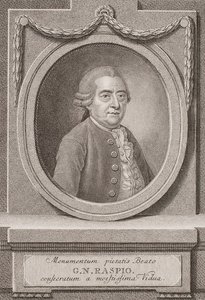
gabriel nikolaus raspe
1712 - 1785 , Germany
Kratke činjenice
- Artistic Movement Or Style: Military Illustration
- Date Of Birth: December 4, 1712
- Date Of Death: October 25, 1785
- Full Name: Gabriel Nikolaus Raspe
- Nationality: German
- Notable Artworks: ['Polish Army Uniforms']
- Place Of Birth: Crelpa, Germany

