


 Pregledaj u prostoru
 Pošalji
 Podeli
 Detalji o delu

 Преузми
 Slični predmeti
 Rendgenski snimak
 Slajdovi
Young Woman Sewing by the Light of a Lamp
 Acrylic On Canvas
- WallArt
- Biedermeier
 1823
1823- 19th Century
 40.0 x 34.0 cm
 Neue Pinakothek
 Pročitaj više
Ručno rađena uljana reprodukcija
Ručno oslikano uljanim bojama na platnu u dimenzijama i okviru po vašem izboru, izrađeno po porudžbini od strane naših umetnika. ( Kupi print Kupi digitalnu sliku)




P118B $10

P118H $10

P118W $10

P438Z $10

P508JH $12

P508YH $12

P805H $10

P805Z $10

P919BZ $10

P919G $10

P919XJ $10

P959ZH $10

P968JZ $12

W106C $8

W218G $10

W218JH $8

W218Y $10

W307PJ $10

W316G $10

W316PJ $8

W316Y $10

W398PJ $8

W4111J $10

W500HY $15

W500JH $15

W692G $12

W849H $8

W940BG $15

W953PJ $8




Izaberite jednu od naših unapred definisanih veličina koje odgovaraju originalnim proporcijama umetničkog dela.

Можете унети сопствене димензије како бисте прилагодили дело одређеном оквиру или простору. Ако одабрана величина не одговара пропорцијама оригинала, слика ће бити исечена или проширена додатним елементима који се ручно насликавају. Дигитални prikaz ће вам бити послат на одобрење пре почетка производње.
Имајте на уму да преглед на екрану не одражава стварно исецање или проширење. Само приказ (mockup) ће тачно приказати коначну композицију.
Иако су доступне прилагођене величине, препоручујемо да одаберете димензију из дефинисане листе како бисте сачували оригиналне пропорције.
Nakon narudžbine, tim ArtsDot.com će klijentu putem e-pošte poslati uputstva i dostaviti prikaz predloženog rešenja
Isporuka širom sveta () za 3/4 nedelje umesto uobičajenih 5 nedelja. (28 август). Bez kompromisa po pitanju kvaliteta.

Besplatna ekspresna dostava širom sveta

Visokokvalitetno laneno platno

Kompletno osiguranje transporta

Garancija povraćaja carine i uvoznih dažbina

Garancija vernosti boja

Politika povrata u roku od 60 dana (samo u slučaju nedostataka)

Garancija povrata novca od 100%

Popust pri grupnoj kupovini
 Opcija sa staklom dostupna je samo za dimenzije manje od 110 cm

Young Woman Sewing by the Light of a Lamp
Tehnika reprodukcije
Dimenzije reprodukcije
-


Konačna cena
$ 263
A Moment Frozen in Time: The Intimate World of Georg Friedrich Kersting
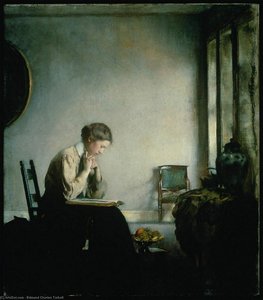
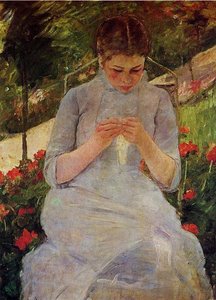
Georg Friedrich Kersting’s “Young Woman Sewing by the Light of a Lamp” isn't merely a portrait; it’s a carefully constructed tableau, a window into a quiet domesticity that speaks volumes about 19th-century life in Germany. Painted in 1823, this work exemplifies the Biedermeier style – a reaction against the grandiosity of Neoclassicism and Romanticism, favoring instead an emphasis on realism, intimacy, and everyday subjects. Kersting’s skill lies not in dramatic gesture or sweeping landscapes, but in his ability to capture the subtle nuances of human interaction within a confined space. The painting immediately draws us in with its soft light, emanating from both the lamp and the diffused glow filtering through the window – elements that create an atmosphere of warmth and tranquility despite the subject’s focused activity.
- Subject Matter: A young woman diligently sewing at a table, her face illuminated by lamplight. The scene is remarkably simple, yet profoundly engaging.
- Style: Biedermeier – characterized by its realism, focus on domestic life, and avoidance of overt sentimentality.
- Technique: Kersting’s meticulous attention to detail is evident in the rendering of fabrics, textures, and the subtle play of light and shadow. He employs a muted color palette, dominated by browns, creams, and blues, contributing to the painting's overall sense of calm.
The Symbolism of Light and Labor
Beyond its surface simplicity, “Young Woman Sewing” is rich in symbolic meaning. The lamp itself represents not just illumination but also a connection to domesticity and tradition – a beacon guiding the woman through her work. Her sewing, a commonplace activity, becomes imbued with significance within the context of the painting. It’s a quiet act of creation, a testament to female labor and skill, often overlooked in historical narratives. The arrangement of the room—the table, the chair, the window—suggests a space designed for comfort and productivity, reflecting the values of the Biedermeier aesthetic: order, practicality, and a celebration of the familiar.
Note the careful positioning of the woman’s hands – they are not overly dramatic or stylized; instead, they convey a sense of focused concentration and quiet determination. This understated realism is a hallmark of Kersting's style and contributes to the painting’s enduring appeal.A Glimpse into 19th-Century German Life
To understand “Young Woman Sewing,” it’s helpful to consider the historical context in which it was created. Prussia in the early 19th century was a society undergoing significant social and political change, yet also deeply rooted in tradition. The Biedermeier style emerged as a response to these shifting dynamics, offering a refuge from the turmoil of the Napoleonic era and the subsequent rise of Romanticism. Kersting’s painting provides a poignant glimpse into the lives of ordinary people – women particularly – who played a vital role in shaping society. His work reflects a growing interest in documenting everyday life and capturing the essence of German culture.
Replicas and Artistic Legacy
Reproductions of “Young Woman Sewing by the Light of a Lamp” offer an accessible way to experience Kersting’s masterful artistry. The meticulous detail and evocative atmosphere of the original painting are faithfully reproduced in high-quality prints, making it a beautiful addition to any home or office. Kersting's work continues to resonate with viewers today because it speaks to universal themes of domesticity, labor, and the quiet beauty of everyday life. His ability to capture such profound emotion within a seemingly simple scene is a testament to his skill as an artist and a keen observer of human nature.
Srodna umetnička dela
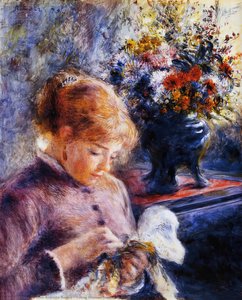
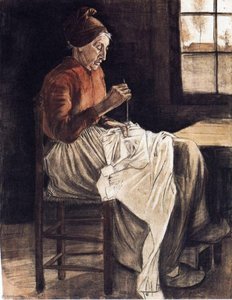
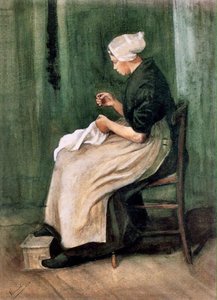
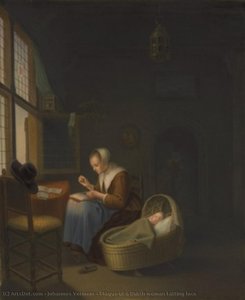
Biografija umetnika
The Quiet Observer: The Life and Legacy of Georg Friedrich Kersting
In the grand tapestry of German Romanticism, where dramatic peaks and tempestuous skies often dominate the visual narrative, there exists a more intimate, whispered beauty found in the works of Georg Friedrich Kersting. Born in 1785 in the modest village of Gostendorf to a glazier, Kersting’s journey from humble beginnings to the heights of Prussian artistic prestige is a testament to a life dedicated to the profound observation of the everyday. His early training at the Copenhagen Academy between 1805 and 1808 provided him with a foundation of stylistic clarity and meticulous draughtsmanship, earning him a silver medal and instilling in him a precision that would become his artistic hallmark.
Kersting’s life was not merely one of quiet studio contemplation; it was deeply intertwined with the turbulent political currents of his era. Upon moving to Dresden in 1808, he joined the Lützow Free Corps, a patriotic volunteer unit, embodying the spirit of national reform and service. This period of military involvement likely sharpened his eye for detail and human character, experiences that would later inform the psychological depth found in his paintings. It was during this era that he forged one of the most significant artistic bonds of the nineteenth century through his relationship with Caspar David Friedrich. Walking together through the rugged landscapes of the Riesengebirge, Kersting acted as both a companion and a collaborator, producing preparatory drawings that would serve as vital inspirations for Friedrich’s more monumental, sublime landscapes.
The Art of the Intimate: Style and Technique
While his mentor, Friedrich, sought to capture the infinite and the divine through overwhelming natural phenomena, Kersting found his calling in the Biedermeier tradition—a style characterized by a retreat into the domestic, the cozy, and the tranquil. He mastered the genre of interior scenes, transforming simple rooms into stages for quiet human drama. His technique was a sophisticated blend of Romantic sensitivity and a reverence for the seventeenth-century Dutch masters. By employing subtle nuances of light and color, Kersting could breathe life into a sunlit corner or a shadowed study, imbuing domesticity with a sense of dignity and timelessness.
His work is defined by several key artistic elements:
- Meticulous Realism: A dedication to the precise rendering of textures, from the grain of wooden furniture to the soft folds of fabric.
- Psychological Depth: The ability to capture fleeting moments of contemplation or quiet interaction, suggesting a rich inner life within his subjects.
- Luminous Atmosphere: A masterful use of light to create a sense of warmth and peace, often focusing on the way natural light enters a domestic space.
- The Beauty of the Ordinary: An elevated focus on everyday objects and scenes, finding profound meaning in the mundane aspects of life.
Historical Significance and Artistic Endurance
The historical importance of Georg Friedrich Kersting lies in his ability to bridge the gap between the sweeping emotionalism of Romanticism and the grounded, observational realism of the Biedermeier period. He provided a necessary counterpoint to the era's more grandiose movements, offering a window into the soul of the German middle class and the sanctity of the private sphere. His collaborations and his ability to translate the spirit of his time into intimate visual poetry ensure his place as a vital figure in European art history.
Through his paintings, Kersting invites us to slow our pace and find wonder in the stillness. He reminds us that greatness is not only found in the epic or the extraordinary, but in the quiet, light-filled moments of our shared human experience. His legacy remains a profound celebration of the beauty found within the boundaries of the home and the heart.
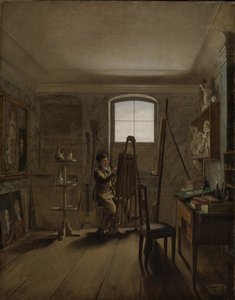
Georg Friedrich Kersting
1785 - 1847 , Germany
Osnovne informacije
- Artistic Movement Or Style: Biedermeier
- Artists Or Movements Influenced By This Artist: Dutch Genre Painting
- Artists Who Influenced This Artist: Caspar David Friedrich
- Date Of Birth: October 31, 1785
- Date Of Death: July 1, 1847
- Full Name: Georg Friedrich Kersting
- Nationality: German
- Notable Artworks:
- The Embroiderer
- Morning in the Riesengebirge
- Place Of Birth: Göstendorf, Germany
Povezani članci
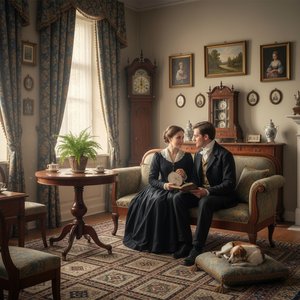
Biedermeier: Art, Society & Intimacy in Restoration Europe
Explore the world of Biedermeier art & culture! Discover the history, aesthetic principles, and lasting influence of this fascinating European movement. Expert insights & beautiful reproductions at ArtsDot.

Harmonizacija Kontrasta: Integracija Apstraktne Umetnosti u Klasične Enterijere za Vječnu Modernost
Откријте тајне хармонизовања класичних ентеријера и апстрактне уметности! Ексклузивни савети професионалних дизајнера за луксузан, безвременски стил. Инспиришите се и трансформишите ваш дом!
Harmonizing History & Hue: A Guide to Matching Art Styles with Interior Architecture for Balanced Décor
Elevate your interior design with our expert guide to harmonizing art styles & architecture. Discover timeless pieces, color palettes, & custom artwork solutions for balanced, luxury spaces. Expert advice included!

Beyond Ephemeral Trends: Cultivating Enduring Interior Aesthetics Through Renaissance Reverie, Impressionist Light, and Pop Art Vibrancy
Discover enduring interior aesthetics inspired by Renaissance artistry, Impressionist light & Pop Art vibrancy. Expert guidance for creating timeless, luxury homes. Explore art curation & design principles.

The Resonance of Place: Contextual Art Design for Harmonious Interior Spaces
Discover how expert art curation transforms interiors into harmonious spaces. Elevate your home with personalized selections & the guidance of a dedicated art concierge at ArtsDot.com.

