

 Pregledaj u prostoru
 Pošalji
 Podeli
 Detalji o delu

 Преузми
 Slični predmeti
 Rendgenski snimak
 Slajdovi
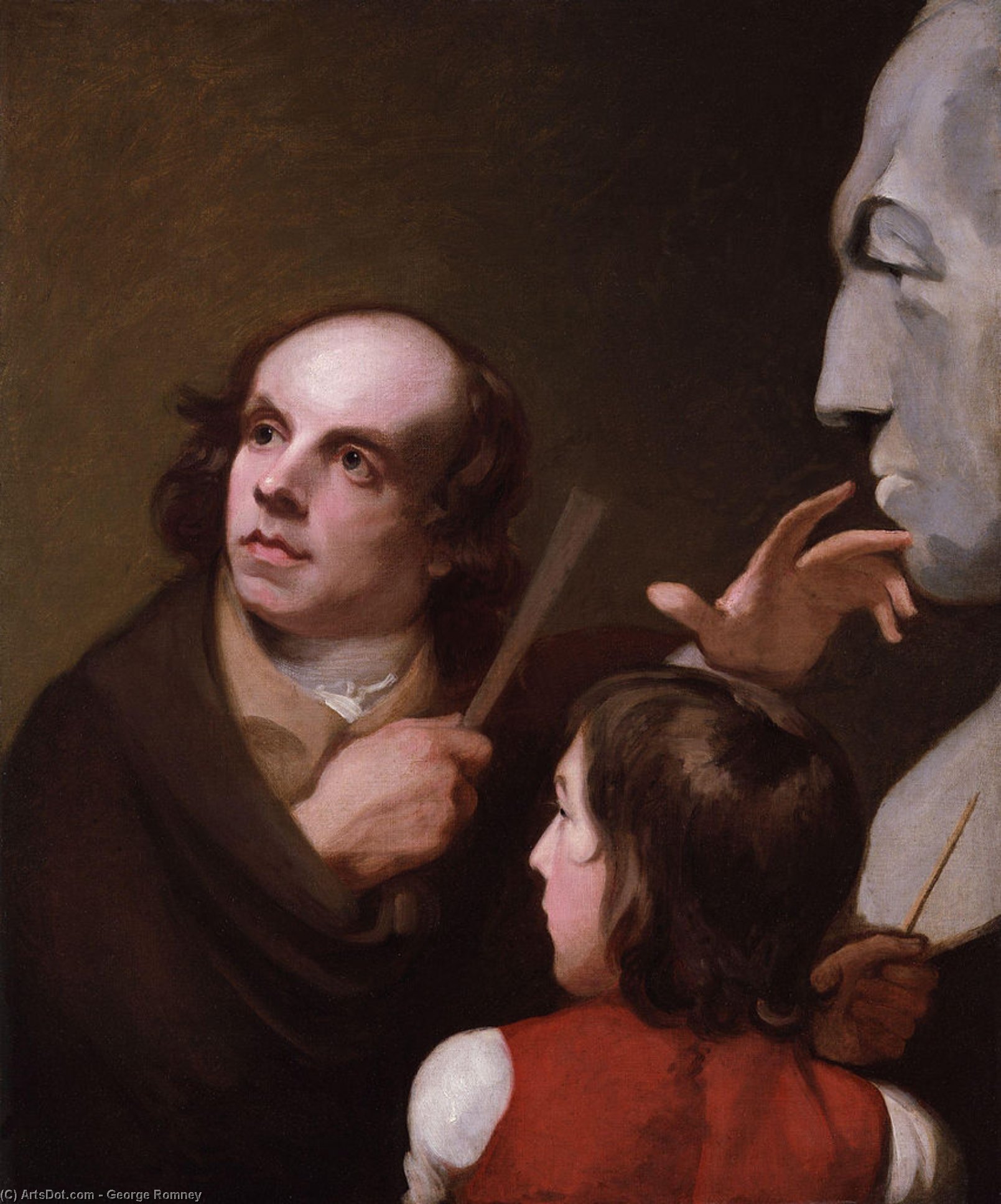
John Flaxman and Thomas Alphonso Hayley


 Pročitaj više
Kupite digitalnu sliku visoke rezolucije i poboljšanog kvaliteta, koja je znatno superiornija od onoga što vidite u online prikazu.
Svaka datoteka je pedantno pripremljena od strane naših stručnjaka koristeći napredne alate i profesionalnu ručnu retušu. Osiguravamo da svaka slika ima izuzetnu oštrinu, preciznu reprodukciju boja i fine detalje.
Konačna datoteka se dostavlja putem e-pošte u roku od 72 sata, optimizovana za neposrednu upotrebu u profesionalnim, izdavačkim i štamparskim okruženjima. To je isti kvalitet kojem veruju vrhunski studiji dizajna, izdavači i galerije.
Digitalna slika
Preuzmite datoteku visoke rezolucije za ličnu upotrebu, štampanje i kreativne projekte. ( Kupi print Kupi ručno naslikanu sliku)
Uključeno uz svaku porudžbinu digitalne slike
Profesionalna digitalna isporuka, zagarantovana
Kada odaberete ArtsDot.com, ne dobijate samo sliku – vi primate profesionalno unapređeno digitalno umetničko delo, izrađeno sa najvećom preciznošću i uz garanciju zadovoljstva. Evo svega što automatski dolazi uz vašu porudžbinu:

Brza dostava putem e-pošte
Vaša digitalna slika visoke rezolucije biće vam poslata putem e-pošte u roku od 72 sata od poručivanja – spremna za trenutnu upotrebu.

Digitalna datoteka unapređena veštačkom inteligencijom
Vaše umetničko delo je profesionalno optimizovano korišćenjem naprednih AI alata i ručne obrade, čime se osiguravaju maksimalni detalji, oštrina i preciznost boja.

Besplatna ponovna isporuka doživotno
Slučajno ste obrisali ili izgubili svoju datoteku? Ne brinite – poslaćemo vam je ponovo u bilo kom trenutku, potpuno besplatno.

Bez troškova uvoza – zauvek
Uživajte u svojim umetničkim delima trenutno, bez carine, dažbina ili troškova dostave – digitalni download je uvek bez poreza.

Garancija vernosti boja
Uz pomoć profesionalnih alata i upravljanja bojama, osiguravamo da vaša digitalna slika što vernije odražava originalne boje.

Garancija zadovoljstva od 100 dana
Ako niste zadovoljni svojom digitalnom slikom, izvršićemo reviziju ili ćemo vam vratiti 100% novca u roku od 100 dana – bez ikakvih pitanja.

100% garancija povrata novca
Niste zadovoljni? Dobijte puni povraćaj novca u roku od 100 dana od prijema digitalne datoteke – bez suvišnih pitanja.

Popusti na velike porudžbine
Kupite 3 slike, uštedite 10% - Kupite 5 slika, uštedite 15% - Kupite 10+ slika, uštedite 20%. Odlično za kreativne projekte, galerije i agencije.
A Dialogue of Minds: The Intellectual Soul of Romney’s Masterpiece
In the quiet, opulent corners of Georgian England, where the flicker of candlelight met the sharp edge of Enlightenment thought, George Romney captured more than mere likenesses; he captured the very pulse of human connection. His 1795 portrait, John Flaxman and Thomas Alphonso Hayley, serves as a profound window into an era defined by the pursuit of reason and the beauty of classical ideals. This is not simply a painting of two men, but a staged symphony of intellectual companionship. As we gaze upon the neoclassical sculptor John Flaxman and the poet Thomas Alphonso Hayley, we are invited to eavesdrop on a conversation that transcends time, witnessing a moment where art, poetry, and philosophy converge within an elegantly appointed interior.
The composition breathes with a palpable sense of immediacy. Romney moves beyond the stiff, formal portraiture of previous generations to embrace a psychological realism that feels startlingly modern. The subjects are caught in a state of animated engagement, their gestures and facial expressions suggesting a depth of character that invites the viewer to wonder about the words exchanged between them. For the discerning collector or interior designer, this piece offers more than visual prestige; it provides an emotional anchor, a narrative centerpiece that brings a sense of cultured history and contemplative warmth to any sophisticated space.
Technique and the Radiance of Neoclassical Grace
Romney’s technical mastery is on full display through his exquisite use of oil on canvas, where he achieves a remarkable tonal depth that seems to glow from within. While the painting adheres to the meticulous draughtsmanship and precision characteristic of the neoclassical movement, there is an unmistakable infusion of Romanticism in the way light dances across the scene. The artist employs sophisticated layering techniques to capture the tactile reality of the era—the soft sheen of a white shirt, the rich, textured weight of a red waistcoat, and the delicate play of shadows within the drapery.
The luminosity of the work is particularly striking, as Romney utilizes light not just to illuminate, but to sculpt. The way light reflects off the surfaces suggests a room filled with the soft, diffused glow of an afternoon salon, creating an atmosphere of intimacy and warmth. This careful manipulation of light and shadow—chiaroscuro in its most refined, English form—lends the portrait a three-dimensional presence, making the figures feel as though they might step forward from the canvas into the room itself. It is this breathtaking attention to detail that makes a high-quality reproduction of this work such a captivating addition to a curated art collection.
Symbolism and the Spirit of an Age
Beyond the aesthetic splendor, the painting is rich with the symbolic language of the late 18th century. The presence of knives held by the subjects serves as a fascinating, perhaps even provocative, metaphor for the precision and intellectual rigor required in the arts of sculpture and poetry. Flaxman, a titan of neoclassical form, represents the structural integrity and moral virtue of the classical tradition, while the interaction itself hints at the burgeoning tension between the era's devotion to reason and its emerging fascination with raw emotion.
The inclusion of secondary figures in the periphery adds layers of social context, suggesting the bustling, interconnected nature of the London artistic circles. This portrait is a tribute to the "Age of Reason," embodying the spirit of thinkers like Voltaire and Rousseau who sought to reshape the world through intellect. To possess or display a reproduction of this work is to celebrate this enduring legacy of human achievement. It is an invitation to surround oneself with the elegance of the past, fostering an environment of inspiration, scholarly depth, and timeless sophistication.
Srodna umetnička dela
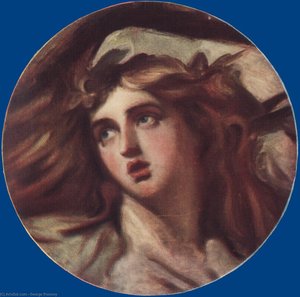
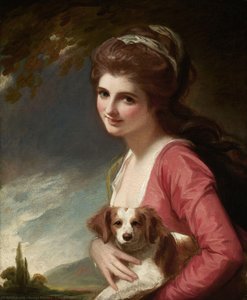
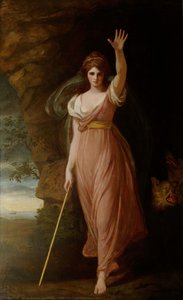
Biografija umetnika
A Life in Portraiture: The World of George Romney
Born in the picturesque landscape of Dalton-in-Furness, Lancashire, on December 15th, 1734, George Romney ascended to become one of the most sought-after portrait painters of his era. His journey from a cabinet maker’s son to the favored artist of British high society is a compelling narrative of innate talent and unwavering ambition. Early life offered little indication of the artistic path he would forge; initially apprenticed to his father, it was an inherent inclination towards drawing and craftsmanship that led him to Christopher Steele, a local portraitist who had studied in Paris. This apprenticeship proved pivotal, providing Romney with foundational skills and an introduction to European artistic traditions. He quickly surpassed his master, however, demonstrating a precocious talent demanding further cultivation. A brief, unhappy marriage and subsequent separation propelled him towards London in 1762, a city brimming with opportunity but also fierce competition.Establishing a Reputation: Style and Technique
London proved to be a crucible for Romney’s artistic development. He swiftly established himself as a formidable portraitist, challenging the dominance of artists like Thomas Gainsborough and Sir Joshua Reynolds. While he never sought membership in the Royal Academy – a decision that perhaps limited his access to certain patronage – his success was undeniable. Romney's style evolved over time, initially reflecting the influence of Steele and his Parisian training, but soon blossomed into something distinctly his own. He possessed an exceptional ability to capture not merely the likeness, but also the personality and social standing of his sitters. His portraits are characterized by elegant poses, a refined use of light and shadow, and a subtle psychological insight that set him apart. Romney’s technique was marked by a delicate touch and a preference for flowing lines, often drawing inspiration from classical sculpture. He skillfully employed color to convey texture and depth, creating portraits that were both visually striking and emotionally resonant. His ability to flatter his subjects while maintaining artistic integrity earned him the loyalty of an elite clientele. He understood the power of suggestion, hinting at character rather than explicitly defining it, a quality that appealed to those who valued discretion and refinement. Romney’s meticulous attention to detail—the subtle folds of fabric, the delicate rendering of skin tones—demonstrated his mastery of observation and artistic execution.The Muse and Her Influence: Emma Hamilton
Romney’s life took a dramatic turn with his encounter with Emma Hart, later known as Lady Hamilton, in 1782. She became not only his most celebrated model but also his muse, profoundly influencing his artistic output. Emma's beauty, intelligence, and theatrical flair captivated Romney, inspiring a series of portraits that explored themes of classical mythology, dramatic narrative, and feminine grace. He depicted her in various roles – as a spinner, as the tragic Miranda from Shakespeare’s *The Tempest*, and in numerous allegorical scenes that showcased her expressive range. These works demonstrate Romney's willingness to experiment with composition and symbolism, moving beyond conventional portraiture into more imaginative territory. The Tempest series, in particular, reveals a Romantic sensibility at play, anticipating the emotional intensity of later artists. The relationship was intense and all-consuming for Romney, though ultimately unfulfilled romantically; Emma eventually became the mistress of Lord Nelson, a union that cemented her place in history. Nevertheless, their artistic collaboration left an indelible mark on both their lives and produced some of Romney’s most enduring masterpieces. He painted over 80 portraits of her, each revealing a different facet of her captivating personality. The dynamism captured in these canvases—Emma's animated gaze, the movement of her drapery—contrasted sharply with the static formality often found in earlier portraiture.Notable Works and Artistic Legacy
Romney’s oeuvre encompasses a diverse range of subjects, reflecting his versatility as an artist. Among his most celebrated paintings are *Peter and James Romney*, depicting his brothers, showcasing his ability to portray familial bonds with tenderness and accuracy. He also produced portraits of prominent figures in British society, including Sir Thomas Lawrence and William Hogarth, demonstrating his understanding of social conventions and artistic ambition. Furthermore, he created striking depictions of historical events—such as *The Death of General Wolfe*, commemorating a pivotal moment in British military history—demonstrating his commitment to capturing grandeur and conveying emotion through visual storytelling. His masterful handling of light and color elevated these works beyond mere likenesses, transforming them into powerful expressions of artistic vision. Romney’s influence extended far beyond his own lifetime, inspiring subsequent generations of painters who admired his technique and embraced his Romantic aesthetic. He remains a significant figure in the history of art, a master portraitist who captured the spirit of an age and left behind a body of work that continues to captivate and inspire. His legacy is secured not only by the beauty of his paintings but also by their enduring psychological insight—a testament to Romney’s profound understanding of human character and emotion. ## Historical Significance: A Reflection of Georgian Society George Romney's portraits offer invaluable insights into the lives and tastes of the British elite during the Georgian era (1714-1830). They depict individuals engaged in social activities—dinner parties, theatrical performances, promenades—providing a vivid panorama of aristocratic life. Romney’s depictions capture not only physical appearances but also inner states of mind, conveying emotions such as joy, melancholy, and contemplation. These portraits serve as documents of fashion, décor, and social customs, reflecting the prevailing aesthetic sensibilities of the time. Moreover, Romney's work engages with themes of mythology and allegory—particularly evident in his series on *The Tempest*, which explores ideas of heroism, tragedy, and redemption—demonstrating his intellectual curiosity and artistic ambition. He was a pioneer in portraying women with dignity and nuance, challenging conventional representations of femininity and elevating Emma Hamilton to the status of an iconic muse. Romney’s contribution to British art is undeniable; he helped establish a new standard for portraiture, prioritizing psychological depth and artistic expression alongside accurate likenesses. His paintings continue to resonate today because they capture something essential about human experience—the complexities of emotion, the beauty of form, and the enduring power of imagination.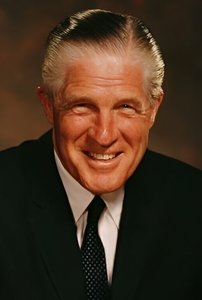
Џорџ Ромејн
1734 - 1802 , United Kingdom
Kratke činjenice
- Artistic Movement Or Style: Портретистика, Романтизам
- Artists Or Movements Influenced By This Artist: ['Британски портретисти']
- Artists Who Influenced This Artist:
- Христофор Стиел
- Карле Ванлоу
- Рафаел
- Тицијан
- Date Of Birth: Децембар 15, 1734
- Date Of Death: Нов септембар 15, 1802
- Full Name: George Romney
- Nationality: Британски
- Notable Artworks:
- Питер и Јамес Ромињи
- Портрет Г. Копер
- Смрт генерала Воле
- Госпођинја Кардвајн и син
- Place Of Birth: Далтон-ин-Фурнес, УК