 Pregledaj u prostoru
 Pošalji
 Podeli
 Detalji o delu

 Преузми
 Slični predmeti
 Rendgenski snimak
 Slajdovi
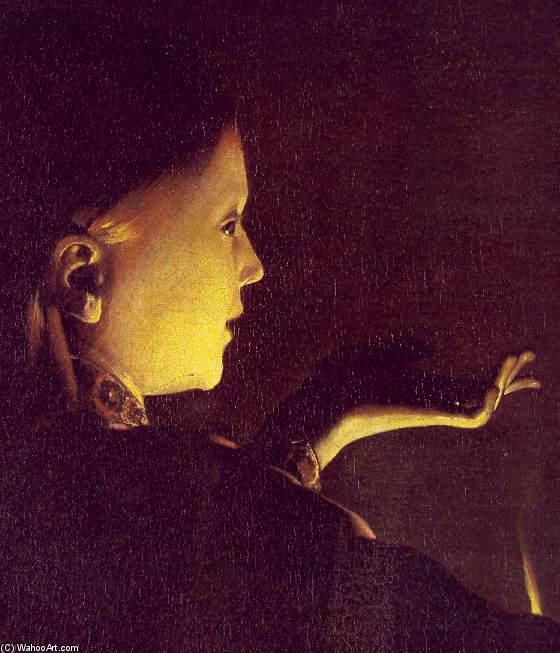
The Dream of St Joseph (detail)


 Pročitaj više
Ručno rađena uljana reprodukcija
Ručno oslikano uljanim bojama na platnu u dimenzijama i okviru po vašem izboru, izrađeno po porudžbini od strane naših umetnika. ( Kupi print Kupi digitalnu sliku)




P118B $10

P118H $10

P118W $10

P438Z $10

P508JH $12

P508YH $12

P805H $10

P805Z $10

P919BZ $10

P919G $10

P919XJ $10

P959ZH $10

P968JZ $12

W106C $8

W218G $10

W218JH $8

W218Y $10

W307PJ $10

W316G $10

W316PJ $8

W316Y $10

W398PJ $8

W4111J $10

W500HY $15

W500JH $15

W692G $12

W849H $8

W940BG $15

W953PJ $8




Izaberite jednu od naših unapred definisanih veličina koje odgovaraju originalnim proporcijama umetničkog dela.

Можете унети сопствене димензије како бисте прилагодили дело одређеном оквиру или простору. Ако одабрана величина не одговара пропорцијама оригинала, слика ће бити исечена или проширена додатним елементима који се ручно насликавају. Дигитални prikaz ће вам бити послат на одобрење пре почетка производње.
Имајте на уму да преглед на екрану не одражава стварно исецање или проширење. Само приказ (mockup) ће тачно приказати коначну композицију.
Иако су доступне прилагођене величине, препоручујемо да одаберете димензију из дефинисане листе како бисте сачували оригиналне пропорције.
Nakon narudžbine, tim ArtsDot.com će klijentu putem e-pošte poslati uputstva i dostaviti prikaz predloženog rešenja
Isporuka širom sveta () za 3/4 nedelje umesto uobičajenih 5 nedelja. (31 август). Bez kompromisa po pitanju kvaliteta.

Besplatna ekspresna dostava širom sveta

Visokokvalitetno laneno platno

Kompletno osiguranje transporta

Garancija povraćaja carine i uvoznih dažbina

Garancija vernosti boja

Politika povrata u roku od 60 dana (samo u slučaju nedostataka)

Garancija povrata novca od 100%

Popust pri grupnoj kupovini
 Opcija sa staklom dostupna je samo za dimenzije manje od 110 cm

The Dream of St Joseph (detail)
Tehnika reprodukcije
Dimenzije reprodukcije
-


Konačna cena
$ 263
The Dream of St Joseph: A Nocturne of Faith and Shadow
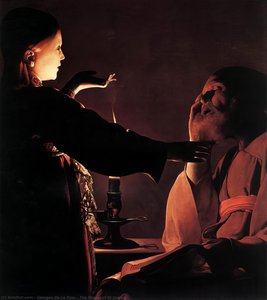
Georges de la Tour’s “The Dream of St Joseph,” painted circa 1640, isn't merely a depiction of a biblical scene; it’s an immersion into a world steeped in spiritual contemplation and the haunting beauty of chiaroscuro. This remarkable work, now meticulously reproduced on hand-painted canvases at ArtsDot.com, offers a profound glimpse into the artist’s unique vision – a vision that blends meticulous realism with an almost unsettling sense of mystery. The painting centers around a woman, her face turned downward in quiet absorption, bathed in the soft, diffused light characteristic of de la Tour's style. Her presence dominates the composition, drawing the viewer into a space both intimate and profoundly melancholic.
The setting is deliberately ambiguous – a darkened room, perhaps a cave or a secluded chamber – lending an air of secrecy and introspection to the scene. The walls are adorned with script, hinting at contemplation and perhaps even divine revelation. Two clocks punctuate the composition, strategically placed near the top left and bottom right corners; these aren’t simply decorative elements but potent symbols of time's relentless passage and the urgency of faith. De la Tour masterfully uses light and shadow to create a dramatic effect, emphasizing the woman’s face as the focal point while obscuring much of the background, inviting viewers to project their own interpretations onto the scene.
The Baroque Master: Georges de la Tour and His World
Georges de la Tour (1593-1652) stands as a singular figure within the French Baroque movement. Born in Vic-sur-Seille, Lorraine, he was not part of an established artistic lineage but rather cultivated his talent through observation and a deep engagement with religious themes. His early life remains somewhat shrouded in mystery, though speculation suggests influences from Italian masters like Caravaggio and possibly even Flemish artists working in the region. De la Tour’s work is defined by its dramatic use of light – *chiaroscuro* – which he employed to create an intense emotional atmosphere, often depicting scenes of religious piety with a palpable sense of drama and solemnity.
His artistic journey was marked by a shift in style over time. Initially influenced by the Dutch Caravaggisti, who had brought the Italian master’s techniques north, de la Tour developed his own distinctive approach, characterized by simplified forms, muted colors, and an almost dreamlike quality. He skillfully blended elements of genre painting – scenes of everyday life – with religious iconography, creating a unique visual language that resonated deeply with his audience. De La Tour's work was often commissioned by the local nobility and bourgeoisie of Lorraine, reflecting the region’s rich cultural landscape.
Symbolism and Spiritual Depth
“The Dream of St Joseph” is laden with symbolic meaning. The woman’s downward gaze suggests a state of deep contemplation, perhaps a moment of divine revelation or an internal struggle. The script on the walls could represent scripture, prayer, or even the mysteries of faith. The clocks serve as reminders of mortality and the fleeting nature of earthly existence – prompting viewers to consider the eternal significance of their beliefs. De la Tour’s meticulous attention to detail—the folds of fabric, the texture of skin, the subtle expressions on faces—contributes to the painting's overall sense of realism and emotional resonance.
The dream itself is a central element. St Joseph, traditionally depicted as a humble carpenter, experiences a profound vision – a moment of divine guidance that shapes his destiny. De la Tour doesn’t explicitly show Joseph receiving this revelation; instead, he captures the *feeling* of it—the quiet intensity and spiritual awakening. The painting invites us to contemplate our own dreams and visions, and to consider how they might shape our lives.
Bringing “The Dream of St Joseph” Home
ArtsDot.com offers exquisite hand-painted reproductions of Georges de la Tour’s “The Dream of St Joseph,” allowing you to experience the profound beauty and spiritual depth of this iconic masterpiece in your own home. Unlike mass-produced prints, our reproductions capture the nuances of de la Tour's technique – the subtle gradations of light and shadow, the delicate textures, and the evocative atmosphere—with unparalleled fidelity. Each reproduction is created by skilled artisans using traditional methods, ensuring a timeless quality that will endure for generations to come. Consider this artwork not just as decoration, but as a portal into a world of faith, mystery, and artistic genius.
Srodna umetnička dela
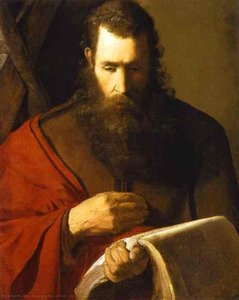
Biografija umetnika
Georges de La Tour (1593–1652): French Baroque Master of Dramatic Chiaroscuro & Tenebrism
Georges de La Tour, a name that resonates with the hushed reverence reserved for masters of light and shadow, remains one of the most compelling figures of the French Baroque. Born in 1593 in Vic-sur-Seille, Lorraine—now Moselle—France, his life unfolded against a backdrop of religious fervor and political upheaval. While details surrounding his early training remain somewhat elusive—scholars speculate about potential journeys to Italy or apprenticeships with local artists like Jacques Bellange—the seeds of his artistic vision were undoubtedly sown in this environment. He wasn’t born into an artistically established family; his father was a baker, yet the circumstances of his mother's lineage hint at a possible connection to nobility, a subtle influence perhaps reflected in the dignity and quiet grace that permeate his work.
Early Life & Artistic Influences
Georges de La Tour’s educational background remains somewhat unclear, but it is assumed that he traveled either to Italy or the Netherlands early in his career. He may possibly have trained under Jacques Bellange in Nancy—the capital of Lorraine—although their styles are very different. His paintings reflect the Baroque naturalism of Caravaggio—the Italian master who revolutionized painting with his intensely realistic and emotionally charged scenes—yet this probably reached him through the Dutch *Caravaggisti* of the Utrecht School and other Northern contemporaries. Hendrick Terbrugghen, in particular, served as a significant model for La Tour’s stylistic development.
The Style of Vic-sur-Seille
La Tour's early works—primarily executed before 1630—demonstrate a distinctive style characterized by vibrant colors and dynamic compositions. These paintings reflect the influence of the Utrecht School, showcasing a heightened sense of realism and capturing the immediacy of everyday life. However, as his career progressed, he moved towards an increasingly introspective and minimalist aesthetic. He began to pare down compositions, focusing on essential forms and reducing extraneous details—creating scenes that felt both timeless and deeply personal.
Major Works & Recurring Themes
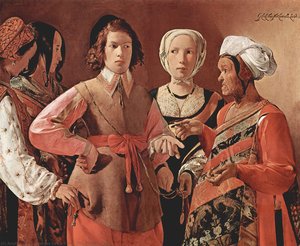
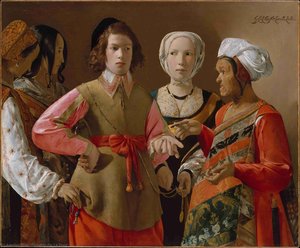
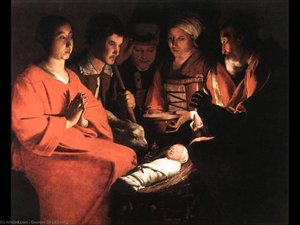
The hallmark of De La Tour's oeuvre is undoubtedly his masterful use of candlelight, which he employed not merely as a source of illumination but as a metaphor for divine grace and spiritual awakening. His paintings are often set at night, with figures bathed in the warm, flickering glow of a single candle or lamp. This creates an atmosphere of intimacy and quiet contemplation—drawing the viewer into the scene and inviting them to share in the emotional experience of the subjects. The Fortune-Teller, painted around 1630, exemplifies this early style—a lively genre scene rendered with sharp observation and dramatic lighting. But it is his later religious works that truly showcase his genius. Adoration of the Shepherds, created around 1640, demonstrates his ability to imbue a traditional subject with profound emotional resonance. The figures are not idealized or heroic; they are ordinary people—humbled by the presence of the divine. The Tears of Saint Peter, painted in the 1650s, is a particularly poignant example of his psychological insight—the apostle’s grief rendered with heartbreaking subtlety and realism. Saint Joseph Carpenter, another iconic work, depicts a serene domestic scene—highlighting De La Tour's mastery of capturing the quiet dignity of everyday life.
Legacy & Enduring Appeal
Despite achieving recognition during his lifetime—he was appointed “Painter to the King” by Louis XIII in 1638—De La Tour’s work fell into relative obscurity after his death in 1652. For centuries, many of his paintings were misattributed to other artists—and his name faded from art historical memory. It wasn't until the early 20th century that a concerted effort was made to rediscover and re-evaluate his oeuvre—led by scholars like Hermann Voss. This rediscovery revealed an artist of extraordinary originality and depth—whose work bridged the gap between Caravaggism and French Classicism. De La Tour’s innovative use of light and shadow—combined with his psychological insight into his subjects—continues to captivate audiences today. His paintings offer a glimpse into 17th-century life and spirituality—reflecting both the religious fervor and the social realities of his time. He remains celebrated for his ability to imbue everyday scenes with profound meaning and emotional depth
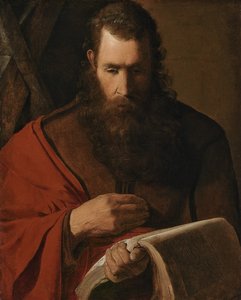
Жорж Де Ла Тур
1593 - 1652 , Француска
Osnovne informacije
- Artistic Movement Or Style: Baroque, Tenebrism
- Artists Who Influenced This Artist:
- Caravaggio
- Terbrugghen
- Date Of Birth: March 13, 1593
- Date Of Death: Jan. 30, 1652
- Full Name: Georges de La Tour
- Nationality: French
- Notable Artworks:
- Fortune Teller
- Adoration Shepherds
- Tears St Peter
- St Joseph Carpenter
- Place Of Birth: Vic-sur-Seille, France
Povezani članci

Georges Braque: 25 Remek-dela Kubizma za Inspirisanje Vašeg Doma | ArtsDot
Istražite 25 remek-dela Georges Braquea, pionira kubizma. Otkrijte priče iza slika, tehnike i inspiraciju za dizajn enterijera. Reprodukcije vrhunskog kvaliteta dostupne na ArtsDot.com! Pronađite savršeno umetničko delo online.
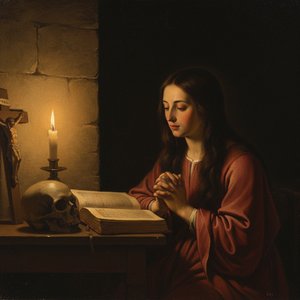
Georges de La Tour: Luminosity, Spirituality & Realism in Baroque Painting
Discover the captivating world of Georges de La Tour, a Baroque master renowned for his dramatic chiaroscuro & spiritual realism. Explore key works, influences, and his remarkable rediscovery. Learn more at ArtsDot.

25 Remek-dela Žorža Seurea: Putovanje kroz Svet Tačizma i Impresionističke Revolucije
Istražite 25 remek-dela Žorža Seurea i uronite u svet tačizma i impresionističke revolucije. Otkrijte priče iza slika, tehnike i inspiraciju ovog francuskog umetnika. Reprodukcije vrhunskog kvaliteta dostupne na ArtsDot.com!

Francisco Goya: 25 Remek-dela Španskog Majstora za Vaš Dom | ArtsDot
Istražite 25 remek-dela Francisca Goya, španskog slikara romantizma i impresionizma. Portreti, tamne slike & istorija umetnosti na ArtsDot.com! Kupite reprodukcije slika vrhunskog kvaliteta za dekoraciju enterijera. Otkrijte celu kolekciju online.
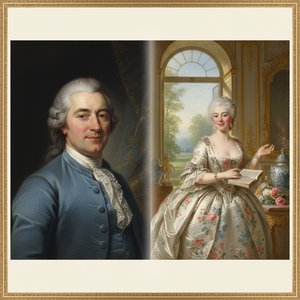
Maurice Quentin de La Tour: Light, Shadow & the Rococo Portrait
Explore the captivating world of Maurice Quentin de La Tour, a master of Rococo portraiture. Discover his innovative pastel techniques, intimate depictions of French aristocracy, and lasting artistic legacy. Learn more at ArtsDot.