

 Pregledaj u prostoru
 Pošalji
 Podeli
 Detalji o delu

 Преузми
 Slični predmeti
 Rendgenski snimak
 Slajdovi
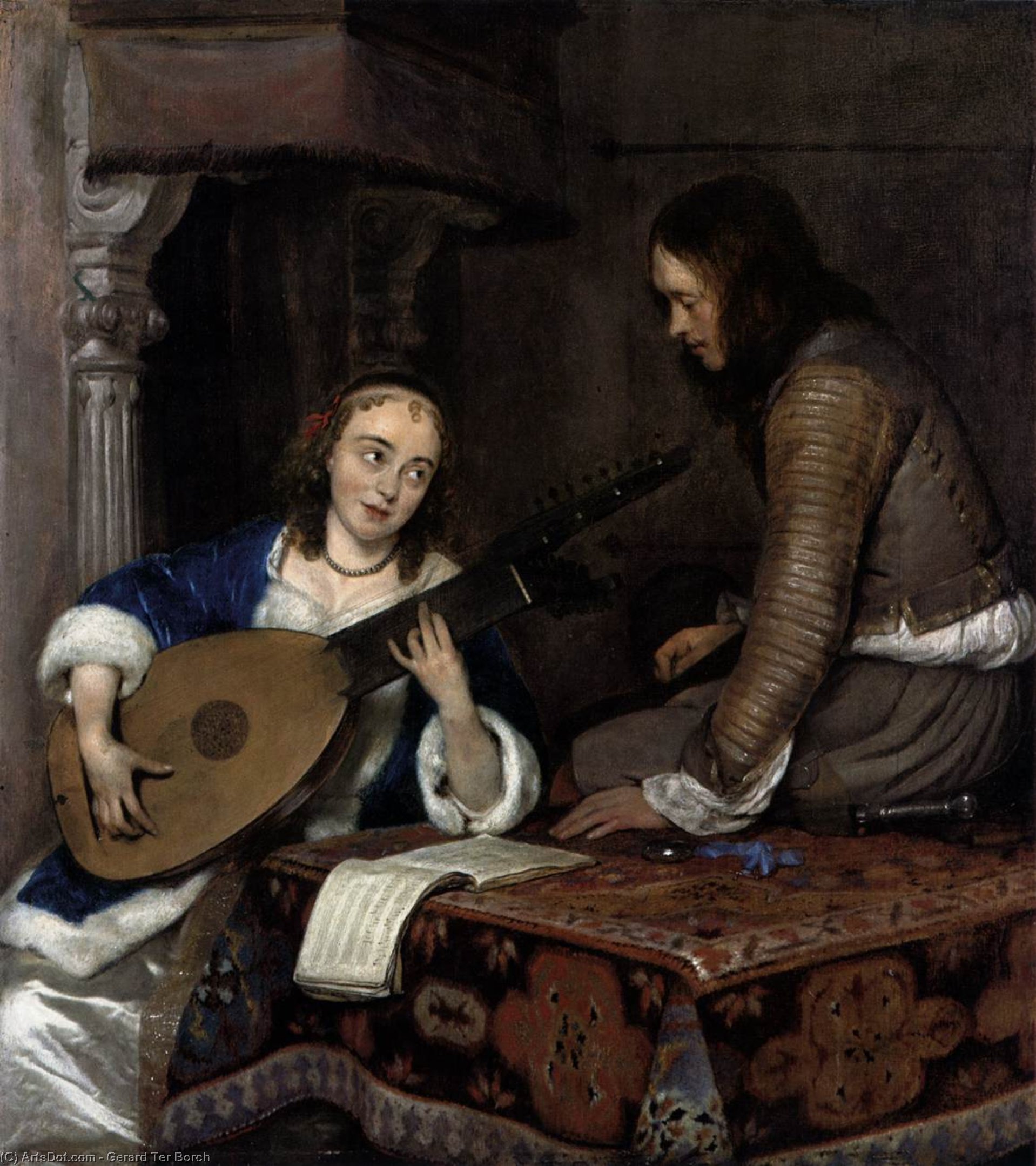
Woman Playing the Theorbo-Lute and a Cavalier
 Baroque Genre Painting
 1658
1658 37.0 x 32.0 cm
 Metropolitan Museum of Art
 Pročitaj više
Kupite digitalnu sliku visoke rezolucije i poboljšanog kvaliteta, koja je znatno superiornija od onoga što vidite u online prikazu.
Svaka datoteka je pedantno pripremljena od strane naših stručnjaka koristeći napredne alate i profesionalnu ručnu retušu. Osiguravamo da svaka slika ima izuzetnu oštrinu, preciznu reprodukciju boja i fine detalje.
Konačna datoteka se dostavlja putem e-pošte u roku od 72 sata, optimizovana za neposrednu upotrebu u profesionalnim, izdavačkim i štamparskim okruženjima. To je isti kvalitet kojem veruju vrhunski studiji dizajna, izdavači i galerije.
Digitalna slika
Preuzmite datoteku visoke rezolucije za ličnu upotrebu, štampanje i kreativne projekte. ( Kupi print Kupi ručno naslikanu sliku)
Uključeno uz svaku porudžbinu digitalne slike
Profesionalna digitalna isporuka, zagarantovana
Kada odaberete ArtsDot.com, ne dobijate samo sliku – vi primate profesionalno unapređeno digitalno umetničko delo, izrađeno sa najvećom preciznošću i uz garanciju zadovoljstva. Evo svega što automatski dolazi uz vašu porudžbinu:

Brza dostava putem e-pošte
Vaša digitalna slika visoke rezolucije biće vam poslata putem e-pošte u roku od 72 sata od poručivanja – spremna za trenutnu upotrebu.

Digitalna datoteka unapređena veštačkom inteligencijom
Vaše umetničko delo je profesionalno optimizovano korišćenjem naprednih AI alata i ručne obrade, čime se osiguravaju maksimalni detalji, oštrina i preciznost boja.

Besplatna ponovna isporuka doživotno
Slučajno ste obrisali ili izgubili svoju datoteku? Ne brinite – poslaćemo vam je ponovo u bilo kom trenutku, potpuno besplatno.

Bez troškova uvoza – zauvek
Uživajte u svojim umetničkim delima trenutno, bez carine, dažbina ili troškova dostave – digitalni download je uvek bez poreza.

Garancija vernosti boja
Uz pomoć profesionalnih alata i upravljanja bojama, osiguravamo da vaša digitalna slika što vernije odražava originalne boje.

Garancija zadovoljstva u roku od 60 dana
Ako niste zadovoljni svojom digitalnom slikom, revidirat ćemo je ili vratiti 100% novca u roku od 60 dana – bez ikakvih pitanja.

100% garancija povrata novca
Niste zadovoljni? Obezbedite pun povrat novca u roku od 60 dana od trenutka kada ste primili svoju digitalnu datoteku – bez suvišnih pitanja.

Popusti na velike porudžbine
Kupite 3 slike, uštedite 10% - Kupite 5 slika, uštedite 15% - Kupite 10+ slika, uštedite 20%. Odlično za kreativne projekte, galerije i agencije.
Opis kolekcionarskog dela
A Moment Frozen in Time: Gerard ter Borch’s “Woman Playing the Theorbo-Lute and a Cavalier”
Gerard ter Borch's "Woman Playing the Theorbo-Lute and a Cavalier," painted in 1658, is more than just a portrait; it’s a meticulously crafted tableau of intimacy, quiet contemplation, and subtle social dynamics. This remarkable work, now housed within the Metropolitan Museum of Art, offers a rare glimpse into the domestic life of the Dutch Golden Age – a world of refined conversation, musical pursuits, and carefully constructed appearances. Ter Borch, a pioneer of Dutch genre painting, wasn’t interested in grand historical narratives or heroic scenes; instead, he focused on capturing the nuances of everyday moments, imbuing them with an extraordinary level of realism and psychological depth. The painting immediately draws the viewer in, inviting us to become silent observers of this private encounter.The Scene Unfolds: Composition and Setting
The composition is deceptively simple yet profoundly effective. A young woman, dressed in a rich, dark gown adorned with lace and pearls, sits poised at a small table, her hands gracefully manipulating the strings of a theorbo-lute – an instrument combining the features of a lute and a bass guitar. Her gaze is directed towards her companion, a cavalier, a gentleman of the period clad in a velvet coat and sporting a sword belt. He’s not actively engaged in conversation, but rather observing her with a thoughtful expression, his posture suggesting attentiveness and perhaps even a hint of admiration. The setting itself – an interior space bathed in soft light – is deliberately understated, featuring a draped couch and a nearby chair, creating a sense of comfortable familiarity. A book rests open on the table beside the woman, adding another layer to the scene’s quiet sophistication. Notice how Ter Borch masterfully uses overlapping forms and subtle shifts in perspective to draw our eye across the canvas, guiding us through this intimate space.Technique and Artistic Style: The Master of Detail
Ter Borch's genius lies not just in his ability to depict a scene but in his unparalleled skill at rendering texture and light. He was renowned for his meticulous attention to detail, employing a technique known as *sfumato* – a subtle blurring of edges and contours – to create an almost photographic realism. The folds of the woman’s gown are rendered with astonishing accuracy, each thread and wrinkle meticulously depicted. Similarly, the velvet of the cavalier's coat appears rich and luxurious, while the wood of the table gleams subtly under the light. This dedication to detail extends to the instruments themselves – the theorbo-lute is a marvel of craftsmanship, its strings and frets rendered with painstaking precision. The use of chiaroscuro—the dramatic contrast between light and shadow—further enhances the painting’s depth and realism, creating a sense of three-dimensionality that is remarkably convincing. It's this mastery of technique that elevates "Woman Playing the Theorbo-Lute and a Cavalier" beyond a simple portrait; it becomes a study in observation and representation.Symbolism and Emotional Resonance: A Portrait of Quiet Connection
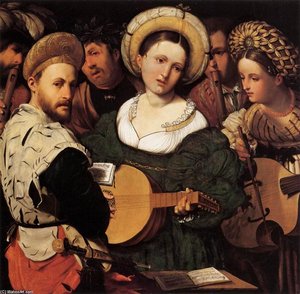
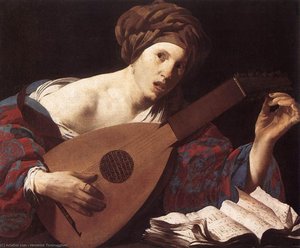
Beyond its technical brilliance, the painting is rich in symbolic meaning. The theorbo-lute itself represents musical refinement and intellectual pursuits – activities often associated with the upper classes. The book suggests a shared interest in learning or perhaps a moment of quiet contemplation. The cavalier’s attentive gaze hints at an unspoken connection between the two figures, suggesting a budding romance or a deep friendship. The pocket watch lying near the lute is particularly intriguing; it could symbolize the fleeting nature of time and the preciousness of this intimate encounter. Ter Borch doesn't offer easy answers or explicit narratives; instead, he invites us to interpret the scene ourselves, drawing our own conclusions about the relationship between these two individuals. The overall mood is one of quiet intimacy and understated elegance – a testament to Ter Borch’s ability to capture the subtle emotional currents that flow beneath the surface of everyday life. The painting's enduring appeal lies in its capacity to evoke a sense of nostalgia for a bygone era, reminding us of the beauty and complexity of human connection.Srodna umetnička dela
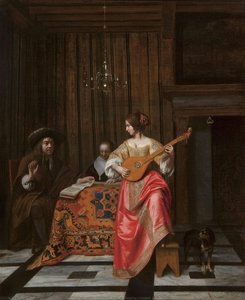

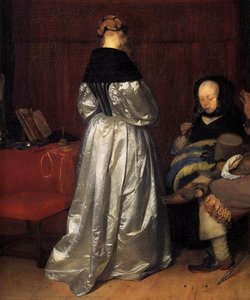
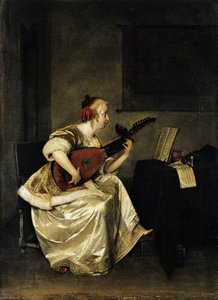
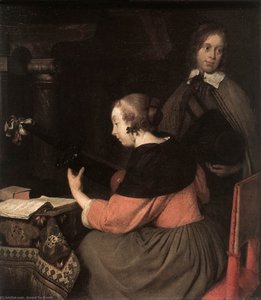
Biografija umetnika
**predstavnik holandske žanrovske slike**
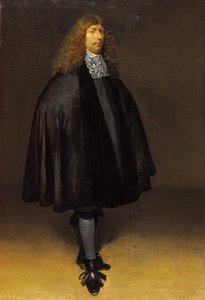
Gerard ter Borch, istaknuta figura hollandskog zlatnog doba, ostavio je neizbrisiv trag u svetu umetnosti svojim žanrovskim slikama. Rođen u decembru 1617. godine i preminut 8. decembra 1681. godine, Ter Borhov život bio je svedočanstvo njegove umetničke virtuoznosti.**rani život i uticaji**
Iako njegovi rani životni tragovi nisu detaljno dokumentovani, poznato je da je intenzivno putovao širom Evrope, obuhvatajući London, Nemačku, Francusku, Španiju i Italiju. Ovo bogato iskustvo proširilo je njegove umetničke vidike, oblikujući njegov jedinstveni stil. Njegova sestra, Gesina ter Borch, takođe je sledila umetničku karijeru, čime je dodatno učvrstila porodičnu umetničku predispoziciju.**istaknuta dela i dostignuća**
Njegov opus obeležili su remek-dela poput slike Pismo, koja predstavlja vrhunac njegove veštine u dočaravanju teksture i svetlosti. Delo Galan conversation (Galan conversation), koje je gravirao Johan Georg Vil, savršeno prikazuje umetnikovu sposobnost da prenese najsuptilnije emocije. Rano delo Čovek na konju (1634) svedoči o njegovom tada još uvek otkrivajućem talentu, dok slika Dolazak Adrijana Paua u Minster (1646) predstavlja značajno delo koje ističe njegovu narativnu moć.**muzeji i kolekcije koje čuvaju radove Ter Borcha**
Njegova međunarodna važnost potvrđena je prisustvom njegovih dela u najprestižnijim svetskim galerijama. Ermitaz poseduje jednu od najvećih kolekcija sa čak šest njegovih dela. Berlinski muzej takođe čuva šest komada, slaveći Ter Borhov globalni značaj, dok se tri njegove slike nalaze u cenjenoj kolekciji Getty Centra.**nasleđe i uticaj**
Uticaj koji je Ter Borch ostavio na holandske slikare poput Gabriela Metsua, Gerita Doua, Egloona van der Neera i Tomasa Vermeera dobro je dokumentovan. Njegov inovativni pristup žanrovskoj slici učinio ga je ključnom figurom u istoriji umetnosti.- za više informacija o Ter Borhovom životu i delima, posetite https://ArtsDot.com/@/gerard-ter-borch
- istražite Muzej Boijmans Van Beuningen u Roterdamu, Holandija, koji prikazuje neke od Ter Borhovih savremenika na https://ArtsDot.com/@@/a@d3arrk-museum-boijmans-van-beuningen-rotterdam-netherlands
- saznajte više o holandskom zlatnom dobu i njegovim značajnim umetnicima na https://en.wikipedia.org/wiki/dutch_golden_age
Gerard Ter Borch
1617 - 1681 , Holandija
Kratke činjenice
- Artistic Movement Or Style: Žanrovsko slikarstvo
- Artists Or Movements Influenced By This Artist: ['Diego Velázquez']
- Artists Who Influenced This Artist:
- Gabriel Metsu
- Gerrit Dou
- Eglon van der Neer
- Johannes Vermeer
- Date Of Birth: decembar 1617.
- Date Of Death: 8. decembra 1681.
- Full Name: Gerard ter Borch
- Nationality: Holandski
- Notable Artworks:
- Pismo
- Galan konverzacija
- Čovek na konju
- Dolazak Adrijana Paua u Minster
- Place Of Birth: Zvole, Holandija

