

 Pregledaj u prostoru
 Pošalji
 Podeli
 Detalji o delu

 Преузми
 Slični predmeti
 Rendgenski snimak
 Slajdovi
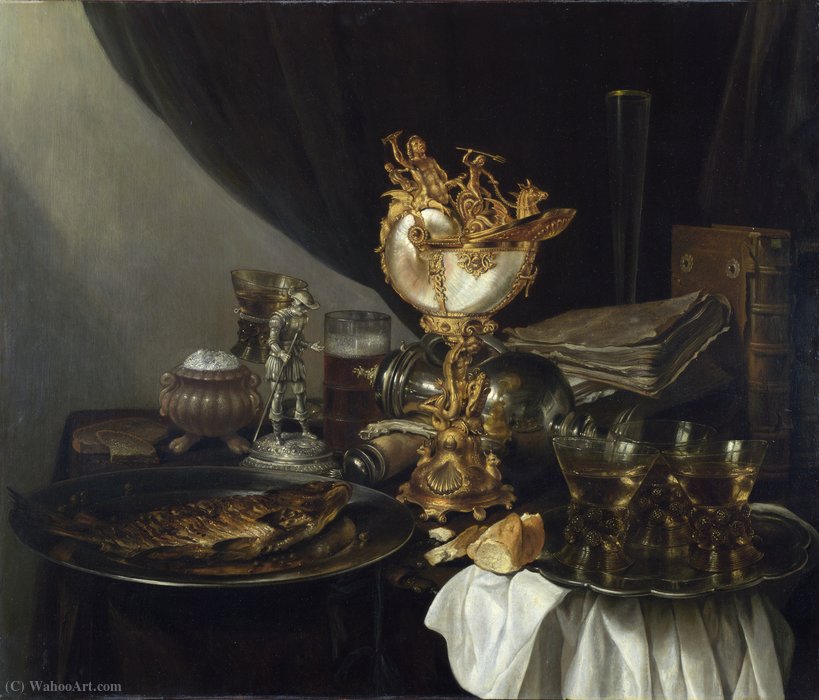
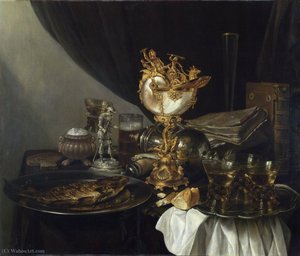
Still life with nautilus (about (London, Nat. Gallery) (1645))
 Pročitaj više
Giclee štampa / Umetnički otisak
Giclée štampa ili print na platnu muzejskog kvaliteta uz brzu proizvodnju i fleksibilne opcije završne obrade. ( Kupi ručno naslikanu sliku Kupi digitalnu sliku)




































Izaberite jednu od naših unapred definisanih veličina koje odgovaraju originalnim proporcijama umetničkog dela.

Možete uneti sopstvene dimenzije kako biste umetničko delo prilagodili specifičnom okviru ili prostoru. Ako odabrani format ne odgovara proporcijama originalne slike, mi ćemo ili iscrtati deo dela ili proširiti sliku pomoću ogledane ivice ili jednobojnog popunjavanja. Digitalni prikaz će vam biti poslat na odobrenje pre početka proizvodnje.
Imajte na umu da pregled na ekranu ne odražava stvarno iscrtavanje ili proširivanje. Samo će prikaz (mockup) precizno pokazati finalnu kompoziciju.
Iako su prilagođene dimenzije dostupne, preporučujemo da odaberete dimenziju sa unapred definisane liste kako biste očuvali originalne proporcije.
Dostava širom sveta () za 2 nedelje umesto uobičajenih 4/5 nedelja. (6 септембар)

Besplatna ekspresna dostava širom sveta

Visokokvalitetno laneno platno

Kompletno osiguranje transporta

Garancija povraćaja carine i uvoznih dažbina

Garancija vernosti boja

Politika povrata u roku od 100 dana (samo u slučaju nedostataka)

Garancija povrata novca od 100%

Popust pri grupnoj kupovini
 Opcija sa staklom dostupna je samo za dimenzije manje od 110 cm

Still life with nautilus (about (London, Nat. Gallery) (1645))
Giclee štampa / Umetnički otisak
Dimenzije reprodukcije
-


Konačna cena
$ 62
Srodna umetnička dela



Biografija umetnika
The Quiet Brilliance of Gerrit Willemsz Heda
In the golden, amber-hued light of the seventeenth-century Dutch Republic, few artists captured the delicate tension between abundance and decay as poignantly as Gerrit Willemsz Heda. A master of the still life, Heda’s brief but luminous career allowed him to leave an indelible mark on the Haarlem school of painting. While much of his personal history remains shrouded in the mists of time, his artistic lineage is clear and profound. Born around 1625 in the vibrant city of Haarlem, he was the son of the celebrated Willem Claesz Heda, a titan of the monochrome banquet piece. Growing up within the walls of a master’s studio, Gerrit did more than merely learn a trade; he inherited a visual language of precision, texture, and profound stillness that would become his lifelong pursuit.
The early records of his life offer glimpses into a young man deeply embedded in the civic and artistic fabric of his home. By 1642, the register of the Saint Luke’s Guild of Haarlem officially noted him as a pupil under his father's tutelage, alongside other rising talents of the era. This period of apprenticeship was foundational, as he absorbed the meticulous techniques required to render the glint of silver, the velvet skin of a peach, and the translucent pulp of a grape. His entry into Haarlem’s civic guard in 1642 further suggests a man of standing and responsibility, even as his artistic identity began to coalesce around the themes of vanitas—the philosophical meditation on the fleeting nature of earthly life.
A Symphony of Light and Texture
Heda’s mature style is a masterclass in restraint and atmospheric depth. Unlike the more flamboyant Baroque painters who sought to overwhelm the viewer with dramatic movement, Heda found power in the quietude of the tabletop. His compositions are often characterized by an understated elegance, where every element—a nautilus shell, a silver platter, or a stray piece of fruit—is placed with intentionality. He utilized chiaroscuro not merely for dramatic effect, but to sculpt form out of shadow, creating a palpable sense of three-dimensionality that invites the viewer to reach out and touch the canvas.
The technical prowess displayed in his works, such as his celebrated Still Life with Nautilus, Silver Tableware and Blackberry Pie, reveals an artist obsessed with the tactile. He possessed a singular ability to differentiate between surfaces:
- The cold, reflective sheen of polished pewter and silver.
- The organic, rugged texture of a nautilus shell.
- The soft, yielding matte of ripening fruit.
- The delicate, translucent quality of glass vessels catching the light.
Legacy and the Vanitas Tradition
Though his life was tragically short, ending around 1649, Heda’s contribution to the Dutch Golden Age remains significant. He bridged the gap between the austere monochrome traditions of his father and a more nuanced, colorful exploration of the still life genre. His work stands as a cornerstone of the vanitas tradition, a genre designed to provoke contemplation on mortality and the transience of worldly pleasures. In every carefully rendered shadow and every bruised piece of fruit, Heda whispered a reminder of the passage of time.
Today, his masterpieces reside in some of the world's most prestigious institutions, including the National Gallery in London and the National Gallery of Art in Washington, D.C. These works continue to captivate modern audiences, offering a window into a period where art was used to navigate the complex relationship between material wealth and spiritual permanence. Gerrit Willemsz Heda remains a vital figure for any student of the Baroque, a painter who found the infinite within the infinitesimal, and who taught us to find beauty in the fleeting moments of our existence.
Osnovne informacije
- Artistic Movement Or Style: Golden Age
- Artists Or Movements Influenced By This Artist: ['Jan Jansz Treck']
- Artists Who Influenced This Artist: ['Willem Claesz Heda']
- Date Of Death: 1649
- Full Name: Gerrit Willemsz Heda
- Nationality: Dutch
- Notable Artworks:
- Still life with nautilus
- Still Life with Ham
- Place Of Birth: Haarlem, Netherlands