

 Pregledaj u prostoru
 Pošalji
 Podeli
 Detalji o delu

 Преузми
 Slični predmeti
 Rendgenski snimak
 Slajdovi
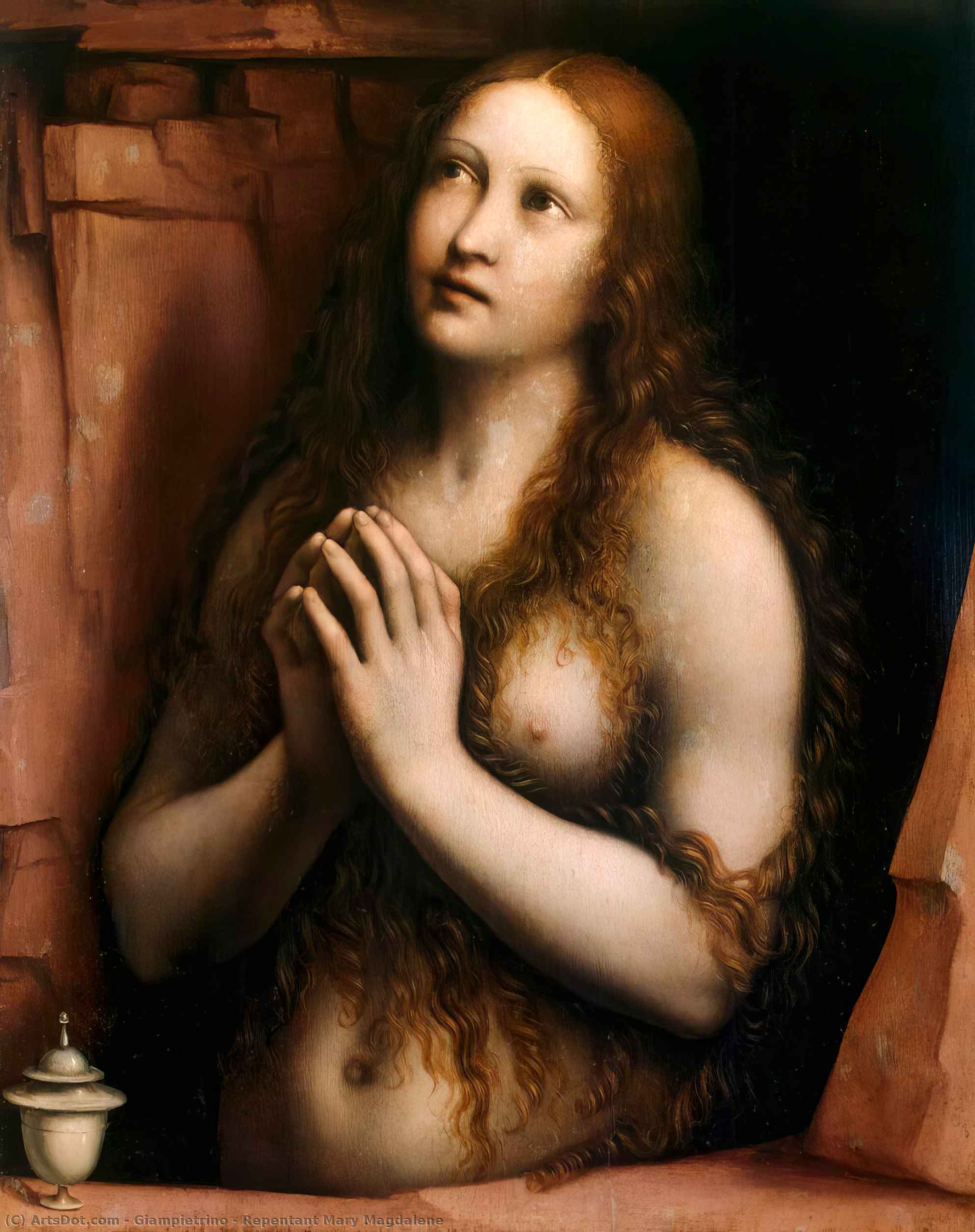
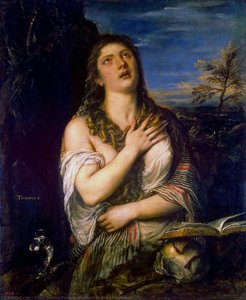
Repentant Mary Magdalene
 Oil On Panel
- Renaissance
 49.0 x 39.0 cm
 Hermitage Museum
 Pročitaj više
Ručno rađena uljana reprodukcija
Ručno oslikano uljanim bojama na platnu u dimenzijama i okviru po vašem izboru, izrađeno po porudžbini od strane naših umetnika. ( Kupi print Kupi digitalnu sliku)




P118B $10

P118H $10

P118W $10

P438Z $10

P508JH $12

P508YH $12

P805H $10

P805Z $10

P919BZ $10

P919G $10

P919XJ $10

P959ZH $10

P968JZ $12

W106C $8

W218G $10

W218JH $8

W218Y $10

W307PJ $10

W316G $10

W316PJ $8

W316Y $10

W398PJ $8

W4111J $10

W500HY $15

W500JH $15

W692G $12

W849H $8

W940BG $15

W953PJ $8




Izaberite jednu od naših unapred definisanih veličina koje odgovaraju originalnim proporcijama umetničkog dela.

Можете унети сопствене димензије како бисте прилагодили дело одређеном оквиру или простору. Ако одабрана величина не одговара пропорцијама оригинала, слика ће бити исечена или проширена додатним елементима који се ручно насликавају. Дигитални prikaz ће вам бити послат на одобрење пре почетка производње.
Имајте на уму да преглед на екрану не одражава стварно исецање или проширење. Само приказ (mockup) ће тачно приказати коначну композицију.
Иако су доступне прилагођене величине, препоручујемо да одаберете димензију из дефинисане листе како бисте сачували оригиналне пропорције.
Nakon narudžbine, tim ArtsDot.com će klijentu putem e-pošte poslati uputstva i dostaviti prikaz predloženog rešenja
Isporuka širom sveta () za 3/4 nedelje umesto uobičajenih 5 nedelja. (23 август). Bez kompromisa po pitanju kvaliteta.

Besplatna ekspresna dostava širom sveta

Visokokvalitetno laneno platno

Kompletno osiguranje transporta

Garancija povraćaja carine i uvoznih dažbina

Garancija vernosti boja

Politika povrata u roku od 60 dana (samo u slučaju nedostataka)

Garancija povrata novca od 100%

Popust pri grupnoj kupovini
 Opcija sa staklom dostupna je samo za dimenzije manje od 110 cm

Repentant Mary Magdalene
Tehnika reprodukcije
Dimenzije reprodukcije
-


Konačna cena
$ 263
Opis umetničkog dela
The Profound Sorrow of Repentance: Giampietrino’s “Repentant Mary Magdalene”
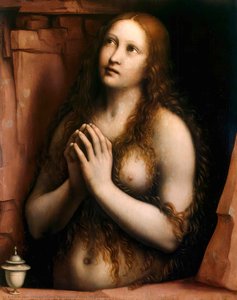
Giampietrino's "Repentant Mary Magdalene," a captivating oil on panel painting housed within the venerable halls of The Hermitage Museum in St. Petersburg, transcends mere portraiture; it is a profound meditation on remorse, faith, and the enduring power of redemption. Completed around 1530 during Giampietrino’s prolific period working alongside Leonardo da Vinci, this work stands as a testament to both the artist's technical skill and his ability to imbue a biblical scene with palpable emotional depth. The painting immediately draws the viewer in with its somber palette – deep browns, muted blues, and shadowed greens—creating an atmosphere of quiet introspection and spiritual contemplation.
The composition itself is masterfully executed. Mary Magdalene, depicted as a young woman radiating both vulnerability and resilience, occupies nearly the entire frame. Her posture, slumped slightly forward with her hands clasped in her lap, speaks volumes about her internal struggle. The architectural backdrop—a rugged, almost claustrophobic rock wall—further emphasizes her isolation and the weight of her past. Subtle hints of two figures, partially obscured within the darkness behind her, suggest a lingering presence of temptation or perhaps the ghosts of former transgressions, adding layers of complexity to the scene.
A Renaissance Master’s Techniques: Oil on Panel and Atmospheric Depth
Giampietrino's artistic approach is firmly rooted in the traditions of the Italian Renaissance, yet infused with a distinctly personal style. The choice of oil paint on panel—a technique favored for its rich textures and luminous colors—is crucial to the painting’s impact. Giampietrino skillfully employs glazing techniques, layering thin washes of color upon one another to build up depth and luminosity. Notice how the light catches the folds of her drapery, creating a tactile quality that invites the viewer to almost reach out and touch it. The artist's meticulous attention to detail is evident in every brushstroke, from the delicate rendering of her hair to the subtle nuances of expression on her face.
Furthermore, Giampietrino demonstrates an impressive understanding of atmospheric perspective. The background recedes into darkness, creating a sense of distance and emphasizing Mary Magdalene’s central position within the composition. This technique not only enhances the painting's visual appeal but also reinforces the emotional impact of the scene—drawing the viewer's eye directly to her face and allowing them to fully absorb her sorrowful expression.
Symbolism and Spiritual Resonance: The Magdalene’s Journey
The symbolism embedded within “Repentant Mary Magdalene” is rich and multifaceted. Mary Magdalene, a figure often misunderstood in Western art history, represents more than just a repentant prostitute. In the Gospels, she is portrayed as a devoted follower of Jesus, a witness to his crucifixion, and one of the first to proclaim his resurrection. Giampietrino’s painting captures this transformative journey—the woman who once sought solace in worldly pleasures now finds redemption through faith. The necklace she wears, a symbol of her devotion, serves as a poignant reminder of her past life and her commitment to a new path.
The rock wall behind her is not merely a decorative element; it symbolizes the harsh realities of sin and the arduous process of repentance. It represents the obstacles that must be overcome in order to achieve spiritual cleansing. The two figures glimpsed in the shadows may represent the temptations that still linger, urging her back towards her former life. Yet, Mary Magdalene’s unwavering gaze—cast downward in humility and reflection—suggests a resolute determination to remain steadfast on her path of redemption.
A Legacy of Devotion: Historical Context and Artistic Influence
The Hermitage Museum, where “Repentant Mary Magdalene” resides, is one of the world’s largest and most prestigious art museums, boasting an unparalleled collection spanning centuries and cultures. Founded by Catherine the Great in 1764, it has played a pivotal role in preserving and promoting artistic heritage. Giampietrino's work stands alongside masterpieces by Leonardo da Vinci, Gerard Ter Borch, and Louis Gallait—artists who were all associated with The Hermitage’s collection, highlighting the museum’s commitment to showcasing the breadth of Renaissance art.
The painting’s enduring appeal lies not only in its technical brilliance but also in its timeless themes of repentance, faith, and redemption. It resonates deeply with viewers across cultures and generations, offering a powerful reminder of the human capacity for transformation. Reproductions of this iconic work are available through Art Oyster, allowing art lovers to bring this profound meditation into their own homes.
Srodna umetnička dela

Biografija umetnika
The Shadow of the Master: The Life and Legacy of Giampietrino
In the vibrant, transformative atmosphere of the Italian Renaissance, few artists captured the lingering essence of a legend as effectively as Giampietrino. Known to history by his more formal name, Giovanni Pietro Rizzoli, this North Italian painter emerged from the Lombard school during a period when the stylistic innovations of Leonardo da Vinci were sweeping through the peninsula. While much of his early life remains shrouded in the mists of time, his presence is indelibly etched into the annals of art history through his profound connection to Leonardo's circle. For decades, the artist was a phantom, known only by the moniker "Giampietrino" found in studio records, until scholars eventually linked this talented hand to the documented life of Rizzoli.
To study Giampietrino is to witness a masterful dialogue with greatness. He was often described by art historians as an "exploiter of Leonardo's repertory," a phrase that suggests not merely a follower, but a sophisticated interpreter of the High Renaissance style. His work serves as a vital bridge, helping to disseminate the subtle complexities of Leonardo’s late techniques—such as sfumato and the delicate interplay of light and shadow—to a wider audience across Lombardy and beyond. He did not simply mimic his predecessor; rather, he absorbed the master's vocabulary to create a body of work that felt both familiar in its grace and distinct in its execution.
A Tapestry of Devotion and Myth
The breadth of Giampietrino’s oeuvre is as impressive as it is varied, ranging from monumental altarpieances to intimate, evocative portraits. He possessed a remarkable ability to navigate between the sacred and the profane, moving seamlessly from the tender, maternal warmth of his Madonnas to the dramatic, tragic allure of mythological figures. His religious compositions, such as the Madonna with Child, are celebrated for their serene beauty and an exquisite attention to detail that captures a sense of timeless grace. In these works, one finds a profound emotional depth, where the soft rendering of flesh and the gentle gaze of the Virgin evoke a deep sense of piety and peace.
Beyond the altar, Giampietrino’s imagination flourished in the realm of classical legend. He was particularly adept at depicting powerful, singular women, imbuing them with a psychological complexity that foreshadowed later Renaissance developments. His explorations of figures such as Cleopatra and Mary Magdalene allow viewers to experience the fusion of Greek and Egyptian aesthetics through a Lombard lens. In his depiction of The Death of Cleopatra, for instance, the artist captures a tragic, cinematic quality, utilizing rich textures and a dramatic palette to tell a story of fallen royalty and enduring sorrow.
Artistic Evolution and Historical Significance
As Giampietrino’s career progressed through his active years between 1495 and 1549, his personal style began to assert itself more clearly against the heavy influence of his mentors. While he remained a faithful student of Leonardo's forms, contemporary observers noted a characteristic use of paler skin tones, a stylistic choice that lent his figures a luminous, almost ethereal quality. This subtle departure from the more robust shadows of the Leonardeschi allowed his work to possess a unique, delicate brilliance that became a hallmark of his mature period.
The historical significance of Giampietrino lies in his role as a cultural conduit. Through his prolific output—often producing multiple versions of the same subject—he ensured that the aesthetic revolution of the late 15th century reached every corner of the Italian landscape. His legacy is found not only in the surviving masterpieces housed in prestigious institutions like The Hermitage and the Uffizi Gallery but also in the way he helped define the visual language of the Lombard school. He remains a testament to the power of artistic continuity, proving that even those working in the shadow of giants can leave an indelible mark upon the light of history.
giampietrino
1495 - 1549 , Italy
Osnovne informacije
- Artistic Movement Or Style: Lombard school, Renaissance
- Artists Or Movements Influenced By This Artist:
- Bernardino Luini
- Giulio Cesare Procaccini
- Artists Who Influenced This Artist: ['Leonardo da Vinci']
- Date Of Birth: 1495
- Date Of Death: 1549
- Full Name: Giovanni Pietro Rizzoli
- Nationality: Italian
- Notable Artworks:
- Madonna with Child
- Repentant Mary Magdalene
- The Death of Cleopatra
- Place Of Birth: Italy
Povezani članci
Oil on Panel Masters: 10 Paintings That Revolutionized Art |
Journey through 10 legendary 'Oil on Panel' masterpieces by Van Eyck, Bosch & Bruegel. Explore the stories behind these iconic Renaissance & Baroque paintings and find museum-quality art reproductions to elevate your home decor. Discover all masterpieces on !
Oil on Panel: A Historical Survey of Technique, Support & Aesthetic Evolution
Explore the rich history of oil on panel painting! Discover Renaissance techniques, support structures & aesthetic evolution. Expert insights for art collectors and enthusiasts.
Oil on Panel: A Historical Survey of Technique, Support, and Aesthetic Impact
Explore the rich history of oil on panel painting! Discover Renaissance techniques, support construction, & the enduring legacy of this masterful art form. Expert insights for collectors and enthusiasts.

The Enduring Power of Painting: A Historical & Contemporary Exploration of Form and Emotion
Explore the rich history & enduring techniques of oil painting with ArtsDot. Discover masterpieces, learn about art collecting, and find authentic handmade reproductions crafted by skilled artists.

The Enduring Legacy of Oil on Canvas: Technique, History & Aesthetic Impact
Explore the rich history & techniques of oil painting – from Renaissance masters to Impressionism. Discover pigments, layering methods, and why this timeless medium endures. Expert insights for artists & art enthusiasts.

