

 Pregledaj u prostoru
 Pošalji
 Podeli
 Detalji o delu

 Преузми
 Slični predmeti
 Rendgenski snimak
 Slajdovi
Judith and the Head of Holofernes


 Pročitaj više
Giclee štampa / Umetnički otisak
Giclée štampa ili print na platnu muzejskog kvaliteta uz brzu proizvodnju i fleksibilne opcije završne obrade. ( Kupi ručno naslikanu sliku Kupi digitalnu sliku)




P118B $10

P118H $10

P118W $10

P438Z $10

P508JH $12

P508YH $12

P805H $10

P805Z $10

P919BZ $10

P919G $10

P919XJ $10

P959ZH $10

P968JZ $12

W106C $8

W218G $10

W218JH $8

W218Y $10

W307PJ $10

W316G $10

W316PJ $8

W316Y $10

W398PJ $8

W4111J $10

W500HY $15

W500JH $15

W692G $12

W849H $8

W940BG $15

W953PJ $8




Izaberite jednu od naših unapred definisanih veličina koje odgovaraju originalnim proporcijama umetničkog dela.

Možete uneti sopstvene dimenzije kako biste umetničko delo prilagodili specifičnom okviru ili prostoru. Ako odabrani format ne odgovara proporcijama originalne slike, mi ćemo ili iscrtati deo dela ili proširiti sliku pomoću ogledane ivice ili jednobojnog popunjavanja. Digitalni prikaz će vam biti poslat na odobrenje pre početka proizvodnje.
Imajte na umu da pregled na ekranu ne odražava stvarno iscrtavanje ili proširivanje. Samo će prikaz (mockup) precizno pokazati finalnu kompoziciju.
Iako su prilagođene dimenzije dostupne, preporučujemo da odaberete dimenziju sa unapred definisane liste kako biste očuvali originalne proporcije.
Dostava širom sveta () za 2 nedelje umesto uobičajenih 4/5 nedelja. (27 август)

Besplatna ekspresna dostava širom sveta

Visokokvalitetno laneno platno

Kompletno osiguranje transporta

Garancija povraćaja carine i uvoznih dažbina

Garancija vernosti boja

Politika povrata u roku od 60 dana (samo u slučaju nedostataka)

Garancija povrata novca od 100%

Popust pri grupnoj kupovini
 Opcija sa staklom dostupna je samo za dimenzije manje od 110 cm

Judith and the Head of Holofernes
Giclee štampa / Umetnički otisak
Dimenzije reprodukcije
-


Konačna cena
$ 62
Opis predmeta
A Baroque Triumph of Courage and Virtue
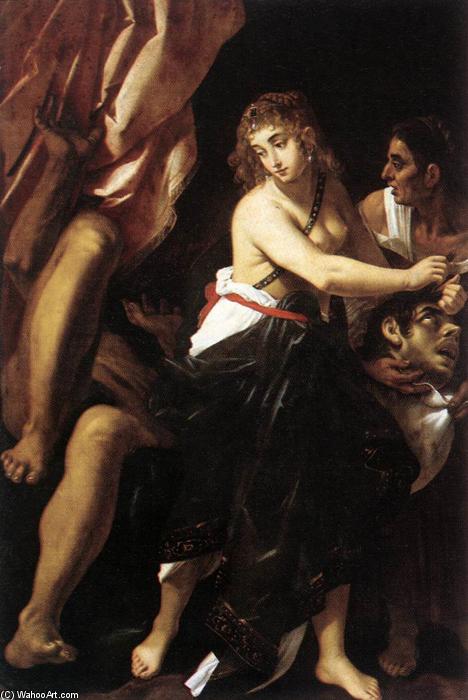
In the heart of the early seventeenth century, Rome was a stage for unparalleled artistic drama, and few works capture this theatrical essence as powerfully as Giovanni Baglione’s “Judith and the Head of Holofernes.” Painted in 1608, this masterpiece serves as a breathtaking distillation of biblical narrative into visual splendor. The painting recounts the legendary tale of Judith, the courageous Jewish widow who, to save her besieged city of Bethulia, entered the camp of the Assyrian general Holofernes. Through a masterful blend of seduction and strategic bravery, she waited for the intoxicated general to succumb to sleep before delivering a decisive, fatal blow. Baglione does not merely depict a historical event; he captures the very moment where heroism meets visceral reality, inviting the viewer into a world of high stakes and profound moral triumph.
The composition is a masterclass in the Baroque aesthetic, a style defined by its rejection of static elegance in favor of movement, grandeur, and intense emotional expression. Baglione moves away from the controlled grace of Mannerism to embrace a more turbulent and palpable energy. This is achieved through his expert use of chiaroscuro—the dramatic interplay between deep, swallowing shadows and piercing highlights. The dark, indistinct background serves a vital purpose: it strips away all worldly distractions, forcing the eye to confront the central figures. In this void, the light seems to sculpt the forms of Judith and her attendant, lending a three-dimensional weight to the scene that makes the violence feel immediate and the characters' resolve feel unshakeable.
The Mastery of Detail and Symbolism
Every brushstroke in Baglione’s work contributes to a larger symbolic dialogue. The meticulous rendering of Holofernes’s severed head is particularly striking; the artist utilizes anatomical precision to convey the shock and suddenness of death, with facial features that still seem to echo the surprise of his final moments. This gruesome detail stands in stark, intentional contrast to Judith’s dignified composure. Dressed in a striking black gown accented with rich reds, her attire reflects both her somber duty and her noble status. Her expression is not one of horror, but of unwavering determination—a deliberate choice by Baglione to elevate her character as an exemplar of piety and strength.
Beside her, the presence of the attendant adds a layer of human connection to the unfolding drama. Clad in lighter garments that catch the light, the assistant’s attentive posture provides a rhythmic balance to Judith's central intensity. For collectors and lovers of fine art, this painting offers more than just a beautiful image; it offers a window into the soul of the Baroque era. It is a piece that commands attention in any setting, providing a sophisticated focal point for those who appreciate art that speaks of the eternal struggle between darkness and light, between tyranny and liberation. Whether viewed as a historical document or a triumph of oil technique, Baglione’s work remains an enduring icon of artistic bravery.
Srodna umetnička dela
Povezani članci

Jacopo Tintoretto: 25 Remek-dela Venecijanskog Majstora | Reprodukcije i Inspiracija za Dom
Uronite u svet Jacopa Tintoreta! Otkrijte 25 remek-dela venecijanskog renesansnog majstora. Istražite dramatične kompozicije, bogate boje i istoriju umetnosti na ArtsDot.com. Reprodukcije slika za luksuzni enterijer.

Barok Majstor dela: Top 10 Umjetničkih Remeka za Vaš Dom
Otkrijte 10 remek dela koja su definisala baroknu umetnost! Karavagio, Bernini i više – istražite priče iza ovih ikoničnih slika. Inspiracija za vaš dom? Pogledajte kolekciju na ArtsDot.com!

Барокна драма: Уношење величине и емоција у савремене ентеријере
Откријте барокну драму и унесите величину у ваш ентеријер! ArtsDot нуди ручно насликане репродукције, персонализоване портрете и стручне консултације за љубитеље класичне уметности. Потражите савршено дело већ данас!

The Dramatic Flourish: Exploring the Baroque Movement's Enduring Legacy in Art History
Explore the dramatic world of Baroque art! Discover iconic artists like Caravaggio & Rubens, defining techniques, and its lasting impact on art history. Expert insights for collectors & enthusiasts at ArtsDot.

The Visceral Stage: Exploring Dramatic Narratives & Emotional Intensity in Baroque Art
Explore the dramatic world of Baroque art! Discover iconic masters like Caravaggio & Rembrandt, their techniques, and the movement's lasting impact. Expert insights for collectors & enthusiasts at ArtsDot.

