 Pregledaj u prostoru
 Pošalji
 Podeli
 Detalji o delu

 Преузми
 Slični predmeti
 Rendgenski snimak
 Slajdovi
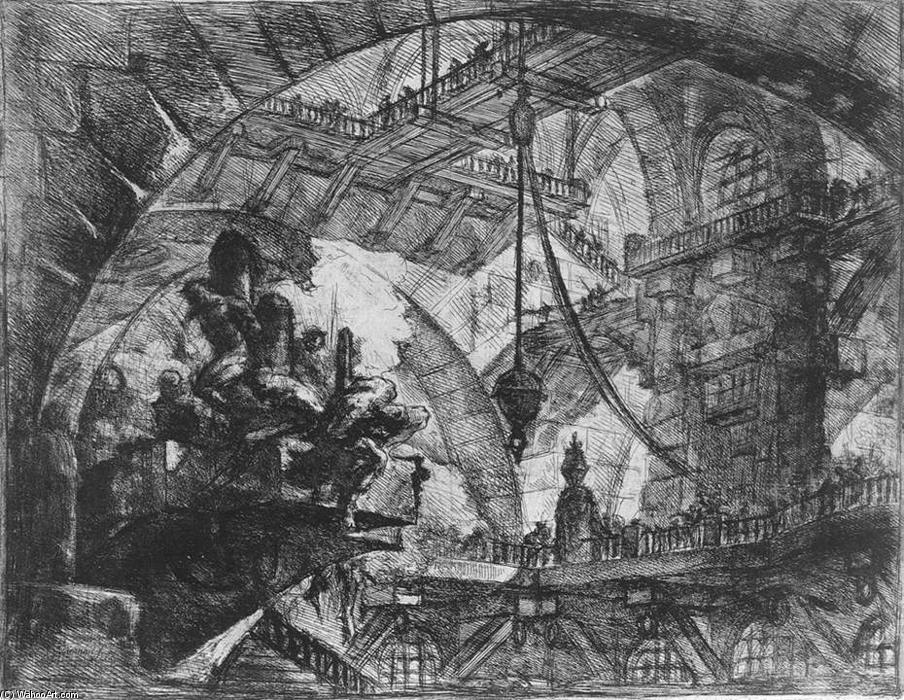
Prisoners on a Projecting Platform


 Pročitaj više
Ručno rađena uljana reprodukcija
Ručno oslikano uljanim bojama na platnu u dimenzijama i okviru po vašem izboru, izrađeno po porudžbini od strane naših umetnika. ( Kupi print Kupi digitalnu sliku)




P118B $10

P118H $10

P118W $10

P438Z $10

P508JH $12

P508YH $12

P805H $10

P805Z $10

P919BZ $10

P919G $10

P919XJ $10

P959ZH $10

P968JZ $12

W106C $8

W218G $10

W218JH $8

W218Y $10

W307PJ $10

W316G $10

W316PJ $8

W316Y $10

W398PJ $8

W4111J $10

W500HY $15

W500JH $15

W692G $12

W849H $8

W940BG $15

W953PJ $8




Izaberite jednu od naših unapred definisanih veličina koje odgovaraju originalnim proporcijama umetničkog dela.

Можете унети сопствене димензије како бисте прилагодили дело одређеном оквиру или простору. Ако одабрана величина не одговара пропорцијама оригинала, слика ће бити исечена или проширена додатним елементима који се ручно насликавају. Дигитални prikaz ће вам бити послат на одобрење пре почетка производње.
Имајте на уму да преглед на екрану не одражава стварно исецање или проширење. Само приказ (mockup) ће тачно приказати коначну композицију.
Иако су доступне прилагођене величине, препоручујемо да одаберете димензију из дефинисане листе како бисте сачували оригиналне пропорције.
Nakon narudžbine, tim ArtsDot.com će klijentu putem e-pošte poslati uputstva i dostaviti prikaz predloženog rešenja
Isporuka širom sveta () za 3/4 nedelje umesto uobičajenih 5 nedelja. (26 август). Bez kompromisa po pitanju kvaliteta.

Besplatna ekspresna dostava širom sveta

Visokokvalitetno laneno platno

Kompletno osiguranje transporta

Garancija povraćaja carine i uvoznih dažbina

Garancija vernosti boja

Politika povrata u roku od 60 dana (samo u slučaju nedostataka)

Garancija povrata novca od 100%

Popust pri grupnoj kupovini
 Opcija sa staklom dostupna je samo za dimenzije manje od 110 cm

Prisoners on a Projecting Platform
Tehnika reprodukcije
Dimenzije reprodukcije
-


Konačna cena
$ 563
Opis umetničkog dela
A Descent into the Imagination: Piranesi’s “Prisoners on a Projecting Platform”
Giovanni Battista Piranesi's "Prisoners on a Projecting Platform," etched in 1749, isn’t merely a depiction of an architectural space; it’s a carefully constructed psychological landscape. This haunting image transcends the boundaries of simple observation, plunging the viewer into a realm of confinement, grandeur, and unsettling mystery. Piranesi, a pivotal figure in the history of art, didn't simply record the ruins he encountered in Rome; he reimagined them, transforming crumbling walls and shadowed corridors into vast, echoing chambers that spoke volumes about human existence and our relationship to time and space. The work’s power lies not just in its technical mastery but in its ability to evoke a profound sense of unease and contemplation.
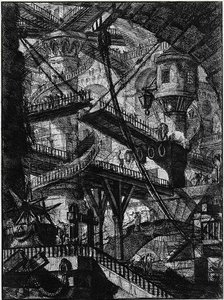
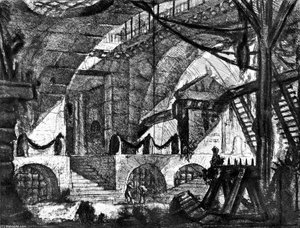
The scene itself is immediately arresting: a circular platform, seemingly suspended within an impossibly vast cavern, supports a small group of figures. These aren't heroic subjects; they are prisoners, their postures suggesting both resignation and a subtle defiance. The architecture surrounding them—a labyrinthine network of arches, vaults, and receding corridors—is rendered with meticulous detail, showcasing Piranesi’s signature style of exaggerated scale. The perspective is deliberately skewed, creating a dizzying effect that draws the eye relentlessly into the depths of the space. It's as if we, too, are trapped within this monumental construction, sharing in the figures’ disorientation and perhaps even their despair.
The Language of Line: Technique and Texture
Piranesi’s genius resides not only in his composition but also in his masterful manipulation of etching technique. The work is entirely monochromatic, relying on subtle shifts in tone to define form and create a remarkable sense of depth. Dense hatching—a technique where closely spaced parallel lines are used to build up areas of shadow—is employed liberally, particularly around the figures and the supporting structures, lending them a palpable weight and texture. Cross-hatching, with intersecting lines, provides further definition to lighter areas, creating a delicate interplay between light and dark. The artist’s use of aquatint – a process that creates tonal variations through roughened metal plates – adds to the richness and complexity of the image, simulating the rough surface of stone and brick.
Notice how Piranesi uses fine, almost invisible lines to suggest distant details—the faintest outlines of arches receding into the background. This technique, combined with the overall sense of perspective, contributes significantly to the illusion of immense scale and the feeling that we are witnessing a space far larger than our own perception allows. The meticulous scratching of the copper plate, achieved through countless hours of painstaking labor, is evident in every line, revealing the artist’s dedication to his craft.
Symbolism and Emotional Resonance
“Prisoners on a Projecting Platform” is rich with symbolic meaning. While the exact narrative remains open to interpretation, the image powerfully evokes themes of confinement, power, and the human condition. The prisoners themselves represent vulnerability and perhaps even the limitations imposed by societal structures or personal circumstances. The vastness of the architecture dwarfs the figures, emphasizing their insignificance in the face of overwhelming forces – a recurring motif in Piranesi’s work. There's an undeniable sense of dread mingled with awe; the scene is both beautiful and unsettling, prompting us to contemplate our own place within the grand scheme of things.
Piranesi’s “veduta” (view) style, exemplified here, wasn’t simply about accurately representing a space. It was about capturing its emotional essence—the feeling of being lost in an immense and potentially hostile environment. The work speaks to our enduring fascination with ruins, with the past, and with the mysteries that lie hidden beneath the surface of reality. It's a testament to Piranesi’s ability to transform observation into profound artistic expression.
Srodna umetnička dela
Biografija umetnika
Giovanni Battista Piranesi (1720–1778): A Visionary of Ruins
Giovanni Battista Piranesi, born in Mogliano Veneto in 1720, wasn't merely an artist; he was a true innovator—a sculptor of imagination who reshaped our understanding of Rome and its ancient past. His life coincided with the golden age of archaeological discovery, when scholars and artists alike eagerly sought to revive the glories of antiquity. But Piranesi refused to passively observe this revival; instead, he actively participated in it, transforming ruins into breathtaking landscapes that pulsed with an unsettling beauty—a testament to his profound psychological insight.
Early Life and Training
The son of a stonemason, Piranesi possessed an innate fascination for the physicality of building from a young age. This formative experience instilled in him a meticulous attention to detail and a deep appreciation for architectural form—skills that would prove invaluable throughout his artistic career. He received instruction from his uncle, Matteo Lucchesi, who was a leading architect in Venice’s *Magistrato alle Acque*, the state organization responsible for engineering and restoring historical buildings. This grounding in practical design complemented Piranesi's burgeoning intellectual curiosity.
Rome and Giuseppe Vasi: The Crucible of Artistic Vision
At the age of 20, Piranesi moved to Rome, where he established professional connections with Marco Foscarini—the Venetian ambassador to the Papacy—and Giuseppe Vasi, a celebrated printmaker who would become his mentor. Vasi recognized Piranesi’s exceptional talent and encouraged him to pursue etching as a medium—a decision that would ultimately define Piranesi's artistic legacy. Under Vasi’s guidance, Piranesi honed his technique, mastering the art of chiaroscuro—the dramatic interplay between light and shadow—and experimenting with innovative printing processes.
The Carceri d'Invenzione: Imaginary Prisons as Psychological Landscapes
Piranesi’s magnum opus is undoubtedly the series of etchings known as the Carceri d'Invenzione (Imaginary Prisons), created between 1745 and 1761. These aren’t representations of actual prisons—but rather fantastical labyrinths—colossal staircases spiraling into darkness, towering arches framing endless vistas, shadowy vaults echoing with unseen presences. The scale is deliberately disorienting; human figures are dwarfed by the immense architecture, emphasizing a sense of isolation and powerlessness. Piranesi’s meticulous attention to detail—the precise rendering of stone textures, the subtle gradations of light—created an atmosphere of palpable unease. These prints weren't merely aesthetically impressive; they were explorations of psychological space—attempts to capture the anxieties and fears that lurked beneath the surface of consciousness.
Vedute: Reconstructing Roman Grandeur
Alongside his imaginative labyrinths, Piranesi produced a vast body of work documenting the real architecture of Rome—known as vedute (views). However, these weren’t straightforward topographical representations. They were carefully composed scenes that emphasized the monumentality and historical significance of ancient ruins. He meticulously researched and depicted Roman landmarks like the Forum, the Colosseum, and the Pantheon, often incorporating figures to provide a sense of scale and animation. Piranesi's approach to *vedute* reflected his belief that archaeology wasn’t simply about uncovering the past but also about interpreting and reimagining it—a conviction that cemented his place as one of the most influential architects and printmakers of his era.
Legacy and Influence
Giovanni Battista Piranesi died in Rome in 1778, leaving behind a legacy that continues to inspire artists and thinkers today. His influence can be seen in the works of Romantic painters like Turner and Doré—who embraced Piranesi’s dramatic use of perspective and chiaroscuro—and in contemporary filmmakers who utilize his imagery to evoke feelings of awe and disorientation. Piranesi's ability to transform ruins into landscapes of the imagination—to capture the sublime beauty of decay—remains a testament to his artistic genius and his profound understanding of human psychology.
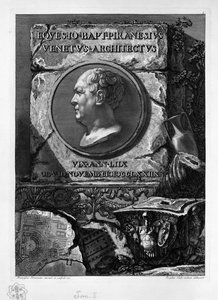
Ђаво Battista Пирањези
1720 - 1778 , Италија
Osnovne informacije
- Artistic Movement Or Style: Neoclassicizam
- Artists Or Movements Influenced By This Artist:
- Romanticizam
- Surrealizam
- Artists Who Influenced This Artist:
- Giuseppe Vasi
- Matteo Lucchesi
- Date Of Birth: 1720
- Full Name: Giovanni Battista Piranesi
- Nationality: Italijan
- Notable Artworks:
- Carceri d'Invenzione
- Vedute di Roma
- Place Of Birth: Mogliano Veneto, Italija
Povezani članci
Etching Masters: 10 Legendary Prints That Revolutionized Art | ArtsDot
Journey through 10 legendary etching masterpieces by Rembrandt, Dürer & Goya. Explore the history of printmaking and discover timeless art for your home. Find museum-quality reproductions at ArtsDot.com.
Etching: A Historical Survey of Technique, Aesthetic Qualities & Enduring Artistic Significance
Explore the rich history of etching, from its origins to Rembrandt's masterful innovations. Discover the technique, aesthetic qualities & enduring legacy of this captivating art form. Expert insights for collectors and enthusiasts.
The Intricate World of Etching: A Historical Survey of Technique, Aesthetic Evolution, and Enduring Artistic Impact
Explore the rich history of etching, from its origins to modern practice. Discover techniques, key artists like Rembrandt, and insights for collectors. A comprehensive guide by ArtsDot.
Giovanni Battista Piranesi: Visionary of Ruins & Architect of Imagination
Explore the life & work of Giovanni Battista Piranesi, master etcher of Roman views & creator of the haunting 'Carceri d'Invenzione'. Discover his architectural vision and lasting influence on art history.
Hubert Robert: Picturing Ruins, Preserving Memory – A Study of Romantic Antiquarianism & Artistic Innovation
Explore the captivating world of Hubert Robert, master of Romantic landscape painting & 'capriccio' ruins. Discover his historical context, artistic innovations, and collecting insights with ArtsDot.