 Pregledaj u prostoru
 Pošalji
 Podeli
 Detalji o delu

 Преузми
 Slični predmeti
 Rendgenski snimak
 Slajdovi
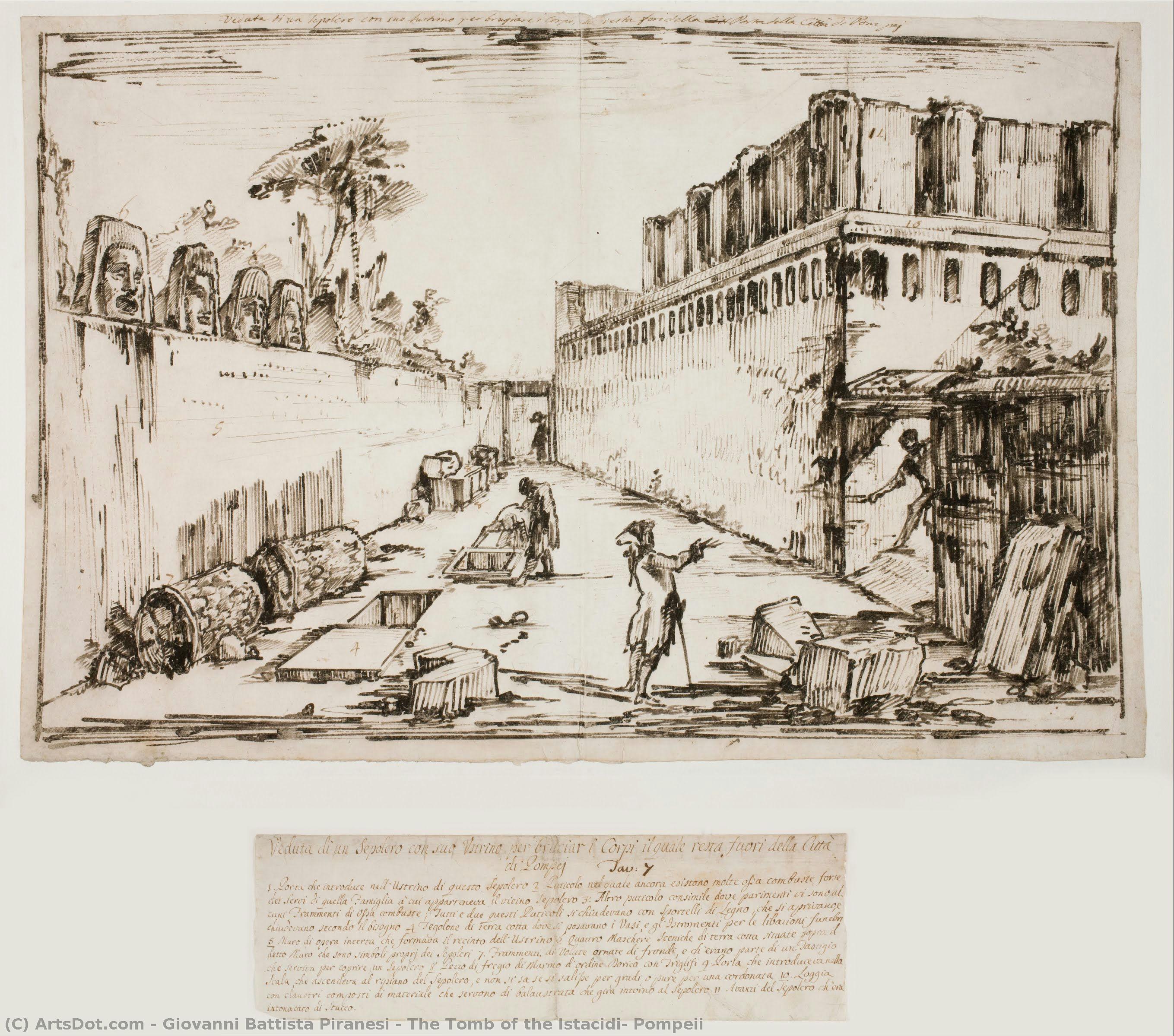
The Tomb of the Istacidi, Pompeii
 Acrylic On Canvas
- WallArt
- Neoclassical Piranesi
 1777
1777 77.0 x 51.0 cm
 Nacionalna galerija Danske
 Pročitaj više
Giclee štampa / Umetnički otisak
Giclée štampa ili print na platnu muzejskog kvaliteta uz brzu proizvodnju i fleksibilne opcije završne obrade. ( Kupi ručno naslikanu sliku Kupi digitalnu sliku)




P118B $10

P118H $10

P118W $10

P438Z $10

P508JH $12

P508YH $12

P805H $10

P805Z $10

P919BZ $10

P919G $10

P919XJ $10

P959ZH $10

P968JZ $12

W106C $8

W218G $10

W218JH $8

W218Y $10

W307PJ $10

W316G $10

W316PJ $8

W316Y $10

W398PJ $8

W4111J $10

W500HY $15

W500JH $15

W692G $12

W849H $8

W940BG $15

W953PJ $8




Izaberite jednu od naših unapred definisanih veličina koje odgovaraju originalnim proporcijama umetničkog dela.

Možete uneti sopstvene dimenzije kako biste umetničko delo prilagodili specifičnom okviru ili prostoru. Ako odabrani format ne odgovara proporcijama originalne slike, mi ćemo ili iscrtati deo dela ili proširiti sliku pomoću ogledane ivice ili jednobojnog popunjavanja. Digitalni prikaz će vam biti poslat na odobrenje pre početka proizvodnje.
Imajte na umu da pregled na ekranu ne odražava stvarno iscrtavanje ili proširivanje. Samo će prikaz (mockup) precizno pokazati finalnu kompoziciju.
Iako su prilagođene dimenzije dostupne, preporučujemo da odaberete dimenziju sa unapred definisane liste kako biste očuvali originalne proporcije.
Dostava širom sveta () za 2 nedelje umesto uobičajenih 4/5 nedelja. (5 септембар)

Besplatna ekspresna dostava širom sveta

Visokokvalitetno laneno platno

Kompletno osiguranje transporta

Garancija povraćaja carine i uvoznih dažbina

Garancija vernosti boja

Politika povrata u roku od 60 dana (samo u slučaju nedostataka)

Garancija povrata novca od 100%

Popust pri grupnoj kupovini
 Opcija sa staklom dostupna je samo za dimenzije manje od 110 cm

The Tomb of the Istacidi, Pompeii
Giclee štampa / Umetnički otisak
Dimenzije reprodukcije
-


Konačna cena
$ 62
A Frozen Moment in Time: Piranesi’s Pompeii
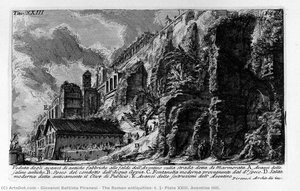
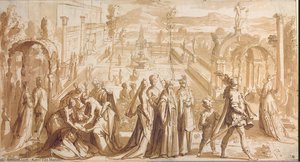
Giovanni Battista Piranesi's “The Tomb of the Istacidi,” a drawing executed around 1777, isn’t merely a depiction of an ancient Roman scene; it’s a portal. A carefully constructed window into a vanished world, brimming with life and shadowed by the looming threat of Vesuvius. Piranesi, a visionary artist deeply fascinated by ruins and the psychological impact of decay, transformed the archaeological discoveries of his time into intensely evocative landscapes – spaces that resonate not just with historical accuracy but also with an almost palpable sense of melancholy and mystery. This particular drawing, housed within the walls of the British Museum, offers a remarkably intimate view of Pompeii, capturing a moment of quiet contemplation amidst the bustling city.

Technique and Composition: A Masterclass in Perspective
Piranesi’s skill lies not just in his subject matter but in his meticulous technique. The drawing is executed with a remarkable precision, employing a combination of pencil, reed pen, and brownish-black ink on paper. He begins by lightly tracing the scene with pencil, establishing the foundational perspective structure – a testament to his architectural training. Then, using a pencil and ruler, he carefully outlines the key lines of the composition, ensuring accurate proportions and spatial relationships. Finally, the details—the weathered columns, the inquisitive archaeologists, the curious tourists—are rendered with the delicate precision of a reed pen, imbuing them with a tangible sense of weight and texture. The use of chiaroscuro – the dramatic interplay of light and shadow – further enhances the drawing’s depth and atmosphere, guiding the viewer's eye through the scene.
- Pencil Sketching: Establishing the foundational perspective.
- Line Work: Precise outlining using a pencil and ruler.
- Ink Detailing: Creating form and texture with a reed pen and ink.
Symbolism and Context: Echoes of Roman Life
The drawing depicts a scene near the Herculaneum gates, a location that would have been alive with activity in Pompeii’s heyday. Piranesi captures a moment of quiet observation – a nobleman gesturing towards a shadowy figure emerging from a doorway, perhaps an Istacidi family member returning home. This small interaction hints at the social dynamics and daily routines of Roman life. The inclusion of archaeologists and tourists underscores the burgeoning interest in classical antiquity during Piranesi’s time, reflecting a growing desire to understand and reconstruct the past. The looming presence of Mount Vesuvius serves as a constant reminder of the fragility of human existence – a subtle yet powerful symbol of fate and mortality.
The drawing speaks volumes about the Roman fascination with both the grandeur of their empire and the inevitability of its decline.Emotional Resonance: A Timeless Appeal
“The Tomb of the Istacidi” transcends a simple historical record; it evokes a profound sense of nostalgia for a lost world. Piranesi’s masterful use of light, shadow, and perspective creates an atmosphere of both serenity and unease. The drawing invites us to contemplate the lives of those who once inhabited Pompeii, imagining their hopes, fears, and daily routines. It's a poignant reminder that even in ruins, there remains a powerful connection to our shared human history – a testament to the enduring beauty and melancholy of the past. This piece is not just an image; it’s an experience, a journey back in time through the eyes of one of art’s most perceptive observers.
Srodna umetnička dela
Biografija umetnika
Giovanni Battista Piranesi (1720–1778): A Visionary of Ruins
Giovanni Battista Piranesi, born in Mogliano Veneto in 1720, wasn't merely an artist; he was a true innovator—a sculptor of imagination who reshaped our understanding of Rome and its ancient past. His life coincided with the golden age of archaeological discovery, when scholars and artists alike eagerly sought to revive the glories of antiquity. But Piranesi refused to passively observe this revival; instead, he actively participated in it, transforming ruins into breathtaking landscapes that pulsed with an unsettling beauty—a testament to his profound psychological insight.
Early Life and Training
The son of a stonemason, Piranesi possessed an innate fascination for the physicality of building from a young age. This formative experience instilled in him a meticulous attention to detail and a deep appreciation for architectural form—skills that would prove invaluable throughout his artistic career. He received instruction from his uncle, Matteo Lucchesi, who was a leading architect in Venice’s *Magistrato alle Acque*, the state organization responsible for engineering and restoring historical buildings. This grounding in practical design complemented Piranesi's burgeoning intellectual curiosity.
Rome and Giuseppe Vasi: The Crucible of Artistic Vision
At the age of 20, Piranesi moved to Rome, where he established professional connections with Marco Foscarini—the Venetian ambassador to the Papacy—and Giuseppe Vasi, a celebrated printmaker who would become his mentor. Vasi recognized Piranesi’s exceptional talent and encouraged him to pursue etching as a medium—a decision that would ultimately define Piranesi's artistic legacy. Under Vasi’s guidance, Piranesi honed his technique, mastering the art of chiaroscuro—the dramatic interplay between light and shadow—and experimenting with innovative printing processes.
The Carceri d'Invenzione: Imaginary Prisons as Psychological Landscapes
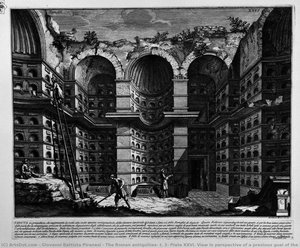
Piranesi’s magnum opus is undoubtedly the series of etchings known as the Carceri d'Invenzione (Imaginary Prisons), created between 1745 and 1761. These aren’t representations of actual prisons—but rather fantastical labyrinths—colossal staircases spiraling into darkness, towering arches framing endless vistas, shadowy vaults echoing with unseen presences. The scale is deliberately disorienting; human figures are dwarfed by the immense architecture, emphasizing a sense of isolation and powerlessness. Piranesi’s meticulous attention to detail—the precise rendering of stone textures, the subtle gradations of light—created an atmosphere of palpable unease. These prints weren't merely aesthetically impressive; they were explorations of psychological space—attempts to capture the anxieties and fears that lurked beneath the surface of consciousness.
Vedute: Reconstructing Roman Grandeur
Alongside his imaginative labyrinths, Piranesi produced a vast body of work documenting the real architecture of Rome—known as vedute (views). However, these weren’t straightforward topographical representations. They were carefully composed scenes that emphasized the monumentality and historical significance of ancient ruins. He meticulously researched and depicted Roman landmarks like the Forum, the Colosseum, and the Pantheon, often incorporating figures to provide a sense of scale and animation. Piranesi's approach to *vedute* reflected his belief that archaeology wasn’t simply about uncovering the past but also about interpreting and reimagining it—a conviction that cemented his place as one of the most influential architects and printmakers of his era.
Legacy and Influence
Giovanni Battista Piranesi died in Rome in 1778, leaving behind a legacy that continues to inspire artists and thinkers today. His influence can be seen in the works of Romantic painters like Turner and Doré—who embraced Piranesi’s dramatic use of perspective and chiaroscuro—and in contemporary filmmakers who utilize his imagery to evoke feelings of awe and disorientation. Piranesi's ability to transform ruins into landscapes of the imagination—to capture the sublime beauty of decay—remains a testament to his artistic genius and his profound understanding of human psychology.
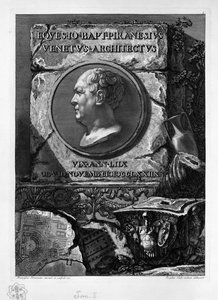
Ђаво Battista Пирањези
1720 - 1778 , Италија
Osnovne informacije
- Artistic Movement Or Style: Neoclassicizam
- Artists Or Movements Influenced By This Artist:
- Romanticizam
- Surrealizam
- Artists Who Influenced This Artist:
- Giuseppe Vasi
- Matteo Lucchesi
- Date Of Birth: 1720
- Full Name: Giovanni Battista Piranesi
- Nationality: Italijan
- Notable Artworks:
- Carceri d'Invenzione
- Vedute di Roma
- Place Of Birth: Mogliano Veneto, Italija
Povezani članci

White on Canvas: 10 Masterpieces & Timeless Elegance for Your Home Decor
Explore 10 iconic white paintings by Monet, Whistler & Rothko! Discover the stories behind these serene masterpieces and their impact on art history. Find museum-quality reproductions for your home decor at .
Etching Masters: 10 Legendary Prints That Revolutionized Art | ArtsDot
Journey through 10 legendary etching masterpieces by Rembrandt, Dürer & Goya. Explore the history of printmaking and discover timeless art for your home. Find museum-quality reproductions at ArtsDot.com.

Dark Masterpieces: 10 Iconic Paintings Dominated by Black Tones |
Explore 10 iconic paintings dominated by black tones, from Rembrandt’s chiaroscuro to Goya's dark expressions. Discover the stories behind these masterpieces & find museum-quality art reproductions for your home at .

Etching: A Historical Survey of Technique, Aesthetic Qualities & Enduring Artistic Significance
Explore the rich history of etching, from its origins to Rembrandt's masterful innovations. Discover the technique, aesthetic qualities & enduring legacy of this captivating art form. Expert insights for collectors and enthusiasts.
The Intricate World of Etching: A Historical Survey of Technique, Aesthetic Evolution, and Enduring Artistic Impact
Explore the rich history of etching, from its origins to modern practice. Discover techniques, key artists like Rembrandt, and insights for collectors. A comprehensive guide by ArtsDot.