 Pregledaj u prostoru
 Pošalji
 Podeli
 Detalji o delu

 Преузми
 Slični predmeti
 Rendgenski snimak
 Slajdovi
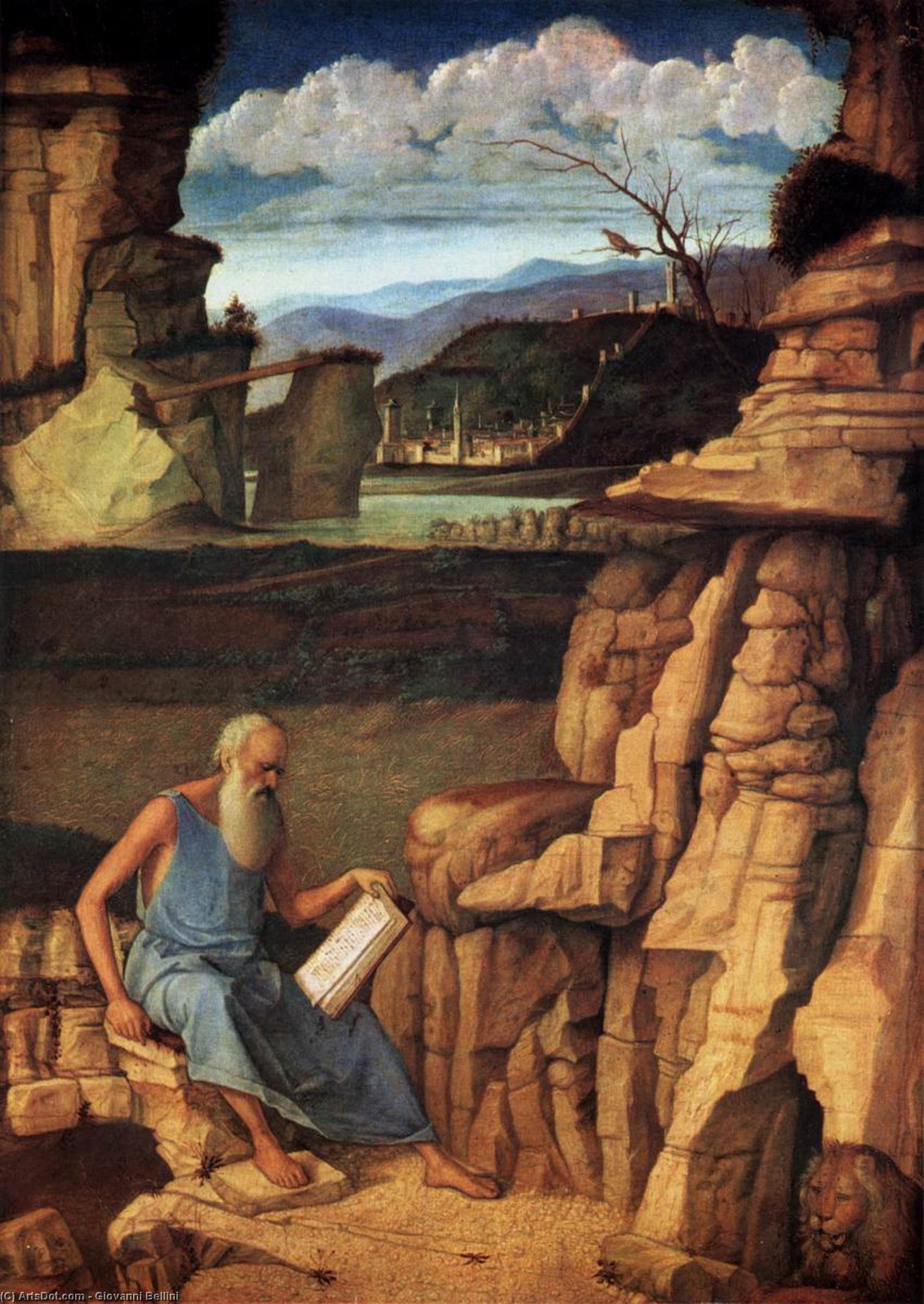
St Jerome Reading in the Countryside
 Oil On Panel
- WallArt
- Venetian Renaissance
 1480
1480- Renaissance
 47.0 x 34.0 cm
 Nacionalna galerija
 Pročitaj više
Ručno rađena uljana reprodukcija
Ručno oslikano uljanim bojama na platnu u dimenzijama i okviru po vašem izboru, izrađeno po porudžbini od strane naših umetnika. ( Kupi print Kupi digitalnu sliku)




P118B $10

P118H $10

P118W $10

P438Z $10

P508JH $12

P508YH $12

P805H $10

P805Z $10

P919BZ $10

P919G $10

P919XJ $10

P959ZH $10

P968JZ $12

W106C $8

W218G $10

W218JH $8

W218Y $10

W307PJ $10

W316G $10

W316PJ $8

W316Y $10

W398PJ $8

W4111J $10

W500HY $15

W500JH $15

W692G $12

W849H $8

W940BG $15

W953PJ $8




Izaberite jednu od naših unapred definisanih veličina koje odgovaraju originalnim proporcijama umetničkog dela.

Можете унети сопствене димензије како бисте прилагодили дело одређеном оквиру или простору. Ако одабрана величина не одговара пропорцијама оригинала, слика ће бити исечена или проширена додатним елементима који се ручно насликавају. Дигитални prikaz ће вам бити послат на одобрење пре почетка производње.
Имајте на уму да преглед на екрану не одражава стварно исецање или проширење. Само приказ (mockup) ће тачно приказати коначну композицију.
Иако су доступне прилагођене величине, препоручујемо да одаберете димензију из дефинисане листе како бисте сачували оригиналне пропорције.
Nakon narudžbine, tim ArtsDot.com će klijentu putem e-pošte poslati uputstva i dostaviti prikaz predloženog rešenja
Isporuka širom sveta () za 3/4 nedelje umesto uobičajenih 5 nedelja. (7 септембар). Bez kompromisa po pitanju kvaliteta.

Besplatna ekspresna dostava širom sveta

Visokokvalitetno laneno platno

Kompletno osiguranje transporta

Garancija povraćaja carine i uvoznih dažbina

Garancija vernosti boja

Politika povraćaja u roku od 100 dana (isključivo u slučaju nedostataka)

Garancija povrata novca od 100%

Popust pri grupnoj kupovini
 Opcija sa staklom dostupna je samo za dimenzije manje od 110 cm

St Jerome Reading in the Countryside
Tehnika reprodukcije
Dimenzije reprodukcije
-


Konačna cena
$ 263
A Sanctuary of Silence: The Soul of St. Jerome
In the quietude of a rugged landscape, where the whispers of a distant river meet the soft rustle of ancient foliage, Giovanni Bellini captures a moment of profound spiritual stillness. St. Jerome Reading in the Countryside is far more than a mere depiction of a biblical scholar; it is an invitation into the very heart of Renaissance contemplation. Painted around 1480, this masterpiece serves as a window into an era where the boundaries between the human intellect and divine grace began to blur through the lens of humanist thought. As the eye wanders across the weathered rocks and the tranquil greenery, one does not simply observe a scene; one enters a state of being—a meditative retreat from the chaos of the world into the sanctuary of focused study.
The central figure, Saint Jerome, sits anchored amidst the natural elements, his presence commanding yet remarkably understated. Unlike many contemporary depictions that relied on dramatic gestures or opulent, theatrical settings to signal sanctity, Bellini chooses a path of subtle grace. The saint is immersed in his text, his scholarly devotion mirrored by the steady, unmoving landscape surrounding him. This deliberate choice reflects the burgeoning Venetian interest in humanism, prioritizing the quiet power of reason and observation. For the collector or the lover of fine art, this painting offers a rare emotional resonance: it provides a sense of groundedness and peace that is increasingly sought after in the modern interior.
The Luminous Mastery of the Venetian School
To behold this work is to witness the technical revolution that Bellini brought to the Venetian school. The artist’s mastery lies in his ability to manipulate light, not as a harsh spotlight, but as a pervasive, atmospheric presence that breathes life into every texture. Through the meticulous application of thin, translucent glazes—a hallmark of the Venetian technique—Bellini achieves an unparalleled depth of color and a soft, ethereal luminosity. The landscape is bathed in a diffused sunlight that softens the edges of the world, creating a sense of sfumato that allows the mountains, trees, and river to merge into a cohesive, breathing ecosystem.
The palette is a sophisticated symphony of earth tones and subtle highlights. Deep ochres, rich umbers, and muted crimsons define the rugged terrain and the heavy folds of Jerome’s robes, providing a tactile realism that invites the viewer to reach out and touch the stone and fabric. This careful layering of pigment creates a sense of internal glow, as if the light is not merely hitting the surface of the painting but is emanating from within it. For an interior designer, such a piece acts as a foundational element of decor, offering a rich, tonal complexity that complements both classical and contemporary spaces with its timeless elegance.
A Legacy of Peace for the Discerning Collector
Beyond its technical brilliance, St. Jerome Reading in the Countryside carries a profound symbolic weight. The landscape itself acts as an extension of the saint's internal state; the stability of the rocks and the flow of the river represent the eternal truths found within his scholarly pursuits. It is a painting about the beauty of solitude and the intellectual richness that can be found when one turns away from the noise of society to engage with the profound. This theme of "serene reflection" makes the artwork an ideal centerpiece for spaces dedicated to study, libraries, or quiet sitting rooms.
Owning a high-quality reproduction of this Bellini masterpiece allows one to bring this atmosphere of tranquility into the home. It is an investment in mood and meaning, providing a focal point that inspires thought and offers a visual respite. Whether placed in a sunlit gallery or a moody, dimly lit study, the painting’s ability to evoke a sense of historical grandeur and spiritual peace remains undiminished by the passage of centuries. It stands as a testament to the enduring power of the Venetian Renaissance—a period where art learned to capture not just the visible world, but the very breath of the soul.
Srodna umetnička dela


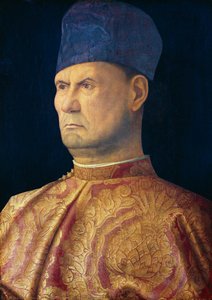
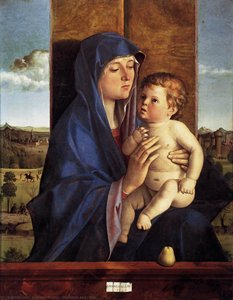

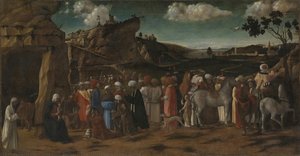
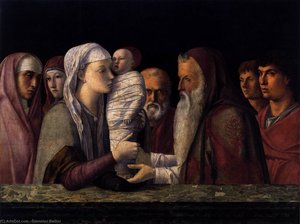

Biografija umetnika
A Venetian Master: The Life and Legacy of Giovanni Bellini
Giovanni Bellini, a name synonymous with the blossoming Renaissance in Venice, stands as a pivotal figure bridging the gap between the traditions of Byzantine art and the innovative spirit that would define the 16th century. Born around 1430 – though some sources suggest 1433 – into a family deeply entrenched in the artistic world, Bellini’s journey was one of continuous evolution, marked by a profound sensitivity to color, light, and the burgeoning humanism of his era. The precise nature of his familial relationships has been debated; for years Jacopo Bellini was considered his father, but modern scholarship increasingly points towards Jacopo being Giovanni's elder half-brother, with Gentile Bellini as his nephew rather than sibling. Regardless of these intricacies, young Giovanni grew up immersed in a workshop brimming with creativity and technical expertise, absorbing the foundations of painting from an early age. His initial training likely involved the traditional tempera techniques favored at the time, but it was his innate talent for observation and emotional expression that would set him apart.Early Influences and Artistic Development
The artistic landscape of 15th-century Venice was a unique blend of influences. The city’s position as a major trading hub exposed its artists to diverse styles and ideas, while the Byzantine heritage continued to exert a strong pull. Bellini's early works reflect this duality. Initially, his style bore the mark of his father and brother, Gentile, with compositions often characterized by meticulous detail and a somewhat restrained emotional palette. However, even in these early pieces, hints of his future brilliance began to emerge – a delicate handling of light, a growing interest in naturalistic settings, and an ability to imbue religious figures with a palpable sense of human pathos. The influence of Andrea Mantegna, his brother-in-law, is also readily apparent during this period, particularly in the clarity of line and sculptural forms. Bellini’s early commissions often involved collaborative projects, such as his contributions to the Scuola di San Marco alongside Gentile and other prominent Venetian artists. These large-scale works provided invaluable experience and allowed him to hone his skills while working alongside some of the most talented painters of the day.Revolutionizing Venetian Painting: Color, Light, and Oil
Bellini’s true revolution lay in his embrace of oil paint. While not the inventor of the technique, he was among the first Venetian artists to fully exploit its potential. Unlike tempera, which dried quickly and demanded a precise, linear approach, oil paint allowed for greater blending, richer colors, and subtle gradations of tone. This newfound freedom enabled Bellini to create paintings with an unprecedented depth and luminosity. His use of color became increasingly sophisticated, moving away from the bright, often harsh hues of earlier Venetian painting towards a more nuanced and harmonious palette. He masterfully captured the effects of light and atmosphere, imbuing his landscapes with a sense of serenity and realism that was groundbreaking for its time. This mastery of oil paint not only transformed his own work but also laid the foundation for the distinctive style that would come to define the Venetian school – a style celebrated for its sensuousness, coloristic richness, and atmospheric perspective. He achieved this remarkable feat by meticulously studying the interplay between light and shadow, creating illusions of depth and dimensionality that captivated viewers.Mature Works and Lasting Influence
As Bellini matured, his artistic vision continued to evolve. His altarpieces, such as those created for the churches of San Zaccaria and Santa Corona, demonstrate his ability to create complex compositions filled with symbolic meaning and emotional resonance. The *Transfiguration*, now housed in the Capodimonte Museum in Naples, exemplifies his mature style – a serene spirit combined with ripened artistic powers. He also served as conservator of the paintings in Doge’s Palace, further solidifying his reputation as Venice's leading artist. His influence extended far beyond his own lifetime. He became a mentor to a generation of younger painters, including Giorgione and Titian, who would carry on his legacy and push the boundaries of Venetian art even further. These pupils absorbed Bellini’s techniques and aesthetic principles, adapting them to their own individual styles and contributing to the golden age of Venetian painting. Bellini's impact can be seen in the works of countless artists who followed, solidifying his place as a true master of the Renaissance. He died in Venice in 1516, leaving behind a body of work that continues to inspire awe and admiration centuries later.A Legacy Enduring Through Time
Giovanni Bellini’s significance extends beyond his technical innovations and artistic achievements. He captured the spirit of a changing world – a world grappling with new ideas about humanity, spirituality, and the relationship between art and nature. His paintings are not merely representations of religious scenes; they are profound meditations on faith, beauty, and the human condition. His ability to imbue his figures with dignity and grace, combined with his masterful use of color and light, created a visual language that resonated deeply with his contemporaries and continues to captivate audiences today. *Bellini’s legacy is not simply one of artistic brilliance; it is a testament to the power of art to transcend time and connect us to the enduring values of human experience.* From the serene beauty of his Madonnas to the dramatic intensity of his religious scenes, Bellini's work remains a cornerstone of Western art history.
Јован Антони Белини
1433 - 1516 , Италија
Osnovne informacije
- Artistic Movement Or Style: Venetian School
- Artists Or Movements Influenced By This Artist:
- Giorgione
- Titian
- Artists Who Influenced This Artist:
- Jacopo Bellini
- Gentile Bellini
- Date Of Birth: c. 1430
- Date Of Death: 1516
- Full Name: Giovanni Bellini
- Nationality: Italian
- Notable Artworks:
- St. Jerome in the Desert
- The Transfiguration
- Place Of Birth: Venice, Italy
Povezani članci
Sacred Narratives Embodied: A Comprehensive Exploration of Religious Iconography in Art History
Explore the rich history of religious iconography in art! Discover symbolism, movements & masterpieces from Byzantine to Renaissance periods. Expert insights for collectors and enthusiasts at ArtsDot.

Jacopo Tintoretto: 25 Remek-dela Venecijanskog Majstora | Reprodukcije i Inspiracija za Dom
Uronite u svet Jacopa Tintoreta! Otkrijte 25 remek-dela venecijanskog renesansnog majstora. Istražite dramatične kompozicije, bogate boje i istoriju umetnosti na ArtsDot.com. Reprodukcije slika za luksuzni enterijer.
Vittore Carpaccio: Venetian Renaissance Narrative & the Poetics of Detail
Explore the captivating world of Vittore Carpaccio, a master storyteller of the Venetian Renaissance. Discover his intricate details, narrative cycles like 'The Legend of St. Ursula,' and unique artistic style.

Sacred Narratives on Canvas: Exploring Religious Painting Through History
Explore the rich history of religious painting with ArtsDot.com! Discover iconic artworks, symbolism & techniques from antiquity to the Renaissance. Enhance your art appreciation today.
The Golden Light of Innovation: Exploring the Venetian Renaissance Art Movement (1430–1580)
Explore the Golden Age of Venetian art (1430–1580). Discover Giorgione, Titian & Tintoretto's techniques, the 'colorito' revolution, and lasting influence. Expert insights for collectors & enthusiasts.