

 Pošalji
 Podeli
 Detalji o delu

 Преузми
 Slični predmeti
 Slajdovi
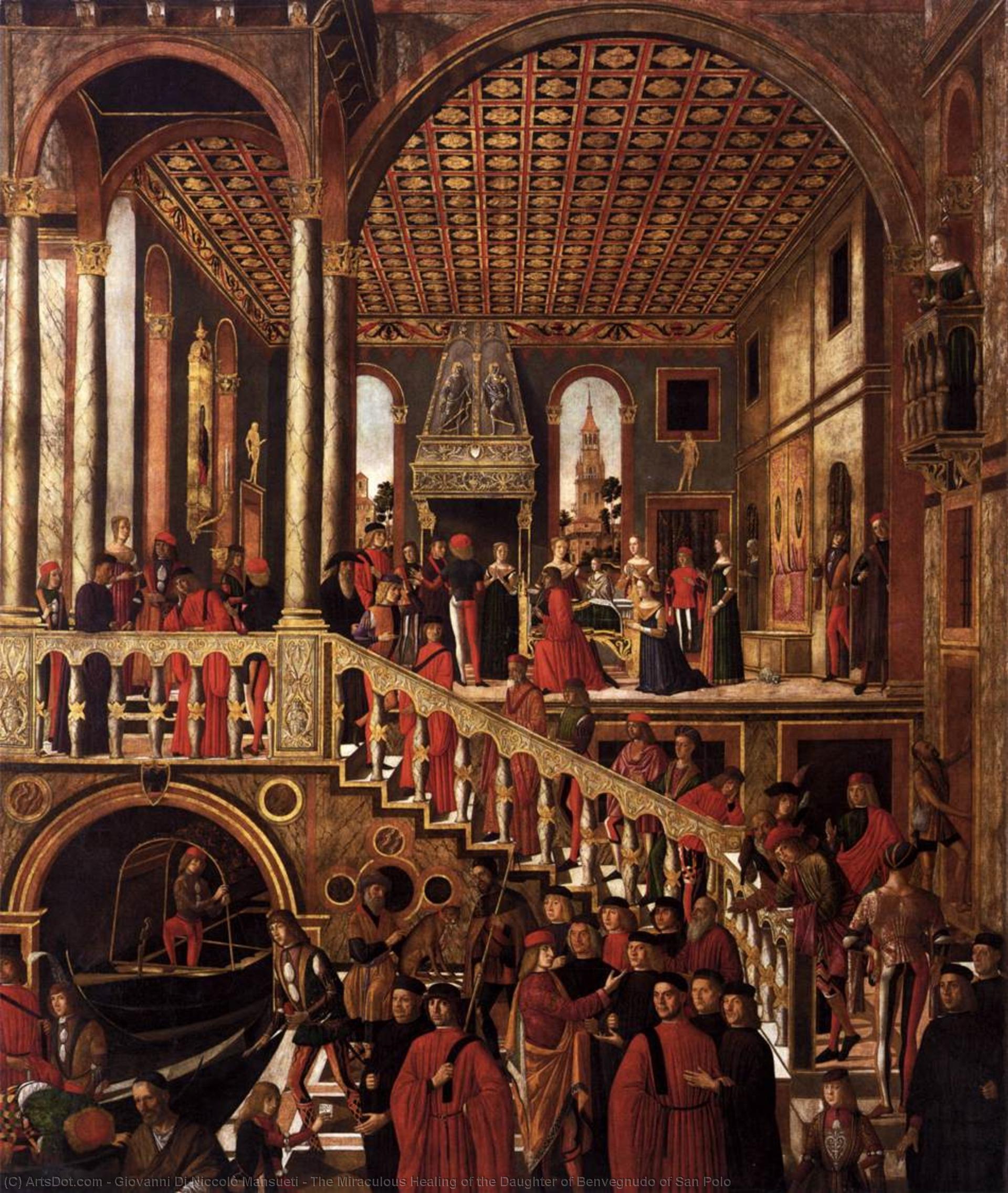
The Miraculous Healing of the Daughter of Benvegnudo of San Polo
 Fresco
- Renaissance
 1505
1505- Renaissance
 369.0 x 296.0 cm
 Galerije Akademija u Veneciji
 Pročitaj više
Ručno rađena uljana reprodukcija
Ručno oslikano uljanim bojama na platnu u dimenzijama i okviru po vašem izboru, izrađeno po porudžbini od strane naših umetnika. ( Kupi print Kupi digitalnu sliku)




































Izaberite jednu od naših unapred definisanih veličina koje odgovaraju originalnim proporcijama umetničkog dela.

Можете унети сопствене димензије како бисте прилагодили дело одређеном оквиру или простору. Ако одабрана величина не одговара пропорцијама оригинала, слика ће бити исечена или проширена додатним елементима који се ручно насликавају. Дигитални prikaz ће вам бити послат на одобрење пре почетка производње.
Имајте на уму да преглед на екрану не одражава стварно исецање или проширење. Само приказ (mockup) ће тачно приказати коначну композицију.
Иако су доступне прилагођене величине, препоручујемо да одаберете димензију из дефинисане листе како бисте сачували оригиналне пропорције.
Nakon narudžbine, tim ArtsDot.com će klijentu putem e-pošte poslati uputstva i dostaviti prikaz predloženog rešenja
Isporuka širom sveta () za 3/4 nedelje umesto uobičajenih 5 nedelja. (7 септембар). Bez kompromisa po pitanju kvaliteta.

Besplatna ekspresna dostava širom sveta

Visokokvalitetno laneno platno

Kompletno osiguranje transporta

Garancija povraćaja carine i uvoznih dažbina

Garancija vernosti boja

Politika povraćaja u roku od 100 dana (isključivo u slučaju nedostataka)

Garancija povrata novca od 100%

Popust pri grupnoj kupovini
 Opcija sa staklom dostupna je samo za dimenzije manje od 110 cm

The Miraculous Healing of the Daughter of Benvegnudo of San Polo
Tehnika reprodukcije
Dimenzije reprodukcije
-


Konačna cena
$ 263
The Divine Drama of Healing
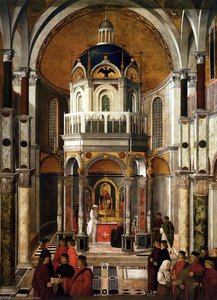
Before us unfolds a breathtaking vision, a monumental fresco capturing the profound moment of divine intervention: The Miraculous Healing of the Daughter of Benvegnudo of San Polo. This grand narrative scene is not merely a depiction of an event; it is an immersion into faith itself. One can almost feel the cool stone beneath the feet and hear the hushed awe of the assembled crowd. At its heart lies the radiant presence of Jesus Christ, whose touch promises restoration, drawing all gazes toward the miracle unfolding in this richly detailed sacred space.
The composition is a masterful orchestration of human emotion against an architectural backdrop of grandeur. Observe the figures gathered on the stairs near the center—a tableau vivant of anticipation and belief. Scattered throughout the foreground and receding into the background, countless individuals populate the scene, each face etched with varying degrees of hope, fear, and wonder. The inclusion of elements like the two visible boats adds a subtle layer of narrative depth, suggesting journeys both literal and spiritual that converge upon this single moment of grace.
A Venetian Masterpiece in Fresco Technique
Executed around 1505 by Giovanni di Niccolò Mansueti, this work showcases the painter's deep connection to the traditions of Venetian art while maintaining a distinct antique sensibility. While the scale—a commanding 369 x 296 cm—speaks to its original function as an imposing fresco, the meticulous detail visible even in reproduction speaks to Mansueti’s technical prowess. His handling of light and shadow across the ornate columns and arches lends an incredible sense of depth, pulling the viewer into the painted reality. The technique employed allows for both monumental scope and intimate focus on individual gestures.
Mansueti, known as a Venetian Master of Antiquity, seems to have drawn inspiration from the foundational masters, echoing the rich storytelling found in earlier Renaissance periods while imbuing it with a unique, almost timeless formality. This adherence to idealized forms gives the entire scene an elevated, enduring quality.
Symbolism and Spiritual Resonance
The symbolism woven into this fresco is deeply resonant for the art lover and the seeker of spiritual beauty alike. The healing itself represents more than just physical recovery; it symbolizes redemption, the triumph of divine love over suffering, and the unwavering power of faith to restore what was broken. The architecture surrounding the event acts as a visual metaphor for the Church—a grand structure built to house and transmit sacred truths. Every figure, every gesture, participates in this overarching narrative of salvation.
For the collector or designer considering bringing this piece into a modern setting, its inherent symbolism offers profound conversational depth. It speaks to themes of renewal, community support, and enduring hope—qualities that resonate across any era.
An Emotional Anchor for Any Space
To gaze upon this work is to be enveloped in an atmosphere of sublime tranquility mixed with dramatic tension. The emotional impact is immediate; it compels the viewer to pause, reflect, and connect with the universal human experience of vulnerability followed by miraculous restoration. Reproducing such a large-scale, emotionally charged piece allows one to curate a space that feels not just decorated, but consecrated—a place imbued with history, artistry, and enduring spiritual warmth.
Whether adorning a grand hall or serving as the focal point in a richly appointed room, this reproduction offers an unparalleled opportunity to own a fragment of Renaissance devotion, rendered with the breathtaking skill of Giovanni di Niccolò Mansueti.
Srodna umetnička dela
Biografija umetnika
The Enigmatic Legacy of Giovanni di Niccolò Mansueti
Within the golden age of the Venetian Renaissance, certain names flicker like candlelight in a vast cathedral—present, profound, yet partially obscured by the shadows of time. Giovanni di Niccolò Mansueti (c. 1465 – 1527) is precisely such a figure. A master whose brush captured the spiritual essence of Venice, Mansueti operated in an era of immense transition, where the rigid structures of the Middle Ages were yielding to the luminous humanism of the Renaissance. While biographical details regarding his early life remain sparse, his artistic identity is indelibly linked to the Venetian tradition, a lineage defined by color, light, and a profound devotion to sacred narrative.
The foundations of Mansueti’s artistry were laid under the watchful eye of Gentile Bellini, the titan of Venetian painting. From Bellini, Mansueti inherited more than just technical proficiency; he absorbed a specific way of seeing the world—a commitment to disegno and a mastery of glazing techniques that allowed light to permeate the layers of oil paint. This training instilled in him a reverence for classical ideals and an ability to render the divine through meticulous observation. While his contemporaries in Florence were racing toward a bold, muscular naturalism, Mansueti remained a steadfast guardian of the antique style, favoring a serene, idealized beauty that echoed the works of earlier masters like Cimabue and Carpaccio.
A Mastery of Sacred Narrative and Symbolism
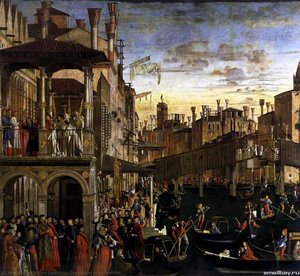
To encounter a work by Mansueti is to enter a space of quiet contemplation. His compositions are rarely mere illustrations of scripture; rather, they are carefully constructed theological meditations. He possessed a singular ability to weave complex religious symbolism into the very fabric of his landscapes and figures. In his celebrated depictions of miracles, such as the Miracle of the Relic of the Holy Cross in Campo San Lio, the artist utilizes subtle tonal gradations to elevate the mundane into the miraculous, guiding the viewer's eye through a landscape of profound spiritual significance.
His technical repertoire was characterized by several defining elements:
- Luminous Glazing: The use of thin, transparent layers of pigment to create an ethereal glow that seems to emanate from within the canvas.
- Devotional Precision: A meticulous approach to detail in religious iconography, ensuring that every saintly attribute and sacred object was rendered with clarity and reverence.
- Classical Serenity: An aesthetic preference for balanced, harmonious compositions that evoke a sense of eternal peace rather than dramatic tension.
In masterpieces such as the Adoration of the Kings, Mansueti captures moments of profound human devotion, blending the majesty of the royal visitors with a tender, intimate atmosphere. His work often serves as a bridge between the monumental scale of the High Renaissance and the delicate, ornamental beauty of the Venetian Quattrocento.
Historical Significance and Artistic Resonance
Though the passage of centuries has rendered much of his personal history lost to us, the historical significance of Giovanni di Niccolò Mansueti remains undeniable. He represents a vital link in the evolution of Venetian art, embodying the transition from the decorative traditions of the late 15th century to the more complex, atmospheric explorations of the 16th century. His refusal to abandon the antique style in favor of fleeting trends allowed him to create works that possess a timeless, almost otherworldly quality.
Today, Mansueti’s oeuvre stands as a testament to the enduring power of the Venetian school. His ability to evoke the divine through symbolic representation—as seen in his powerful interpretations of the Crucifixion—continues to captivate scholars and art lovers alike. He remains a master of the sacred, an artist who found the infinite within the details of the finite, leaving behind a legacy of light, faith, and unparalleled Venetian grace.

giovanni di niccolò mansueti
1465 - 1527 , Italy
Osnovne informacije
- Artistic Movement Or Style: Antique Style
- Artists Or Movements Influenced By This Artist: ['Cima da Conegliano']
- Artists Who Influenced This Artist: ['Gentile Bellini']
- Date Of Birth: c. 1465
- Date Of Death: March 26, 1527
- Full Name: Giovanni di Niccolò Mansueti
- Nationality: Italian
- Notable Artworks:
- Miracles of the Cross
- St Jerome in the Desert (detail)
- The Miraculous Healing of the Daughter of Benvegnudo
- Place Of Birth: Venice, Italy
Povezani članci

Porodična freska nasleđe: Očuvanje kulture i identiteta kroz zidno slikarstvo – Istorijski uvid za kolekcionare
Istražite bogatu istoriju zidnog slikarstva i njegov značaj za očuvanje kulture i porodičnog nasleđa. Ekskluzivni uvid za kolekcionare, restauratore i ljubitelje umetnosti. Saznajte više o tehnikama, vrednosti i budućnosti ove drevne veštine.

Giclée Prints: Archival Quality & Aesthetic Nuances for the Discerning Collector
Explore the world of giclée prints with ArtsDot. Learn about archival quality, aesthetic nuances & investment potential. Expert guidance for discerning art collectors seeking museum-quality reproductions and lasting value.

The Enduring Legacy of Fresco Painting: Techniques, History & Contemporary Relevance
Explore the rich history & enduring artistry of fresco painting – from Giotto to Michelangelo! Discover techniques, conservation efforts, & modern applications. Learn how ArtsDot brings this timeless art form to your home.

The Enduring Legacy of Fresco: Technique, History & Artistic Expression Across Cultures
Explore the rich history & enduring legacy of fresco painting! Discover ancient techniques, Giotto's masterpieces, and modern applications. Expert insights for art lovers & professionals.

Umetnička dela koja oživljavaju prostor: Emocionalna snaga personalizovane freske u enterijeru
Otkrijte emocionalnu snagu personalizovane freske! Ekskluzivni vodič o istoriji, tehnikama i primeni freski u luksuznom dizajnu enterijera. Kreirajte jedinstveno umetničko delo za vaš dom.