

 Pošalji
 Podeli
 Detalji o delu

 Преузми
 Slični predmeti
 Slajdovi
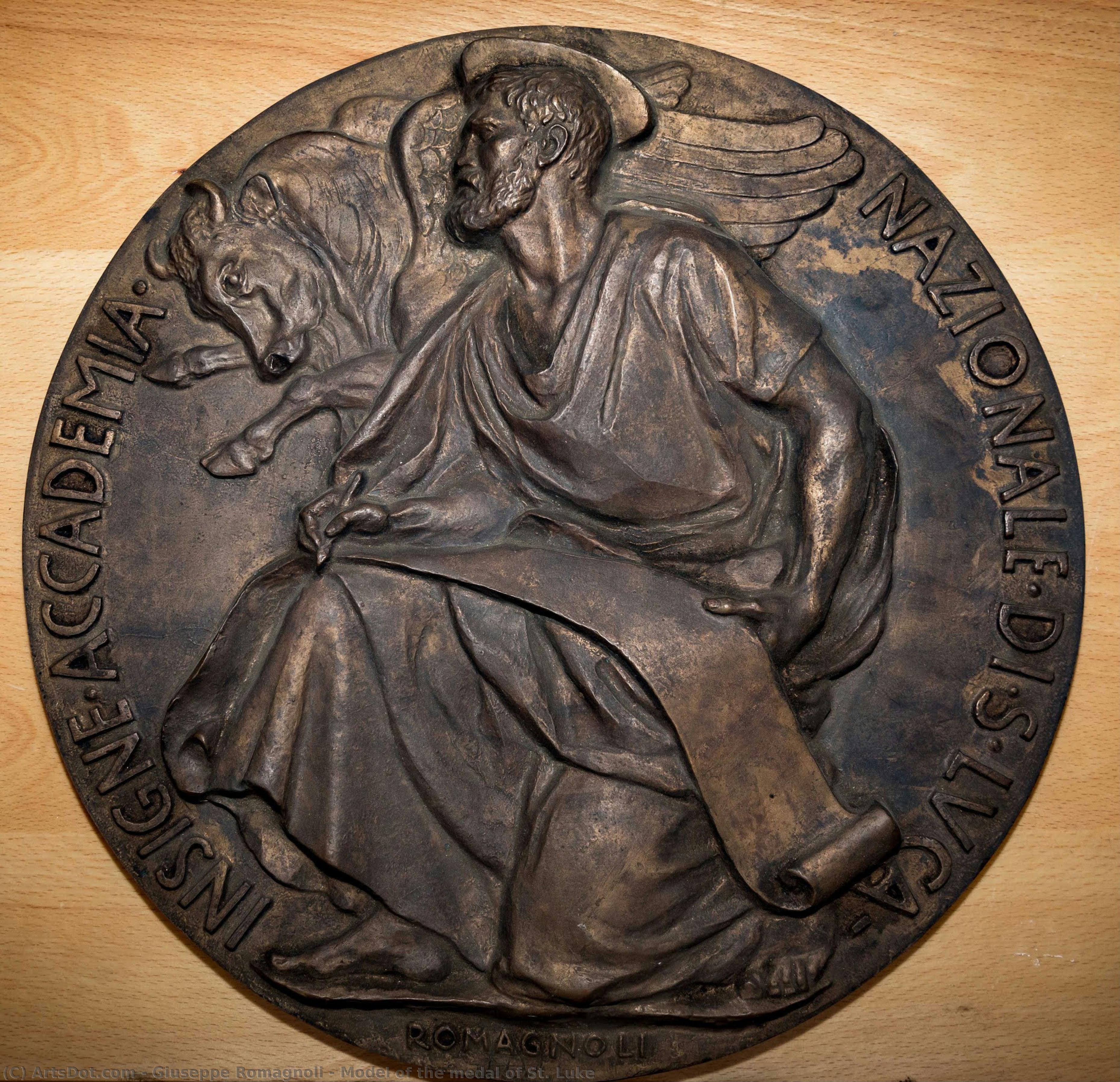
Model of the medal of St. Luke
 Sculpture Bronze
- Neoclassicism
 33.0 x 33.0 cm
 Accademia di San Luca
 Pročitaj više
Ručno rađena uljana reprodukcija
Ručno oslikano uljanim bojama na platnu u dimenzijama i okviru po vašem izboru, izrađeno po porudžbini od strane naših umetnika. ( Kupi print Kupi digitalnu sliku)




































Izaberite jednu od naših unapred definisanih veličina koje odgovaraju originalnim proporcijama umetničkog dela.

Можете унети сопствене димензије како бисте прилагодили дело одређеном оквиру или простору. Ако одабрана величина не одговара пропорцијама оригинала, слика ће бити исечена или проширена додатним елементима који се ручно насликавају. Дигитални prikaz ће вам бити послат на одобрење пре почетка производње.
Имајте на уму да преглед на екрану не одражава стварно исецање или проширење. Само приказ (mockup) ће тачно приказати коначну композицију.
Иако су доступне прилагођене величине, препоручујемо да одаберете димензију из дефинисане листе како бисте сачували оригиналне пропорције.
Nakon narudžbine, tim ArtsDot.com će klijentu putem e-pošte poslati uputstva i dostaviti prikaz predloženog rešenja
Isporuka širom sveta () za 3/4 nedelje umesto uobičajenih 5 nedelja. (23 август). Bez kompromisa po pitanju kvaliteta.

Besplatna ekspresna dostava širom sveta

Visokokvalitetno laneno platno

Kompletno osiguranje transporta

Garancija povraćaja carine i uvoznih dažbina

Garancija vernosti boja

Politika povrata u roku od 60 dana (samo u slučaju nedostataka)

Garancija povrata novca od 100%

Popust pri grupnoj kupovini
 Opcija sa staklom dostupna je samo za dimenzije manje od 110 cm

Model of the medal of St. Luke
Tehnika reprodukcije
Dimenzije reprodukcije
-


Konačna cena
$ 263
Opis umetničkog dela
Giuseppe Romagnoli’s ‘Model of the Medal of St. Luke’: A Renaissance Echo in Bronze
Giuseppe Romagnoli's “Model of the Medal of St. Luke” offers a captivating glimpse into the artistic sensibilities of early 20th-century Italy, a period marked by both reverence for classical traditions and an emerging embrace of modern aesthetics. Executed in dark brown patina bronze, this circular relief sculpture transcends mere representation; it’s a carefully constructed meditation on faith, inspiration, and the enduring legacy of St. Luke, the Evangelist. The artwork's dimensions – 33 x 33 cm – lend it an intimate scale, perfect for contemplation or as a focal point within a thoughtfully curated interior space. The piece immediately draws the eye with its meticulous detailing and the palpable sense of age imparted by the darkened bronze surface, hinting at centuries of observation and devotion.
- Subject Matter: The central theme revolves around St. Luke, traditionally depicted as the patron saint of physicians and artists. The seated figure, draped in classical robes reminiscent of Roman emperors or mythological heroes, embodies a sense of authority and wisdom.
- Composition: The circular medallion format elevates the subject to a symbolic level, suggesting wholeness, eternity, and the cyclical nature of divine inspiration.
- Material & Technique: Crafted from bronze – likely through subtractive sculpting – Romagnoli skillfully manipulated the material to achieve a remarkably textured surface. This technique isn’t merely decorative; it deliberately mimics the effects of aging, adding layers of historical depth and suggesting the sculpture has borne witness to countless prayers and reflections.
Renaissance Influences & Neoclassical Precision
Romagnoli's work is firmly rooted in the artistic currents of the Renaissance and Neoclassicism. The anatomical accuracy of the figures, particularly the musculature and drapery, reflects a deep understanding of classical sculpture – a hallmark of artists studying the works of Greek and Roman masters. The flowing robes, rendered with painstaking detail, evoke the grandeur of ancient civilizations while simultaneously conveying a sense of spiritual grace. The angel hovering above, with its large feathered wings and halo, is a classic representation of divine intervention, echoing motifs found in countless religious artworks throughout history. This careful blending of historical references speaks to Romagnoli’s commitment to both tradition and artistic innovation.
Symbolism & Narrative Depth
Beyond the literal depiction of St. Luke, the sculpture resonates with profound symbolic meaning. The scene likely represents divine inspiration or guidance – a core tenet of Christian belief. The inscription ‘INSIGNE ACCADEMIA’ (Noble Academy) further enhances this narrative, suggesting that St. Luke's work served as a model for artistic and intellectual pursuits. The use of light and shadow, carefully rendered to create soft, diffused effects, adds to the artwork’s emotional impact, guiding the viewer’s eye and emphasizing key elements within the composition. The overall effect is one of serene contemplation and spiritual reverence.
A Collector's Perspective
This limited-edition reproduction offers a unique opportunity to own a piece of art history. The meticulous attention to detail, combined with Romagnoli’s masterful use of bronze and patina, ensures that this artwork will remain a captivating addition to any collection or interior design scheme. Its timeless subject matter and classical style make it suitable for a wide range of settings – from formal studies to contemporary living spaces. The 33 x 33 cm size makes it ideal for smaller rooms or as a striking accent piece. Invest in a reproduction that captures the essence of this remarkable sculpture and bring its beauty and symbolism into your world.
Srodna umetnička dela
Biografija umetnika
Piet Mondrian: Architect of Abstraction
Piet Mondrian, a name synonymous with modern art’s radical shift towards abstraction, was far more than simply a painter; he was a theorist, an architect of visual language, and a fervent believer in the power of pure form to express universal truths. Born Pieter Cornelis Mondriaan on March 7th, 1872, in Amersfoort, Netherlands, his artistic journey began within a family steeped in both artistic tradition and conservative religious values – a duality that would profoundly shape his aesthetic philosophy. His father, a schoolmaster, instilled a disciplined approach to learning, while his uncle, a landscape painter, provided early guidance and encouragement. Mondrian’s early life was characterized by a quiet determination to pursue painting, a path initially discouraged by his family but ultimately embraced with unwavering resolve. This inherent drive, coupled with an acute sensitivity to color and form, laid the groundwork for his revolutionary artistic vision.Early Influences and Artistic Development
Mondrian’s formative years were marked by exposure to a diverse range of artistic styles. He initially trained at the Amsterdam Academy of Fine Arts, absorbing the techniques of landscape painting prevalent in the Hague School – a style that emphasized naturalistic representation. However, it was his encounter with Cubism in 1911 that proved transformative. The fragmented perspectives and geometric deconstruction of Picasso and Braque ignited within him a desire to move beyond mere imitation of reality and explore the underlying structure of visual experience. This pivotal moment marked a decisive break from traditional painting and set him on a path towards abstraction. He moved to Paris in 1914, immersing himself in the vibrant artistic scene and engaging with other avant-garde movements like Futurism and Constructivism. Crucially, he began experimenting with distilling his subjects – landscapes, buildings, even portraits – into their essential geometric components: straight lines, right angles, and primary colors.The Birth of Neo-Plasticism
Following the First World War, Mondrian refined his artistic vocabulary, developing what he termed “Neo-Plasticism” (also known as De Stijl). This wasn’t simply a style; it was a comprehensive aesthetic philosophy rooted in the belief that art could serve as a catalyst for social and spiritual renewal. He pared down his palette to just three primary colors – red, blue, and yellow – along with black, white, and gray, believing these hues represented the fundamental building blocks of all existence. He rejected any illusionistic representation, advocating instead for a purely abstract language composed solely of horizontal and vertical lines intersecting at right angles. This rigorous simplification aimed to create a visual harmony that transcended individual perception, reflecting an underlying order in the universe. The *De Stijl* group, co-founded by Mondrian and Theo van Doesburg, provided a crucial platform for disseminating his ideas and fostering collaboration within this radical artistic movement.Key Works and Theoretical Contributions
Mondrian’s most iconic works – including *Composition with Red, Blue and Yellow* (1930), *Broadway Boogie Woogie* (1942-43), and *Victory Boogie Woogie* (1942-44) – exemplify his commitment to pure abstraction. *Broadway Boogie Woogie*, for instance, captures the dynamism of urban life through a fractured grid of intersecting rectangles, while *Victory Boogie Woogie* reveals a more complex, rhythmically layered composition. Beyond painting, Mondrian explored architectural design and typography, applying his principles of geometric harmony to create buildings and publications that reflected his utopian vision. He wrote extensively on art theory, articulating his belief in the power of abstraction to reveal universal truths and achieve spiritual enlightenment. His writings emphasized the importance of reducing visual elements to their most essential forms, arguing that this process would liberate art from the constraints of representation and pave the way for a new era of aesthetic harmony.Legacy and Historical Significance
Piet Mondrian’s influence on 20th-century art is undeniable. His pioneering work in abstraction paved the way for countless artists who followed, including Mark Rothko, Barnett Newman, and Josef Albers. His rigorous approach to composition and his unwavering commitment to pure form continue to inspire artists today. He wasn't merely a painter; he was a visionary who sought to redefine the very nature of art and its relationship to reality. Mondrian died on February 1st, 1944, in New York City, leaving behind a legacy as one of the most important figures in modern art – an architect of abstraction whose work continues to resonate with audiences worldwide. His dedication to reducing visual elements to their purest form remains a powerful testament to the enduring potential of abstract art to communicate profound ideas and evoke deep emotional responses.
giuseppe romagnoli
1872 - 1966 , Italy
Osnovne informacije
- Artistic Movement Or Style: [Neo-Plasticism](https://artuk.org/discover/artists/mondrian-piet-18721944#)
- Artists Or Movements Influenced By This Artist:
- De Stijl
- Abstract art
- Artists Who Influenced This Artist:
- Cubism
- Theosophic Organization
- Date Of Birth: 7 March 1872
- Date Of Death: 1 February 1944
- Full Name: Pieter Cornelis Mondriaan
- Nationality: Dutch
- Notable Artworks:
- Composition with Red Blue and Yellow
- Broadway Boogie Woogie
- Victory Boogie Woogie
- Place Of Birth: Amersfoort, Netherlands
Povezani članci

Bronze Sculptures That Defined Art History | ArtsDot
Journey through art history with our Top 10 bronze sculptures! Explore masterpieces by Rodin, Michelangelo & more. Discover stories behind iconic statues and find museum-quality reproductions for your home decor at ArtsDot.com.

Bronze Age to Modern Masters: 10 Sculptures That Redefined Art | ArtsDot
Journey through art history with 10 legendary bronze sculptures – from Michelangelo's David to Rodin’s Thinker. Explore the stories, techniques & timeless beauty of these masterpieces. Find museum-quality reproductions & elevate your home decor on ArtsDot.com.

The Enduring Legacy of Bronze: A Historical & Artistic Exploration for the Collector
Explore the rich history & enduring appeal of bronze sculpture with expert insights for collectors at ArtsDot. Learn about casting techniques, iconic artists, collecting tips & contemporary interpretations.

The Enduring Legacy of Bronze: History, Technique & Artistic Expression for the Collector
Explore the rich history & enduring appeal of bronze sculpture with expert insights for collectors at ArtsDot. Learn about casting techniques, iconic artists, and collecting tips.

The Enduring Legacy of Bronze Sculpture: A Collector's Guide to Form & Cultural Significance
Explore the rich history & enduring appeal of bronze sculpture with expert insights for collectors at ArtsDot. Learn about casting techniques, iconic artists, and collecting tips to build a discerning art collection.

