

 Pregledaj u prostoru
 Pošalji
 Podeli
 Detalji o delu

 Преузми
 Slični predmeti
 Rendgenski snimak
 Slajdovi
 Stats
StatsMill Workers
 1939
1939 44.0 x 36.0 cm
 Pročitaj više
Ručno rađena uljana reprodukcija
Ručno oslikano uljanim bojama na platnu u dimenzijama i okviru po vašem izboru, izrađeno po porudžbini od strane naših umetnika. ( Switch to Print Switch to Digital Image)




































Izaberite jednu od naših unapred definisanih veličina koje odgovaraju originalnim proporcijama umetničkog dela.

Можете унети сопствене димензије како бисте прилагодили дело одређеном оквиру или простору. Ако одабрана величина не одговара пропорцијама оригинала, слика ће бити исечена или проширена додатним елементима који се ручно насликавају. Дигитални prikaz ће вам бити послат на одобрење пре почетка производње.
Имајте на уму да преглед на екрану не одражава стварно исецање или проширење. Само приказ (mockup) ће тачно приказати коначну композицију.
Иако су доступне прилагођене величине, препоручујемо да одаберете димензију из дефинисане листе како бисте сачували оригиналне пропорције.
Nakon narudžbine, tim ArtsDot.com će klijentu putem e-pošte poslati uputstva i dostaviti prikaz predloženog rešenja
Isporuka širom sveta () za 3/4 nedelje umesto uobičajenih 5 nedelja. (7 септембар). Bez kompromisa po pitanju kvaliteta.

Besplatna ekspresna dostava širom sveta

Visokokvalitetno laneno platno

Kompletno osiguranje transporta

Garancija povraćaja carine i uvoznih dažbina

Garancija vernosti boja

Politika povraćaja u roku od 100 dana (isključivo u slučaju nedostataka)

Garancija povrata novca od 100%

Popust pri grupnoj kupovini
 Opcija sa staklom dostupna je samo za dimenzije manje od 110 cm

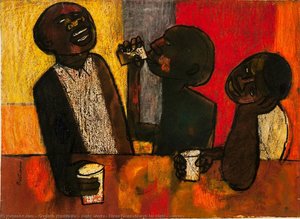
Mill Workers
Tehnika reprodukcije
Dimenzije reprodukcije
-


Konačna cena
$ 263
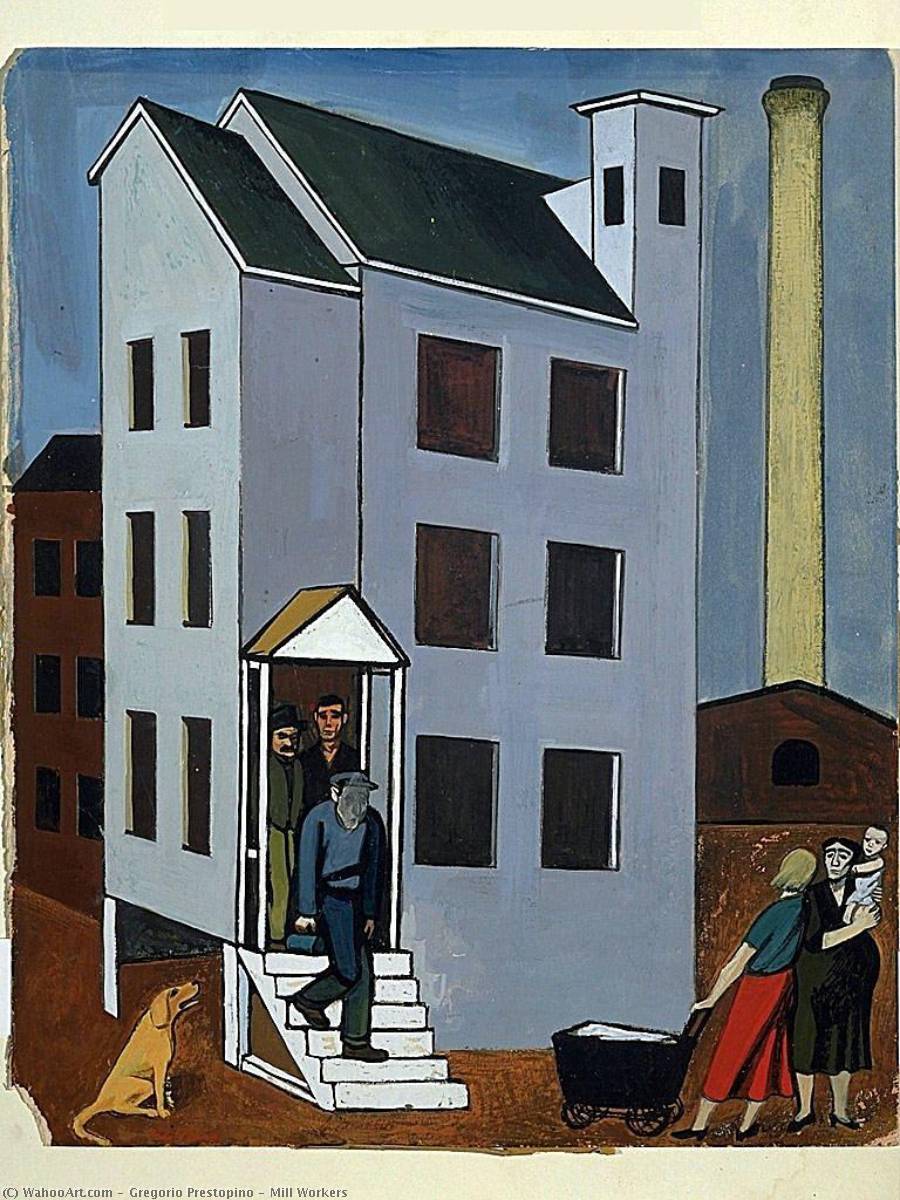
The scene depicts a group of people standing in front of a large building with many windows, giving it an industrial or commercial appearance. The overall atmosphere suggests that this could be a painting of workers from a mill or factory, gathered outside their workplace during a break or after completing their shift. A dog is also present in the painting, located near the left side of the image, adding a sense of warmth and humanity to the scene.
Artistic Style and Technique
Gregorio Prestopino's use of gouache as a medium adds a unique texture and depth to the painting. The bold lines and vibrant colors used in the artwork create a sense of energy and movement, drawing the viewer's eye to the central figures. The artist's attention to detail is also evident in the intricate depiction of the building's architecture and the workers' clothing.Some notable works by Gregorio Prestopino include Rock and Pine, which can be found on /art/list/?Filter=AQZSYW-Gregorio-Prestopino-Rock-and-Pine. For more information on the artist and his works, visit /art/list/?Filter=gregorio+prestopino,gregorio,prestopino&.
Conclusion
The painting Mill Workers by Gregorio Prestopino is a powerful representation of the lives of workers during the 1930s. The artwork's use of gouache and bold lines creates a sense of energy and movement, while the attention to detail adds depth and texture to the scene. As a handmade oil painting reproduction specialist, https://ArtsDot.com offers a unique opportunity to own a piece of art history. Visit our website to explore more artworks by Gregorio Prestopino and other notable artists.- View Mill Workers on /art/list/?Filter=AQZSYG-Gregorio-Prestopino-Mill-Workers
- Learn more about Gregorio Prestopino on /art/list/?Filter=gregorio+prestopino,gregorio,prestopino&
- Discover more artworks at the Smithsonian American Art Museum on /art/list/?Filter=smithsonian+american+art+museum,smithsonian,american,museum&
Srodna umetnička dela







Biografija umetnika
The Soul of the City: The Life and Legacy of Gregorio Prestopino
In the vibrant, crowded streets of New York City’s Little Italy, a profound artistic vision began to take shape. Born in 1907 to Italian immigrants Antonino Prestopini and Letteria Rando, Gregorio Prestopino was destined to become one of the most poignant chroniclers of the American urban experience. His early years were marked by a precocious talent that earned him a scholarship to the prestigious National Academy of Design. It was here, under the mentorship of figures like Charles Hawthorne, that Prestopino developed a rigorous foundation in observation. This training did more than teach him how to render form; it instilled in him a deep reverence for the minute details of life, a quality that would later allow him to transform the mundane activities of city dwellers into profound meditations on the human condition.
As his style matured, Prestopino moved away from the soft edges of Impressionism toward the gritty, unvarnished truth of Social Realism. He found kinship with the Ashcan School, drawing inspiration from the unflinching depictions of laborers and marginalized communities seen in the works of Reginald Marsh. His canvases became windows into the heart of the Great Depression, capturing the heavy atmosphere of industrial life and the quiet dignity of the working class. In masterpieces such as Mill Workers, created in 1939, he utilized the textured depth of gouache to portray the collective spirit of those gathered outside factory gates, blending a sense of social urgency with an intimate, almost tender, observation of everyday struggle.
A Mastery of Light and Shadow
The trajectory of Prestopino’s career reached a transformative milestone in 1972 when he was awarded the prestigious Rome Prize. This period of immersion in European art history allowed him to refine his technical command, particularly through the study of chiaroscuro. By mastering the dramatic interplay between light and shadow, he infused his later works with a theatrical intensity that elevated his subjects beyond mere reportage. Whether painting a bustling street scene or a solitary figure, Prestopino used light to sculpt emotion, creating a sense of depth that was both physical and psychological.
His artistic evolution also saw him embracing more expressive modes, blending the boundaries between realism and modernism. In works like Brown Brook, one can witness a shift toward bolder colors and geometric forms, where the energy of Expressionism meets a structured, modern sensibility. This versatility allowed him to remain relevant across decades of shifting aesthetic trends, moving from the stark social commentary of the 1930s to the more complex, textured landscapes of his later years.
The Harlem Studio and Historical Significance
Perhaps the most evocative chapter of Prestopino’s life was his time spent in Harlem. Establishing a studio in this culturally rich neighborhood, he became an integral part of the local artistic fabric. His presence was so deeply felt that filmmakers John Hubley and Faith Elliot famously captured the immediacy of his process in the film Harlem Wednesday, documenting the artist as he worked directly before his canvases. This period solidified his reputation as a painter who did not merely observe the city from a distance but lived within its pulse, capturing the very essence of urban humanity.
Prestopino’s significance lies in his refusal to abandon the human image during an era when much of the art world was turning toward total abstraction. Alongside contemporaries like Ben Shahn and Philip Evergood, he championed a way of seeing that honored the figure and the social reality it inhabited. His legacy is preserved in the permanent collections of institutions such as the Smithsonian American Art Museum, where his works continue to resonate with their characteristic warmth, honesty, and enduring truth.
gregorio prestopino
1907 - 1984
Osnovne informacije
- Artistic Movement Or Style: American Realism; Expressionism
- Artists Or Movements Influenced By This Artist:
- Ben Shahn
- Philip Evergood
- Artists Who Influenced This Artist:
- Charles Hawthorne
- French Impressionists
- Date Of Birth: June 21, 1907
- Date Of Death: December 19, 1984
- Full Name: Gregorio Prestopino
- Nationality: American
- Notable Artworks:
- Mill Workers
- Grey Wind
- Supper in Bethlehem
- Place Of Birth: New York City, United States