

 Pregledaj u prostoru
 Pošalji
 Podeli
 Detalji o delu

 Преузми
 Slični predmeti
 Rendgenski snimak
 Slajdovi
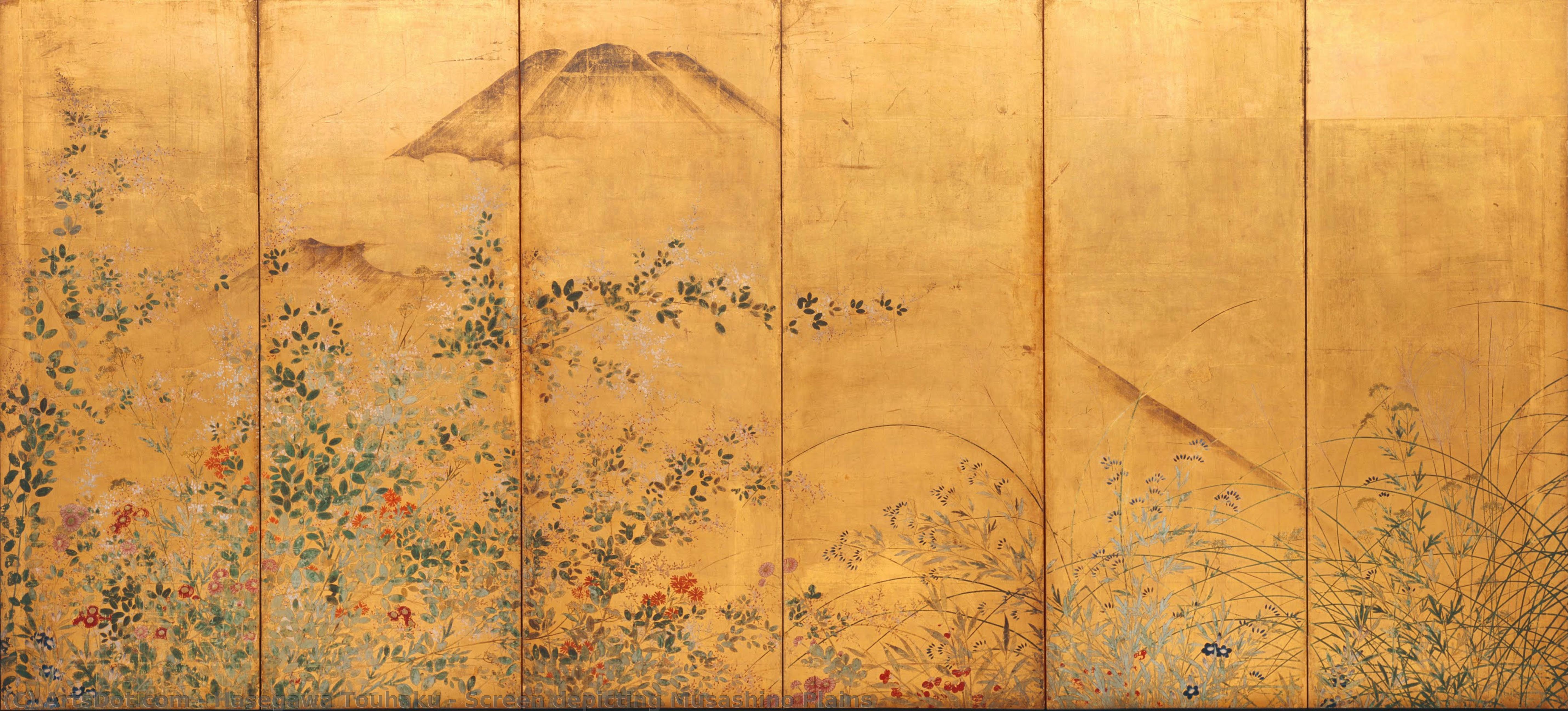
Screen depicting Musashino Plains
 Ink
Ink- WallArt
 Early Modern
 367.0 x 165.0 cm
 Iwami Art Museum
 Pročitaj više
Kupite digitalnu sliku visoke rezolucije i poboljšanog kvaliteta, koja je znatno superiornija od onoga što vidite u online prikazu.
Svaka datoteka je pedantno pripremljena od strane naših stručnjaka koristeći napredne alate i profesionalnu ručnu retušu. Osiguravamo da svaka slika ima izuzetnu oštrinu, preciznu reprodukciju boja i fine detalje.
Konačna datoteka se dostavlja putem e-pošte u roku od 72 sata, optimizovana za neposrednu upotrebu u profesionalnim, izdavačkim i štamparskim okruženjima. To je isti kvalitet kojem veruju vrhunski studiji dizajna, izdavači i galerije.
Digitalna slika
Preuzmite datoteku visoke rezolucije za ličnu upotrebu, štampanje i kreativne projekte. ( Kupi print Kupi ručno naslikanu sliku)
Uključeno uz svaku porudžbinu digitalne slike
Profesionalna digitalna isporuka, zagarantovana
Kada odaberete ArtsDot.com, ne dobijate samo sliku – vi primate profesionalno unapređeno digitalno umetničko delo, izrađeno sa najvećom preciznošću i uz garanciju zadovoljstva. Evo svega što automatski dolazi uz vašu porudžbinu:

Brza dostava putem e-pošte
Vaša digitalna slika visoke rezolucije biće vam poslata putem e-pošte u roku od 72 sata od poručivanja – spremna za trenutnu upotrebu.

Digitalna datoteka unapređena veštačkom inteligencijom
Vaše umetničko delo je profesionalno optimizovano korišćenjem naprednih AI alata i ručne obrade, čime se osiguravaju maksimalni detalji, oštrina i preciznost boja.

Besplatna ponovna isporuka doživotno
Slučajno ste obrisali ili izgubili svoju datoteku? Ne brinite – poslaćemo vam je ponovo u bilo kom trenutku, potpuno besplatno.

Bez troškova uvoza – zauvek
Uživajte u svojim umetničkim delima trenutno, bez carine, dažbina ili troškova dostave – digitalni download je uvek bez poreza.

Garancija vernosti boja
Uz pomoć profesionalnih alata i upravljanja bojama, osiguravamo da vaša digitalna slika što vernije odražava originalne boje.

Garancija zadovoljstva u roku od 60 dana
Ako niste zadovoljni svojom digitalnom slikom, revidirat ćemo je ili vratiti 100% novca u roku od 60 dana – bez ikakvih pitanja.

100% garancija povrata novca
Niste zadovoljni? Obezbedite pun povrat novca u roku od 60 dana od trenutka kada ste primili svoju digitalnu datoteku – bez suvišnih pitanja.

Popusti na velike porudžbine
Kupite 3 slike, uštedite 10% - Kupite 5 slika, uštedite 15% - Kupite 10+ slika, uštedite 20%. Odlično za kreativne projekte, galerije i agencije.
Srodna umetnička dela
Biografija umetnika
Hasegawa Tohaku: A Master of Serene Landscapes and the Dawn of Rinpa
Hasegawa Tohaku, a name synonymous with understated elegance and profound observation, stands as one of the most pivotal figures in Japanese art history. Born Okumura Tōhaku in 1539 during the tumultuous era of the Sengoku period, he navigated a landscape of war and upheaval to become a foundational artist of the Rinpa school – a movement that would dramatically reshape the aesthetic sensibilities of Japan for centuries to come. More than just a painter, Tohaku was a meticulous scholar of Chinese art, a master of ink techniques, and a subtle innovator who quietly redefined the boundaries of Japanese landscape painting.
His early life remains somewhat shrouded in mystery, though it’s believed he began his artistic journey as a Buddhist icon painter in Noto Province. This formative period instilled within him a deep respect for tradition and a rigorous approach to technique – qualities that would later inform his distinctive style. Crucially, he apprenticed himself to the influential Kanō school, absorbing their sophisticated methods of perspective, color theory, and brushwork. However, Tohaku wasn’t merely a mimic; he skillfully integrated these influences with his own burgeoning artistic vision, forging a unique path that ultimately diverged from the more rigidly formal approach of the Kanō school.
The Rise to Prominence: Kyoto and the Patronage of Power
Around 1571, Tohaku relocated to Kyoto, the cultural heart of Japan, seeking opportunities within the burgeoning artistic circles. It was here that he gained recognition as a court painter, securing commissions from powerful figures like Toyotomi Hideyoshi, the ambitious warlord who would later become Shogun. These commissions – particularly the monumental *Shoheki-ga* (wall paintings) for the Daitoku-ji Temple – showcased his ability to synthesize traditional techniques with innovative composition and a keen understanding of spatial relationships. The scale and ambition of these works demonstrated Tohaku’s growing confidence and established him as a leading artist of his time.
His relationship with Sen no Rikyu, the legendary tea master who profoundly influenced Japanese aesthetics, further elevated his status. Rikyu recognized Tohaku's ability to capture the essence of nature – not through dramatic grandeur, but through subtle details and an appreciation for quiet beauty. This shared sensibility would become a defining characteristic of the Rinpa school, which sought to emulate this understated elegance.
A Distinctive Style: Simplicity, Observation, and the Essence of Nature
Tohaku’s artistic style is immediately recognizable by its remarkable simplicity and profound observation. Unlike many of his contemporaries who favored elaborate detail and vibrant colors, Tohaku masterfully employed a restrained palette – primarily consisting of shades of gray, brown, and black – to create atmospheric landscapes that exude serenity and tranquility. His brushwork is characterized by its fluidity and economy; he used minimal strokes to convey the essence of his subjects with remarkable precision.
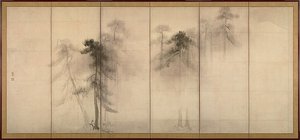
His most celebrated works—the iconic “Pine Trees” (1500), a triptych exploring the interplay of light, shadow, and texture, and the evocative “Eight Views of Ōmi” – exemplify this approach. These paintings are not merely depictions of landscapes; they are meditations on nature’s inherent beauty and the fleeting passage of time. The subtle variations in tone, the delicate rendering of foliage, and the suggestion of depth create a sense of immersive realism that invites contemplation.
- Pine Trees: A triptych showcasing the interplay of light and shadow on pine trees, demonstrating Tohaku’s mastery of *sumi-e* (ink wash painting).
- Eight Views of Ōmi: A series of landscapes capturing the diverse beauty of the region of Ōmi (present-day Shiga Prefecture), reflecting a deep understanding of topography and seasonal changes.
Legacy and Influence: The Foundation of Rinpa
Hasegawa Tohaku’s influence extends far beyond his own lifetime. He is widely considered the founder of the Rinpa school, a movement that profoundly impacted Japanese art for centuries to come. Rinpa artists, building upon Tohaku's principles, rejected the rigid conventions of traditional painting and embraced a more naturalistic approach – emphasizing observation, simplification, and the exploration of light and shadow.
His legacy is firmly established through numerous national treasures, including “Pine Trees” and “Eight Views of Ōmi,” which are housed in museums across Japan. Tohaku’s work continues to inspire artists and art lovers alike, serving as a testament to the power of simplicity, observation, and the enduring beauty of the natural world. His quiet revolution transformed Japanese painting, leaving an indelible mark on its history and shaping the aesthetic sensibilities of generations to come.
Key Achievements
- Founder of the Rinpa School: Established a new artistic movement emphasizing simplicity, observation, and naturalism.
- Master of *Sumi-e*: Perfected the art of ink wash painting, utilizing subtle variations in tone to create atmospheric landscapes.
- Innovative Composition: Developed unique compositional techniques that prioritized clarity, balance, and a sense of spatial depth.
- National Treasures: His works, including “Pine Trees” and “Eight Views of Ōmi,” are recognized as national treasures of Japan.
hasegawa touhaku
1539 - 1610

