

 Pregledaj u prostoru
 Pošalji
 Podeli
 Detalji o delu

 Преузми
 Slični predmeti
 Rendgenski snimak
 Slajdovi
 Stats
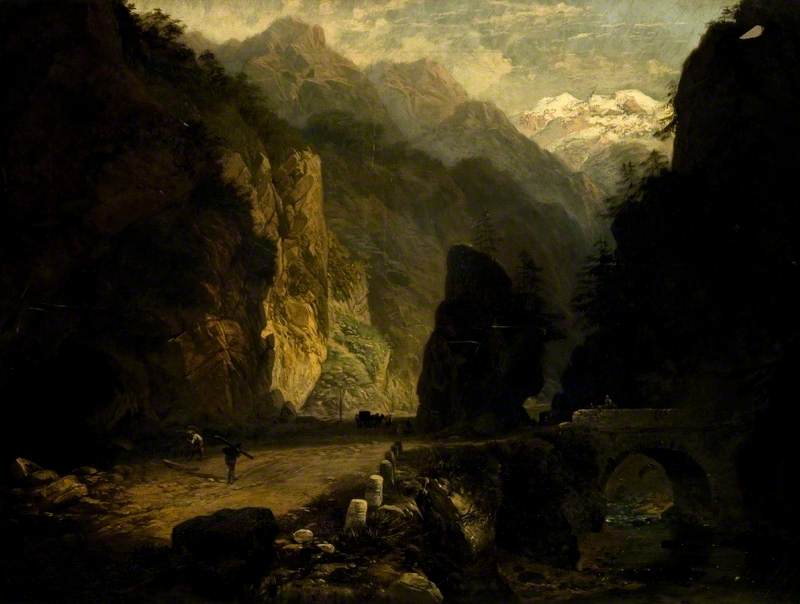
StatsThe Pass of the Simeron, Switzerland
 46.0 x 61.0 cm
 Pročitaj više
Ručno rađena uljana reprodukcija
Ručno oslikano uljanim bojama na platnu u dimenzijama i okviru po vašem izboru, izrađeno po porudžbini od strane naših umetnika. ( Switch to Print Switch to Digital Image)




































Izaberite jednu od naših unapred definisanih veličina koje odgovaraju originalnim proporcijama umetničkog dela.

Можете унети сопствене димензије како бисте прилагодили дело одређеном оквиру или простору. Ако одабрана величина не одговара пропорцијама оригинала, слика ће бити исечена или проширена додатним елементима који се ручно насликавају. Дигитални prikaz ће вам бити послат на одобрење пре почетка производње.
Имајте на уму да преглед на екрану не одражава стварно исецање или проширење. Само приказ (mockup) ће тачно приказати коначну композицију.
Иако су доступне прилагођене величине, препоручујемо да одаберете димензију из дефинисане листе како бисте сачували оригиналне пропорције.
Nakon narudžbine, tim ArtsDot.com će klijentu putem e-pošte poslati uputstva i dostaviti prikaz predloženog rešenja
Isporuka širom sveta () za 3/4 nedelje umesto uobičajenih 5 nedelja. (8 септембар). Bez kompromisa po pitanju kvaliteta.

Besplatna ekspresna dostava širom sveta

Visokokvalitetno laneno platno

Kompletno osiguranje transporta

Garancija povraćaja carine i uvoznih dažbina

Garancija vernosti boja

Politika povraćaja u roku od 100 dana (isključivo u slučaju nedostataka)

Garancija povrata novca od 100%

Popust pri grupnoj kupovini
 Opcija sa staklom dostupna je samo za dimenzije manje od 110 cm

The Pass of the Simeron, Switzerland
Tehnika reprodukcije
Dimenzije reprodukcije
-


Konačna cena
$ 263
Srodna umetnička dela









Biografija umetnika
The Visionary Chronicler of an Era
In the vibrant, shifting landscape of nineteenth-century Britain, few artists possessed the ability to capture the grand scale of human ambition and historical drama quite like Henry Courtney Selous. Born in London in 1803, Selous was a child of the arts, the son of the Flemish miniature painter Gideon Slous. His early years were steeped in the meticulous discipline of portraiture, yet his spirit yearned for something far more expansive than the intimate confines of a small canvas. This precocious talent led him to the Royal Academy Schools at the tender age of fourteen, where he honed a rigorous classical foundation, studying the human form with an intensity that would later define his ability to render dynamic, heroic figures in motion.
Selous’s artistic journey was one of constant evolution and remarkable versatility. While he began his career exhibiting animal portraits and human likenesses under his original family name, Slous, he eventually transitioned into the more sweeping realms of illustration and lithography. His early work as an illustrator for literary classics—ranging from the tempestuous worlds of Shakespeare to the spiritual journeys in The Pilgrim's Progress—demonstrated a profound capacity for narrative depth. He did not merely illustrate text; he breathed life into the written word, creating visual echoes of the epic themes that captivated the Victorian imagination.
Mastery of the Epic and the Historical
As his career matured, Selous moved away from the intimate and toward the monumental. He became a master of the panorama, working on vast canvases that offered audiences a sense of immersive spectacle. This period of his life was marked by an extraordinary ability to synthesize historical accuracy with dramatic flair. His work often served as a visual bridge between the past and the present, capturing the zeitgeist of a nation undergoing profound transformation. One cannot discuss his legacy without mentioning his most celebrated achievement: The Opening of the Great Exhibition (1851). This imposing oil painting, now held in the Victoria & Albert Museum, stands as a definitive visual record of a landmark moment in human history, capturing the grandeur and technological optimism of the age.
Beyond the spectacle of the exhibition, Selous found profound inspiration in the heroic and the legendary. His brush was equally adept at depicting the ferocity of battle and the solemnity of religious devotion. Whether he was rendering the intense energy of a military charge or the quiet majesty of the Holy Land following his travels, his work remained anchored by a deep respect for the human figure. This skill allowed him to participate in the great tradition of history painting, providing a visual counterpoint to the more domestic and introspective art movements of his time.
A Legacy Written in Light and Line
The significance of Henry Courtney Selous lies not only in his individual masterpieces but in his role as a chronicler of the Victorian soul. To look upon his work is to witness the era's fascination with progress, empire, and the enduring power of myth. His ability to navigate between the delicate precision of lithography and the sweeping drama of large-scale oil painting allowed him to reach a wide audience, from the elite collectors of the Royal Academy to the burgeoning middle class who found solace in his beautifully illustrated books.
Though much of his work was obscured by the shifting tides of art history, the enduring impact of his "illustrative genius" remains undeniable. He left behind a body of work that serves as a window into a world of grand ambitions and epic narratives. His life, which concluded in Devon in 1890, was a testament to the power of artistic versatility—a journey from the small, focused details of a miniature painter's studio to the vast, breathtaking horizons of historical legend.
Osnovne informacije
- Artistic Movement Or Style: Historical painting, Illustration
- Artists Who Influenced This Artist:
- Gideon Slous
- John Martin
- Date Of Birth: April 25, 1803
- Date Of Death: September 24, 1890
- Full Name: Henry Courtney Selous
- Nationality: English
- Notable Artworks:
- The Opening of the Great Exhibition
- King Alfred Submitting his Code of Law
- Place Of Birth: London, England