

 Pregledaj u prostoru
 Pošalji
 Podeli
 Detalji o delu

 Преузми
 Slični predmeti
 Rendgenski snimak
 Slajdovi
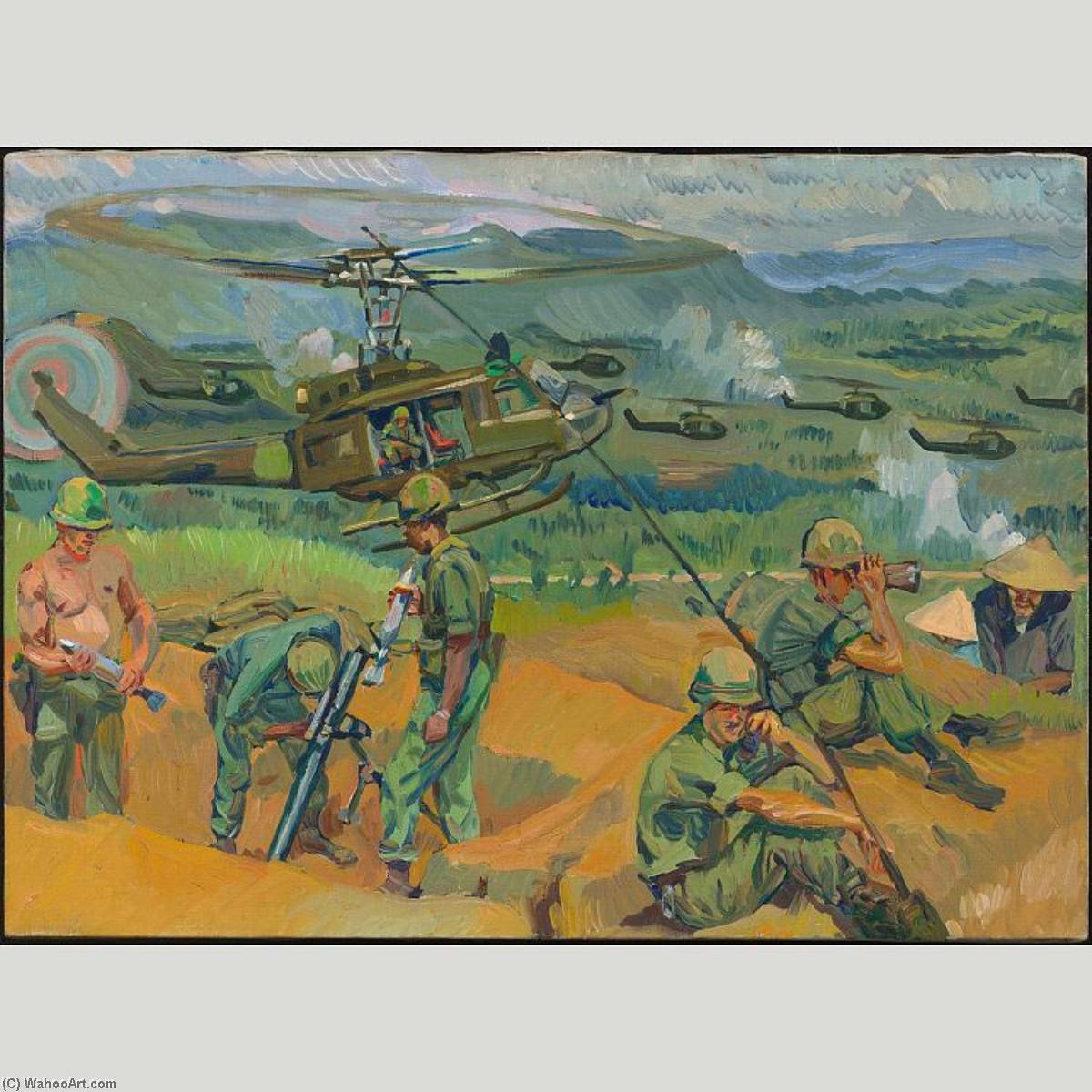
U.S. Build up in Vietnam

 Pročitaj više
Kupite digitalnu sliku visoke rezolucije i poboljšanog kvaliteta, koja je znatno superiornija od onoga što vidite u online prikazu.
Svaka datoteka je pedantno pripremljena od strane naših stručnjaka koristeći napredne alate i profesionalnu ručnu retušu. Osiguravamo da svaka slika ima izuzetnu oštrinu, preciznu reprodukciju boja i fine detalje.
Konačna datoteka se dostavlja putem e-pošte u roku od 72 sata, optimizovana za neposrednu upotrebu u profesionalnim, izdavačkim i štamparskim okruženjima. To je isti kvalitet kojem veruju vrhunski studiji dizajna, izdavači i galerije.
Digitalna slika
Preuzmite datoteku visoke rezolucije za ličnu upotrebu, štampanje i kreativne projekte. ( Kupi print Kupi ručno naslikanu sliku)
Uključeno uz svaku porudžbinu digitalne slike
Profesionalna digitalna isporuka, zagarantovana
Kada odaberete ArtsDot.com, ne dobijate samo sliku – vi primate profesionalno unapređeno digitalno umetničko delo, izrađeno sa najvećom preciznošću i uz garanciju zadovoljstva. Evo svega što automatski dolazi uz vašu porudžbinu:

Brza dostava putem e-pošte
Vaša digitalna slika visoke rezolucije biće vam poslata putem e-pošte u roku od 72 sata od poručivanja – spremna za trenutnu upotrebu.

Digitalna datoteka unapređena veštačkom inteligencijom
Vaše umetničko delo je profesionalno optimizovano korišćenjem naprednih AI alata i ručne obrade, čime se osiguravaju maksimalni detalji, oštrina i preciznost boja.

Besplatna ponovna isporuka doživotno
Slučajno ste obrisali ili izgubili svoju datoteku? Ne brinite – poslaćemo vam je ponovo u bilo kom trenutku, potpuno besplatno.

Bez troškova uvoza – zauvek
Uživajte u svojim umetničkim delima trenutno, bez carine, dažbina ili troškova dostave – digitalni download je uvek bez poreza.

Garancija vernosti boja
Uz pomoć profesionalnih alata i upravljanja bojama, osiguravamo da vaša digitalna slika što vernije odražava originalne boje.

Garancija zadovoljstva u roku od 60 dana
Ako niste zadovoljni svojom digitalnom slikom, revidirat ćemo je ili vratiti 100% novca u roku od 60 dana – bez ikakvih pitanja.

100% garancija povrata novca
Niste zadovoljni? Obezbedite pun povrat novca u roku od 60 dana od trenutka kada ste primili svoju digitalnu datoteku – bez suvišnih pitanja.

Popusti na velike porudžbine
Kupite 3 slike, uštedite 10% - Kupite 5 slika, uštedite 15% - Kupite 10+ slika, uštedite 20%. Odlično za kreativne projekte, galerije i agencije.
Opis kolekcionarskog dela
The Painting's Composition and Meaning
The painting depicts a scene of military men in uniforms, with some standing and others sitting on the ground. The presence of helicopters in the background adds a sense of dynamism to the composition. The use of bold colors and brushstrokes creates a sense of energy and tension, reflecting the turmoil of the Vietnam War era. The Hirshhorn Museum and Sculpture Garden in the United States is home to this remarkable painting.Artist's Style and Influences
Henry Koerner's style is characterized by his use of vibrant colors and expressive brushstrokes. His work is often compared to that of other notable artists, such as Pablo Picasso and Alice Neel. The influence of Cubism and Abstract Expressionism can be seen in his paintings, which often feature bold geometric shapes and emotive colors.- U.S. Build up in Vietnam is a significant work in Henry Koerner's oeuvre, showcasing his ability to capture the essence of a moment in time.
- The painting's composition and use of color reflect the turmoil and uncertainty of the Vietnam War era.
- Henry Koerner's style is characterized by his use of vibrant colors and expressive brushstrokes, influenced by Cubism and Abstract Expressionism.
The painting "U.S. Build up in Vietnam" is a testament to Henry Koerner's skill as an artist and his ability to capture the essence of a moment in time. As a significant work in his oeuvre, it continues to inspire and captivate art enthusiasts around the world.
Srodna umetnička dela









Biografija umetnika
Henry Koerner: Echoes of Trauma and a Surrealist Vision
Born in Vienna, Austria, in 1915 – though often identified as August 28th – to Jewish parents, Leo Körner and Feige Dwora Mager, Henry Koerner’s life was profoundly shaped by the tumultuous events of the 20th century. His early years were marked by a vibrant artistic environment; his father, a renowned architect and designer, instilled in him an appreciation for form and function, while his aunt, Sophie Körner, a painter and printmaker, nurtured his creative spirit. Training at Vienna’s Graphische Lehr- und Versuchsanstalt (graphic design school) under Viktor Theodor Slama, Koerner honed his skills in poster design and book illustration – a foundation that would later inform his distinctive visual language. However, the rise of Nazism irrevocably altered his trajectory, forcing him to flee Austria in 1938, embarking on a harrowing journey through Italy before finally settling in New York City in 1940, where he married Viennese-born Fritzi Apfel.
Early Career and the Impact of War
Initially finding work as a commercial artist for Maxwell Bauer Studios in Manhattan, Koerner quickly established himself as a talented poster designer. His early successes – first prize from the American Society of the Control of Cancer Poster Competition and two first prizes from the National War Poster Competition – demonstrated his ability to capture attention and convey powerful messages through visual imagery. Crucially, he found himself immersed in the vibrant artistic community of wartime New York, surrounded by fellow creatives grappling with the realities of conflict. This period was profoundly influenced by the work of Ben Shahn, Bernard Perlin, and David Stone Martin, all of whom were employed at the Office of War Information’s graphics division. Shahn's dynamic, emotionally charged style, combined with the stark photography of Walker Evans and the influence of German Neue Sachlichkeit painters like Otto Dix – known for their unflinching depictions of social realities – became a cornerstone of Koerner’s artistic development.
Magical Realism and the Trauma of Displacement
Koerner's most significant work emerged during World War II, fueled by his own experiences as an émigré and the devastating loss he would later endure. His paintings began with a deeply personal subject: “My Parents I” (1944), a haunting rendering of his family home in Vienna – a poignant symbol of a lost past and a testament to the enduring power of memory. This marked the beginning of his exploration into what became known as "Magical Realism," a style characterized by dreamlike imagery, symbolic narratives, and an unsettling blend of reality and fantasy. Drafted into the U.S. Army in 1944, Koerner was assigned to the Office of Strategic Services (OSS), documenting the war effort through posters and sketches. His work for the OSS included “Save Waste Fats” and “Someone Talked,” the latter earning an award from the Museum of Modern Art. His time in London involved meticulously capturing everyday life amidst the chaos of wartime, sketching scenes of resilience and quiet desperation.
Nuremberg Trials and Post-War Reflections
Following VE Day, Koerner was reassigned to Germany, working in Wiesbaden and Berlin. A particularly poignant aspect of his post-war work involved documenting the Nuremberg trials, sketching the defendants – a stark reminder of the atrocities committed during the conflict. However, it was upon his return to Vienna in 1946 that Koerner faced an unimaginable tragedy: the discovery that his parents and siblings had been murdered in the Holocaust. This devastating revelation profoundly impacted his artistic vision, shifting his focus from documenting external events to exploring the internal landscape of trauma, memory, and loss. His paintings from this period – “My Parents II,” “The Skin of Our Teeth,” and “Mirror of Life” – are imbued with a palpable sense of grief and a haunting exploration of the psychological scars left by war and genocide. These works were exhibited in Berlin in 1947, marking the first major exhibition of American modern art in post-war Germany and sparking considerable debate about the nature of his artistic expression.
Legacy and Recognition
Henry Koerner’s work remains a powerful testament to the human experience during a period of unprecedented upheaval. His distinctive style, blending elements of Surrealism, Magical Realism, and social realism, continues to resonate with viewers today. His portraits for *Time* magazine cemented his place in popular culture, while his wartime artwork offers invaluable insights into the psychological impact of conflict. The Henry Koerner House in Pittsburgh, meticulously preserved as a studio and gallery, stands as a lasting tribute to his artistic legacy. Despite initial criticism regarding the perceived “bitterness” of his work, Koerner’s exploration of trauma, memory, and the enduring power of personal history has earned him recognition as one of the most significant artists of the 20th century, whose art continues to provoke reflection and evoke profound emotion.
Henry Koerner
1954 - 1991

