

 Pregledaj u prostoru
 Pošalji
 Podeli
 Detalji o delu

 Преузми
 Slični predmeti
 Rendgenski snimak
 Slajdovi
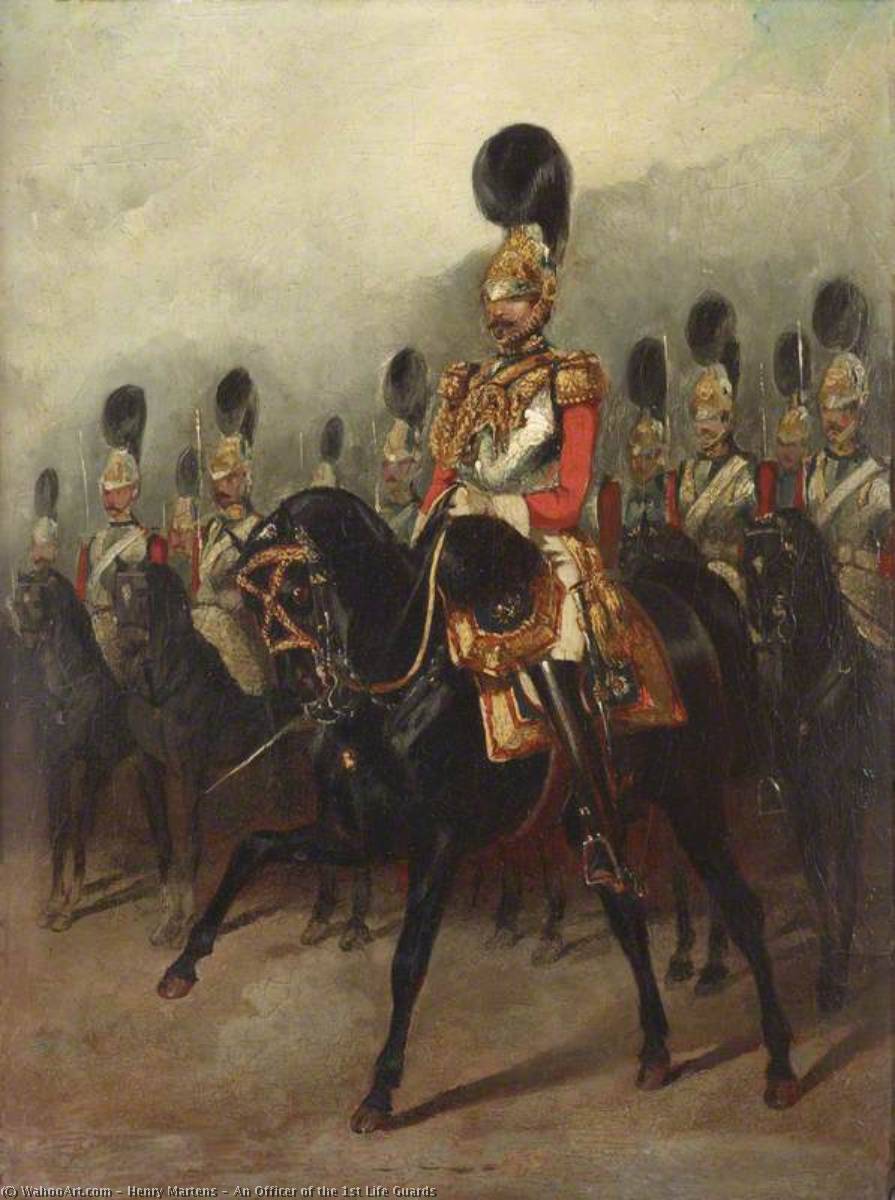
An Officer of the 1st Life Guards
 30.0 x 23.0 cm
 National Trust
 Pročitaj više
Ručno rađena uljana reprodukcija
Ručno oslikano uljanim bojama na platnu u dimenzijama i okviru po vašem izboru, izrađeno po porudžbini od strane naših umetnika. ( Kupi print Kupi digitalnu sliku)




































Izaberite jednu od naših unapred definisanih veličina koje odgovaraju originalnim proporcijama umetničkog dela.

Можете унети сопствене димензије како бисте прилагодили дело одређеном оквиру или простору. Ако одабрана величина не одговара пропорцијама оригинала, слика ће бити исечена или проширена додатним елементима који се ручно насликавају. Дигитални prikaz ће вам бити послат на одобрење пре почетка производње.
Имајте на уму да преглед на екрану не одражава стварно исецање или проширење. Само приказ (mockup) ће тачно приказати коначну композицију.
Иако су доступне прилагођене величине, препоручујемо да одаберете димензију из дефинисане листе како бисте сачували оригиналне пропорције.
Nakon narudžbine, tim ArtsDot.com će klijentu putem e-pošte poslati uputstva i dostaviti prikaz predloženog rešenja
Isporuka širom sveta () za 3/4 nedelje umesto uobičajenih 5 nedelja. (27 август). Bez kompromisa po pitanju kvaliteta.

Besplatna ekspresna dostava širom sveta

Visokokvalitetno laneno platno

Kompletno osiguranje transporta

Garancija povraćaja carine i uvoznih dažbina

Garancija vernosti boja

Politika povrata u roku od 60 dana (samo u slučaju nedostataka)

Garancija povrata novca od 100%

Popust pri grupnoj kupovini
 Opcija sa staklom dostupna je samo za dimenzije manje od 110 cm

An Officer of the 1st Life Guards
Tehnika reprodukcije
Dimenzije reprodukcije
-


Konačna cena
$ 263
Srodna umetnička dela










Biografija umetnika
Henry Martens: A Military Visionary of the Early 19th Century
Henry Martens, a name perhaps less familiar than his contemporaries Millet or David, nevertheless stands as a pivotal figure in 19th-century British art. Born in London around 1790 and passing away in 1868, Martens wasn’t simply a painter; he was an illustrator deeply embedded within the military establishment, meticulously documenting battles, uniforms, and the realities of warfare with a remarkable level of detail and realism. His work offers a unique window into a period of significant social and political change – the Napoleonic Wars’ aftermath, the expansion of the British Empire, and the evolving role of the army in shaping national identity.
Martens' early life remains somewhat shrouded in mystery, though it is known he was part of a family with connections to the legal profession. He initially trained as an engraver before gravitating towards painting, finding his true calling in capturing the dynamism and drama of military scenes. Unlike many artists who idealized warfare, Martens presented a brutally honest depiction of conflict – the mud, the blood, the exhaustion, and the intricate details of soldier’s equipment. This commitment to accuracy, combined with an almost photographic eye for detail, quickly established him as a sought-after illustrator for publications like Ackermann's Repository, a hugely popular illustrated magazine that catered to a broad audience.
The Rise of Military Illustration and Martens’ Role
The mid-19th century witnessed a surge in military illustration, fueled by the ongoing expansion of the British Empire and the need for detailed records of campaigns. Martens was perfectly positioned to capitalize on this demand. His work wasn't merely decorative; it served a practical purpose – providing visual documentation for officers, soldiers, and the public alike. He collaborated extensively with Captain George Rodney Mundy, supplying sketches that were then meticulously rendered in aquatint prints by John Harris for Ackermann’s. This partnership produced a vast body of work depicting conflicts such as the Sikh Wars and the Kaffir War, offering unprecedented glimpses into these far-flung colonial engagements.
Martens' style was characterized by an almost obsessive attention to detail. He meticulously researched uniforms, weaponry, and battlefield layouts, striving for unparalleled accuracy. His use of aquatint – a printing technique that produced tonal shades through the application of gum arabic – allowed him to create incredibly nuanced representations of textures, light, and shadow. His compositions were often dynamic, capturing the moment of action with a sense of immediacy and energy. He wasn’t interested in grand narratives or heroic portrayals; instead, he focused on the individual soldier, his actions, and the immediate circumstances of battle.
Key Works and Artistic Techniques
Several works stand out as particularly significant examples of Martens' artistic skill and historical importance. “The Siege of Multan, 1849” is a prime example, showcasing his ability to convey chaos and intensity on the battlefield. The painting’s composition—a swirling mass of soldiers, artillery, and smoke—is both dramatic and meticulously rendered. “An Officer of the 2nd Royal North British Dragoons,” another notable piece, exemplifies his mastery of portraiture within a military context, capturing the officer's posture, uniform, and expression with remarkable precision.
Martens’ work extended beyond battlefield scenes to include detailed illustrations of military uniforms. His “Costumes of the British Army” series, published between 1849 and 1853, was a monumental undertaking – a comprehensive visual record of the army's attire at the time. These plates were incredibly popular, serving as invaluable references for officers and soldiers alike. His depictions of Sikh and Kaffir uniforms are particularly noteworthy, offering insights into the diverse cultures and military traditions encountered during the British Empire’s expansion.
Legacy and Historical Significance
Henry Martens' legacy is often overlooked, yet his contributions to art history are substantial. He wasn’t a painter of grand historical scenes in the style of David or Ingres; instead, he offered a uniquely realistic and detailed portrayal of military life during a pivotal era. His work provides invaluable insights into the social, political, and military dynamics of 19th-century Britain and its empire.
Today, Martens’ paintings are housed primarily at the Musée Thomas-Henry in Évreux, France, where they continue to fascinate viewers with their remarkable detail and historical significance. His legacy endures not only through his artwork but also through his pioneering role as a military illustrator – an artist who captured the realities of war with unflinching honesty and technical brilliance.
henry martens
1790 - 1868
Osnovne informacije
- Artistic Movement Or Style: Military illustration
- Artists Or Movements Influenced By This Artist: ["Ackermann's lithographs"]
- Artists Who Influenced This Artist: ['Jean-François Millet']
- Date Of Birth: 1790
- Date Of Death: 1868
- Full Name: Henry Martens
- Nationality: English
- Notable Artworks:
- Siege of Multan
- Officer of Dragoons
- Charles I at Naseby
- Place Of Birth: London, England

